
A Slice of Life
Bill Lites

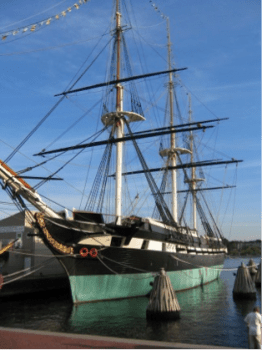
The next day I misread the opening time for the B & O Railroad Museum in Baltimore, MD so I was an hour early getting there. I parked in the museum’s free parking lot, and took the free “Charm City Circulator” bus to the Baltimore Inner Harbor. Since I had toured aboard other U.S. Navy ships and submarines, I only went aboard the USS Constellation. I did take photos and checked out the USCGC Taney, the submarine USS Tork, and the Lightship Chesapeake, but saved the time going aboard those ships, for another museum down the road that day. While waiting for the bus back to the B & O Railroad Museum, I struck up a conversation with a very nice lady who was on her way to work, and helped me with the number of the bus I would need to catch for my trip back to the RR museum, and my car.
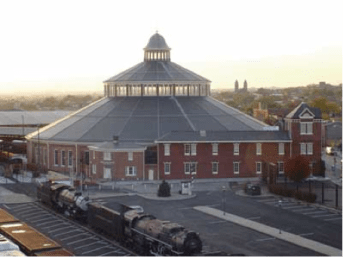
The B & O Railroad Museum is located in the old Monte Clare Station, and with its adjacent roundhouse, was part of the original Monte Clare Shops begun in 1829. The Shops are considered to be the oldest railroad manufacturing complex in the United States. The museum is massive, and has one of the world’s largest collections of 19th century rolling stock. The museum was also the site which received the first telegraph message, “What hath God wrought?” sent from Washington, D.C. to Baltimore, MD on May 24, 1844 using Samuel Morse’s new telegraph invention.
Next I took a quick drive north a few miles to visit the Glenn L. Martin Aviation Museum in Middle River, MD which was a small museum with only a dozen or so outside static display aircraft. I hadn’t planned to stay long (the Robert Frost poem comes to mind again), but I was their only customer and their very knowledgeable tour guide was a little long-winded with nothing else to do. I immediately realized I was trapped. I was afraid he was going to explain all about each of the 20,000 photos covering the walls of the small museum area and finally asked him if I could see the museum’s airplanes. He had to drive me to the static displays and started telling me all about each of the airplanes, and I was trapped again. They had two B-57 aircraft on static display, and I recorded the tail numbers so I could ask my friend Larry when I back to Titusville, if he had flown in either of them, during his time in the U.S. Air Force. I finally convinced him to take me back to my car so I could get on to the next stop. I’m sure I could have learned a lot if I had not been on such a tight time schedule that day.
Now I headed south around Chesapeake Bay to visit the U.S. Naval Academy Museum in Annapolis, MD which is located in the Preble Hall, just inside the Naval Academy premises. I parked and had to walk thru a security check point, and show my ID, in order to access the museum. The museum is a maritime museum started in 1845 and traces U.S. Naval history in the form of three dimensional artwork, paintings, model ships, uniforms and metals exhibits in its four galleries.
—–To Be Continued—–

 A few weeks ago our two adult Sunday School teachers sort of retired. After twenty years of teaching, it was time for something new. Our pastor’s wife said we were all saturated in the Bible, and it was true. At first we just talked, but to me it seemed we were saying the same things over and over. They were the best things you could say, full of faith and hope, but still…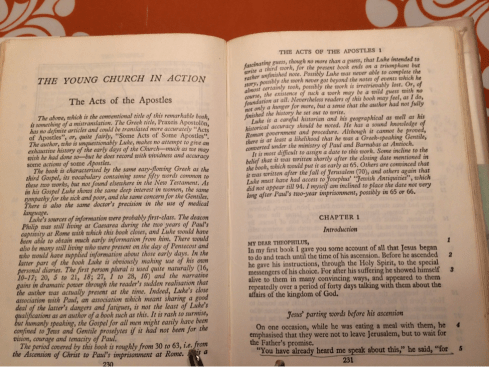







 some of the hangers where the museum’s aircraft are now housed. Among notable aircraft built by Fairchild during and shortly after WWII included the PT-19/PT-23/PT-26 Cornell trainers, the AT-21 Gunner twin-engine trainer, the C-61 Argus (For the RAF), and the C-82 Packet, C-119 Flying Boxcar and the C-123 Provider cargo planes. The museum wasn’t officially open, but one of the guys working at the airport hangar (where “Greta” delivered me) agreed to show me the museum’s aircraft collection and tell me a little about Fairchild’s roll in wartime Hagerstown.
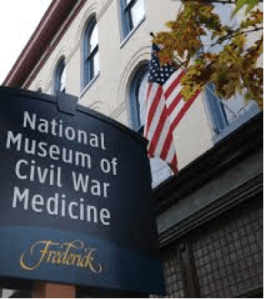 medical treatment used on the fighting men during the Civil War. It is surprising to me that as many men as did, survived their treatments, surgeries and amputations during that war. I guess the main reason for their survival rate was that they were young and healthy when they went into the war. It makes one appreciate modern medical practices such as the advances in cleanliness, antiseptics, surgical applications and especially prosthetics technology.
 front of the museum just long enough to go in and ask where to park. I couldn’t have been in the museum more than 3 or 4 minutes, but when I came out to move my car I had a parking ticket and the writer of that ticket was nowhere to be seen. He/she must have been lurking in some doorway, close by, just waiting for me to walk away from my car, because the ticket was a computer print-out with a “lot” of automobile information that had to have been observed and entered into their hand-held device. Man, was that fast! Needless to say, that was a costly museum visit.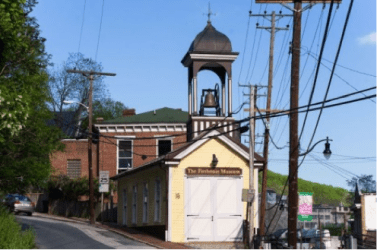

 Many years ago, when we attended Park Avenue Church a man came to speak. His way of doing things changed many lives – mine was one.













 Old Things R New