Tag Archives: Christian bloggers

The Bank Robbery~Part 2

12 May

Guest Post

Norma Rowe

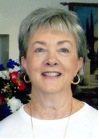
Norma head shot


After I heard the voice telling me to leave the vault and go into the bank lobby with the robber, I went. He had demanded that two girls go, but I was the only one who did. He didn’t ask for another one. He, instead, came with me to the teller window and told me to put money in bags. Even though he kept telling me to hurry up, I carefully included the “bait” money (marked bills). At one point I saw a small red light flashing, which indicated that the alarm had been activated. I remembered what he had said about blowing someone’s head off, so I tried to conceal the light. I failed, but fortunately he didn’t see me or the light. I then came to the vault-teller’s box, a large one, which required two different keys. I couldn’t open that one, and by then he was making me very nervous so I called to the Operations Officer to come out from the vault and open it for me. He grudgingly came and got it open but now he had to join us in filling the bags. I was toward the front of the building when I glanced up to see a police officer looking in the window. He was wearing a motorcycle helmet. Oh, good, I thought. The police are here so now we are safe.

I looked back at the thief and at that very instant he was firing at the officer. Up until that moment I had thought that maybe the gun wasn’t loaded but when I saw a flare come from the weapon, the hope of an unloaded gun vanished! My first instinct was to run toward the police officer, so I could be out of danger, but I discarded that idea thinking the guy could easily shoot me in the back. I couldn’t stay where I was, in the middle of gunfire, but if I ran toward the back of the building to join the others I had to pass him and he could easily grab me to use as a hostage. Again, something inside of me was assuring me that I could run by him and he wouldn’t grab me. I did.

As I ran back, the O.O. who had ducked behind a desk, kept yelling, “Get down, get down!” I finally ducked behind another desk but he said, “not there, here.” He wanted me where he was because it was closer to the vault, but once I hit the floor I couldn’t stand on my own two feet again. It was like that “shield,” that “armor” I had felt before, had lifted, so he stretched out his arm and I stretched out mine and he grabbed my hand and pulled me across the floor and we got on our feet to run into the vault to barricade ourselves but my legs wouldn’t support me. I was nicknamed “rubber legs” after that. One of our customers, a retired bank manager, saw what was happening and came out and helped the O. O. lift me off the floor and drag me into the vault with them. We closed the door, and barricaded it with a metal cabinet nearby.

1.png


Minute Meditations~3

3 May

SUNDAY MEMORIES

Judy Wills

JUDY


TRUST…..

What does that word mean to you? The New World dictionary defines trust as: firm belief or confidence in the honesty, integrity, reliability, justice, etc. of another person or thing. A secondary definition is: confident expectation. How does that fit your definition?

1

Have you ever trusted someone with a “secret” only to have that secret spread around and get out of control? How did that make you feel? Did you feel like you could “trust” that person with anything personal again? Most likely not.

My brother, Bill, wrote his thoughts on this:

2

3

4

Mindfulness

1 May

From My Heart

Louise Gibson

Louise Gibson


Mindfulness is being aware of the moment.

Listen to your heart.

Your life matters-

Live it fully from the start.


Water the seed of optimism.

Have a love affair with life.

Think positive thoughts

and you will drive away the strife.


Cultivate awareness.

You’ll find you learn a lot.

If you are in the kitchen stirring the pot-

Be aware of stirring the pot!


How will being mindful

help you deal with your pain?

Being aware of God’s presence

will bring peace to your heart again.


by DiVoran Lites

by DiVoran Lites

South of the Border~Part 2

22 Apr

A Slice of Life

Bill Lites

Bill Small Red Plane


Monday we were up early for breakfast, after which we loaded up the vans and began the 175 mile drive to the border. Our caravan of vehicles stopped at Eagle Pass, TX for lunch (our last American meal for a week), and then it was across the border (Passport & luggage check) and on to our destination in a small colonia of Nava, Mexico which is located about halfway between Del Rio and Laredo, TX.


We had been supplied with detailed lists of things to take and not take (to help speed us at border crossings), as well as “Cautions” about not eating any food or drinking any water not provided by our hosts. This was to help keep the visiting groups in good working condition and keep us from coming down with a case of “Montezuma’s Revenge.” It was a long (but uneventful) trip, except for that short delay at the border crossing (I think the guards were looking for a “donation” to let us pass). The rest of the time was occupied with lots of singing and laughter in our van.

3


When we arrived at the colonia (small unregulated settlement), it was rather shocking for our visiting group to see the utter desolation and primitive conditions most of the local people lived in. The area had been picked clean of any possible building/covering material (no matter how small or flimsy) and used for shelter. In many cases, there didn’t seem to be any way to keep the weather (hot or cold/wind or rain) out of their shelters.


I had heard of people living in cardboard shacks, but as our hosts drove us around the area, explaining the basic layout, I mentioned to the woman sitting next to me, “It’s hard to believe people can actually survive in conditions like this!” All she and her friend could do was shake their heads in agreement.

After our long drive from San Antonio, it was getting late in the afternoon, so our hosts showed us some of the support structures they had built to help the local people and the colonia maintain a decent lifestyle. First there was the John 3:16 Church, where many different types of services were held each week, and where we would eat our lunch meal each day.

8

Next was the Dorcas House sewing center where some of the local women and girls were taught how to use the sewing machines, and the materials they were supplied with, to make clothing for their families and to sell.

9

And then there was the Carpenters Shop where some of the local men and boys were supplied tools and wood and taught how to build furniture for themselves and to sell. As a side note, I was interested to learn that all of the tools, wood, sewing machines and materials the local people have access to, have been donated to OSM for use as part of their ministry to help the colonia support itself.

10


After the tour, we headed to the small town of Allende where we checked into our hotel. Once we were checked in, we were taken to the local Methodist church where the gracious church members had prepared dinner and music for us.   The food was great and we all had a wonderful time getting acquainted, with lots of relaxing laughter, music and singing. After the festivities, a bunch of us strolled the streets of Allende, and even found an ice-cream parlor for some desert. Then it was back to the hotel for a good night’s sleep.

11


—–To Be Continued—–

Do you live with confidence, joy, and peace? Answer these few questions to find out.

18 Apr

Spring Unfurling

9 Apr

On the Porch

Onisha Ellis

I'm a winner

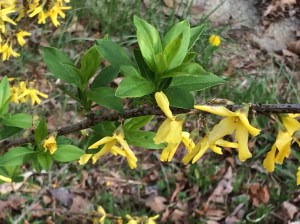
  We left Florida earlier than usual this year and arrived in North Carolina before spring. Our daffodils greeted us with their beautiful faces and the Bradford Pear trees were spectacular but everything else was brown. Temperatures continued to drop into the upper twenties and lower thirties and it seemed spring might forget to arrive.IMG_2476   Each day we searched for signs our plants were waking up. The first to awaken were the forsythia. We seldomsee them in their bright yellow coat and they are a treat to our eyes. Don’t you think it is cool the way God staggers the arrival of spring so each plant gets it own time to shine? IMG_2486   The weather warmed this week and it seems the rest of nature is anxious to share its beauty. While the forsythia is shedding its yellow coat and daffodils are beginning to fade the blueberries and apple buds are swelling. Plants that had lain hidden all winter are sending out new shoots.   I am especially thrilled with one of our peony plants. You see, it came from the yard of a precious friend who passed away. One day, as I sat with her I asked if I might have a root from one of her beautiful plants and she said yes. We had spent many hours rocking on her porch and admiring them and I wanted something special to keep those memories close. Sadly, at the end of the summer it seemed to die. Imagine my joy this morning when my husband told me the plant was coming back to life! IMG_2490   So far, we have late daffodils, one tulip, bleeding heart and a fat bee on a dandelion!
On Wednesay we drove down to Clayton, Georgia to see the cherry blossoms. We had gone the week before and they were bare sticks but this week they were glorious.

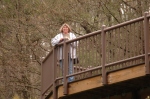
The weather today is warm bordering on hot so I know spring will be fully unfurled in a few more days. My husband decided today was a good time to erect a handrail for the stairs down to his workshop. I sneeked a picutre thorugh the screeon of him and our porch dog gus. Mike and gus copy 3   I’m not sure why, but I kind of like the texture the screen adds to the picture.
Keukenhof Gardens, Holland~Part 2

5 Apr

SUNDAY MEMORIES

Judy Wills

JUDY


2


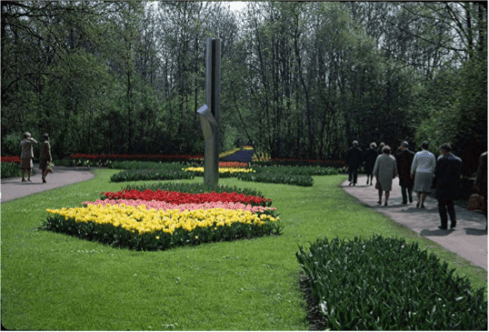
Last time, I wrote about the Keukenhof Gardens, in Lisse, Holland. We so thoroughly enjoyed our visits there, and want to share this beautiful place with everyone we know.

3

Here is some history about the tulips we found interesting from the Fluwell website:

“during World War 2, people ate tulip bulbs. The only reason for this was hunger. The Netherlands suffered a great famine in the winter of 1944-1945. Eating tulip bulbs is not something our ancestors did for fun, they did it because there was nothing else to eat.

 Many Dutchmen of certain age remember the famine and the tulip bulbs they ate. In our theme park Tulpenland, we have a lot of customers that share their memories with us. They sometimes still find it difficult to see tulip bulbs back, although they know that we use them only for flowers, not for food. Hunger is a deep emotion that is not easily forgotten.

 The Dutch famine was the result of the lost Battle of Arnhem (1944), when allied forces failed to liberate the northern provinces of the country. The northern provinces became isolated from the liberated parts of Europe. Food stocks ran out, as did fuel stocks. Then a harsh winter began. Thousands of Dutch citizens starved or froze to death.

 Due to the war situation, tulip growers had not planted tulip bulbs that year; so great amounts of tulip bulbs were stocked on farms throughout the country. During the famine authorities decided to use these stocks as food for the starving populations. The old, dry tulip bulbs were sold in grocery stores, and newspapers published recipes with tulips. The tulip bulbs were nutritious and relatively easy to cook, so that less fuel was needed.

 The tulip bulbs that people ate in the Second World War cannot be compared with modern day, fresh tulip bulbs. The war bulbs were old and dry and did not taste like fresh tulips. A fresh tulip bulb has a sweet, milky flavor that is actually not very bad. The tulip bulbs that were eaten during the war had a very bitter and dry taste instead.

 Eating tulip bulbs is not as bad as it sounds like, as long as you eat fresh tulips that were not sprayed. Unfortunately, such bulbs were not available during the last winter of WW2. It is important that this sad history is not forgotten. Dutch children are still raised with the words: you are not hungry, you only have appetite (Je hebt geen honger, je hebt trek). Real hunger makes you eat everything you can get, even old, dry tulip bulbs, as they were eaten during the Dutch famine.”


Amazing!

Just a side note here – there is a wonderful place to visit outside The Hague, called Madurodam. It is a miniature city, built to scale. It includes the normal things you would find in a city – churches, office buildings, and even Schiphol Airport in Amsterdam, with working airplanes. It’s a fun thing to see during the day, but miniature lights come on at night, and it’s quite the fairyland.

14


The family of Old Things R New wishes each of our visitors a blessed Easter. He is risen!

How to live happily ever after.

4 Apr

Baking for Cystic Fibrosis

2 Apr

On the Porch

Onisha Ellis

I'm a winner

UPDATE 4/6/2016

The bake sale was a huge success and over $2,000.00 was raised for Cystic Fibrosis!  My friend was thrilled and grateful for the communiy support.

This Saturday, April 4, 2015, a determined grandmother will be setting up a card table in front of our local K-Mart and selling fabulous baked goods, She does this every year to raise money for Cystic Fibrosis research. Her friends and church family bake the items.

My friend has three precious granddaughters, two of which have active CF and the other one is a carrier. Until Wednesday, I had no idea that Cystic Fibrosis research was largely funded through donations, because Cystic Fibrosis affects a relatively small number of children, in the United States approximately 30,000 and worldwide 70,000.

 Nearly every #cysticfibrosis drug available today was made possible because of @CF_Foundation support. (Click to Tweet)

Today I am baking a triple chocolate buttermilk pound cake for the auction, along with some cookies.

triple-chocolate-buttermilk-pound-cake-sl

This cake was featured on the cover of the February Southern Living Magazine and I made it during our stay in Florida. It was incredible!  It seems the recipe came from a professional baker who charges cake lovers  $36.00  to take one home or have it shipped!  If you would like to make it, here is the RECIPE.  I don’t add the white frosting since it has buttermilk in it and I am not sure if it would require refrigeration. Would love for my baker friends to weigh in on this as I think the white makes the cake look great.

If you would like to know more about Cystic Fibrosis you can visit the Cystic Foundation home page and if you have an opportunity to give, I know these three girls and their family would be grateful. Thanks to research, these girls already have a brighter future  than children in the past.

My Colonial States Trip~Part 20

1 Apr

A Slice of Life

Bill Lites

Bill Rocket Plane


I started my last day of this trip with another attempt at visiting the First Baptist Church in America. I drove the 15 miles into Providence, RI and this time had no trouble driving right up to the church. I parked and walked across the street to take a picture of the church and read the plaque out front. Of course the church was closed at that time of the morning, so I just moved on to the next place I wanted to visit before leaving Providence.

1
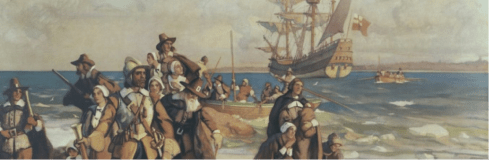
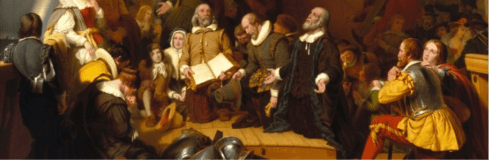
It wasn’t far to the Roger Williams Museum and National Memorial where I learned what a dedicated individual Roger Williams really was. He originally came to this country in early 1631 with a group of Puritans, who landed in Boston, MA hoping to find religious freedom in the newly formed Massachusetts Bay Colony.

2

 He left Boston later that year to accept a ministry position offer in Salem, MA whose inhabitants believed more along the lines he did. When Salem withdrew their offer, Williams accepted an offer in Plymouth, MA for the same reason. By 1633 Williams was still at odds with local clergy over his “radical” beliefs (the separation of church and state) and the Massachusetts Bay Colony wanted him gone.

3

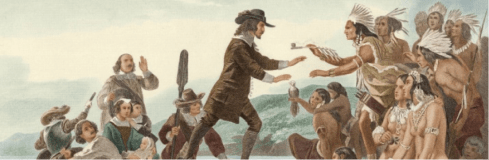
In 1636 his persecution as a “separatist” came to a head when the Massachusetts Bay Colony convicted him for his “new and dangerous opinions” with plans to deport him back to England. He fled south from Plymouth, some 50 miles or so, to spend time with the Wampanoag Indians, and later traveled to the headwaters of Narragansett Bay where he founded the colony of Providence (later to be called Rhode Island), on land deeded to him by the Narragansett Indians.

4

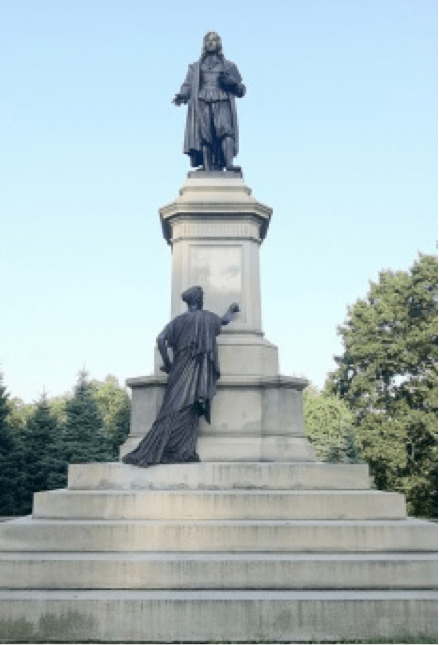
Williams established a trading post just south of Providence in 1637 and was instrumental in founding the First Baptist Church in America (which I referred to in Part 19 and above) in 1638. He returned to England in 1643 to secure a charter for the colony of Rhode Island, and again in 1651 to defend that charter against another grant that would have split the colony. In his later years Williams would succumb to ill-health, brought on by a lifetime dedicated to the colony he had founded and his struggling to keep it together, along with his constant battle with the “establishment” for religious freedom for all people everywhere. Below is a photo of the monument in Providence, dedicated to Williams with the figure of Clio (the muse of history) who is shown inscribing Williams’ name and the date (1636) when he founded the colony of Providence, which would later become the state of Rhode Island.


5


—–To Be Continued—–