Tag Archives: Christian bloggers

Baking for Cystic Fibrosis

2 Apr

On the Porch

Onisha Ellis

I'm a winner

UPDATE 4/6/2016

The bake sale was a huge success and over $2,000.00 was raised for Cystic Fibrosis!  My friend was thrilled and grateful for the communiy support.

This Saturday, April 4, 2015, a determined grandmother will be setting up a card table in front of our local K-Mart and selling fabulous baked goods, She does this every year to raise money for Cystic Fibrosis research. Her friends and church family bake the items.

My friend has three precious granddaughters, two of which have active CF and the other one is a carrier. Until Wednesday, I had no idea that Cystic Fibrosis research was largely funded through donations, because Cystic Fibrosis affects a relatively small number of children, in the United States approximately 30,000 and worldwide 70,000.

 Nearly every #cysticfibrosis drug available today was made possible because of @CF_Foundation support. (Click to Tweet)

Today I am baking a triple chocolate buttermilk pound cake for the auction, along with some cookies.

triple-chocolate-buttermilk-pound-cake-sl

This cake was featured on the cover of the February Southern Living Magazine and I made it during our stay in Florida. It was incredible!  It seems the recipe came from a professional baker who charges cake lovers  $36.00  to take one home or have it shipped!  If you would like to make it, here is the RECIPE.  I don’t add the white frosting since it has buttermilk in it and I am not sure if it would require refrigeration. Would love for my baker friends to weigh in on this as I think the white makes the cake look great.

If you would like to know more about Cystic Fibrosis you can visit the Cystic Foundation home page and if you have an opportunity to give, I know these three girls and their family would be grateful. Thanks to research, these girls already have a brighter future  than children in the past.

My Colonial States Trip~Part 20

1 Apr

A Slice of Life

Bill Lites

Bill Rocket Plane


I started my last day of this trip with another attempt at visiting the First Baptist Church in America. I drove the 15 miles into Providence, RI and this time had no trouble driving right up to the church. I parked and walked across the street to take a picture of the church and read the plaque out front. Of course the church was closed at that time of the morning, so I just moved on to the next place I wanted to visit before leaving Providence.

1
It wasn’t far to the Roger Williams Museum and National Memorial where I learned what a dedicated individual Roger Williams really was. He originally came to this country in early 1631 with a group of Puritans, who landed in Boston, MA hoping to find religious freedom in the newly formed Massachusetts Bay Colony.

2

 He left Boston later that year to accept a ministry position offer in Salem, MA whose inhabitants believed more along the lines he did. When Salem withdrew their offer, Williams accepted an offer in Plymouth, MA for the same reason. By 1633 Williams was still at odds with local clergy over his “radical” beliefs (the separation of church and state) and the Massachusetts Bay Colony wanted him gone.

3

In 1636 his persecution as a “separatist” came to a head when the Massachusetts Bay Colony convicted him for his “new and dangerous opinions” with plans to deport him back to England. He fled south from Plymouth, some 50 miles or so, to spend time with the Wampanoag Indians, and later traveled to the headwaters of Narragansett Bay where he founded the colony of Providence (later to be called Rhode Island), on land deeded to him by the Narragansett Indians.

4

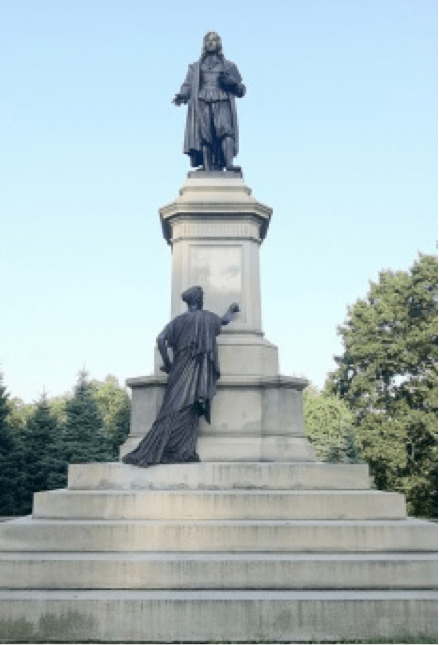
Williams established a trading post just south of Providence in 1637 and was instrumental in founding the First Baptist Church in America (which I referred to in Part 19 and above) in 1638. He returned to England in 1643 to secure a charter for the colony of Rhode Island, and again in 1651 to defend that charter against another grant that would have split the colony. In his later years Williams would succumb to ill-health, brought on by a lifetime dedicated to the colony he had founded and his struggling to keep it together, along with his constant battle with the “establishment” for religious freedom for all people everywhere. Below is a photo of the monument in Providence, dedicated to Williams with the figure of Clio (the muse of history) who is shown inscribing Williams’ name and the date (1636) when he founded the colony of Providence, which would later become the state of Rhode Island.


5


—–To Be Continued—–

Canon City, Colorado

30 Mar

My Take

DiVoran Lites
Author, Poet and ArtistOne of Dad’s early letters after he was inducted into the army in 1943 had an account of his rescuing a sergeant from drowning. I read that when I was a grandmother, and it was pretty exciting. He was trained in water purification, so that explains how I’ve always been interested in clean water.

Our lives in Canon City were full of interesting things to do. On Sunday afternoons, Mother took us to the small park across from the prison for a band concert. I believe the band members were convicts or cons as we called them. To us, it was the best music in the world and a great source for learning patriotism.

Mother loved to tell the story of the time the band played, “The Star Spangled Banner.” Suddenly I gripped my little brother by his collar and jerked him to his feet saying, “Stand up … Star Spangle.”

We listened to the radio a lot. During the daytime if Mother didn’t have a job that day, she’d iron or sew and listen to soap operas. She loved “Stella Dallas. I’m sure the tales were full of warnings and cautions and were probably good for a little girl to hear, though I’m sure I didn’t understand half of it. We listened to “Fibber McGee and Molly.” It started with the opening of a closet where everything fell out on the floor with great crashings and bangings. We thought that was hilarious – every time. I always thrilled to the opening music of “Let’s Pretend.” I wonder now what those captivating stories were about. Maybe I can look them up on the Internet.

One special evening, David and Mother stayed home and my Grandparents took me to the Pen (which is what we called the prison) for a guards and wives night out. We had dinner in the “dining room,” which was full of long tables where the cons usually ate. They then set up a projector and showed the movie, “April Showers.” Afterward we toured the rows of cells and I was surprised to see how many of the men had decorated with serapes, pictures, and anything else they could find to make their spaces homey. I believe at that time the cells only held one man, two at the most.

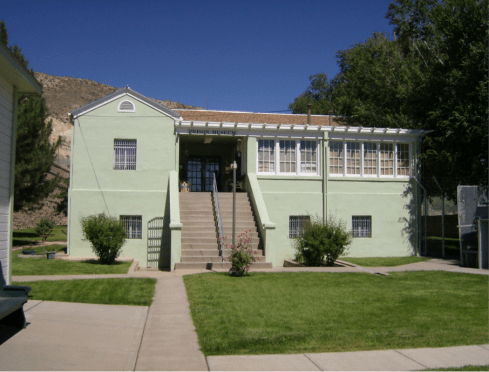
We went back to the Colorado State Penitentiary a few years ago. They’ve made the old part into a museum.

1


Prison Museum 

Video

The building was pristine, the air inside cool on a hot summer day. I recognized the name Alfred Packer, infamous cannibal. The museum had a model of the first gas chamber to be used in Colorado and the big wooden, “horses,” they laid the men over to beat them with a paddle for punishment.

To me, though, as a child, the prison was a friendly place. When we walked past the cells, the inmates looked out not with evil intent, but seeming to long for home and family.

3

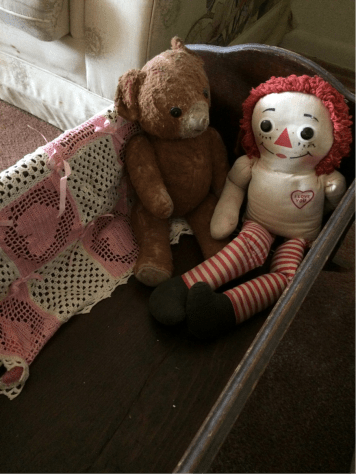
Another reason I was well disposed toward inmates was that one of them made a doll cradle for me. My old pals, Teddy and Raggedy Ann, got a lot of use from that.

2


Doesn’t Teddy look like a good listener? Believe me, he is. Notice how somebody kissed him on the nose so much his nose wore off.


Keukenhof Gardens, Holland

29 Mar

SUNDAY MEMORIES

Judy Wills   

JUDY                                                


1


I hope you are enjoying my postings about flowers as much as I am enjoying writing about them. Although my “green thumb” is as purple as can be, i.e. I can’t grow ANYTHING – I thoroughly enjoy flowers. We’ve been to many “gardens” in our lifetime, but I think the most magnificent is the Keukenhof Gardens by Lisse in Holland (pronounced koy’-ken-hōf). We’ve been fortunate to have been stationed in Germany for a total of six years, and have made the Holland trip quite a few times.

2

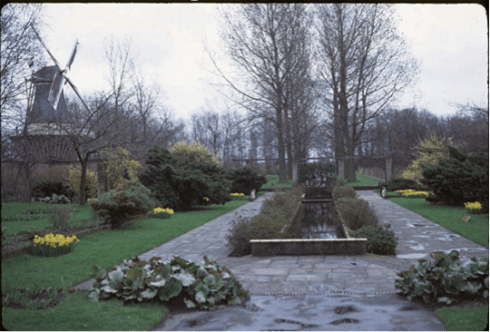
One of the first times we visited Keukenhof was in April of 1968. Spring had not yet fully arrived in Holland, and we were treated to winds and bare trees. However, the landscaping of the gardens was still beautiful.

3


And when we returned later, when Spring was in full swing, we were amazed to see how the landscape had just exploded with flowers.

4


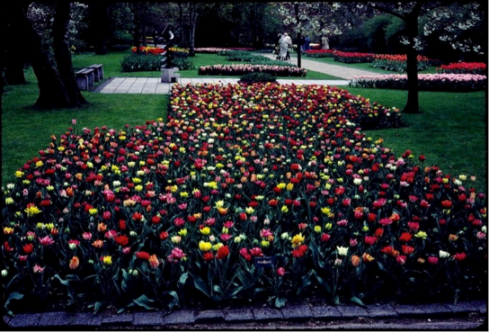
There were blankets of flowers.

5


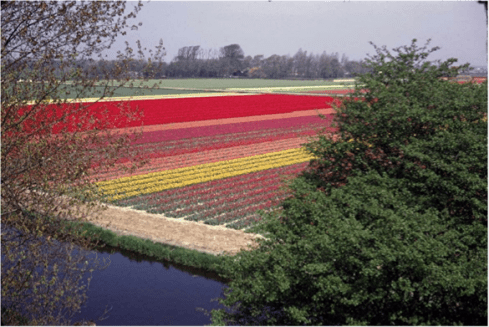
And when we climbed up into one of the many windmills there, we could look out and see fields and fields of tulips. Beautiful!

7


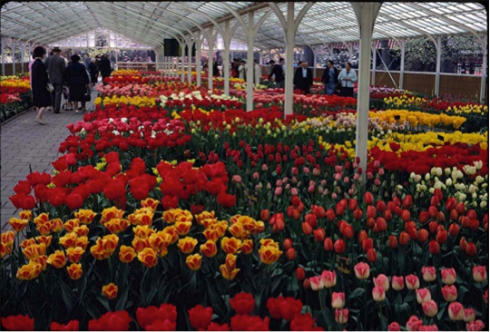
Even though there weren’t many flowers outside around the grounds, there were tulips in abundance in the hothouses. We’ve been told there are about 700 different varieties of tulips there.

8


I was fascinated to see some that were absolutely black – named “Black Beauty.”

9


Another time we visited, we saw more black tulips called “The Ace of Spades.”

10


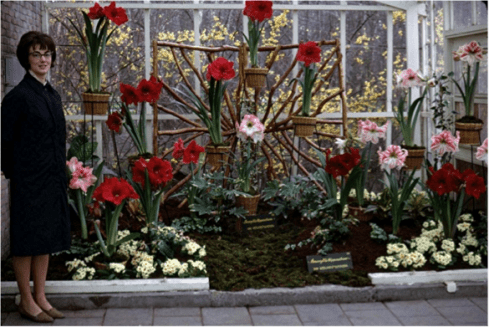
We were amazed to see all the different colors and styles of tulips – lots of hybrid work going on there. Although tulips are the main flower, there are many others there, as well. There were blankets of hyacinths. I saw my first Amaryllis, and was amazed at the size of it.

11


The next year, 1969, we visited again, but in May, when my Mother came to visit us. Not only were the gardens in full swing, the flowers were just everywhere


12


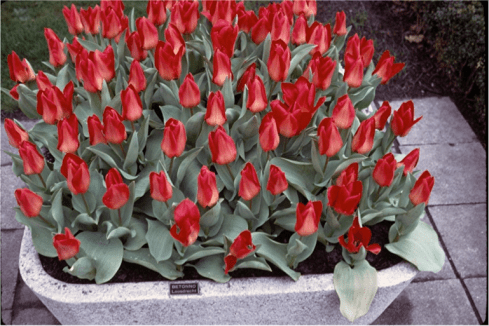
Not only in the ground, but in planters, as well.

13


Just about everywhere flowers could be – they were there. You can see the difference in the trees and the tulips and other flowers from the early Spring of our 1968 visit. We thoroughly enjoyed both visits.

15


We visited again in March of 1981, with our two daughters, during their Spring Break. The weather was rather chilly, windy, and brisk. We were in jackets at the time. Once again, Spring had yet to arrive, and nature was still rather bleak. We had been wandering around the area and thought we would freeze if we went to the gardens, but really had no choice – it was then or never. Much to our surprise – inside the garden, with all the trees, the wind didn’t reach us very much, and we were quite comfortable.

14


~~~~~~~~To Be Continued~~~~~~~


Five ways to bring balance to your life.

28 Mar

So many times “if only” is a lament. Janet shares the promise of God’s “if”

Settling In

26 Mar

On the Porch

Onisha Ellis

I'm a winner

I’ve spent the past week settling into our home for the summer. The way I can tell I am settled in is that my previously tidy house is no longer tidy. What can I say, I am messy.

The weather has been cool, but not cold and I have enjoyed it. Florida was beginning to heat up. This morning we took a drive down to Cornelia, Georgia to pick up a meat order. We pass Cornelia frequently on our way to Gainesville or Atlanta but have never explored it so I was looking forward to the trip. After we picked up our order I asked Siri to find the local McDonalds. It was time for a bathroom break and some coffee. Siri was not very cooperative but she and I finally worked it out and she set us on our way.

Have you ever heard to the Habersham Candle Company? They make wax pottery vessels. Mike’s cousin gave us one for our North Carolina home and I love it. I knew they are located in Cornelia so I nicely asked Siri to route us there and she complied. To my amazement. It isn’t a small company like I had imagined. , I thought I could go there and buy one or two. Wrong. I was too intimidated to go up to the door so I called them to see if they are open to the public. Sadly, they aren’t. I’m not sure why I had it in my mind that they were.

After we came home, I checked email and found one from a blog I follow, Marketing Christian Books suggesting the reader try a cool website that can make marketing fun. Who wouldn’t want to learn that? I spent the rest of the afternoon playing with it. Here are a couple I made.


Cold weather is supposed to return this weekend. I am looking forward to it. It will be nice to have a chance to wear the winter clothes one last time. How about you, are you sick of the cold or enjoying it?

My Colonial States Trip~Part 19

25 Mar

A Slice of Life

 Bill Lites


Next I headed east on SR #138 across Narragansett Bay to visit the Breakers and the Mansions of Newport, RI where I was surprised at the number of tourists there were lined up at the Newport Visitor Center trying to get on a tour bus ride of the area. The affluence of the area was brought home to me in an unusual way, when I stopped at a Shop-N-Go to pick up some granola bars. The first thing I noticed was the parking lot had an overabundance of expensive cars in it with names like Mercedes, BMW and Lexus. Then as I was walking the aisles looking for the granola bars, I saw this elegant looking woman, dressed in a beautiful flowing black silk dress, with her hair done up in some kind of fancy French looking hairstyle and 7-inch heels, pushing a shopping cart down the aisle. What a picture that was!

1


The Newport mansions were huge and unbelievably beautiful! They were too spread out for a walking tour (for me), and I didn’t want to take the time to go on a bus tour, so I just drove to a few of them, parked in their free parking areas, and toured outside the mansions and their grounds, taking photos. I had a brochure of all the different mansion locations, so was able to see several before I got bored with all that extravagance and moved on to the next museum on my list.

While I was in Newport I dropped by the White Horse Tavern just to say I had seen the oldest tavern building (1652) in the U.S. and get a photo of it. Over the years the building was expanded and used for other things, such as a boarding house and as a meeting house for the Rhode Island General Assembly. It’s rumored that a pirate (name unknown) ran the tavern operation during the early 18th century. It wasn’t actually named the “White Horse Tavern” until 1730, and during the American Revelation, Tories and British troops were quartered in the building around the time of the British occupation and the Battle of Rhode Island in 1778 (also known as the Battle of Quaker Hill).

5


Battleship Cove is a maritime museum located on the Taunton River in Fall River, Ma and is said to be the home of the world’s largest collection of naval vessels in one place. Included in the collection are the U.S. Battleship USS Massachusetts (BB-59), the U.S. Destroyer USS Joseph P. Kennedy, Jr. (DD-850), the U.S. Attack Submarine USS Lionfish (SS-298), the German Tarantul-class Corvette Hiddensee and the U.S. PT Boats, PT-617 and PT-796. As I mentioned earlier, since I have toured several U.S. Destroyers, Battleships and Submarines, my main interest at this museum was the PT Boats. I was impressed with their size, armament, speed and ability to go up against some of the enemy’s largest ships, sink them, and live to fight another day. It reminded me of the day I was walking with DiVoran in the woods near our house when I got too close to a wasp nest. I never saw the wasp that stung me and was gone before I knew what had hit me. I would guess that was just how some of those enemy ship’s captains must have felt like, after being torpedoed by a PT boat, and their ship beginning to sink under their feet. I can just hear them screaming, “What was that and where did they come from?”


—–To Be Continued—–


Crowley, Colorado

23 Mar

My Take

DiVoran Lites

1

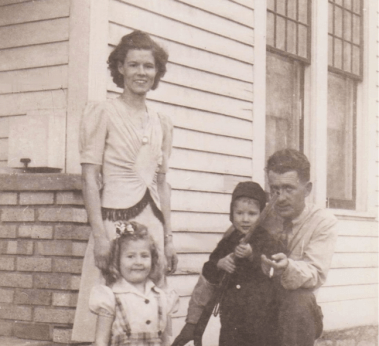
Dora, Ivan, DiVoran, David at Grandparents Apartment House in Canon City, Colorado


When I was five years old my parents took my brother and I and moved to Crowley, Colorado. It was 1943 and WW2 was raging in Europe. At that time they weren’t calling up married men with children, but that would soon change. Dad went to Crowley to keep the canning factory machinery running and mother’s job was to cook a noon meal everyday for the bosses.

We lived in a shotgun house which meant all the rooms were in a row. I recall mother handing me a tomato warm from the sun and a shaker of salt and telling me to go sit on the front step out of the way and eat it. I haven’t had a real tomato since, but that may not be a fair comparison.

Another thing I remember in the food department was the goat milk. We had a Nanny goat and a kid. The kid got all the milk he needed, and our family got the rest. I called my daily portion a milkshake because mother gave it to me warm, fresh, and foaming from the goat. I sat on the front step to drink that, too.

Sometimes, mother wanted to walk down to the factory to say hello to dad. When that happened, she had her own entourage. We all went in a line. Mother and brother, David, then DiVoran, Nanny Goat, and Billy the kid. The baby goat walked on the panes of glass covering the tomato plants to keep them warm and never broke one. The proud and beautiful rooster, Chanticleer took his place at the end of the line.

At night, Daddy came home tired. He recline on the couch and I sat on its arm next to his head and ran my hands through his crisp and curly dark hair.

One day we got the news that Daddy had to go fight Hitler in the war. Mother and the children would go back to Canon City and live with the grandparents. The day we left Crowley, we were all packed up, but we took time for our noontime dinner before we left. It was chicken and noodles, which was one of my favorite meals. Suddenly I got suspicious … where did the chicken come from. Did it happen to have anything to do with Chanticleer? It did. I lost my appetite and thus begun the battle of the meat between my father and I. It got much worse after I saw the movie, “Bambi,” and dad started hunting after the war.

During the last nine months of the war while Daddy was gone, Mother, David and I lived upstairs in our own apartment at Grandmother and Grandad’s house. Granddad worked as a guard at the Colorado State Penitentiary and Grandmother had her own beauty salon there in the downstairs of the house with a separate entrance. Mother and Grandmother had many altercations over everything that comprised our daily lives. I was a diligent messenger between them never realizing how I was stirring things up.

For one thing, Grandmother was determined to keep Mother busy so she wouldn’t get sad missing her husband. Because fabric was vitually unavailable and David and I were growing children, our female guardians took all the clothes stored in the attic and made them into dresses, coats, pants, and shirts for us kids.

One time I got so tired of standing for fittings that I grabbed the unfinished neck of a dress and ripped it right down the middle. Apparently, that particular material was a bit older than they had realized. But my rebellion didn’t do me any good. The next day, we were back to making clothes again. I was probably the best dressed and best coifed child in first grade that year.
2

Even though Daddy was far away he was still a big part of all our lives as the war lumbered on toward its conclusion. I have his letters from that time that tell how much he missed us. What a wonderful legacy that is.

 Mark 13:7


My Colonial States Trip Part 18

18 Mar

A Slice of Life

 Bill Lites

Bill Small Red Plane


I wanted to save plenty of time for visiting the Submarine Force Library & Museum in Groton, CT before they closed. This museum is the only submarine museum operated by the U.S. Navy and is the home of the USS Nautilus (SSN-571), the first nuclear powered submarine in the world.  

1


The museum also was a replica of the first submarine ever used in combat, David Bushnell’s Turtle, built in 1775; a WWII HA-8 Japanese Midget submarine and the Navy’s USS X-1 research submarine that was initially designed to operate using a special closed-loop hydrogen peroxide system to generate the oxygen the submarine’s diesel engine needed to operate while the ship was submerged.


I was impressed with the 50 foot model of the USS Gato (SS-212), first of that class of submarine built by the U.S. Navy (thus carrying the class name) and was one of the typical classes of over 250 submarines built and used by the Navy during WWII. This beautifully detailed cut-away model shows all the different parts of the submarine, from bow to stern, were the crew lived and worked.

5


Next I drove up the coast a few miles to visit the Mystic Seaport Museum in Mystic, CT advertised as the largest maritime museum in the world. The museum is located on 17 acres just south of I-95 on the Mystic River and was the first living maritime museum in the United States (1929). The museum re-creates a 19th century seafaring village, with its historic sailing ships, boats and over 60 period structures that have been carefully restored. I was impressed with one of their main attractions, the last surviving whaling ship, the Charles W. Morgan.


     6                              

Since I was close to the town of Mystic, and I had looked them up on the internet as part of my trip research, I decided to try another lobster roll at the Ancient Mariner Restaurant in downtown Mystic. To my surprise, the town was in the middle of celebrating “Pirate Invasion Day” with people all over town (and in the restaurants) dressed up in Pirate costumes, running around looking for their next item in their Scavenger Hunt (or Geo Cache), and having a wonderful time, as the rain had finally let up. Then it was on up the road to the motel in Warwick, RI for a well-deserved rest after a 375 mile drive in the rain.

7


The next day was Sunday and I had planned to have a late breakfast and then attend the 11:00 service at the First Baptist Church in America in Providence, RI which was founded by Roger Williams in 1638. Williams had founded Providence in 1636 and had conducted church services in his home until 1638. For the next 60 years the congregation met outside, when the weather was nice, or in homes. The first service held in the current church building was in 1775 when the building was completed. Well, when I got to Providence some organization was having a 5-K Run right thru the area, and all the streets around the church were blocked off and the traffic was re-routed for blocks.

8


I finally gave up trying to get to the church, and headed for the Quonset Air Museum in North Kingston, RI where I found a small one-hanger museum with some unusual aircraft, not far from the Martha’s Vineyard Ferry landing. All of their aircraft were on static display, and not in what I would call beautifully restored condition. The guy behind the counter was very friendly and he told me all about the museum’s operations, after which we discussed our military service experiences at some length.

9


—–To Be Continued—–


Jesus Talks to Children

16 Mar

My Take

 DiVoran Lites 

 Jesus Talks to Children


Sunday, we had two princesses, a prince, and a beloved handmaiden in Sunday School. Before we even started singing one of the princesses was pouting because she wanted to go home. It was daddy’s day, but daddy had chosen to bring her to church. All I could offer was for her to go sit with him and his wife (whom she loves). She passed on sitting still and listening to the sermon for adults. I explained how a bad mood affects everyone and asked her to see if she could find a way to become happy about where she was.

For the lesson, I gave each child a sponge on a paper plate. I then explained they could slowly pour their drinking water into it pretending the sponge was their heart, and they were soaking up God’s love. We talked about how we can ask God to love people through us even if we didn’t like them very much. Teacher got to be the unlikeable one, and they squeezed some of the love-water into my sponge. After refilling theirs, they sat quietly and waited for God to say something to them.

We decorated our journal pages, then wrote what God had said to us. Each message was short, but you could tell the children treasured them. I was particularly impressed with one which said, “You will fulfill your goals in 2015.” I happen to know the child’s goal is to get an A in every subject this semester. She can do it too, especially now that she knows God is supporting her in it.

I felt a bit funny about my message, thinking it sounded like a cliche. “Jesus is the greatest.” I read. The children seemed surprised. We’ve discussed cartoon characters, Santa Claus, and Whitney Houston, so I suppose, “Jesus is the greatest,” was news to them. Good news.

Oh, yes, the sad little princess – when we drew titles of songs near the beginning of the class she got, “If You’re Happy and You Know it.” She started laughing even before she told us what her song was.

When the guardian of the other princess came for her, I gave her the sponge and said her child could wash dishes with it. The guardian was thrilled because just before the end of the service the preacher had said that children need to be taught to work. I’m sure this particular woman is already teaching the eight-year-old to work, and many other good things, but she liked the idea that the sponge fit the sermon so well. I did too.

God does talk to us. He talks to children, too. I’ve read that they don’t get a half-pint serving of the Holy Spirit, they get the whole bucketful, just as we adults do.

Jesus called them to himself and said, “Let the children come to me, and forbid them not, for of such is the kingdom of Heaven.”

Luke 18:16