Tag Archives: #amblogging

An Amazing Adventure~Part 9

21 Dec

SUNDAY MEMORIES

Judy Wills
JUDY

I would like to make a “disclaimer” here: Some years ago, Fred and I purchased “Lifetime” passes to our U.S. National Parks. For a very nominal fee, admission to our NPS are free—for our lifetime! They came in very handy on this trip, with all the NPS parks we entered. If you are ever thinking about making such a trip—it is very well-worth your money to purchase a pass. Karen and Brian had theirs, as well, but probably paid more than we did, since we purchased ours as “seniors.” Look into it….

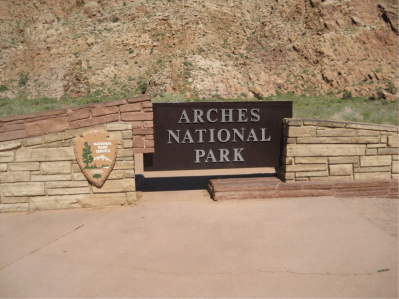
We finally made our way to Arches National Park.
2

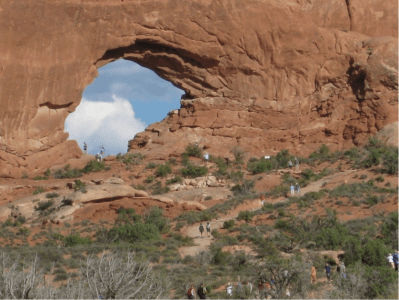
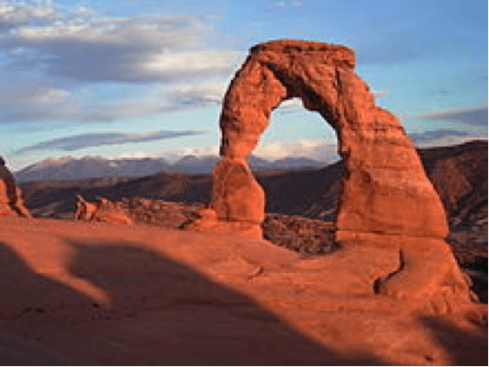
There are over 2000 natural stone arches in this park. There are massive pinnacles, fins, and balanced rocks. It’s one place you won’t want to turn your head for fear of missing something amazing. And you should recognize the Delicate Arch—made famous as the desktop picture on a lot of computers! It is also on some of the Utah license plates, and the Utah state quarter. It looks like it isn’t very big—and we only saw it from a distance—but it’s 65’ tall—that’s about as tall as a five-or-six story building! I’ve seen pictures of it with people below it, and they look really tiny!
3

The entrance to the Visitors Center at Arches has some amazing bronze animals.

We saw a great video about the formation of the arches within the park, and are told how they are continually changing—and eventually will collapse with just the right time, wind, rain, and snow.

Brian was more adventurous than the rest of us, so he plowed ahead, while we took our time climbing Park Avenue. We’re told that it was named that because the massive rock formations reminded the Arches National Park discoverers of Park Avenue in New York City.


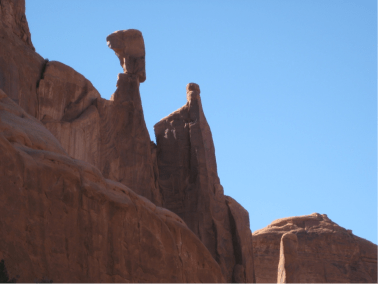
It was a bit slow-going for me (I’ve GOT to get my knees fixed!!), but we made it, and saw some fantastic formations along the way. There was Bowed Rock, Windows, Turret, Caves, Pothold Arch, Queen Nefertiti,
9


the Three Gossips,

10


Panorama Point, Delicate Arch and others. Fred and Brian went on further to see and photograph Landscape Arch.
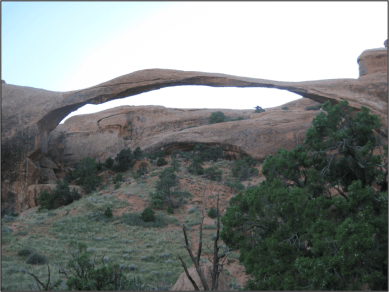
11


We saw the balanced rock from several angles. We saw lots of “fins”
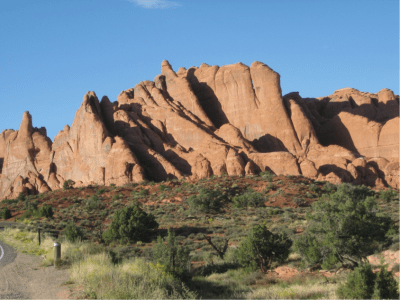
12

and some arches within large rocks.

13

It’s just beyond description. And we walked along side some massive rocks, just lying around. Again, Brian is more adventurous that the rest of us, and climbed up on a couple of them. He’s nuts!!

As sunset was approaching, we headed out of Arches and went into Moab. We stopped at a Wendy’s for supper, and at a grocery store to refill our cooler. Then we drove over two hours to Grand Junction. We stayed at the Grand Vista Hotel there.


~~~~~~~To Be Continued~~~~~~~


A Servant’s Heart

19 Dec


From my Heart

Louise GIbson

Louise Gibson


The true spirit of Christmas is one of giving.

To give of yourself is the greatest gift of all.

To follow in the footsteps of Jesus.

we learn to develop a servant’s heart

in answer to our Savior’s call.


Jesus welcomes, “Come, follow Me.

I will make you a fisher of men,”

“Oh, yes, dear Lord, I want to follow you.

Life on earth is not he end!


The three Marys who served


The three most prominent women in the gospels

were all named Mary. The first was Mary of Nazareth.

God chose her to raise Jesus because of her servant’s

heart.

“For He has regarded the lowly state of His maidservant;

for behold, “henceforth, all generations will call me blessed,”


The second was Mary of Bethany. She was His student.

Whenever she appeared in the gospels, she was at

the feet of Jesus.


The third was Mary of Magdala. Though successful in

business, she had deep spiritual needs in her life.

Jesus freed her from demons, saved her, and she

became His zealous supporter. She supported His

ministry from her own resources, according to Luke 8:1-3.


Mary and Joseph xmas 1001 (2)


* Painting by DiVoran Lites

My Colonial States Trip~Part 5

17 Dec

A Slice of Life

Bill Lites

Bill Stars Plane

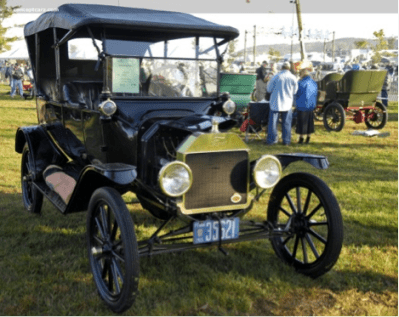
The next morning I planned to start the day with a visit to the Maine Maritime Museum located in Bath, ME but they didn’t open until later in the day and as                                                                                                                                                      the poem by Robert Frost goes, “The woods are lovely dark and deep, but I have promises to keep and miles to go before I sleep, and miles to go before I sleep.” So I just kept on trucking up US #1 toward Owls Head, ME and the Transportation Museum there. This is one of the best transportation museums I have ever visited, where many of their over 150 transportation vehicle collection are from the pre-1920s era, and they all operate as originally designed. I got my first ride in a 1915 Ford Model T, and it ran like a sewing machine. What a thrill that was!

1

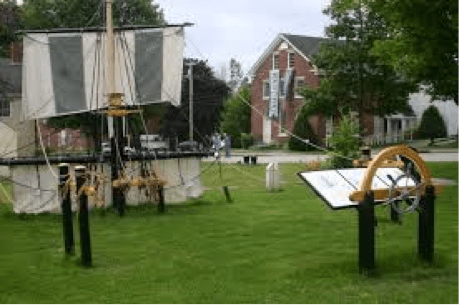
I would like to have stayed longer in that museum, but I headed north on US #1 again toward my next stop at the Penobscot Marine Museum in Searsport, ME. This museum is Maine’s oldest maritime museum and is designed to preserve Searsport’s unique maritime and shipbuilding history. It is laid out as a 19th century seafaring village, with thirteen buildings, housing a collection of archival items focusing on the maritime history and life in New England during the early 18th century.

2

Now I was headed for Bar Harbor and Acadia Nation Park, located near the mouth of the Bay of Fundy, at the northeast edge of Maine. It was a beautiful day and the drive around Acadia National Park was breath-taking. The leaves on the trees were just beginning to turn, making the scenery that much more beautiful.

3

Next it was back thru Ellsworth, Maine and the long drive up US #1 thru Columbia Falls and Jonesboro to Calais and the Canadian border, where I was asked where I was going and what the purpose of my trip was.   After I crossed the border into New Brunswick, for some reason, Greta wouldn’t recognize the motel address. It was after dark, and I didn’t have a map of the area, so I called the motel and the clerk told me which exit to take and then talked me into Fredericton, NB and to the motel. Wow, that was a life-saver, and what a relief it was! The next morning I visited the Christ Church Cathedral before heading out of town. The beautiful cathedral was built in 1853 and has continued to hold services right up to modern times. The front door was open and wonderful organ music was being played by someone on the church’s four-manual Casavant Freres Opus 2399 organ (which has more than 2500 wood and metal pipes). What a beautiful way to start one’s day.

4

I headed west to visit the Kings Landing Historical Settlement which is a late 18th century living museum, made up of almost 70 buildings, located on 300 acres, where period life of the “United Empire Loyalists” is re-created by costumed interpreters that bring to life the era with explanations of how the people lived, worked and played during that time in New Brunswick. As I walked toward the bridge, I was pleased to hear a mellow singing voice echoing across the water to me. When I arrived at the King’s Head Inn, there was the singer, sitting on a bench with his guitar, strumming more early British folk tunes for the people passing by. The village was very interesting but the usual transportation wagon never showed up and it ended up being quite a walk back to my car!

5


—–To Be Continued—–

An Amazing Adventure~Part 8

14 Dec

SUNDAY MEMORIES

Judy Wills

JUDY


The next morning, we had breakfast at our out-of-the-way hotel. It was surprisingly good—make your own waffles and all the stuff that goes along with that.

We went through the little area known as Fruita. There is a bit of history about it, as well. It was settled by the Mormons, and they planted all kinds of fruit trees—apple, pear, peach, cherry, apricot, mulberry, even Potowatomee Plum (I’d never heard of that one). They made their living off all the things one can make from fruit. The original name of the place was Junction. After the success of the fruit trees, they changed the name to Fruita.

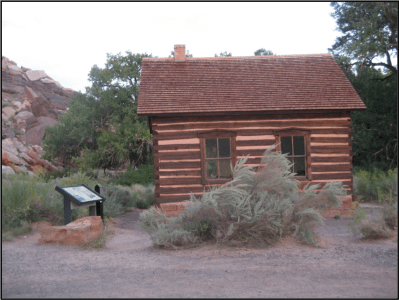
The residents (usually no more than about 10 families) built a one-room school house, which still stands today, after some renovation. The National Park Service purchased most of the land—and trees—and razed most of the buildings. But the school house survived. And while the land and trees belong to the National Park Service, the public is invited to help harvest. According to their website, any fruit consumed in the park is free. If you pick the fruit and take it out of the park—you are charged. Interesting. Here is a picture of that one-room schoolhouse.

2

From there, we headed on to Canyonlands and Arches National Parks, in Moab, Utah. It took us a while to get there, so by the time we arrived, it was time for lunch.

3


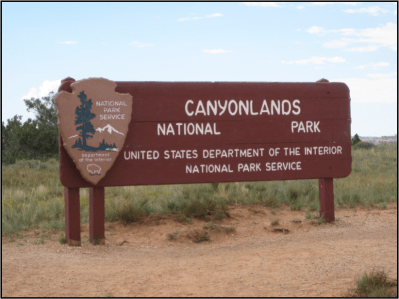
I found it interesting to know that Canyonlands National Park is the LARGEST park in Utah! When looking at the map, there is an area five or six time larger than Canyonlands, but then I realized it is the Grand Staircase Escalante National MONUMENT—not a national park Big difference—I suppose mostly who controls the area. Canyonlands has deeply eroded canyons interspersed with sheer-sided mesas and a variety of spires, arches and unusual rock formations

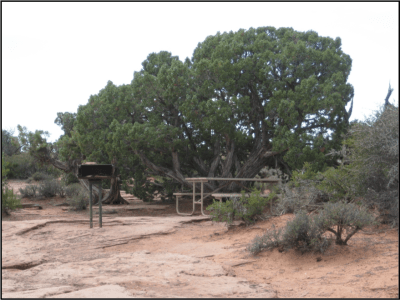
We had a picnic lunch near the Grand View Point, at an outside picnic table. We were joined by some chipmunks and either a raven or a crow (we aren’t sure just what each of those birds looks like, so…..). They must have had some scraps from other picnickers, because they were quite bold.

7


After lunch, we drove around Canyonlands, as much as we could. Again, of course, I wanted to get out and take pictures of just everything I could see. So Brian stated that when we stopped, it was for a “two photo stop” only. If I took more than two photos, he would go off and leave me (he never did)! Of course, if HE got out to take pictures, the deal was off!


We stopped at Buck Canyon Overlook. Fantastic scenery. It’s like I just couldn’t get enough of it all. Apparently the Green and Colorado rivers confluence carved out what we saw. Absolutely amazing! Breath-taking! And frankly, I thought some of the rock formations were as spectacular as what we saw in Grand Canyon.

The elevations in Canyonlands range from 3,700’ to 7,200’ above sea level. That makes for hot summers and cold winters. Sometimes the temperatures can change as much as 50° within one day. The area has less than 10” of rain per year, usually in the summer by monsoons, which can cause flash flooding.

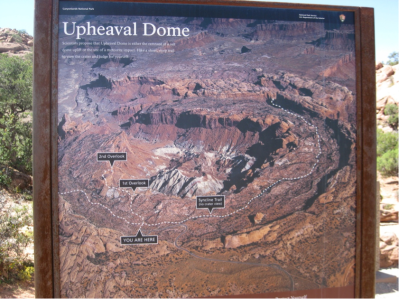
There is also an area within Canyonlands called Upheaval Dome. The “experts” still aren’t sure—even after all these years of studying it—whether it was a salt dome that exploded, or a meteorite impact. It was a bit of a hike—classified as a “short steep trail” to get to the overlook, so Brian was the only one who made that trek. We contented ourselves with the sign.

8

8

~~~~~~~To Be Continued~~~~~~~
What is Your Favorite Christmas Activity

11 Dec

On the Porch

Onisha Ellis

I'm a winner

Baking is my favorite Christmas activity. For me it beats decorating hands down. Usually I bake with my grandchildren but this year “the baking season” began in my daughter Rebekah’s kitchen which is a treat for me as usually we are six hundred miles apart. Today’s baking by Rebekah  yielded five different types of cookies,  loaves of vanilla tea bread and muffins large and mini. I contributed a fudge experiment which was a failure as fudge, but it will make some fantastic hot fudge sauce. My major contribution was washing up, you know all the bowls, spatulas, measuring cups and spoons and I enjoyed every minute of it. I have sweet memories of working side by side in the kitchen with my mother and aunts. I think we created some memories today too. Soon we will be back in North Carolina and three generations will be baking together.  I am sure I will be continuing my role as dishwasher-in-chief.

IMG_0695

Rebekah’s favorite recipe source Tea Time magazine


As a child, my mother and I had matching aprons. Hers wore out but mine was packed away and brought out for Rebekah, then my granddaughter, Karyssa. The apron Rebekah is wearing in the photo below is a memory apron with three generations of cooks embroidered on it. It will soon be time to create a new apron for my granddaughter.

IMG_0696

Vanilla tea loaves coming out of the oven.


My Colonial States Trip~Part 4

10 Dec

A Slice of Life

 Bill Lites

Bill Small Red Plane


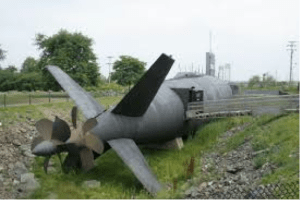
My first stop the next day was to visit the Albacore Submarine Museum in Portsmouth, NH where I took a quick tour thru the U.S. Navy’s unique research submarine that was used in the 1950s to study streamline hull/propeller designs along with various propulsion systems. I had toured other submarines, but this one was by far the most compact vessel I had ever seen. I don’t have claustrophobia, but I sure wouldn’t have volunteered for duty in that sub.

1

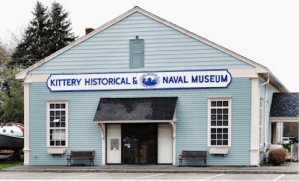
Just a few miles up the road I crossed the border into Maine and stopped to visit the Kittery Historical & Naval Museum in Kittery, ME where I discovered a small but amazing collection of local Kittery area historical memorabilia, including many maritime and military contributions.

2


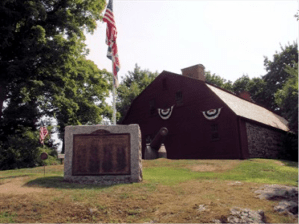
Another 5 miles up US #1 was the Old York Gaol (jail) which served as a colonial debtor’s prison in York County Maine as far back as 1656. The present structure was an expansion of the original jail and was in use from 1719 to 1879 when it was closed and converted to a school. It was not open when I was there, but I took time to take a peek thru the windows.

3

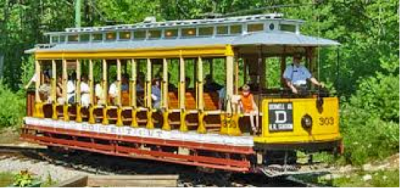
Then it was on north to visit the Seashore Trolley Museum in Kennebunkport, ME which is one of the oldest and largest museums of mass transit vehicles. The price of a ticket will get you a 30-minute ride into yesteryear on the museum’s 1918 electric trolley that was once used on the Eastern Mass Street Railway line.  

4

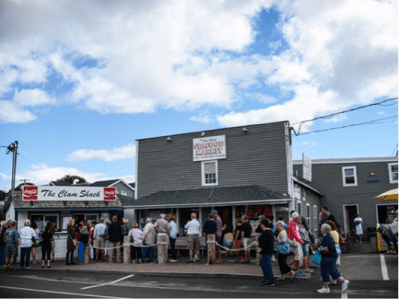
As part of my research for this trip up the Eastern Seaboard, I had Googled “Lobster Restaurants” and discovered that a guy named Mike Urban had come up with a list of the “12 Best Lobster Shacks in New England and one of them was “The Clam Shack” right there in Kennebunkport, ME.   So, of course, I had to try one of their lobster rolls for lunch. Yummy, was that ever good! If you are ever in Kennebunkport, try to find a place to park, and walk across the Kennebunk River bridge to “The Clam Shack, and whatever you do, don’t miss the opportunity to try one of their famous lobster rolls. You won’t be sorry.

5

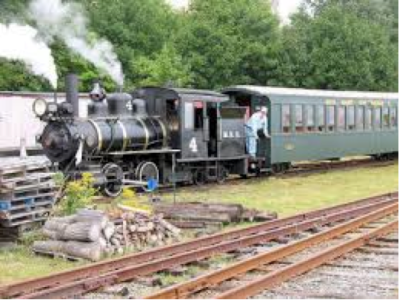
Next I visited the Maine Narrow Gauge Railroad Museum in Portland, ME where they have a collection of narrow gauge rolling stock and artifacts that were used in Maine during the late 19th century and early 20th century. The museum operates a 1½ mile long narrow gauge railroad, using vintage equipment, which carries passengers along the waterfront of Casco Bay and parallels Portland’s Eastern Promenade.

6

While I was in Portland, I visited the Portland Observatory which was built in 1807 and is the last surviving maritime signal tower in the United States. The observatory is an 86 feet tall hexagon shaped structure which sits atop Munjoy Hill, which itself is 222 feet above sea level. Originally located to be seen from the open ocean and the Portland wharfs, the observatory served as a primitive means of ship-to-shore communications for merchantmen and was even used successfully as a watchtower during the War of 1812. Then it was on north another 25 miles or so to Brunswick, ME where I spent the night.


     —–To Be Continued—–


Do Frogs Come to Sunday School

8 Dec

My Take

DiVoran Lites

Author, Poet and ArtistI’ve had a couple of nature surprises in the past few days. Sometimes on the trail, I find things I’ve never seen before, leaves with perfectly round bumps, cocoons that look like fiber eggs, berries or plums growing on bushes.

Sunday on the playground the children came upon yet another frog.( I’ve been leery since a kid once threw a lizard on me and I had to sit there acting like it was nothing when I wanted to scream and jump and run. It’s not good for you to reign yourself in like that, it can give you bad breath.)

When the children find a creature I rush to supervise their investigations. One day they found a large green frog and were so enthralled with it that they wore it out in spite of repeated warnings to leave it alone,  The next time they found a toad, they announced it, but pretty much did leave it alone after the lecture they got last time.

But Sunday’s frog was the absolute monster frog in every way, and everyone was 1.tube slideinterested in him. He was a Cuban tree frog like the one we have in our tool shedlette and he had ensconced himself inside our tube slide, in a way that made the slide unusable. I wouldn’t get a tube slide again, I have always been afraid there would be something in it that we wouldn’t care for.
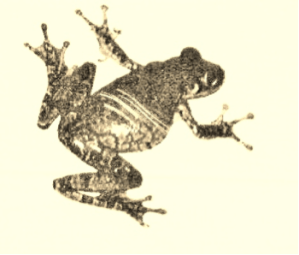

It did keep us entertains for quite some time. It was much bigger than the one at home and as ugly as all Cuban tree frogs are with their neutral color and their fat sucker-toes.

2

The thing was everyone needed to see it and in order to do that you had to get down, by yourself, and crane up into the tube slide. Every time someone did that someone else had to poke whatever body part that  was sticking out and yell, “Boo.” It sounded as if we were having our Halloween party right then and there.

I really wanted to see it, but I knew if they said boo while I was leaning into the slide exit I would jump and bump my poor old head that has already been bumped so many times it’s a wonder I have any sense left at all. I begged the children not to say boo. Have I told you how big he was? He was about the size of a dessert bowl.

3


The one on the left, maybe a bit smaller, but not much. I saw it for myself and I can hardly believe it.

Anyhow the kids didn’t poke me or say boo. They must love me a lot to do that for me. After I emerged, the boys kicked the plastic slide and hit it with sticks, even though they stopped every time I told them to stop.

The level of excitement was about the same as if someone had yelled big spider or snake.

.

Suddenly, from out of nowhere came this blood-curdling squeal that made all the wiggling and kicking cease immediately. We looked at each other with big eyes, our hair standing on end. The boys wanted mohawks, anyhow, now they had them. The squeal sounded like a warning or a distress cry. It came again, only not so authentic sounding this time. Tommy was at the top of the slide, it could well have been him calling down the slue. He confessed that some of it was. So I was stuck. Can frogs really squeal like that?

We do know that frogs (and many other critters) come to Sunday School. Now if you want to know whether they squeal like banshees or not, click here.

http://www.youtube.com/watch?v=UCAFAbldfSg

My Colonial States Trip Part 3

3 Dec

A Slice of Life

Bill Lites

Bill Stars Plane

My Boston friend had suggested I take the “T” Commuter train from outside the city to avoid traffic and parking problems. So I plugged the Braintree “T” Station address into my Garmin (We call her Greta) and headed north. When Greta announced “Arriving at address on the left,” all I saw was a row of warehouses. I drove around looking for the station with no luck. Finally I asked a guy coming out of one of the warehouse buildings where the train station was. He pointing and said, “Turn at the light and then it’s just over there a few blocks.” I followed his directions and found the station, parked in the parking garage and bought my round-trip ticket at the kiosk. I boarded the “Red” line train to the “Downtown Crossing” station, where I transferred to the “Orange” line for the “State” station, where I transferred to the “Blue” line for the “Aquarium” station, where I got off and found the City View Trolley Tours. Shooo, was that intense!

1

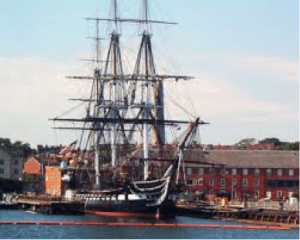
The tour of Old Boston and the Inner Harbor was great, with on–off stops where I could visit the many famous “Freedom Trail” landmarks such as the Old North Church, from where it is said Paul Revere received his lantern signal to begin his famous ride to warn the patriots “The British are coming!”; The Old South Church (or Third Church in Boston), which was used as The Meeting House (as a bit of trivia, in 1773, Samuel Adams gave the signals from the Old South Church Meeting House for the “War Whoops” that started the Boston Tea Party); The site in the harbor where the Boston Tea Party took place; and of course, a self-guided walk-thru tour of the USS Constitution and museum.

2

I was especially interested in the USS Cassin Young (DD-793) Museum located there in Boston harbor, because one of my tours of duty with the U.S. Navy was aboard the USS Gurke (DD-783). The Cassin Young was a (1943) Fletcher-class destroyer, whereas the Gurke was a little later (1945) Gearing-class destroyer, but they were overall very similar. To say walking thru that destroyer brought back memories is an understatement.

3


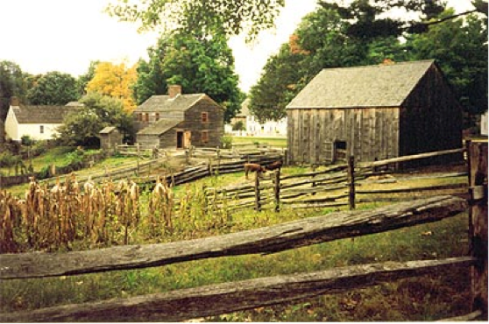
When I got off the “T” train at the Braintree station that afternoon, I looked at the parking garage, and it was only 4-stories high. I distinctly remembered that the parking garage where I had parked that morning was 5-stories. After many questions to the station attendants, I finally realized that the guy who had given me directions that morning, for some reason, had directed me to the “Quincy Center” station instead. Now I had to buy a one-way ticket and catch the next train back one stop to the Quincy Center station to find my car. What a mess that was, and a big waste of time! Once I got to my car, I headed for the U.S. Naval Shipbuilding Museum in Quincy, Ma to see the heavy cruiser USS Salem. I didn’t spend much time at that museum as I wanted to visit the Sturbridge Village in Sturbridge, MA which is a living museum that re-creates life in rural New England during the 1790s thru the 1830s. I tried to get there before they closed, but that didn’t work out because “Greta” took me to the wrong location again. I finally found the Village, but by then they were closed, so I called it a day, had dinner and went to the motel for some rest and TV.

4


—–To Be Continued—–


Worries

1 Dec

3

My Take

DiVoran Lites

Author, Poet and ArtistI’ve heard people say that they never worry, especially Christians since they condemn worry as a sin. They’re right, it comes from fear. But have you ever really met anyone who never worries at all? I haven’t. I sometimes worry about the strangest things. I worry about being useful to God. I worry about doing everything right so that the ones I love will love me, I worry about our health as we grow older, and here’s one that goes with love, I worry about being alone and lonely.

Lately, though I’ve been getting good results from praying about my worries as they come up. I pray that I will know the real truth of a situation, I thank God for it, and I let go of trying to figure it out for myself.

The number one human rule if you’re worrying is to do something good for somebody else. But you know what? I then worry about exactly what I should do. I wish I had not spent all the brain power I’ve spent trying to figure out what volunteer organization to join or who needs my help.

One day, I just said, okay. I give up. I don’t want to join a new organization. I don’t want to add to my should do list, and I don’t need someone else planning things for me to do for other people.

After giving up I told the Lord, it was his job to tell me what to do and when. I would watch for his His movement. Meanwhile I could stick with what I knew beyond doubt were my personal callings. For me it would be things like keeping my husband happy and well fed and both of us in the best health possible. It would be having my family’s backs, worship, prayer, writing, teaching Sunday school. That sort of thing.

But do you need to know what I’m called to do? I’d say no. I’d say you need to know what God has called you to focus on.

What’s happening now is that I do have time to fulfill my calling or callings, but also He works divine appointments and divine interruptions gently into my routine so that life never gets boring. As a matter of fact, I’m having more fun, feeling less lonely, and enjoying more adventures than ever before in my life. So rules are okay, but divine inspiration and serendipities are so much better.

An Amazing Adventure~Part 6

30 Nov

SUNDAY MEMORIES

Judy Wills

JUDY


Heading to Utah, we stopped at the Pipe Spring National Monument near Colorado City.  It is a very interesting place—built over a natural spring.  (an interesting footnote is that during World War 2, a series of tankers were built and named after National Parks.  Here is a picture of the S.S. Pipe Spring, courtesy of National Park Service)

I was intrigued to learn that the fort at Pipe Spring was home to the first telegraph station in the state of Arizona.  While not on the original line from Washington D.C., or from San Francisco, the Mormon church built its own adjunct line linking communities north and south to Salt Lake City.  It was called the Deseret Telegraph.  There was a room set up in the fort with the telegraph equipment.  It was manned by women usually, the first being only 16 years old.

We were surprised to learn that Texas Longhorn cattle had been brought to Pipe Spring, and were an integral part of that culture.  There are descendants of the original cattle still there today.

5

From Pipe Spring we drove north into Utah, and Zion National Park.  Unfortunately, we decided to take the last eight miles on a road that was barely on the map!  It was full of ruts and holes and took WAAAYYY too long to get to our destination!  But make it, we did, and decided it was the worst part of the trip so far.  Also unfortunately, it was the most direct route to get to Zion.

6

Brian wanted to hike to The Narrows—a gorge where there are cliff walls a thousand feet tall with a “narrow” opening through them.

7

The Virgin River that runs through there can be relatively calm, or—with flash floods—can be very dangerous.  Fred, Karen and I did a short hike, but then turned back to wait for Brian.  There is no way to hike through The Narrows without getting into the river and depending on the time of year, getting your feet, or knees, or entire body wet.

8

It sounded like fun, and we saw plenty of wet, happy folks emerging, but my knees just wouldn’t let me hike very far.  We later took a shuttle ride through the park and got some great pictures.


We also saw some deer, and got some good pictures of them.

11


We learned that in 1968, Butch Cassidy and the Sundance Kid was filmed in the park.

From Zion National Park, we stopped for supper in Hurricane, Utah.  We ate at Durango’s Mexican Grill.  Really good—very similar to Moe’s Mexican Grill, if you are familiar with that.

From there we drove to St. George, Utah.  We stayed in the Lexington Hotel there.  We were about half-way through our trip, so we did our laundry there—enough to keep us in clean clothes until we returned to Orlando.

~~~~~~~To Be Continued~~~~~~~