
A Slice of Life
Bill Lites
Day 4 (Sunday, Oct. 2, 2016)
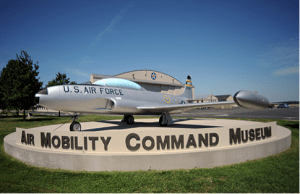
I was up early today in order to make the drive to the National Museum of the USAF here in Dayton, Ohio. I knew I was going to spend a lot of time at this museum today, and because of that, I wanted to be one of the first to get one of the many electric carts they provide for visitors with bad knees like mine.
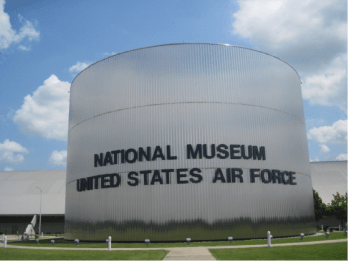
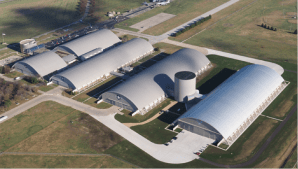
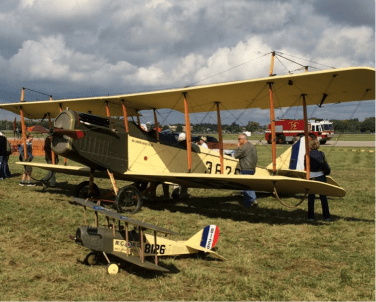
I believe this is the largest military aviation museum in the world, with 360+ aircraft, and is laid out (mostly) chronologically in four huge hangers. All of the aircraft in this museum have been beautifully restored, and displayed, in such a manner to allow photographs to be taken from the best possible angles. In the first Hanger, are aircraft examples from the beginning of American aviation history, through those used during World War I (The Early Years Gallery).

The Early Years Gallery
And then, there are the huge variety of aircraft used by the USAF during the WW II years, which are displayed in the (World War II Gallery).

World War II Gallery
The second Hanger, consists of aircraft used by the USAF during the Korean War, and are located in the (Korean War Gallery).

Korean War Gallery
The aircraft used by the USAF during the Vietnam War era, are also located the second hanger, in the (Southeast Asia War Gallery).
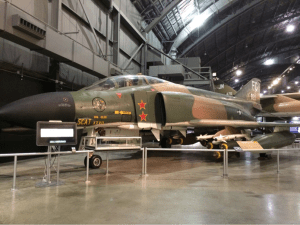
Southeast Asia War Gallery
The third Hanger houses a large variety of aircraft used by the USAF during the Cold War era, and are located in the (Cold War Gallery). Also located in the third Hanger are many of the modern aircraft being used by the USAF as part of their current operations.
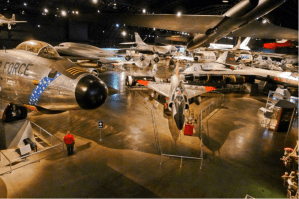
Cold War Gallery
The third and fourth Hangers are separated by the (Missile Gallery), which displays many of the USAF offensive and defensive rockets and missiles which have been developed and deployed over the years.
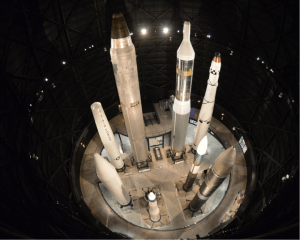
Missile Gallery
The huge new fourth Hanger houses aircraft used by past U.S. Presidents while in office, from Franklin D. Roosevelt to Bill Clinton, and are located in the (Presidential Gallery).

Presidential Gallery
The many different types of aircraft used by the USAF Airlift Command, to move personnel and equipment where needed around the world, are located in the (Global Reach Gallery) of the fourth Hanger.

Global Reach Gallery
There is a Space Shuttle Exhibit, including the CCT-1 Crew Compartment Trainer, various satellites, and a Titan IVB Rocket located in the (Space Gallery) section of the fourth Hanger.

Space Gallery
The museum’s largest aircraft, the XB-70, and other aerospace related vehicles that the USAF has sponsored, for research and development projects, over the years are located in the (Research & Development Gallery) of the fourth Hanger.

Research & Development Gallery
The majority of these aircraft had been on display somewhere in one of the three hangers, or outside, the first time I visited the USAF museum in 2009. With the opening of the new fourth hanger in 2016, many had been rearranged or relocated to new areas within the four hangers. As a result, it did not take me as long to go through, and view all the aircraft in the four hangers, as I had originally expected. It still took most of the day to see everything.
Since many of the Wright Brothers aviation historical points of interest here in Dayton are close together, I spent the rest of the afternoon visiting as many of those locations as time allowed. These short visits to many of the sites on the “Aviation Trail” included stops at the Dayton Aviation Heritage Historical Park, the Huffman Prairie Flying Field, the Wright Brothers Aviation Center, and the Aviation Trail Museum. Stay tuned for details about these visits in tomorrow’s blog.

On the way back to the motel I stopped in Englewood, Ohio for a delicious meal at the Cazadores Mexican Food Cantina. Their EL Morro Special, consisted of grilled chicken strips cooked with pineapple and Mexican pork sausage, topped with shredded cheese and fresh green onions, served over a flower tortilla. I had a small side salad with guacamole and sour cream. The combination made for an outstanding meal. Then I topped it off with a dish of Mexican Flan for dessert.

—–To Be Continued—–






























 boarded up store fronts, while the Kimo Theater and the Indian Jewelry stores are still going strong. “Old town Albuquerque is a thriving tourist center, and the Rio Grande River actually had water in it. Of course, most of that water had probably come from the heavy rains and flooding in Colorado. The city has expanded toward all points of the compass, and is no longer the Albuquerque where I grew up. Now it’s just another big city, with all the big city problems, as far as I am concerned.
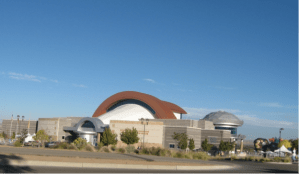 would have been really disappointed if I had traveled all that way for the Balloon Fiesta, only to have rainy and windy weather the only two days I was there. Actually, I hadn’t even realized I was going to be in Albuquerque during the Balloon Fiesta until I had made all my motel reservations, and couldn’t change them. However, the Anderson-Abruzzo International Balloon Museum Foundation has built a beautiful big Balloon Museum since I had last been in Albuquerque, so I was able to visit the museum in spite of the bad weather.
  that had always been there since I was a teenager. We had heard all kinds of stories about the closed society of “Los Penitentes” or “The Brothers of the Pious Fraternity of Our Father Jesus the Nazarene” who lived somewhere in the Tijeras Canon area, and practiced their mysterious rituals there. They were known for their ascetic practices, which included self-flagellation in private ceremonies during Lent, and processions during Holy Week which ended with the reenactment of Christ’s crucifixion on Good Friday. Thus, the crosses we guessed. I never knew anyone who witnessed one of their ceremonies or knew a Penitente personally.
 Then it was on thru Moriarty, NM with its Tee-Pee Motel and Santa Rosa, NM, which I had missed on that scary day, on my way to Albuquerque, just a few days before. Then I passed thru Tucumcari, NM, back across the border into West Texas, thru Wildorado,TX with its many wind generators, and finally into Amarillo, TX.
 the Texas Air & Space Museum located at the Rick Husband International Airport, and the Kwahadi Museum of the American Indian located on I-40 just east of the city. This American Indian Museum had some of the most beautiful paintings, and when I ask about them, was told most of them were painted by an author named Thomas E. Mails, as illustrations for his book “Mystic Warriors of the Plains.”









 Old Things R New