Tag Archives: Travel

Marti Gras-German Style

5 Mar

SUNDAY MEMORIES

Judy Wills

JUDY


 Now that the Pre-Easter time is upon us, I want to share a memory with you.

We were blest with being able to live in West Germany for a total of six years. We spent three years in Wiesbaden, then 10 years later, we returned to Germany for another three years in Heidelberg.   Both tours of duty were precious to us. God gave us the opportunity to live in a country that wasn’t our native land, to see the beauty of other parts of the world, and to know another culture. I wish every American citizen could have that experience – to see the United States from the viewpoint of other countries. It certainly helped us to see what a wonderful and free country we live in.

One memory has stayed with us, that is a most fun memory. Our first Easter-time in Heidelberg came, and we learned of a Marti Gras parade planned for downtown Heidelberg, along the fussganger (literally foot street – no vehicles allowed). The girls and I wanted to attend, but Fred was unable to get away from his job.

We actually lived not too far from downtown, but had planned to take the local bus down. We started out walking, but every time we saw a bus approaching, it was absolutely packed with people, and driver just shook his head at us. So we eventually walked our way downtown.

There had been a few rumors that, if the U.S. military band marched in the parade, as planned, reprisals against them would happen. It made us a bit apprehensive, but then decided to go, anyway. As it turned out – no mishaps, and we were grateful.


1

Credit Google Search

We found a spot on the sidewalk and planted ourselves there. As it turned out, there was a tiny German grandmother standing just in front of us. She probably didn’t reach my shoulders, even with her sensible heeled shoes on. She walked with and supported herself with a cane. We found it amusing that, when some teenage girls tried to stand in front of her, she poked them with her cane and told them to “get lost” (my words). They moved!

And then the parade started. It was a fun-filled parade, and we enjoyed the floats – and the U.S. military band – very much. Those on the floats would throw candy out along their way. I encouraged our girls to pick up what they could (each piece was wrapped). And then this sweet little lady would look at our girls and point out – with her cane – pieces of candy they had missed. When I suggested they offer some to her, and they did, she just smiled and shook her head.

 

2Credit Google Search and Dreamstime

I guess one of the most fun things that happened, was when the parade had slowed down (as parades happen to do occasionally), and one of the men on the float in front of us jumped off, came over to the little lady, took her chin in his hand and said “Oma!” – that’s German for “Granny!” She ducked her head, turned to us slightly, and just blushed with a grin on her face! It was adorable.

As the parade was finishing and the crowd began to disperse, we thanked her with our limited German. She just made the experience for us.

What a wonderful memory. Both of our daughters remember that experience, and we treasure it.

Here are some definitions to help you out:

Fasching: pre-Lenten festivities celebrated in grand style in mostly the predominantly catholic regions of the German-speaking countries.

Fasching is Germany’s carnival season. It starts on the 11th day of November at exactly 11minutes after 11am and ends at the stroke of midnight on Shroud Tuesday – often referred to as Fat Tuesday (the Tuesday before Ash Wednesday).

A 2016 Dawn Patrol Rendezvous Trip~Part 9

1 Mar

A Slice of Life

Bill Lites

Bill Cross Plane


Day 9 (Friday Oct.7, 2016)

After a few direction problems with Greta, my first stop this morning was to visit the National Automotive & Truck Museum located in Auburn, IN. This museum consists of 200+ vehicles, located on two levels, representing mainly cars from the 1950s, 1960s, and 1970s. The cars were packed so close together that it made it difficult to get a good photo of any individual car or truck.


1


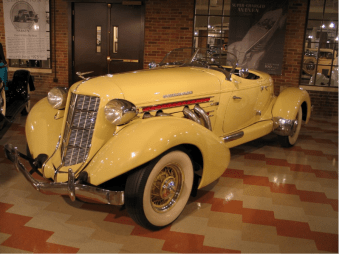
In the same block, was the Auburn-Cord-Duesenberg Automobile Museum. This was one of the most fascinating museums that I’ve visited. It has 7 galleries which display some 125 beautifully restored 1903-1937 cars. I was surprised to learn from one of the roving docents that, during these years, the Auburn was what today we would have considered the Chevrolet of its time; the Cord was considered the Oldsmobile; and the Duesenberg was considered the Cadillac.


2

Each of these cars was beautifully designed, and technically advanced for its time. What little I had known about these cars, over the years, had led me to believe that each one was to be considered at the top of its class for its time.


3

    1935 Auburn Boattail Speedster

4

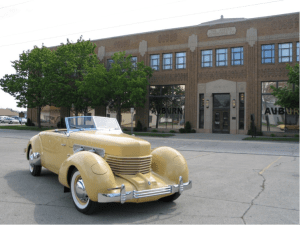
                                                     1936 Cord Convertible Coupe


4b

1932 Duesenberg Model J Convertible Coupe


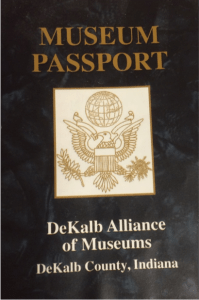
These two museums were among several auto museums, in the Auburn area, that had put together a “Museum Passport” type brochure, to advertise each of their museums. When I showed my passport, each museum would give me a discount on their admission price and stamp my passport. This handy passport had the name, address, and phone number for each of the eight cooperating museums in the Auburn area.


5


This really helped solve the rest of my direction problems with Greta, in Auburn. When I arrived at the next museum location, I discovered that four of the other museums, I wanted to visit there in Auburn, were all located in this same museum complex.


6


First on the list was the Kruse Automotive & Carriage Museum, which features a variety of vehicles, including beautifully restored Classic Cars, Custom Hot Rods, TV/Movie Super Hero cars and costumes, Indy race cars, and Monster Trucks. There were also early antique horse-drawn carriages of all types (including several British Royal Carriages) dating from the late 1700s.


7


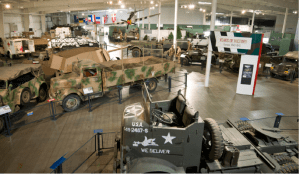
Next was the National Military History Center, located in the same building. This museum has a great display of military vehicles, equipment, and memorabilia to help present future generations with a better understand of the unique role of the U.S. Military Armed Services.


8


Located there in the same Museum Complex, was the Gallery 326 Antique Mall which was closed the day I was there. However, it appears from their web site, that this is an auction center which boasts of over 100 dealers of high-quality collectibles including vintage automobiles.


9
Next I visited the Early Ford V-8 Foundation Museum, also located there in the Museum Complex. This small museum consists of the history of the Ford Motor Company vehicles produced from 1903 to the present, with emphasis on the 1932-1953 Ford cars, utilizing the flathead V-8 engine and its many variants.


10


Next I visited the Hoosier Air Museum, located a short distance from the Auburn Museum Complex. This was a very small museum, with about a dozen aircraft in one hanger. The tour guide was, I believe, the curator and part owner of the museum, and had lots of details about each of the museums aircraft.


11


By now I was getting pretty tired and decided to head for tonight’s motel, located on the outskirts of Montpelier, Ohio. After checking in, I asked the desk clerk for recommendations about a good restaurant in the area and he said, “Try the Four Seasons Restaurant next door, they have good food.”  Well, the restaurant next door looked to me like a pretty small Mom-&-Pop type place, so I drove down the highway into Montpelier and found no restaurants. I turned around and drove the other way down the highway for a ways, and found no restaurants. So, I gave up and went back to the Four Seasons Restaurant, and had one of the best Lasagna dinners I’ve ever had. I should have known. Right?


12


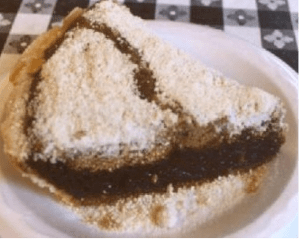
I had saved half of my Shoofly Pie from last night, and had that for dessert again tonight back in the motel. That really went well while I watched TV. Yuuum!


13


—–To Be Continued—–

Memories of New Mexico~Part 2

26 Feb

SUNDAY MEMORIES

Judy Wills

JUDY


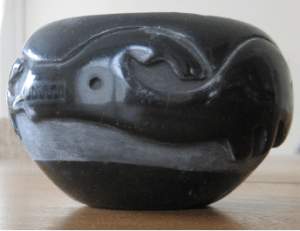
 I have some mementos of New Mexico, and I would like to share them with you. Some of the Native Americans that lived in the pueblos out and around Albuquerque, made some wonderful black pots. I’m sure that originally, they were actually used within the house for some household chore, but these little ones are just for sitting on a shelf, and to be enjoyed by all. At least I’ve always enjoyed them. However, they were quite expensive, and I was unable to purchase any.

My wonderful sister-in-law, DiVoran, had this little pot sitting on her shelf for as long as I can remember. We made a trade one time – she got some gold earrings, and I got her little black pot! It was an even-trade for both of us.


And Fred’s parents had this black pot, that I admired so much. So when they passed away, I was able to inherit the pot, and have enjoyed it ever since.


2


They both sit on a shelf, along with this adorable brass road runner that I also inherited from Fred’s parents. They had him a long time, and I admired him for all that time. He appealed to me because the road runner is the New Mexico state bird.


3


Some newer art forms from New Mexico also have appealed to me. The last time we were in Albuquerque (Fred’s brother still lives there), I purchased this little glass cactus. I thought it was really cute – and it is almost a prickly as a real cactus!


4


For some reason, Kokopelli has become a favorite Native American icon of mine.

I just think he’s cute – and he’s playing a musical instrument. From Wikipedia, I gleaned the following:

Kokopelli is a fertility deity, usually depicted as a humpbacked flute player (often with feathers or antenna-like protrusions on his head), who has been venerated by some Native American cultures in the Southwestern United States. Like most fertility deities, Kokopelli presides over both childbirth and agriculture. He is also a trickster god and represents the spirit of music.

This little statuette sits on one of my shelves for me to enjoy. I have forgotten what this type of metal-work is called.


5


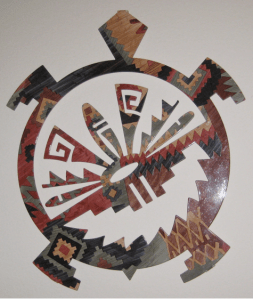
I also have another type of that art work – it is a turtle. I saw this the last time we were in Albuquerque, and it appealed to me. I think it’s cute.


6


Those of you old enough, and interested in car racing – especially the Indianapolis 500 – might remember the Unser brothers. They were New Mexico boys, and back in the 1960’s-1980’s had an auto shop in Albuquerque, designed for maintaining race cars. Al Unser won that race four times, his brother, Bobby won it three times, and Al Unser, Jr. won it twice! You might say it was in the family’s blood! There is a Unser Racing Museum in Los Ranchos de Albuquerque that is open to any and all.


7

Credit Google search and Rita Wechter

A 2016 Dawn Patrol Rendezvous~Trip Part 8

22 Feb

A Slice of Life

Bill Lites

Bill Stars Plane


Day 8 (Thursday, Oct.6, 2016)

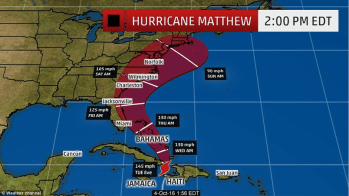
Last night was a little hectic. DiVoran and the rest of my family were all dealing with hurricane Matthew, as it heads for our homes in East Central Florida. And here I was, trying to do my part to help them by remote control in Indiana. It was after midnight when I finally got to bed. I was only able to sleep until 3:30, when I had to get up and make notes about more things I needed to remember to tell DiVoran about house preparations.


1


So, this morning after I talked over my list with DiVoran, I got ready and headed east to visit the Studebaker National Museum, located in South, Bend IN. This was an absolutely fabulous museum, consisting of three levels of beautifully restored Studebaker automobiles and associated vehicles/products, which the Studebaker Corporation has manufactured over the years.


2


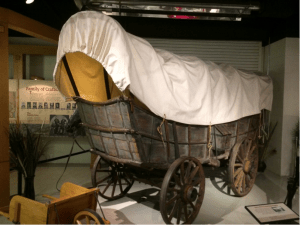
The chronological history of the Studebaker Corporation, there at the museum, begins with the original hand-built Conestoga type wagon that John C. Studebaker designed and built, around 1835, to move his family from Pennsylvania to Indiana.


3


By the time I got finished looking at all of the fabulous Studebaker cars and associated vehicles/products, the morning was almost gone. So, I decided to skip The History Museum there in South Bend (which was just around the corner from the Studebaker Museum), and head straight for the Basilica of the Sacred Heart, at the Notre Dame University located in Elkhart, IN. To my regret, I discovered that vehicle access near the Basilica area was restricted, so this photo, from a distance, was all I could get.


4


Next I checked out the National New York Central Railroad Museum, also located there in Elkhart, IN.  This turned out to be a very small museum with mainly local historical railroad memorabilia and a few pieces of well-worn rolling stock. I didn’t stay long.


5


Yesterday while visiting the Old Michigan City Lighthouse, a couple I met there, mentioned that if I was heading to Elkhart, I should be sure to visit the National RV Museum while I was there. So, that is where I was headed next. This turned out to be a very interesting museum, consisting of examples of RV type vehicles dating from the early 1920s to the present day. It has always amazed me how creative people have been, when it comes to designing and building mobile recreational vehicles over the years.


6


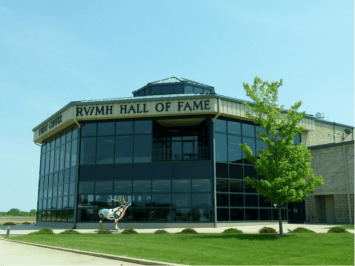
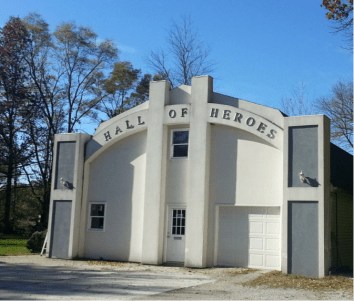
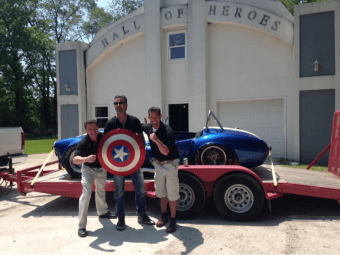
By now time was getting short, and I headed for my next visit at the Hall of Heroes Museum, also located there in Elkhart. This amazingly small museum was really fascinating (Check out the “Hall of Heroes” website for the amazing details of this unusual museum). The owner and curator, Allen Stewart, gave me a private tour of his museum, which houses over 60,000 comic books, 10,000+ toys and figures, and tons of other superhero related memorabilia. Allen’s collection includes a copy of the very first Action Comics comic book, which introduced the Super Hero, Superman, in 1938.


7


Recently I’ve been watching the “Fast N Loud” TV series, on the Discovery channel, and was surprised when one of their episodes happened to be when Richard Rawlings (Owner of the “Gas Monkey Garage” in Dallas, Texas), went to Elkhart to buy Allen Stewart’s ”65 Iron Man Shelby Cobra” from the Hall of Heroes Museum collection.


8


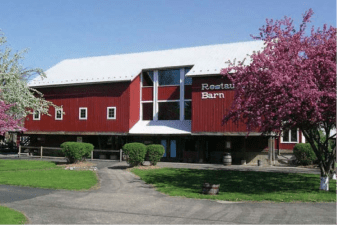
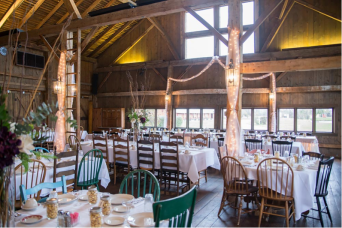
I had been told that this area contained a large population of Amish and I was anxious to try some Amish food at a local restaurant. As it turned out, I had researched this idea before my trip, and had decided to try the Amish Acres Restaurant Barn, located some 15 miles south of Elkhart, in Nappanee, IN. This restaurant is part of an 80 acre Old Order Amish* farm, homesteaded by Moses Stahly in 1873, and whose nine original buildings have been relocated and restored to create an attraction. The Amish Acres attraction includes a restaurant, the Round Barn Theatre, a one-room school, a blacksmith shop, an apple cider mill, a maple sugar camp, a mint distillery, an ice house and bank barns.


9


* Wikipedia: The Old Order Amish are a North American ethno-religious group consisting of some 2000 local churches. There is no formal church organization to bind them together, but they are linked by common faith, traditions and ancestry. In 1693, led by Jakob Ammann, the Amish separated from mainstream Mennonites.


10


I was pleasantly surprised with the food, but disappointed because it was served family style. There was way too much food for me to eat, but I was not allowed to take any of their delicious food back to the motel with me. They did however let me take a slice of their wonderful Shoofly Pie with me for dessert. Go figure?


11


So, with a full tummy, I headed for the motel to check on the status of Hurricane Matthew, see how DiVoran was doing, record today’s activities, and prepare for tomorrow’s adventures.


12


—–To Be Continued—–


A 2016 Dawn Patrol Rendezvous Trip~Part 7

15 Feb

A Slice of Life

 Bill Lites

Bill Small Red Plane


Day 7 (Wednesday, Oct.5, 2016)
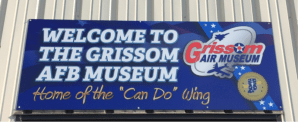
I took my time getting ready this morning because my first stop today was to visit the Grissom Air Museum (located only about 10 miles north of the motel) and just south of Peru, IN. Since they didn’t open until 10 o’clock, I slept in and had a leisurely breakfast. The museum had a small memorabilia area with some cockpit simulators and a nice collection of static displayed aircraft outdoors.


1


Next on the list was the Kersting World of Motorcycles Museum, located 4 miles south of North Judson in Winamac, IN. This museum turned out to be situated in the middle of cornfields on all sides, and Greta and I had a difficult time locating it. I was given a personal guided tour of the museum, by the 80-year old founder and owner, Jim Kersting. Jim told me that he built his first motorcycle at age 12, and that he called it the Simpletag (See the museum’s website for the fascinating story of how the motorcycle got its name).


2


The first motorcycle of Jim’s collection was a 1931 Indian 4-cycinder, which he got at a farm auction, and his collection has been growing ever since. Jim told me the story behind many of his various 100+ machines in the museum, and was especially proud of the ones he raced at Daytona, Florida when he was younger. He had some great stories to tell of his adventures.


3


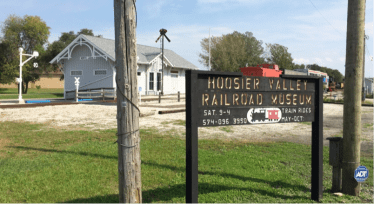
Next, just up the road a ways, I had planned to visit the Hoosier Valley Railroad Museum located in North Judson, IN. However, it turned out that the museum is only open on Saturdays, so the best I could do was to stop and take a picture of the station.


4


My next stop turned out to be the farthest west I would go on this trip. The plan was to visit the Indiana Aviation Museum, located adjacent to the Porter County Regional Airport in Valparaiso, IN. When I couldn’t find the museum, I stopped at the airport and talked to a friendly young man. He informed me that the museum had evidently sold all their airplanes, and closed the museum a year or so ago. They still had an Internet website listing, so I was surprised to learn of the museum’s closing.


5


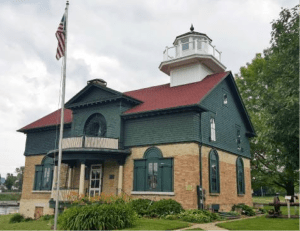
Even after getting off to a slow start this morning, I was still running a little ahead of schedule by now, so I headed northeast a few miles to visit the Old Lighthouse Museum, located in Michigan City, IN. This was a very small lighthouse building that has been converted into a museum. The ground floor of the building is made up of mostly local lighthouse memorabilia, and I was offered the opportunity to view the yacht harbor from the top of the lighthouse structure. I declined this offer, as I’m sure my knees would have given out before I got to the top. The elderly museum curators understood completely.


6


Next, I headed southeast to visit the La Porte Historical Society Museum, located in La Porte, IN. This was a fabulous multi-level museum, containing a huge collection of local historical memorabilia of all sorts. This part of the museum included fully furnished living room, dining room, and kitchen representations for the 1920s, 1930s, 1940s, and 1950s.


7


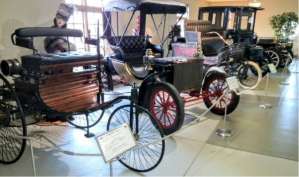
The Door Prairie Auto Museum, which once was a museum by itself, has now been incorporated into the La Porte Historical Society Museum, and takes up the entire second floor of the building. This automobile museum has some of the most unusual examples of the early American auto industry, and each automobile has been beautifully restored for museum display and public auto shows.


8


By now it was time to head for the motel, for a marvelous meal of leftover Cracker Barrel grilled catfish with green greens, corn, and one of their famous hot buttery biscuits and honey for dessert. One of my favorite meals.


9


—–To Be Continued—–

A 2016 Dawn Patrol Rendezvous Trip Part 6

8 Feb

A Slice of Life

 Bill Lites

Bill Cross Plane


Day 6 (Tuesday, Oct. 4, 2016)
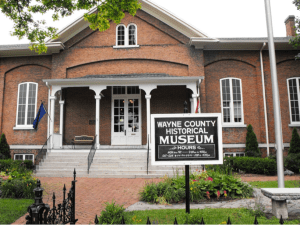
I headed west, out of Dayton this morning, on my way to visit the first museum on my list for today. The Wayne County Historical Museum is located just across the border, in Richmond, Indiana. This was one of the most interesting historical museums I have ever visited. Created by Julia Meek Gaar (at age 71) in 1930, she selected the 1865 Hicksite Quaker Meeting House for her museum. She filled the museum with many of the items she had purchased, over the years, during several of her worldwide trips.


1


The Lindemuth collection was added to the museum in 1954. There were also automobiles and an airplane, included as part of the museum’s collection. Many of these items represented the early industrial years in and around the Richmond, Indiana area.


2


Just around the corner, there in Richmond, I visited the Model “T” Museum. This small museum displays 14 Model “T” Fords spanning the early years (1908 to 1927). This history of the Model “T” production industry provided me with many new and interesting details about the early manufacturing processes, and body style variations, of Henry Ford’s Model “T” automobiles.

3


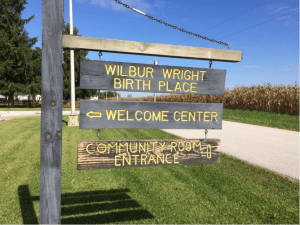
Next on the list today, was a visit to the Wilbur Wright Birthplace & Museum in Hagerstown, Indiana. Born in 1867 Wilbur said, later in life, that he and Orville were initially drawn to an early interest in aviation by a toy helicopter (based on an invention by French aeronautical pioneer Alphonse Penaud), that their father gave them as a gift when he was 11 years old.


4


Wilbur and Orville of course, went on to improve on the design as their interest in aerodynamics grew, and their creativity turned out to be endless. I was also interested to learn that Wilbur Wright’s father was a traveling minister in the Ohio region during the middle to late 1800s. As it happens, my grandfather was also a traveling minister, in Louisana, about that same time period.


5


Just a few miles north I visited the National Model Aviation Museum in Muncie, Indiana. Even though the National Model Aviation Association headquarters is located on a 1000+ acre site, I was surprised to see how small the headquarters and museum buildings were. I was however, impressed with the museum’s collection of model aircraft and model aircraft engines, dating from the early 1900s.


6


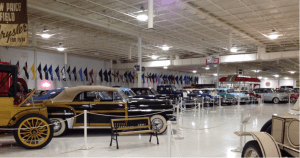
Next on the list was a visit to the Kokomo Automotive Heritage Museum located in Kokomo, Indiana. This was a very impressive museum that displayed 300+ beautifully restored automobiles, from many different manufactures, dating from the early 1900s to approximately 1970.


7png
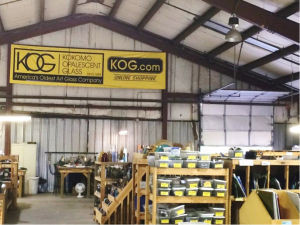
The Kokomo Opalescent Glass Company was located just down the street from the Kokomo Automotive Museum there in Kokomo. This glass company prides itself in the creation of beautiful original stain glass windows, decorative art pieces, and blown glass creations. I was unable to get a tour of the factory while normal working operations were going on, but I did talk to one of the stain glass workers at length, about how the glass company created custom orders and speculation pieces.


8


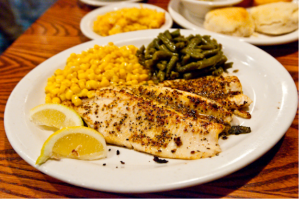
Dinner tonight was a great meal, at the local Kokomo Cracker Barrel restaurant, where I had their grilled catfish, green beans, sweet corn, and one of their famous biscuits with honey for dessert. Yummy! There was plenty left over for a repeat tomorrow evening. Double yummy!


9


—–To Be Continued—–

A 2016 Dawn Patrol Rendezvous Trip~Part 5

1 Feb

A Slice of Life

Bill Lites


Day 5 (Monday, Oct. 3, 2016)
Since I had attended the 2016 Dawn Patrol Rendezvous Airshow, and seen the many existing and new aircraft additions at the Museum of the United States Air Force (my two main reasons for this trip), I was a little ahead of my planned schedule for today. So, I decided to visit several local Wright Brothers affiliated locations there in Dayton. First on the list, was to check out the Huffman Prairie Interpretive Center located just down the road a short drive from the USAF Museum. The Center’s exhibits and films focus on the early achievements of the Wright Brothers, that took place at the nearby Huffman Prairie Flying Field.


1


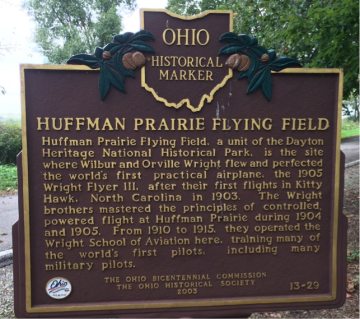
Next I drove over to the Huffman Prairie Flying Field, to see the actual field where Orville and Wilber performed about 150 flights during 1904 & 1905. This effort is what led to the development of the 1905 Wright Flyer III, which they considered to be the first practical airplane (the original 1905 Flyer III is now housed at the Wright Brothers Aviation Center).


2


Now I made my way a few miles south, to visit the Dayton Aviation Heritage National Historical Park.  This Park commemorates three of the important aviation historical figures; the Wright Brothers and Paul Laurence Dunbar, and how their lives came together.


3


The center also exhibits re-creations of the Wright Brothers engineering office, work shop, and one of the Wright Brothers bicycle shops across the walkway.


4


A short distance west across I-75 I visited the Wright Brothers Aviation Center, located in the Carillon Historical Park. This is where the original 1905 Flyer III is housed, along with many other Wright Brothers artifacts.


5


The beautifully restored 65 acre Carillon Historical Park is home to many historic buildings and exhibits, associated with the history of technology that has taken place in and around the Dayton area. It also honors the contributions of the many Dayton residents who have been part of that history, dating from 1796 to the present.


6


After leaving Carillon Park, I swung around a few blocks to check out the historic Patterson Homestead. This beautifully restored mansion was built by Robert Patterson on part of the 2038 acre Rubicon farm, where three generations of Patterson’s lived. As it turned out, Patterson’s grandsons, John and Frank Patterson , who also lived in the house as young children, would eventually go on to found the National Cash Register Company (now NCR Corporation) in 1884. I wasn’t interested in touring another mansion today, so I opted to head for the next museum on my list for today.


7


Now it was back across I-75 a few blocks, to take a look at the Paul Laurence Dunbar house. This was the home, for a short while, of the famous African-American poet, that in 1890 wrote and edited The Tattler, Dayton’s first weekly African-American newspaper. As it happened, Dunbar’s newspaper was printed by his high-school acquaintances Orville and Wilbur Wright in their fledgling printing company.


8


Next I stopped by the Veteran’s Memorial Park there in Dayton to take a photo of the Park. I was impressed with the mottos of the various U.S. Military Services. I had not remembered that each of the services was originally created in 1775 to fight the Revolutionary War.

Since things were going quickly, and I had run out of things to see in the Dayton area, I decided to head south to Cincinnati, Ohio. I had never been to Cincinnati, and since it was only about 40 miles south of my last stop, I thought I would drive down and have lunch there and see what things of interest I could come across.


10


While I was having lunch I Googled “Things to Do in Cincinnati” and one of the first things to catch my eye was the National Underground Railroad Freedom Center. But when I got there the center was closed.


11


Another place of interest was the Cincinnati Union Terminal, which was listed as one of the Great American Stations. I have to admit the beautifully designed Art Deco terminal building was something to see. But as an active train station, it only had room to display a small amount of Cincinnati Union Station historical memorabilia.


12


Next I tried the Cincinnati Fire Museum, not too far down the road, but like a lot of museums that stay open on Saturdays and Sundays, they were closed. This was a small building and I’m sure they would not have had room for a large display.


13


Just a few miles away I checked out the Greater Cincinnati Police Museum, but here again this was another “Closed on Mondays” museum. As a matter of fact, there didn’t seem to be much of anything going on in Cincinnati today.


14


Well, my score for places to see in Cincinnati wasn’t going too well, and it was getting on in the afternoon, so I headed back to Dayton. Greta took me on some backroads on the way, and as I rounded one bend, I saw the strangest structure I believe I have ever seen adjacent to a farmhouse. I couldn’t begin to describe it. You will just have to guess what it is, like I did. Stretches your imagination doesn’t it?


15


By now, it was time to head for the motel and warm up my wonderfully delicious repeat of the El Morro Special Mexican dinner from last night. Yummm!


16


—–To Be Continued—–


My 2016 Dawn Patrol Rendezvous Trip~Part 4

25 Jan

A Slice of Life

Bill Lites

Day 4 (Sunday, Oct. 2, 2016)
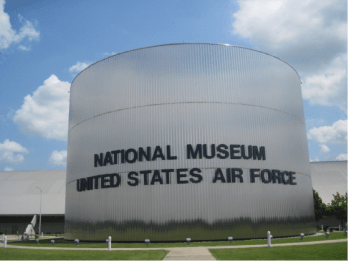
I was up early today in order to make the drive to the National Museum of the USAF here in Dayton, Ohio. I knew I was going to spend a lot of time at this museum today, and because of that, I wanted to be one of the first to get one of the many electric carts they provide for visitors with bad knees like mine.


1


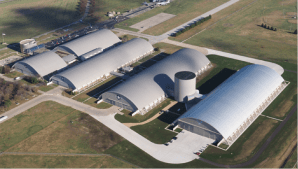
I believe this is the largest military aviation museum in the world, with 360+ aircraft, and is laid out (mostly) chronologically in four huge hangers. All of the aircraft in this museum have been beautifully restored, and displayed, in such a manner to allow photographs to be taken from the best possible angles. In the first Hanger, are aircraft examples from the beginning of American aviation history, through those used during World War I (The Early Years Gallery).
 

2

 The Early Years Gallery


And then, there are the huge variety of aircraft used by the USAF during the WW II years, which are displayed in the (World War II Gallery).
 

3

World War II Gallery


The second Hanger, consists of aircraft used by the USAF during the Korean War, and are located in the (Korean War Gallery).


4

Korean War Gallery


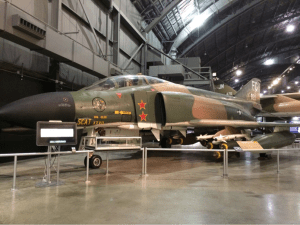
The aircraft used by the USAF during the Vietnam War era, are also located the second hanger, in the (Southeast Asia War Gallery).


5

Southeast Asia War Gallery


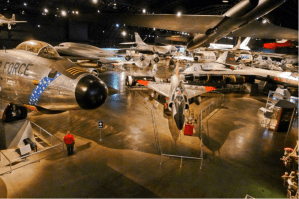
The third Hanger houses a large variety of aircraft used by the USAF during the Cold War era, and are located in the (Cold War Gallery). Also located in the third Hanger are many of the modern aircraft being used by the USAF as part of their current operations.


6

Cold War Gallery


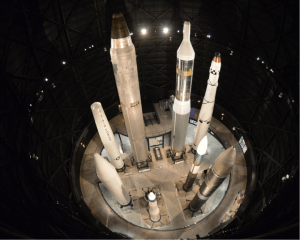
The third and fourth Hangers are separated by the (Missile Gallery), which displays many of the USAF offensive and defensive rockets and missiles which have been developed and deployed over the years.


7

Missile Gallery


The huge new fourth Hanger houses aircraft used by past U.S. Presidents while in office, from Franklin D. Roosevelt to Bill Clinton, and are located in the (Presidential Gallery).


8

Presidential Gallery


The many different types of aircraft used by the USAF Airlift Command, to move personnel and equipment where needed around the world, are located in the (Global Reach Gallery) of the fourth Hanger.


10

Global Reach Gallery


There is a Space Shuttle Exhibit, including the CCT-1 Crew Compartment Trainer, various satellites, and a Titan IVB Rocket located in the (Space Gallery) section of the fourth Hanger.


11

Space Gallery


The museum’s largest aircraft, the XB-70, and other aerospace related vehicles that the USAF has sponsored, for research and development projects, over the years are located in the (Research & Development Gallery) of the fourth Hanger.


12

Research & Development Gallery


The majority of these aircraft had been on display somewhere in one of the three hangers, or outside, the first time I visited the USAF museum in 2009. With the opening of the new fourth hanger in 2016, many had been rearranged or relocated to new areas within the four hangers. As a result, it did not take me as long to go through, and view all the aircraft in the four hangers, as I had originally expected. It still took most of the day to see everything.


13


Since many of the Wright Brothers aviation historical points of interest here in Dayton are close together, I spent the rest of the afternoon visiting as many of those locations as time allowed. These short visits to many of the sites on the “Aviation Trail” included stops at the Dayton Aviation Heritage Historical Park, the Huffman Prairie Flying Field, the Wright Brothers Aviation Center, and the Aviation Trail Museum. Stay tuned for details about these visits in tomorrow’s blog.


14


On the way back to the motel I stopped in Englewood, Ohio for a delicious meal at the Cazadores Mexican Food Cantina. Their EL Morro Special, consisted of grilled chicken strips cooked with pineapple and Mexican pork sausage, topped with shredded cheese and fresh green onions, served over a flower tortilla. I had a small side salad with guacamole and sour cream. The combination made for an outstanding meal. Then I topped it off with a dish of Mexican Flan for dessert.


15


—–To Be Continued—–


Florida Caverns State Park

24 Jan

A Life to Live

Melody Hendrix

Did you know that Florida has caves as beautiful as the famous Mammoth Cave and Carlsbad Caverns? Florida Caverns State Park is located in the Florida Panhandle near Marianna. It is home to the only air-filled cave accessible to tourists in Florida.
Florida Caverns is unusual for the state. It is a limestone cave, part of a system of Ocala limestone which stretches out into north Florida and south Alabama and south Georgia..
The Florida Caverns has dazzling formations of limestone stalactites, stalagmites, soda straws, flowstones and draperies. The caverns are home to blind salamanders and crayfish, as well as the endangered gray bat.

This is just one more example of Florida’s diverse landscapes. The tour of the cave is a must.
caves-2

The address is  3345 Caverns Rd, Marianna, FL 32446

Directions to Florida Caverns State Park

Florida Caverns State Park is located three miles north of Marianna, off of U.S. 90 on State Road 166. From Tallahassee, take I-10 west to exit 142, turn right on Highway 71 and travel north to Highway 90. Turn left. Follow brown park signs. From Pensacola: Take I-10 east to exit 136, turn left on Highway 276, travel north to Highway 90. Turn right. Follow brown park signs.

My 2016 Dawn Patrol Rendezvous Trip Part 3

18 Jan

A Slice of Life

Bill Lites


Day 3 (Saturday, Oct. 1, 2016)

I was surprised this morning to see partly cloudy skies and no rain. So, after I had shaved, showered and finished my breakfast I headed for the Dawn Patrol Rendezvous Airshow located adjacent to the USAF Museum in Dayton, Ohio. In spite of the rainy weather over the past few days, the turnout for the first day of the Airshow was amazingly well attended.


Dawn Patrol


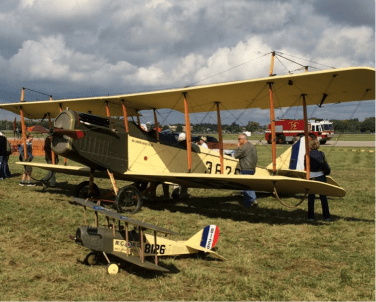
Of the 20 Plus World War I replica aircraft entries, between 12 and 15 pilots braved the weather and flew their fragile aircraft here to participate in the first day’s activities. The number of antique cars was limited and there were no antique motorcycles this year. Also, I missed the re-enactment gun emplacements, field hospitals and memorabilia tables that were part of the displays during the 2009 Dawn Patrol Rendezvous Airshow I had attended. I even had to look hard to find people dressed in WWI costumes.


1


The WWI R/C model airplanes (smallest of which was ¼ scale) flying at this event outnumbered the full-size replica aircraft at least 3 to 1. There were some really beautiful model airplanes, and they were also in the air more often than the full-size replica aircraft were. The bad weather over the past few days I’m sure had a major impact on this event.  However, I still had a great time.


2

1/2 Scale Sopwith Camel (B6313)


The wind came up about 12:30, with a 45° crosswind to the active grass runway, which made it very dangerous for the full-size replica aircraft to take off and land. So, since the flying portion of the air show was going to be delayed for today, (with no time estimate for resumption of full scale aircraft flying), I opted to leave the air show and check out a couple other museums in the area.


3


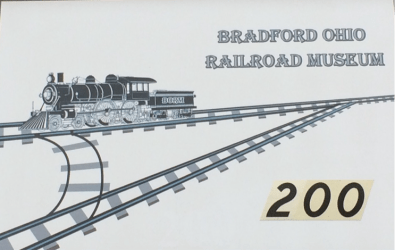
The first museum I visited this afternoon was the Bradford Ohio Railroad Museum located some 30 miles north of Dayton in Bradford, Ohio. This turned out to be a very small museum, consisting of mostly Pennsylvania Railroad memorabilia.


4


Strange as it may seem, the museum is housed in what used to be a small bank, and one of the lingering features of the museum structure, that they could not hide, is a huge bank vault on the ground floor at the back of the one-room museum. There was no rolling stock associated with this museum, but the curator informed me that they hope to eventually add some Bradford Ohio Railroad rolling stock adjacent to their museum when funds allow. This was another one of the Ohio railroad depots that witnessed the Lincoln Funeral Train as it passed through the city of Bradford on April 30, 1865.


5


Next I headed north again, to visit the Armstrong Air and Space Museum located in Wapakoneta, Ohio which is the hometown of Neil Armstrong. This is a very nicely organized museum, honoring and displaying memorabilia from the military and NASA life of Neil Armstrong.  The museum also honors the Ohioans, who are noted for having defied gravity, with exhibits that detail the feats of the Wright Brothers and John Glen


6


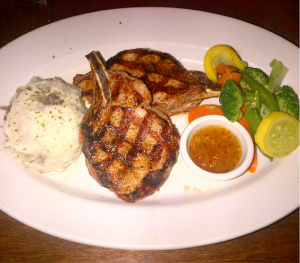
Now it was time to head back to the motel for tonight, which was located in Franklin, Ohio. Dinner this evening was a delicious meal of leftover Outback Pork Porterhouse with garlic potatos and some of their dark bread. And as I had hoped, it was double yummy!


7


—–To Be Continued—–