
SUNDAY MEMORIES
Judy Wills

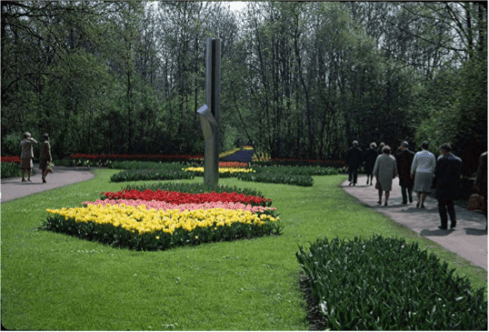
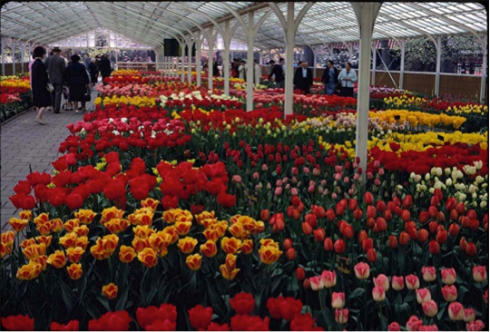
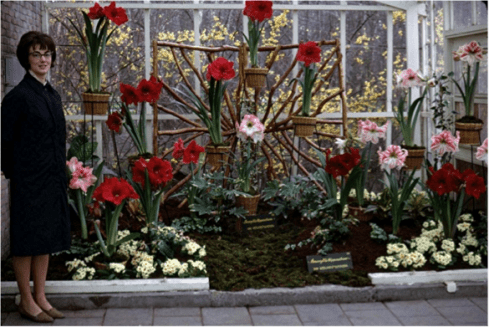
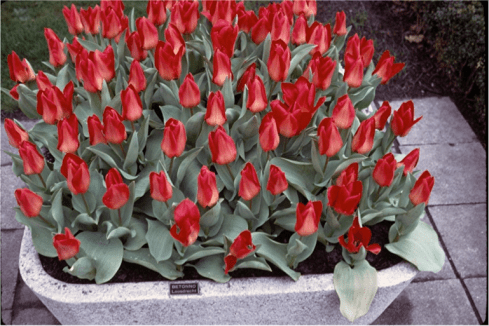
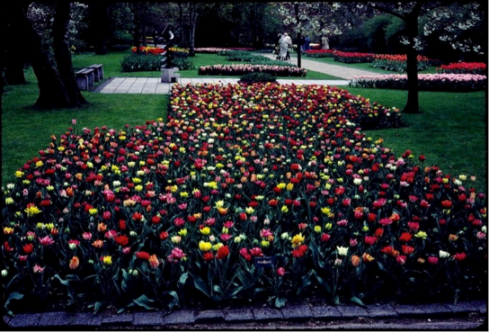
Last time, I wrote about the Keukenhof Gardens, in Lisse, Holland. We so thoroughly enjoyed our visits there, and want to share this beautiful place with everyone we know.

Here is some history about the tulips we found interesting from the Fluwell website:
“during World War 2, people ate tulip bulbs. The only reason for this was hunger. The Netherlands suffered a great famine in the winter of 1944-1945. Eating tulip bulbs is not something our ancestors did for fun, they did it because there was nothing else to eat.
Many Dutchmen of certain age remember the famine and the tulip bulbs they ate. In our theme park Tulpenland, we have a lot of customers that share their memories with us. They sometimes still find it difficult to see tulip bulbs back, although they know that we use them only for flowers, not for food. Hunger is a deep emotion that is not easily forgotten.
The Dutch famine was the result of the lost Battle of Arnhem (1944), when allied forces failed to liberate the northern provinces of the country. The northern provinces became isolated from the liberated parts of Europe. Food stocks ran out, as did fuel stocks. Then a harsh winter began. Thousands of Dutch citizens starved or froze to death.
Due to the war situation, tulip growers had not planted tulip bulbs that year; so great amounts of tulip bulbs were stocked on farms throughout the country. During the famine authorities decided to use these stocks as food for the starving populations. The old, dry tulip bulbs were sold in grocery stores, and newspapers published recipes with tulips. The tulip bulbs were nutritious and relatively easy to cook, so that less fuel was needed.
The tulip bulbs that people ate in the Second World War cannot be compared with modern day, fresh tulip bulbs. The war bulbs were old and dry and did not taste like fresh tulips. A fresh tulip bulb has a sweet, milky flavor that is actually not very bad. The tulip bulbs that were eaten during the war had a very bitter and dry taste instead.
Eating tulip bulbs is not as bad as it sounds like, as long as you eat fresh tulips that were not sprayed. Unfortunately, such bulbs were not available during the last winter of WW2. It is important that this sad history is not forgotten. Dutch children are still raised with the words: you are not hungry, you only have appetite (Je hebt geen honger, je hebt trek). Real hunger makes you eat everything you can get, even old, dry tulip bulbs, as they were eaten during the Dutch famine.”
Amazing!


Just a side note here – there is a wonderful place to visit outside The Hague, called Madurodam. It is a miniature city, built to scale. It includes the normal things you would find in a city – churches, office buildings, and even Schiphol Airport in Amsterdam, with working airplanes. It’s a fun thing to see during the day, but miniature lights come on at night, and it’s quite the fairyland.

The family of Old Things R New wishes each of our visitors a blessed Easter. He is risen!










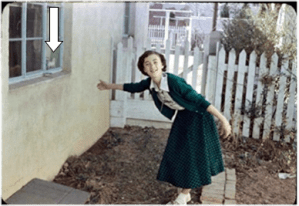
 I have a cow pitcher that my mother filled with milk and we poured it over our cereal.
  (I’ve actually lost that one, but my brother found another one and I have this one to remind me. Here is a picture of the original in our dining room window)
  I also have a small pitcher that was used on the “family-style” table at our Glorieta Baptist Convention Center in Glorieta, New Mexico. They were filled with cream or milk, and several were on each table for the coffee users.
 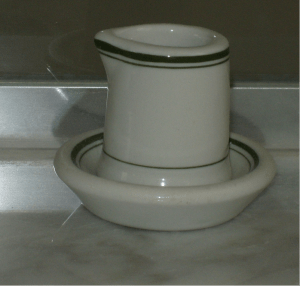 I have another “cow” pitcher that was for the same use.
  I have a set of pitchers that Aunt Jessie picked up in Pennsylvania one time.
 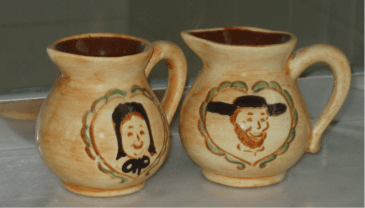 Yes, they are dust-collectors as well, but they remind me of good times in my life. But I have other “treasures” as well. I had heard of Hummel figurines most of my life, but it wasn’t until we moved to Germany that they came to mean something to me. In downtown Wiesbaden, there was a most unique store. Here is a picture of the storefront. It is one huge cuckoo clock!
 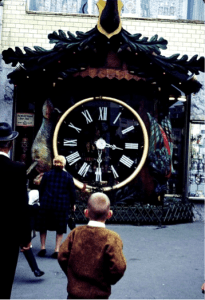 But they had wonderful Hummel figurines there. Fred’s mother purchased one, and, since her death, I have it. It is a treasure.
 One of the most fun treasures I have is a German nutcracker. Most of the nutcrackers you find have a smooth, rounded block of painted wood for the face.














 Old Things R New