A Slice of Life
Bill Lites

While I was in Tucson I had several other places I wanted to visit, so the next place on my list, was the Titan Missile Museum just 20 miles south of Tucson, in Sahuarita, AZ. I was not aware that any of our ICBM silos here in the U.S. had survived the missile reduction treaties (SALT) over the years, which was part of the “world-wide weapon systems modernization program.” As it turns out, this preserved missile site, officially known as Titan II ICBM site 571-7, is all that remains of the 54 “Cold War” Titan II missile sites that were on alert across the United States from 1963 to 1987. It is now a Registered National Historic Landmark.

On my way back to Tucson from the Titan Missile Museum, I stopped to check out the San Xavier del Bac Mission (White Dove of the Desert) just off I-19. The mission was very simple inside, but very beautifully decorated at the same time. As I was leaving, I noticed a number of wooden shade structures near the parking area where several local women were cooking a verity of dishes for sale to the visitors and parishioners. It was getting close to dinner time, and I was tempted to try some of the food, but then thought better of it, since a trip like this is not the time to come down with a case of Montezuma’s Revenge.

I started the next day with a trip to the Saguaro National Park (West) that our family had driven thru back in 1975, as part of a six-week cross-country camping trip we had taken, when I was between jobs. We were impressed with the tall multi-armed Saguaro cactus, which can grow to as high as 70 feet tall, and filled that part of the Sonoran Desert. Next, I visited the Sonora Desert Museum, which we had also visited in 1975, but it had expanded and changed so much over the years that I didn’t recognize any part of it, except the entrance. Luckily, this time I had chosen a better time of year to visit, so, instead of mid-July and 120 degrees in the shade, it was early April with a mild breeze and a pleasant humidity free 80 degrees.

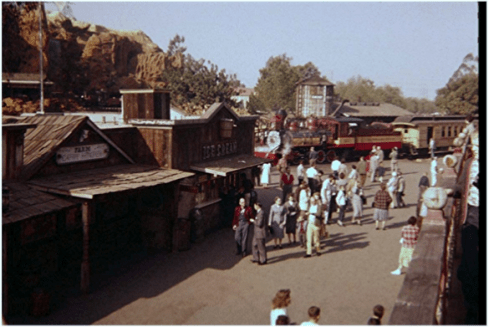
Next on the list, and just down the road was the Old Tucson Studios, which was originally built in 1938 by Columbia Pictures as a replica of 1860s Tucson for the movie “Arizona.” It was fun walking the dusty streets of Old Tucson and recalling some of the great movies that had been filmed there, over the years. Films such as The Bells of St. Mary’s (1945), starring Bing Crosby & Ingrid Bergman. The Last Round-Up (1947) with Gene Autry, Winchester ’73 (1950) with James Stewart, The Last Outpost (1951) with Ronald Reagan, Gunfight at the O.K. Corral (1957), The Lone Ranger and the Lost City of Gold (1958) and Cimarron (1959). My hero, John Wayne, starred in four movies filmed at Old Tucson Studios; Rio Bravo (1959), McLintock! (1963), El Dorado (1966) and Rio Lobo (1970. Movies have continued to be made there, with the latest being in 2013. Old Tucson Studios was opened to the public as a tourist attraction in 1960, and the many extras wondering the streets in their period costumes added much to the nostalgia.

—–To Be Continued—–











 So, I headed west for Inglewood, CA (where I went to college) but ran into heavy traffic before I could get close to my first destination. It was Sunday, and a bicycle marathon (with tens of thousands of bicycles) was being held that day and was traveling down Wilshire Blvd. causing traffic to be backed up for miles on either side of Wilshire. After creeping along for almost an hour, before I found a place where I could get out of that mess, I was tired, frustrated, and decided to call it a “Wasted Day”- giving up on seeing any museums that day and headed back toward the motel.
 Airport to visit the Lyon Air Museum. This was a great experience, as all the museum’s aircraft are in flying condition and all their rare vehicles run. I got a special treat when they towed their B-17G, “Fuddy Duddy” out of the hanger and fired up all four engines. There’s nothing I enjoy more than the smell of a large aviation engine starting up. It’s something about the oil and gas mixture that does it for me. And, here I got to experience the smell of “Four” engines starting! What a thrill.




 Navy Seabee Museum. This museum preserves and displays historic material relating to the history of the Naval Construction Force, better known as the Seabees, and the U.S. Navy Civil Engineer Corps. During World War II, approximately 250,000 Seabees passed through the Naval Construction Battalion Center (NCBC) at Port Hueneme, on their way to or from Europe and Pacific Theaters. Among many other tasks they were asked to perform, over the course of the war, the U. S. Naval Combat Demolition Units (NCDU) working closely with the Army Combat Demolition Units (ACDU) were instrumental in removing much of the hazardous materials and obstacles from the beaches in advance of the June 6, 1944 Normandy Invasion.
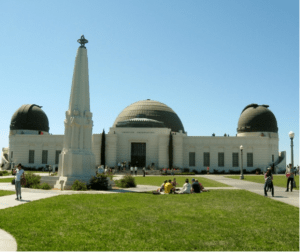 that day. Cars were backed up halfway down the mountain waiting for a chance to find a parking space. I went into the lobby and took a look at the fascinating Foucault Pendulum, which was introduced in 1851 by French physicist León Foucault, as the first simple proof of the rotation of the Earth in an easy-to-see experiment. I walked around the outer domes and got a view of the smoggy L.A. basin and the Hollywood Hills.