Tag Archives: Travel

Flying Legends Airshow~Part 9

21 Oct

A Slice of Life

Bill Lites

Flying Legends

Day 9 – Thursday July 9th

1

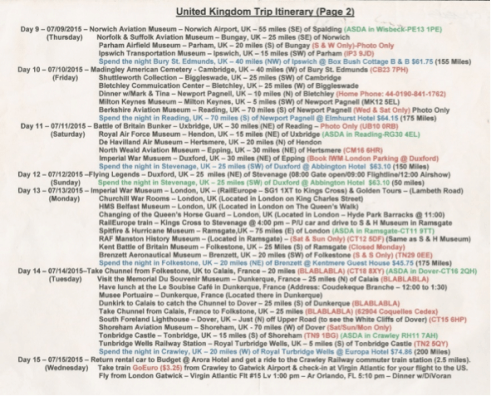
After another great English breakfast at the Riverside Pub, the first museum on my list today was the City of Norwich Aviation Museum, located adjacent to the Norwich Airport. This was a small museum with 12 beautifully restored aircraft displayed outside. However, two of their displays were a Vulcan bomber and a Nimrod naval patrol aircraft. It’s amazing to me how these small museums manage to acquire these very large and rare aircraft.

2

Next it was on to the Norfolk & Suffolk Aviation Museum in Bungay. This museum consisted of some 13 nicely restored outside static displayed aircraft and two Quonset hut type buildings of WWII memorabilia. This was one of the few UK aviation museums that did not have a Vulcan bomber in their collection.3
The Parham Airfield Museum turned out to be nothing more than a small restored control tower which was closed that day. I am assuming that the control tower contained memorabilia related to the U.S. 390th Bombardment Group that was based at this field during WWII.

4

The Ipswich Transportation Museum has the largest collection of transportation items in Britain devoted to just one town. Everything displayed in the museum was either made or used in and around Ipswich, a county town in Suffolk. This included cars, trucks, buses, and trollies. The museum also includes many items of the Ipswich Engineering Collection.5

This turned out to be a fairly short day and Greta took me past the Box Bush Cottage B&B Iocated in St. Edmunds the first time. After I re-entered the SatNav, address she took me right to it. Box Bush Cottage is a lovely 200 year old two-story home situated on approximately 20 acres of beautiful farm land. The owners Nick and Emilie were some of the greatest hosts a person could ask for. They had beautifully landscaped yards and gardens. They also had some black Chochin China chickens, a really cute pet goat, and a couple of the cleanest small pigs I’ve ever seen.6

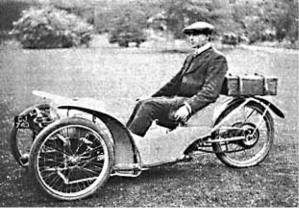
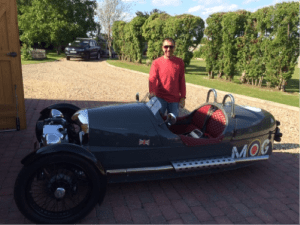
Nick is a roofing contractor and amateur race car enthusiast. He owns and was preparing his Morgan Three-Wheel Super Sport for a hill-climb event at Shelelsey Walsh in Worcestershire on the following Saturday. In case you are like me, having never heard of the Shelelsey Walsh Speed Hillclimb; it is a 1000 yard long 10-16 degree incline course that hosts one of the oldest motorsport events in the world (begun in 1905). I was very interested in the Three-Wheeler since I had only seen photos of them at car shows. Nick informed me that the Morgan Motor Company began hand building the first “Cyclecar” in 1909, which was the company’s original Three-Wheeler, that Mr. Morgan called the Morgan Runabout.
7

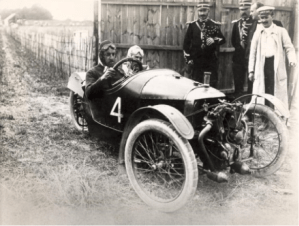
Because of its superior design, it wasn’t long before the Morgan Cyclecar was entering and winning Cyclecar races throughout the UK and Europe. These race wins culminated with the winning of the Cyclecar Grand Prix at Amiens in France in 1913, against much opposition from many continental four-wheelers. After that victory, Morgan named one of his most popular Three-Wheeler models the Grand Prix.
8

In 1920 Morgan introduced the four-seat Family Runabout three-wheeler which helped put economic travel within the reach of most families. Morgan Cyclecars continued to be improved and upgraded thru the years, and in 1931 the Super Sport was introduced.

9

After WWII Three-Wheeler popularity declined such that production was finally discontinued in 1953. Morgan continued building automobiles, but then some 60 years later, in 2014, by popular demand, the company “Reimagined” their Three-Wheeler to 21st century standards. Nick’s new and improved Morgan Three-Wheeler is a beautiful machine, and I wished him and his son the best of luck at Saturday’s hill climb.
10

—–To Be Continued—–

Flying Legends Airshow~Part 8

14 Oct

A Slice of Life

Bill Lites

Flying Legends


Day 8 – Wednesday July 8th


When I checked in at the “Ye Ole Red Lion Hotel” the evening before, the hotel proprietor was very efficient and explained everything to me, including Wi-Fi password, dinner and breakfast menus & hours. I asked him if breakfast was to be served in the same dining area where I took my dinner (Fish & Chips) and he said, “Yes.”  I woke ready to dig into my English breakfast (served from 8-10) that was included with the price of my room. But when I arrived at the breakfast room, at 8:30, the door was locked. I knocked on the door but nobody came. I knocked on a window and still no one came. After waiting for about 15 minutes I finally decided I wasn’t going to get any breakfast. I thought, “You know that’s a good way for the hotel to save money on the free breakfast they advertise. Just don’t open up and then you don’t have to serve breakfast. The people have their destinations to get to and will usually give up and drive away, like I did.”

1


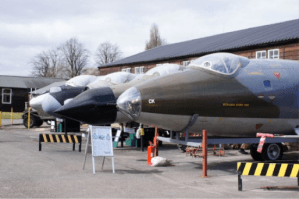
My first stop today was at the South Yorkshire Aircraft Museum in Doncaster. They had a very nicely restored Vulcan bomber sitting outside as you entered the museum property, but the rest of their outside display airplanes were in very poor condition. The inside of the only Hanger they had looked like a junkyard. It was so full of parts of airplanes, helicopters and engines that a person could hardly walk thru the mess. Their excuse for the condition was that they just didn’t have room to properly display everything they had. They did have a row of several British Cambara nose sections displayed outside that I thought Larry would be interested in.

2


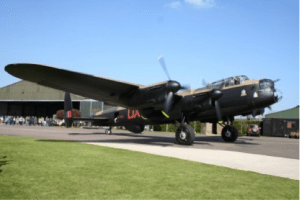
Next it was on to the Lincolnshire Aviation Center in Hagnaby. This was a beautifully restored our WWII RAF bomber base. Several of the original buildings and the control tower have been restored and used to exhibit their WWII memorabilia. The museums claim to fame is a fully restored Lancaster bomber. Every few days (today wasn’t one of those days) they start the engines and you can buy a ride in the bomber as they taxi it down the runway and back. WOW, what a thrill that must be!

3


Next was the Battle of Britain Memorial Center and Coningsby. This museum reminded me of Kermit Weeks’ Fantasy of Flight in Florida. Every beautifully restored airplane they have in their collection is in flying condition, and is flown frequently. The only difference is that Kermit flies his own restored museum airplanes and this museum’s restored airplanes are flown by active duty No. 29 Squadron RAF pilots in their spare time, on special occasions, at airshows all over England. Missing from the photo below is their C-47.

4

Next on the list was the Cranwell Aviation Heritage Center in Sleaford. This museum only had one plane and the museum was mostly dedicated to the history of the Cranwell Air Field Training Center there during World War II.

5


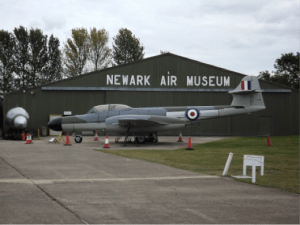
The Newark Air Museum in Newark-on-Trent was closed today, but I did get a few photos of their outside static display airplanes, thru the fence.

6


Next was the Finland & West Norfolk Aviation Museum in Wisbeck. I didn’t get to this museum before they closed, but I would never have guessed it was a museum, except for the sign over the door and the one airplane out front. From the outside, it looked like a work shop in a small warehousing area.

7


I found the Riverside Chalets in the small town of Spalding.   The small apartment type rooms were located behind the Riverside Pub.  They were very nice, quiet and clean. I had a great meal of beef, new potatoes and mashpeas and a pint of Guinness at the tiny pub that evening.

8


—–To Be Continued—–

You Can’t Outgive God~Part 2

12 Aug

A Slice of Life

 Bill Lites

Bill Cross Plane

 One of the people Marcia made friends with during her time in Italy was Erika, a 26-year-old single Italian office worker who had agreed to be Marcia’s Italian teacher. When construction on the “Magic” was finished, Marcia and Erika were among the DCL Team members who worked their way across the Atlantic on the ship making it ready for its first Disney cruise from Port Canaveral, FL. Upon completion of that “Shakedown Cruise,” Erika went back to Italy and Marcia went back to work with WDI here in Florida. DiVoran and Marcia reconnected and it wasn’t long before she asked us to join her, as her guest, for another “Employee Day” at Disney World’s Epcot Center. It was a wonderful day, and we loved every minute of it

1

When the DCL crew was assembled in 1998 to support the building of the second DCL ship “Wonder” in Italy, Marcia was part of that group from the start. About six months after she got to Italy and settled in, she invited us to come to Italy for a visit and to stay with her for part of our trip. In February of 1999 DiVoran and I took our “Italian Vacation Trip of a Lifetime.” Most days were hazy (with some heavy fog) and very cold (30F – 40F) but we just bundled up and enjoyed the adventure.

2

Marcia introduced us to Erika and many of her other Italian friends, who received us into their circle as if we were family. “Any friend of Marcia is a friend of ours.” We stayed with Marcia in her apartment in the small town of Mogliano Veneto and she and Erika were our very own personal traveling companions, tour guides, and interpreters, which made our visit to Italy the best and most wonderfully memorable trip it could have been. One of the funniest things was the day (early in our stay) when Erika confided in us, out of Marcia’s hearing, that it was her opinion that Marcia really had limited language skills and she would appreciate it if we didn’t tell anyone that she was Marcia’s Italian teacher. We kept her secret. Our special tour guides showed us all the beautiful and interesting sites as we visited places like Venice, Padua, Verona, Bologna, Florence, Murano, Burano and the beautiful little mountain village of Asolo.

3

Just to give you an idea of how many of our days went, I remember it was cold and foggy the morning the four of us hurried to Venice to catch the train to Florence. There were so many wonderful things to see, that upon arrival in Florence, Erika and DiVoran took off one way and Marcia and I went another. There is not time enough to tell you about the beauty of that city and the vast historic art treasures housed in their museums and cathedrals.

4

But…as the story goes, sometime during their stroll around that beautiful city of Florence and its marvelous museums, DiVoran told Erika she would like a warmer pair of gloves, to wear over the thin leather ones she had. So, Erika took her into a glove shop and asked to see gloves.

5

The very proper clerk behind the counter showed them several styles and colors. DiVoran picked a pair she thought she would like, and the clerk propped her elbow on a wooden stand made for that purpose. He carefully smoothed one beautiful bright red glove and then the other on her hands, and buttoned the small round buttons at her wrists. DiVoran liked them so much that she asked Erika to help her use her credit card to pay for them. DiVoran has always loved those gloves, but to this day I don’t think she has ever asked anyone how much they cost.

6


   —–To Be Continued—–

South of the Border~Part 5

13 May

A Slice of Life

 Bill Lites

Bill Lites


Once all the dedication ceremonies were over, it was time for the teams to relax and celebrate. OSM had made arrangements for a cookout at the John 3:16 Church and we were all ready to do our part to help eat everything in sight. This was another opportunity for the entire group to praise God for His continued love, protection and provision toward us during this entire project

1

After we finished eating, several of us headed over to the Carpenter’s Shop to help assemble and setup some new equipment that had been recently donated. The young boys were especially excited about the new tools, and were wanting to know what each tool did and when they were going to get to work in the shop.

2

Early Saturday morning, after breakfast at the hotel, we packed up the vans and started the long trip back toward San Antonio. Our caravan took a short break just before we got to the border to visit the market in Piedras Negras, where I bought DiVoran a 4-foot long Rain Stick. It makes the most wonderful sound (like falling rain), and she still uses it every Sunday, when she sings with the Praise Team, during our morning church service here in Titusville.

3


Our border crossing was uneventful this time, and we arrived at the Kennedy ranch in time to enjoy a real American dinner (our first in a week) and boy was that a great meal. Some of us took time to wash some really dirty clothes, and enjoy the quiet surroundings of the ranch, until it was time to head back to the Retreat Center for a good night’s rest.

4

 Sunday, after breakfast, we drove a short distance over to attend a church service at a Cowboy Church (I can’t remember exactly where), which was quite an eye opener for me. It had to be one of the most informal and unusual church services I’ve ever attended. They really know how to praise the Lord in that church, and without any pretensions.

5

 Then we started working our way toward the airport by spending a short time at the beautiful River Walk, where we had a great lunch at one of the many nice restaurants located there along the San Antonio River. By the time we finished lunch, it was time to head for the airport, say our final good-bye’s, and get checked in for our flight back to Orlando.

6


I can say, I feel like that was one of the most rewarding weeks I have ever spent in my life. There is nothing like seeing the appreciative look on people’s faces when you hand them the keys to a house that they would never have been able to afford, or that they ever had expected someone would give them. If you can, you should try it sometime. I guarantee you will love the experience, and it will absolutely change your life forever. Our God is good, all the time.

—–The End—–


If you, your church or civic group would like to help the OSM with their ministry to the needy people of Mexico and Haiti, you can visit them for details on their website at www.onlyaservant.org or call them at 830-228-4809.

7


South of the Border~Part 3

29 Apr

A Slice of Life

 Bill Lites

Bill Stars Plane


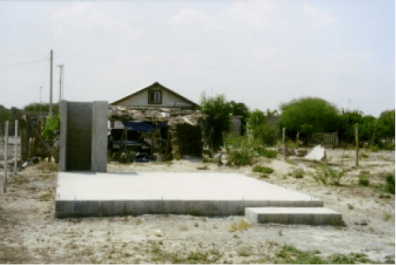
Tuesday morning after breakfast, we drove to the building site, where our visiting group was split up into two teams, with two Kennedy Team Leaders in each team to keep us on the right track, and we got started. Each team was assigned to build a house on their pre-finished slab, and the race was on to see who could finish first.

1


It was amazing how organized the Team Leaders were, as they assigned the various tasks to our team members. There were materials coordinators, wood cutters (my main job), wood shapers, painters and builders all working smoothly together at one time. A lot of the wood materials had been ordered cut to length, so the assembly process was fast and fairly easy.

2

The 2”x 4”walls were assembled on the slab, and then each was raised and braced in place, while being attached to the slab floor with pre-installed j-bolts, nuts and washers.

Next the joists were built (I had a hard time keeping up with all the angle cuts for our house on the chop saw) and the corrugated galvanized tin roofing was nailed in place. Once that was done, a plywood loft was built over the rear half of the house, where smaller family members could sleep. As you can see in the photo below, the tail-end of the joists were pre-painted (on the ground by the painters) to save time and reduce the use of troublesome ladders after assembly. As I mentioned earlier, this was also done with the soffit and fascia boards as well as the window and door trim.

5


Then heavy insulation was fastened in place between the joists, under the tin roof, and covered with plywood to help keep the loft area from getting so hot. A sturdy and child-safe ladder was built to give access to the loft area.

6


While the roof and loft work was going on topside, another team was drilling holes and running electrical wiring in the wall studs. Once that was done, the exterior plywood sheeting was nailed to the walls and gables, the window and door holes were cut, and the windows were installed.

7


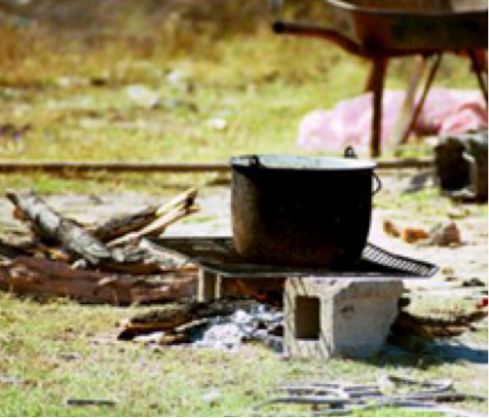
While all the time these activities were going on, the shaper team was busy at work cutting scalloped trim boards, and the painting team was busy painting window and door trim boards and the completed (ventilated) soffit and scalloped trim boards. The small (3’x 3’square) shower enclosure was plumbed (cold water only) to provide the much-needed hygiene that most of the colonia (unregulated settlement) dwellers did not have access to. I understand that a latrine system was used by the colonia families, but I don’t remember seeing it or being told about it at the time. The only toilet I ever saw or used was located next to the John 3:16 Church, and it was very small. A kitchen area was not designated in these houses, as the colonia families were accustomed to doing most of their cooking outside their “homes” and would most likely continue to do their cooking outdoors when the weather permitted doing so.

8


—–To Be Continued—–


My Colonial States Trip~Part 21

8 Apr

A Slice of Life

Bill Lites

Bill Small Red Plane

After that educational tour, I headed for the rental car office to turn in my car and get a ride to the Providence Train Station for my trip to the T.F. Green Airport. All went well until I arrived at the train station and my train #807 showed no gate assignment. There were four tracks, and I didn’t want to miss my train (12:27) because the next train after that (2:54) to the airport would cause me to miss my flight to Orlando. As I bought my ticket, I asked the clerk which track train #807 would leave from and she said, “That information will be posted on the schedule board about 15 minutes before the train arrives.” So, I broke out my CD player and settled in to wait. At 12:15 the schedule board had not changed and I asked the clerk about the gate number again. This time she rolled her eyes and said, “Sometimes they don’t post that information until 5 minutes before the train arrives.” I thanked her and sat back down to watch the schedule board. By now (12:23) I was about to panic, and go holler at someone, when the schedule board changed showing “Train #807 Arriving On Track 4” and I breathed a sigh of relief.

1

I got to the T.F. Green Airport Station at 12:43 and figured I now had a little over 2 hours to wait for my flight leaving at 3:30. But, when I went to check my bag for the flight, I was told that the plane had had mechanical problems and they would have to bring another plane to Providence, and the new departure time for my flight was 4:50. What a bummer! All that anxiety over missing the train was for nothing. So, what else could I do, but call DiVoran to tell her my flight was delayed, and that would make it too late arriving for us to go to dinner there in Orlando, as we had planned. She said, “No problem, I’ll just whip us up an omelet when we get home.” Well, that was fine with me, so, I broke out my CD player again and settled in for a little longer wait this time. As it turned out, it was almost 9:00 before we got home and that ham/cheese/mushroom omelet was just what the doctor ordered.

2


I’ve said it before and I’ll say it again, I love going on these trips, to see different parts of our wonderful country, visit interesting places and museums and meet my American neighbors no matter where they live. But, it is always good to get home to the company of my lovely wife DiVoran and sleep in my own bed. I hope you have enjoyed reading about this trip as much as I have enjoyed re-living it in these blogs. I’m sure I have left out some important details of the trip, but if I remember them I’ll just have to include them as some kind of a “Post Script” or “Addendum” to My Colonial States Trip at some later date. In the meantime, keep smiling because GOD loves YOU and has a wonderful plan for your life.      

3                             


           —–The End—–

Keukenhof Gardens, Holland~Part 2

5 Apr

SUNDAY MEMORIES

Judy Wills

JUDY


2


Last time, I wrote about the Keukenhof Gardens, in Lisse, Holland. We so thoroughly enjoyed our visits there, and want to share this beautiful place with everyone we know.

3

Here is some history about the tulips we found interesting from the Fluwell website:

“during World War 2, people ate tulip bulbs. The only reason for this was hunger. The Netherlands suffered a great famine in the winter of 1944-1945. Eating tulip bulbs is not something our ancestors did for fun, they did it because there was nothing else to eat.

 Many Dutchmen of certain age remember the famine and the tulip bulbs they ate. In our theme park Tulpenland, we have a lot of customers that share their memories with us. They sometimes still find it difficult to see tulip bulbs back, although they know that we use them only for flowers, not for food. Hunger is a deep emotion that is not easily forgotten.

 The Dutch famine was the result of the lost Battle of Arnhem (1944), when allied forces failed to liberate the northern provinces of the country. The northern provinces became isolated from the liberated parts of Europe. Food stocks ran out, as did fuel stocks. Then a harsh winter began. Thousands of Dutch citizens starved or froze to death.

 Due to the war situation, tulip growers had not planted tulip bulbs that year; so great amounts of tulip bulbs were stocked on farms throughout the country. During the famine authorities decided to use these stocks as food for the starving populations. The old, dry tulip bulbs were sold in grocery stores, and newspapers published recipes with tulips. The tulip bulbs were nutritious and relatively easy to cook, so that less fuel was needed.

 The tulip bulbs that people ate in the Second World War cannot be compared with modern day, fresh tulip bulbs. The war bulbs were old and dry and did not taste like fresh tulips. A fresh tulip bulb has a sweet, milky flavor that is actually not very bad. The tulip bulbs that were eaten during the war had a very bitter and dry taste instead.

 Eating tulip bulbs is not as bad as it sounds like, as long as you eat fresh tulips that were not sprayed. Unfortunately, such bulbs were not available during the last winter of WW2. It is important that this sad history is not forgotten. Dutch children are still raised with the words: you are not hungry, you only have appetite (Je hebt geen honger, je hebt trek). Real hunger makes you eat everything you can get, even old, dry tulip bulbs, as they were eaten during the Dutch famine.”


Amazing!

Just a side note here – there is a wonderful place to visit outside The Hague, called Madurodam. It is a miniature city, built to scale. It includes the normal things you would find in a city – churches, office buildings, and even Schiphol Airport in Amsterdam, with working airplanes. It’s a fun thing to see during the day, but miniature lights come on at night, and it’s quite the fairyland.

14


The family of Old Things R New wishes each of our visitors a blessed Easter. He is risen!

Keukenhof Gardens, Holland

29 Mar

SUNDAY MEMORIES

Judy Wills   

JUDY                                                


1


I hope you are enjoying my postings about flowers as much as I am enjoying writing about them. Although my “green thumb” is as purple as can be, i.e. I can’t grow ANYTHING – I thoroughly enjoy flowers. We’ve been to many “gardens” in our lifetime, but I think the most magnificent is the Keukenhof Gardens by Lisse in Holland (pronounced koy’-ken-hōf). We’ve been fortunate to have been stationed in Germany for a total of six years, and have made the Holland trip quite a few times.

2

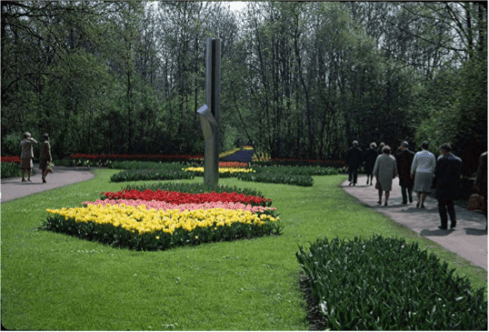
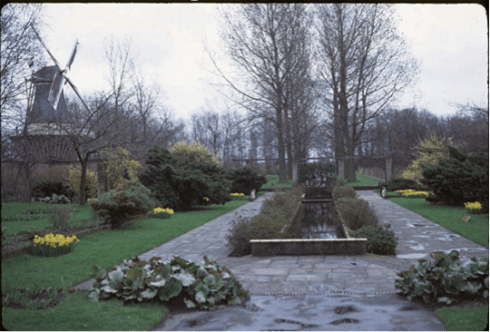
One of the first times we visited Keukenhof was in April of 1968. Spring had not yet fully arrived in Holland, and we were treated to winds and bare trees. However, the landscaping of the gardens was still beautiful.

3


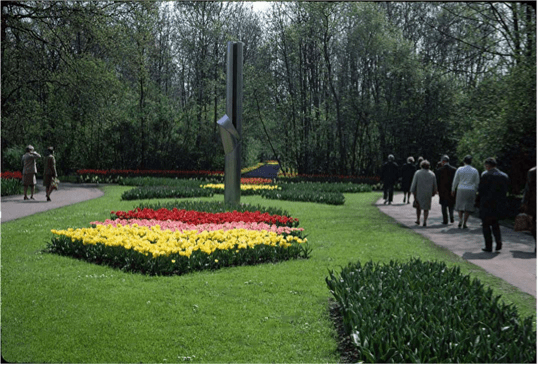
And when we returned later, when Spring was in full swing, we were amazed to see how the landscape had just exploded with flowers.

4


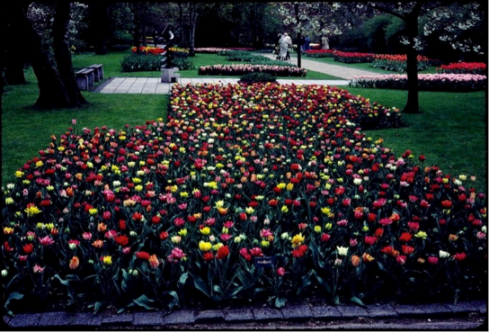
There were blankets of flowers.

5


And when we climbed up into one of the many windmills there, we could look out and see fields and fields of tulips. Beautiful!

7


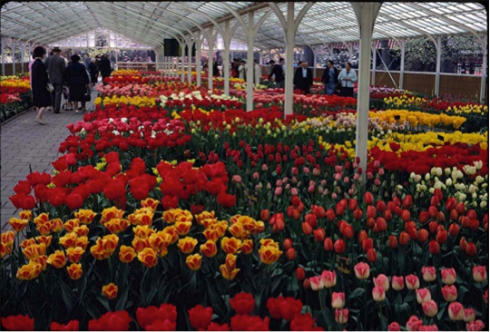
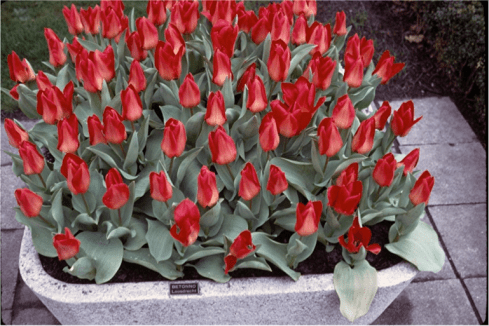
Even though there weren’t many flowers outside around the grounds, there were tulips in abundance in the hothouses. We’ve been told there are about 700 different varieties of tulips there.

8


I was fascinated to see some that were absolutely black – named “Black Beauty.”

9


Another time we visited, we saw more black tulips called “The Ace of Spades.”

10


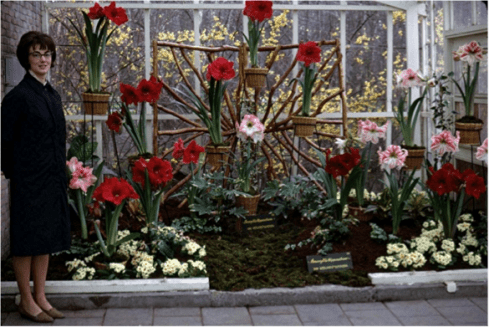
We were amazed to see all the different colors and styles of tulips – lots of hybrid work going on there. Although tulips are the main flower, there are many others there, as well. There were blankets of hyacinths. I saw my first Amaryllis, and was amazed at the size of it.

11


The next year, 1969, we visited again, but in May, when my Mother came to visit us. Not only were the gardens in full swing, the flowers were just everywhere


12


Not only in the ground, but in planters, as well.

13


Just about everywhere flowers could be – they were there. You can see the difference in the trees and the tulips and other flowers from the early Spring of our 1968 visit. We thoroughly enjoyed both visits.

15


We visited again in March of 1981, with our two daughters, during their Spring Break. The weather was rather chilly, windy, and brisk. We were in jackets at the time. Once again, Spring had yet to arrive, and nature was still rather bleak. We had been wandering around the area and thought we would freeze if we went to the gardens, but really had no choice – it was then or never. Much to our surprise – inside the garden, with all the trees, the wind didn’t reach us very much, and we were quite comfortable.

14


~~~~~~~~To Be Continued~~~~~~~


My Colonial States Trip~Part 19

25 Mar

A Slice of Life

 Bill Lites


Next I headed east on SR #138 across Narragansett Bay to visit the Breakers and the Mansions of Newport, RI where I was surprised at the number of tourists there were lined up at the Newport Visitor Center trying to get on a tour bus ride of the area. The affluence of the area was brought home to me in an unusual way, when I stopped at a Shop-N-Go to pick up some granola bars. The first thing I noticed was the parking lot had an overabundance of expensive cars in it with names like Mercedes, BMW and Lexus. Then as I was walking the aisles looking for the granola bars, I saw this elegant looking woman, dressed in a beautiful flowing black silk dress, with her hair done up in some kind of fancy French looking hairstyle and 7-inch heels, pushing a shopping cart down the aisle. What a picture that was!

1


The Newport mansions were huge and unbelievably beautiful! They were too spread out for a walking tour (for me), and I didn’t want to take the time to go on a bus tour, so I just drove to a few of them, parked in their free parking areas, and toured outside the mansions and their grounds, taking photos. I had a brochure of all the different mansion locations, so was able to see several before I got bored with all that extravagance and moved on to the next museum on my list.

While I was in Newport I dropped by the White Horse Tavern just to say I had seen the oldest tavern building (1652) in the U.S. and get a photo of it. Over the years the building was expanded and used for other things, such as a boarding house and as a meeting house for the Rhode Island General Assembly. It’s rumored that a pirate (name unknown) ran the tavern operation during the early 18th century. It wasn’t actually named the “White Horse Tavern” until 1730, and during the American Revelation, Tories and British troops were quartered in the building around the time of the British occupation and the Battle of Rhode Island in 1778 (also known as the Battle of Quaker Hill).

5


Battleship Cove is a maritime museum located on the Taunton River in Fall River, Ma and is said to be the home of the world’s largest collection of naval vessels in one place. Included in the collection are the U.S. Battleship USS Massachusetts (BB-59), the U.S. Destroyer USS Joseph P. Kennedy, Jr. (DD-850), the U.S. Attack Submarine USS Lionfish (SS-298), the German Tarantul-class Corvette Hiddensee and the U.S. PT Boats, PT-617 and PT-796. As I mentioned earlier, since I have toured several U.S. Destroyers, Battleships and Submarines, my main interest at this museum was the PT Boats. I was impressed with their size, armament, speed and ability to go up against some of the enemy’s largest ships, sink them, and live to fight another day. It reminded me of the day I was walking with DiVoran in the woods near our house when I got too close to a wasp nest. I never saw the wasp that stung me and was gone before I knew what had hit me. I would guess that was just how some of those enemy ship’s captains must have felt like, after being torpedoed by a PT boat, and their ship beginning to sink under their feet. I can just hear them screaming, “What was that and where did they come from?”


—–To Be Continued—–


My Colonial States Trip Part 18

18 Mar

A Slice of Life

 Bill Lites

Bill Small Red Plane


I wanted to save plenty of time for visiting the Submarine Force Library & Museum in Groton, CT before they closed. This museum is the only submarine museum operated by the U.S. Navy and is the home of the USS Nautilus (SSN-571), the first nuclear powered submarine in the world.  

1


The museum also was a replica of the first submarine ever used in combat, David Bushnell’s Turtle, built in 1775; a WWII HA-8 Japanese Midget submarine and the Navy’s USS X-1 research submarine that was initially designed to operate using a special closed-loop hydrogen peroxide system to generate the oxygen the submarine’s diesel engine needed to operate while the ship was submerged.


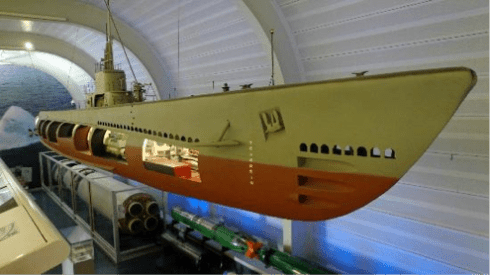
I was impressed with the 50 foot model of the USS Gato (SS-212), first of that class of submarine built by the U.S. Navy (thus carrying the class name) and was one of the typical classes of over 250 submarines built and used by the Navy during WWII. This beautifully detailed cut-away model shows all the different parts of the submarine, from bow to stern, were the crew lived and worked.

5


Next I drove up the coast a few miles to visit the Mystic Seaport Museum in Mystic, CT advertised as the largest maritime museum in the world. The museum is located on 17 acres just south of I-95 on the Mystic River and was the first living maritime museum in the United States (1929). The museum re-creates a 19th century seafaring village, with its historic sailing ships, boats and over 60 period structures that have been carefully restored. I was impressed with one of their main attractions, the last surviving whaling ship, the Charles W. Morgan.


     6                              

Since I was close to the town of Mystic, and I had looked them up on the internet as part of my trip research, I decided to try another lobster roll at the Ancient Mariner Restaurant in downtown Mystic. To my surprise, the town was in the middle of celebrating “Pirate Invasion Day” with people all over town (and in the restaurants) dressed up in Pirate costumes, running around looking for their next item in their Scavenger Hunt (or Geo Cache), and having a wonderful time, as the rain had finally let up. Then it was on up the road to the motel in Warwick, RI for a well-deserved rest after a 375 mile drive in the rain.

7


The next day was Sunday and I had planned to have a late breakfast and then attend the 11:00 service at the First Baptist Church in America in Providence, RI which was founded by Roger Williams in 1638. Williams had founded Providence in 1636 and had conducted church services in his home until 1638. For the next 60 years the congregation met outside, when the weather was nice, or in homes. The first service held in the current church building was in 1775 when the building was completed. Well, when I got to Providence some organization was having a 5-K Run right thru the area, and all the streets around the church were blocked off and the traffic was re-routed for blocks.

8


I finally gave up trying to get to the church, and headed for the Quonset Air Museum in North Kingston, RI where I found a small one-hanger museum with some unusual aircraft, not far from the Martha’s Vineyard Ferry landing. All of their aircraft were on static display, and not in what I would call beautifully restored condition. The guy behind the counter was very friendly and he told me all about the museum’s operations, after which we discussed our military service experiences at some length.

9


—–To Be Continued—–