Tag Archives: Travel

My Colonial States Trip~Part 19

25 Mar

A Slice of Life

 Bill Lites


Next I headed east on SR #138 across Narragansett Bay to visit the Breakers and the Mansions of Newport, RI where I was surprised at the number of tourists there were lined up at the Newport Visitor Center trying to get on a tour bus ride of the area. The affluence of the area was brought home to me in an unusual way, when I stopped at a Shop-N-Go to pick up some granola bars. The first thing I noticed was the parking lot had an overabundance of expensive cars in it with names like Mercedes, BMW and Lexus. Then as I was walking the aisles looking for the granola bars, I saw this elegant looking woman, dressed in a beautiful flowing black silk dress, with her hair done up in some kind of fancy French looking hairstyle and 7-inch heels, pushing a shopping cart down the aisle. What a picture that was!

1


The Newport mansions were huge and unbelievably beautiful! They were too spread out for a walking tour (for me), and I didn’t want to take the time to go on a bus tour, so I just drove to a few of them, parked in their free parking areas, and toured outside the mansions and their grounds, taking photos. I had a brochure of all the different mansion locations, so was able to see several before I got bored with all that extravagance and moved on to the next museum on my list.

While I was in Newport I dropped by the White Horse Tavern just to say I had seen the oldest tavern building (1652) in the U.S. and get a photo of it. Over the years the building was expanded and used for other things, such as a boarding house and as a meeting house for the Rhode Island General Assembly. It’s rumored that a pirate (name unknown) ran the tavern operation during the early 18th century. It wasn’t actually named the “White Horse Tavern” until 1730, and during the American Revelation, Tories and British troops were quartered in the building around the time of the British occupation and the Battle of Rhode Island in 1778 (also known as the Battle of Quaker Hill).

5


Battleship Cove is a maritime museum located on the Taunton River in Fall River, Ma and is said to be the home of the world’s largest collection of naval vessels in one place. Included in the collection are the U.S. Battleship USS Massachusetts (BB-59), the U.S. Destroyer USS Joseph P. Kennedy, Jr. (DD-850), the U.S. Attack Submarine USS Lionfish (SS-298), the German Tarantul-class Corvette Hiddensee and the U.S. PT Boats, PT-617 and PT-796. As I mentioned earlier, since I have toured several U.S. Destroyers, Battleships and Submarines, my main interest at this museum was the PT Boats. I was impressed with their size, armament, speed and ability to go up against some of the enemy’s largest ships, sink them, and live to fight another day. It reminded me of the day I was walking with DiVoran in the woods near our house when I got too close to a wasp nest. I never saw the wasp that stung me and was gone before I knew what had hit me. I would guess that was just how some of those enemy ship’s captains must have felt like, after being torpedoed by a PT boat, and their ship beginning to sink under their feet. I can just hear them screaming, “What was that and where did they come from?”


—–To Be Continued—–


My Colonial States Trip Part 18

18 Mar

A Slice of Life

 Bill Lites

Bill Small Red Plane


I wanted to save plenty of time for visiting the Submarine Force Library & Museum in Groton, CT before they closed. This museum is the only submarine museum operated by the U.S. Navy and is the home of the USS Nautilus (SSN-571), the first nuclear powered submarine in the world.  

1


The museum also was a replica of the first submarine ever used in combat, David Bushnell’s Turtle, built in 1775; a WWII HA-8 Japanese Midget submarine and the Navy’s USS X-1 research submarine that was initially designed to operate using a special closed-loop hydrogen peroxide system to generate the oxygen the submarine’s diesel engine needed to operate while the ship was submerged.


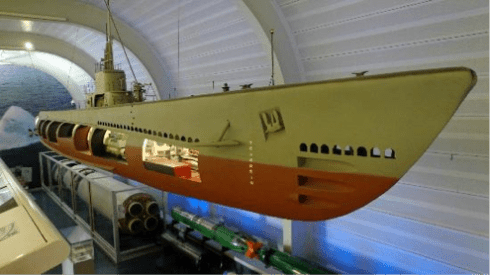
I was impressed with the 50 foot model of the USS Gato (SS-212), first of that class of submarine built by the U.S. Navy (thus carrying the class name) and was one of the typical classes of over 250 submarines built and used by the Navy during WWII. This beautifully detailed cut-away model shows all the different parts of the submarine, from bow to stern, were the crew lived and worked.

5


Next I drove up the coast a few miles to visit the Mystic Seaport Museum in Mystic, CT advertised as the largest maritime museum in the world. The museum is located on 17 acres just south of I-95 on the Mystic River and was the first living maritime museum in the United States (1929). The museum re-creates a 19th century seafaring village, with its historic sailing ships, boats and over 60 period structures that have been carefully restored. I was impressed with one of their main attractions, the last surviving whaling ship, the Charles W. Morgan.


     6                              

Since I was close to the town of Mystic, and I had looked them up on the internet as part of my trip research, I decided to try another lobster roll at the Ancient Mariner Restaurant in downtown Mystic. To my surprise, the town was in the middle of celebrating “Pirate Invasion Day” with people all over town (and in the restaurants) dressed up in Pirate costumes, running around looking for their next item in their Scavenger Hunt (or Geo Cache), and having a wonderful time, as the rain had finally let up. Then it was on up the road to the motel in Warwick, RI for a well-deserved rest after a 375 mile drive in the rain.

7


The next day was Sunday and I had planned to have a late breakfast and then attend the 11:00 service at the First Baptist Church in America in Providence, RI which was founded by Roger Williams in 1638. Williams had founded Providence in 1636 and had conducted church services in his home until 1638. For the next 60 years the congregation met outside, when the weather was nice, or in homes. The first service held in the current church building was in 1775 when the building was completed. Well, when I got to Providence some organization was having a 5-K Run right thru the area, and all the streets around the church were blocked off and the traffic was re-routed for blocks.

8


I finally gave up trying to get to the church, and headed for the Quonset Air Museum in North Kingston, RI where I found a small one-hanger museum with some unusual aircraft, not far from the Martha’s Vineyard Ferry landing. All of their aircraft were on static display, and not in what I would call beautifully restored condition. The guy behind the counter was very friendly and he told me all about the museum’s operations, after which we discussed our military service experiences at some length.

9


—–To Be Continued—–


Texas Bluebonnets

15 Mar

SUNDAY MEMORIES

Judy Wills

JUDY


2

Some of my family is from Texas – actually my brother and I were born in Dallas, but moved to Albuquerque, New Mexico when we were small children. But my mother’s mother (Granny) and her oldest daughter, Jessie, lived in San Antonio for many years.

3


Consequently, I had known about the Texas Bluebonnets for longer than I really knew what they were.

4


Even though Fred and I lived in Fort Worth for many years, it wasn’t until we moved to San Antonio that I really knew about the Texas Bluebonnets. And they are AMAZING! They have been adopted as the state flower of Texas.

5


On the internet I found this: As historian Jack Maguire so aptly wrote, “It’s not only the state flower but also a kind of floral trademark almost as well known to outsiders as cowboy boots and the Stetson hat.” He goes on to affirm that “The bluebonnet is to Texas what the shamrock is to Ireland, the cherry blossom to Japan, the lily to France, the rose to England and the tulip to Holland.”  Well said.

6


When Springtime comes to Texas – from the Dallas/Fort Worth area down to the Corpus Christi area – the Bluebonnets are in full bloom, from late March to mid-April. They are the most dainty, beautiful flower, and we’ve see just fields and fields of them – like a blanket of blue in some cases. I’ve been sent many pictures of them via e-mail through the years, and have enjoyed seeing them all.

7


There is even one of Bluebonnets in the snow! Must have been a late storm – although Dallas/Fort Worth can have abundant snow in early Spring.

When we moved from San Antonio to Florida, I took some Bluebonnet seeds with me and planted them, hoping for some lovely spring flowers to remind me of Texas. No such luck! As I’ve just gleaned from google, they must be planted in the fall and have to have the wind, rain, and cold weather to make them leap forth in the Spring. And the panhandle of Florida just doesn’t have that kind of winter weather. Shucks! Oh well, I then planted strawberry plants and they did very well.

11


But the Texas Bluebonnet is a source of great pride for Texas – as if they needed something else! And they are just a beautiful side of Texas that most don’t know about. I think a lot of people think of Texas as dusty, flat, and unimaginative. But it is full of great differences, including some of the most beautiful flowers in God’s creation.

12


                       I’m just so glad I was able to see them, and enjoy their beauty.


For the beauty of the earth
For the glory of the skies,
For the love which from our birth
Over and around us lies.


My Colonial States Trip~Part 17

11 Mar

A Slice of Life
 Bill Lites

My friends from Boston and New York had advised me not to use the George Washington Bridge if I could help it, but that’s the way “Greta” took me on my way back to the west to visit the Aviation Hall of Fame in Teterboro, NJ. So, it was across the Throgs Neck Bridge, thru the Bronx, over the Hudson River on the G.W. Bridge to the museum. As it turned out, it must have been my lucky day for that crossing, because that trip was pretty much of a breeze and I made it to the museum in good time. This museum, located at the Teterboro Airport, displays historic aircraft and spacecraft equipment, artifacts and photographs along with a model aircraft collection, honoring the many New Jersey men and women who have helped make the aviation industry what it is today. There is a room filled with medallions honoring the over 160 inductees to date.

I woke up to rain the next morning. Up until now the weather had been perfect and I had just assumed it would be the same for the whole trip. Silly me. What was I thinking? Well, it rained that entire day as I sloshed my way toward Connecticut. I figured “Greta” would have routed me back across the G.W. Bridge and up I-95 to Bridgeport, CT before turning north. But I wasn’t ready to try my luck getting across the G.W. Bridge again, especially during the morning rush-hour traffic in the rain. So, I decided to take the northern route, using the Garden State Parkway, and then crossing the Hudson River at the Tappenzee Bridge. Well, wouldn’t you know, I missed the exit for the bridge. I stopped at a service center and asked how to get back to the bridge exit and the guy said, “Just take the next exit and do a “U” turn.” Right! It was 20 miles to the next exit and it ended up taking me 30 minutes and another 30 miles back to the bridge exit (all this in the pouring down rain).

3

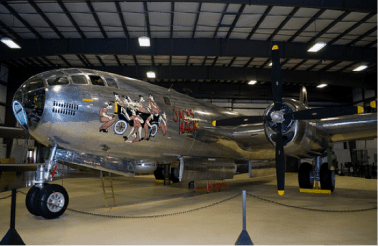
I finally made it to the right exit, across the Tappenzee Bridge, then thru Danbury and Hartford, CT to the New England Air Museum in Windsor Locks, CT. That ended up taking 1-½ hours longer than I had planned. What a waste of time that was! The museum displays over 60 beautifully restored aircraft and related artifacts/equipment in three hangers. As I followed a group into the B-29 hanger, I overheard someone say that the small group was honoring their 95 year old uncle who had been a navigator in B-29s during WWII. The elderly gentleman was overwhelmed by the occasion and the size of the aircraft. I heard him say, “I don’t remember it being so big!” What a nice thing for a family to do for their uncle. While I was in the area, I had planned to visit the American Museum of Aviation in Stafford Springs, CT but I discovered that visiting the museum was by appointment only. I was behind schedule anyway, so I just headed south to my next stop, at the New London Customhouse in New London, CT which is operated by the New England Maritime Association. This turned out to be a very small museum, so I didn’t spend much time there.

4

—–To Be Continued—–

My Colonial States Trip~Part 16

4 Mar

A Slice of Life

 Bill Lites

Bill Lites

Bill Lites


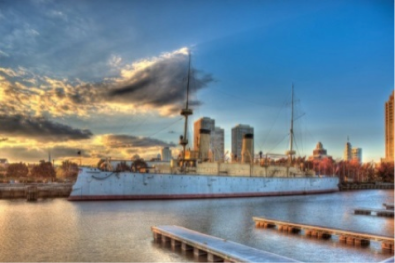
I saw the Dolly Todd (Madison) house, Edgar Allen Poe’s house, the Fireman’s Hall Museum, the Pine Street Presbyterian Church and the Mechanic’s National Bank. I had trouble finding the Seaport Museum, home of the USS Olympia, and when I did find it they wanted $15.00 to park and $10.00 admission, and this was another case of not feeling like I would have enough time to see the museum and the ship to justify the cost.

1


So, I headed back across the Delaware River to Camden, NJ to try to see the USS New Jersey before they closed, but didn’t make it. So, I just went on back to Gloucester City, where I had another fabulous rib dinner at the Texas Roadhouse restaurant before going back to the motel for the night.

2


The next day I passed up visiting the Simeone Auto museum and the Wings of Freedom Aviation Museum, as I saw so many things in Philadelphia that I ran out of time, and had to push on toward that day’s list of places to visit.

3


First on the list was the Air Victory Museum in Lumberton, NJ which was closed that day. When I was researching the drive from Lumberton to my next stop in Garden City, NY I was pleased to see that “Google Maps” routed me south, around New York City, on I-278 to miss the city traffic. So now, after inputting the Cradle of Aviation Museum address into “Greta”, I sat back to enjoy the ride. The first indication that something was not quite right was when I was directed to enter the Lincoln Tunnel. The next thing I knew I was stopped at a light at the corner of East 42nd Street and Madison Avenue.

4


What in the world was going on? “Greta” had done it to me again! All I could do at this point was follow her directions, as I had no idea how to get to Garden City by myself. She took me thru the Queens Midtown Tunnel onto the Long Island Expressway (I think) and somehow delivered me to the correct museum address in Garden City. Needless to say, it took a lot longer than I had planned to get there. When I finally pulled up in front of the Cradle of Aviation Museum, I was expecting to be thrilled with lots of beautifully restored aircraft in that magnificent facility. What greeted me, as I entered the front door was a huge mess of canvas tarps on the floor, with tables, buckets, and women everywhere, making preparations for a local flower show, of all things. As it turned out, the museum had a surprisingly small number of aircraft for the size of their facility. I guess the main reason for that was their emphasis is on education rather than strictly on aviation. In one area, on the ground floor, I came across the Nassau County Firefighters Museum & Education Center. What a surprise that was!

5


Next I continued about 15 miles east on Long Island to the American Airpower Museum located in Farmingdale, NY which is about the size of our Valiant Air Command Museum in Titusville, Florida. Most of their WWII aircraft housed in their large hanger are in flying condition, while their later era (more modern) planes, make up an impressive static display collection outside.

6


—–To Be Continued—–

My Colonial States Trip~Part 15

25 Feb

A Slice of Life

 Bill Lites

Bill Small Red Plane


Then I checked out Carpenter’s Hall where in 1774 the 1st Continental Congress met in response to the “Intolerable Acts” the British Parliament had imposed on the colonies, as punishment for the Boston Tea Party. They ended up voting to support a trade embargo against England, one of the first unified acts of defiance against the King of England.

1

Then there was the tomb of the Unknown Soldier of the American Revolution which was a very moving monument that honors the thousands of soldiers, of George Washington’s Army, who died during the American Revolutionary War, fighting for our freedom.

2


I left my glasses in the Ben Franklin Post Office (luckily they were there when I went back for them) where they hand stamped a letter I mailed. Most of us know of Ben Franklin from our history books as the guy who, in 1750, flew a kite in a thunderstorm proving that lightning was electricity. But, Franklin was a man of many talents; he was a prolific author, printer, political theorist, politician, postmaster, scientist, inventor, civic activist, statesman, and diplomat. He was the first United States ambassador to France (1778-1785), and the 6th president of Pennsylvania (1785-1788).

3


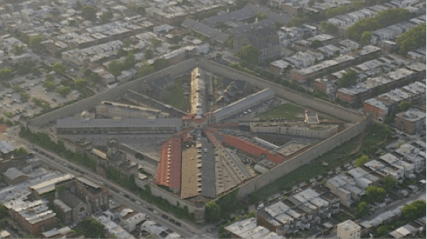
I had never heard of the Eastern State Penitentiary where, in mid-1800s, it set the standard for penal reform with its castle-like Gothic architecture and its founders’ Quaker-inspired belief that solitary confinement could reform criminals.  Eastern State’s radial floor plan (known as the hub and spoke plan) and system of solitary confinement was the model for hundreds of later prisons worldwide.

4


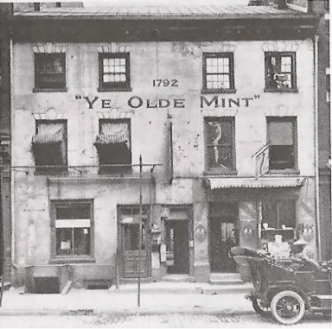
The next day, while I was trying to take in as many of the interesting things in Philadelphia as I could, I decided to take a quick self-guided tour of the current U.S. Mint there in Philadelphia.   It turns out that the first U.S. Mint (better known as “Ye Olde Mint”) was authorized by the “Coinage Act” of 1792 and was built that same year.  The Mint Act (as it was called) also instituted a decimal system based on a dollar unit; specified weights, metallic composition and fineness; and required that each United States coin be impressed with the word “Liberty.”  It was fascinating to see how our U.S. coins are produced, most of the process now being automated.

5


I checked out the City Tavern which was the site of many early business transactions, patriot gatherings, and musical performances and has been restored to look as it did in the 1700s. Today one can sample ale recipes by George Washington, Benjamin Franklin, Thomas Jefferson and Alexander Hamilton. I didn’t stop and partake of any of those, as I was on a mission to see as many of the places as I could before the close of the day.

6


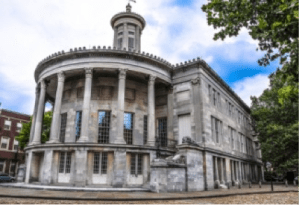
Down the street was the Philadelphia Merchant’s Exchange, built between 1832 and 1834, and was originally a gathering place where merchants met to barter or sell their cargoes and merchandise. From Exchange the ships could be seen approaching from up or down the Delaware River.

7


—–To Be Continued—–

Treasures

22 Feb

SUNDAY MEMORIES

Judy Wills

JUDY

I’ve found many “treasures” in my lifetime. The times in my life that I write about are, indeed, treasures to me. Such wonderful memories they are. But I have some “earthly” treasures, as well. I’ve collected things throughout my life, and they usually have great meaning to me. I remember when my Aunt Jessie bought me my first pitcher – and it started a collection with me. Most of the “pitchers” I have are actually creamers. She took me another time to Juarez, Mexico, and we purchased another pitcher.

1

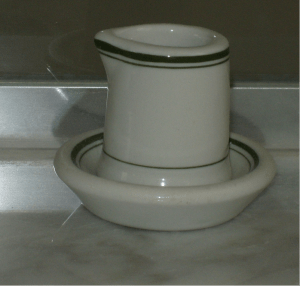
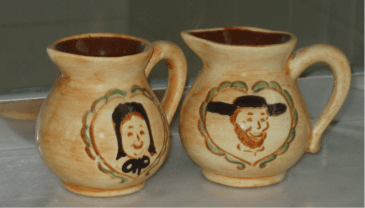
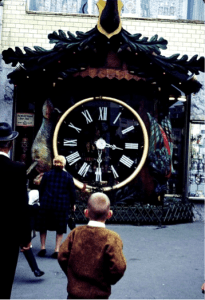
I have a pitcher that is purported to be from my grandmother – and the only thing I have from her. Remember, she had 13 children, and my family lived far away from her, so we didn’t get very much of hers following her death. 3 I have a cow pitcher that my mother filled with milk and we poured it over our cereal. 4 (I’ve actually lost that one, but my brother found another one and I have this one to remind me. Here is a picture of the original in our dining room window) 5 I also have a small pitcher that was used on the “family-style” table at our Glorieta Baptist Convention Center in Glorieta, New Mexico. They were filled with cream or milk, and several were on each table for the coffee users. 6 I have another “cow” pitcher that was for the same use. 7 I have a set of pitchers that Aunt Jessie picked up in Pennsylvania one time. 8 Yes, they are dust-collectors as well, but they remind me of good times in my life. But I have other “treasures” as well. I had heard of Hummel figurines most of my life, but it wasn’t until we moved to Germany that they came to mean something to me. In downtown Wiesbaden, there was a most unique store. Here is a picture of the storefront. It is one huge cuckoo clock! 9 But they had wonderful Hummel figurines there. Fred’s mother purchased one, and, since her death, I have it. It is a treasure.10One of the most fun treasures I have is a German nutcracker. Most of the nutcrackers you find have a smooth, rounded block of painted wood for the face.   12


Really gives character to him. We have him sitting where we can see him every time we sit down to eat. I know we are to “lay up treasures in heaven,” but these earthly ones give joy to our earthly life and times. When heaven comes my way, I won’t need them anymore – I’ll have the daily worship of my Lord and Savior, Jesus Christ. And I am so grateful for that assurance of salvation. I am blest beyond measure.

The Crest

15 Feb

SUNDAY MEMORIES

Judy Wills

JUDY


Growing up in Albuquerque, New Mexico, I always took the mountains for granted. They were just part of the scene.

2

The Sandia Mountains are part of the Rocky Mountain chain, and are really majestic and beautiful, and I miss them, now that I live in flatland Florida. The mountains are quite wonderful all the time, but especially in the evening, when the sun is setting and they literally turn purple. Remember the line from “America the Beautiful” – you know:

O beautiful for spacious skies,
For amber waves of grain,
For purple mountain majesties
Above the fruited plain!

Well, they really do turn purple! Amazing!

The top of Sandia Crest tops out at 10,678 feet above sea level – the highest point in Albuquerque. And it’s COLD up there – and breezy! We took our daughters there in the summer before we went to Germany – and we forgot to take sweaters with us!. As you can see from the pictures – we were FREEZING!


For a bit of information, I gleaned this from Wikipedia: Sandía means watermelon in Spanish, and is popularly believed to be a reference to the reddish color of the mountains at sunset. Also, when viewed from the west, the profile of the mountains is a long ridge, with a thin zone of green conifers near the top, suggesting the “rind” of the watermelon. However, as Robert Julyan notes, “the most likely explanation is the one believed by the Sandia Indians: the Spaniards, when they encountered the Pueblo in 1540, called it Sandia, because they thought the squash gourds growing there were watermelons, and the name Sandia soon was transferred to the mountains east of the pueblo.” He also notes that the Sandia Pueblo Indians call the mountain Bien Mur, “big mountain”.

There are two ways to get to the crest – driving or by the tram.It is reported to be the longest tramway in the world!


While we’ve driven the roads many times, we’ve only been up the tramway once – and it was quite a thrill! If you’re ever in Albuquerque, give it a try. Something you’ll never experience anywhere else.

7

But Albuquerque and the crest are known for other things, as well. I know that many people have heard of the winter snow skiing in Taos, New Mexico. But the best-kept secret is that some of the very best skiing is right there in the mountains of Albuquerque!

8

On a website I checked out recently, it said that there was a 23″ base of snow, and so far this year they’ve had 55″ of new snow! That should delight any ski enthusiast! I never got into skiing – little too expensive for me, and I’m a bit of a chicken. But many people have discovered that pleasure and ski right outside of town.

That’s the Albuquerque I know and love.

9

My Colonial States Trip~Part 12

4 Feb

A Slice of Life

 Bill Lites

Bill Stars Plane

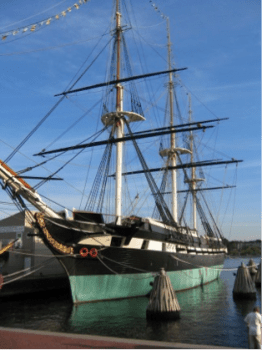
The next day I misread the opening time for the B & O Railroad Museum in Baltimore, MD so I was an hour early getting there. I parked in the museum’s free parking lot, and took the free “Charm City Circulator” bus to the Baltimore Inner Harbor. Since I had toured aboard other U.S. Navy ships and submarines, I only went aboard the USS Constellation. I did take photos and checked out the USCGC Taney, the submarine USS Tork, and the Lightship Chesapeake, but saved the time going aboard those ships, for another museum down the road that day. While waiting for the bus back to the B & O Railroad Museum, I struck up a conversation with a very nice lady who was on her way to work, and helped me with the number of the bus I would need to catch for my trip back to the RR museum, and my car.

1

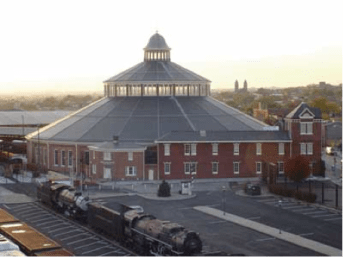
The B & O Railroad Museum is located in the old Monte Clare Station, and with its adjacent roundhouse, was part of the original Monte Clare Shops begun in 1829. The Shops are considered to be the oldest railroad manufacturing complex in the United States. The museum is massive, and has one of the world’s largest collections of 19th century rolling stock. The museum was also the site which received the first telegraph message, “What hath God wrought?” sent from Washington, D.C. to Baltimore, MD on May 24, 1844 using Samuel Morse’s new telegraph invention.

2

Next I took a quick drive north a few miles to visit the Glenn L. Martin Aviation Museum in Middle River, MD which was a small museum with only a dozen or so outside static display aircraft. I hadn’t planned to stay long (the Robert Frost poem comes to mind again), but I was their only customer and their very knowledgeable tour guide was a little long-winded with nothing else to do. I immediately realized I was trapped. I was afraid he was going to explain all about each of the 20,000 photos covering the walls of the small museum area and finally asked him if I could see the museum’s airplanes. He had to drive me to the static displays and started telling me all about each of the airplanes, and I was trapped again. They had two B-57 aircraft on static display, and I recorded the tail numbers so I could ask my friend Larry when I back to Titusville, if he had flown in either of them, during his time in the U.S. Air Force. I finally convinced him to take me back to my car so I could get on to the next stop. I’m sure I could have learned a lot if I had not been on such a tight time schedule that day.

3

Now I headed south around Chesapeake Bay to visit the U.S. Naval Academy Museum in Annapolis, MD which is located in the Preble Hall, just inside the Naval Academy premises. I parked and had to walk thru a security check point, and show my ID, in order to access the museum. The museum is a maritime museum started in 1845 and traces U.S. Naval history in the form of three dimensional artwork, paintings, model ships, uniforms and metals exhibits in its four galleries.

4


—–To Be Continued—–

My Colonial States Trip~Part 10

21 Jan

A Slice of Life

Bill Lites

Bill Lites


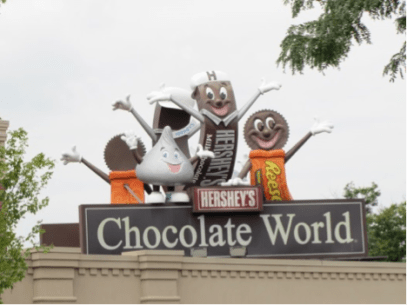
It was getting late, so I drove over to Hershey World which was really on my list for the next day, but I had checked the hours of operation before the trip, and I thought they were supposed to be open until 11:00 pm daily. My first clue that something was amiss was that their huge parking lot was almost empty. Well, when I got there, I found out they have different operating hours on different days of the week, as well as different months of the year! I hadn’t researched their operating hours thorough enough, and by now it was 5:45 pm and they were due to close at 6:00 pm that day. As I walked into the lobby, I saw the entrance to the Hershey’s Great American Chocolate Tour Ride and asked the lady if it was too late for a tour. She said, “Not at all, step aboard.” So I did. On their moving tour chair, I got to see how the cocoa bean is processed from the tropical rainforest to Hershey, PA and is transformed from a bean into the many forms of Hershey’s famous chocolate. That was all I needed to do there, as DiVoran had instructed me NOT to buy any chocolate for her because of her diet. That evening, for dinner, I treated myself to another one of my very favorites; a “Southwest Specialty Burger” at Fuddruckers in Harrisburg, PA before heading for the motel to relax and write-up my notes about the day’s activities.

1

The next morning I drove the 15 miles back over to Hershey, PA to visit the Antique Auto Club of America Museum, and what a collection they have there. The AACA’s collection of vehicles includes such rare early autos as a 1895 Chicago Motor Benton Harbor, a 1896 Ford quadricycle, a 1897 Aldrich Autobuggy, a 1905 Paragon Roadster, a 1917 Pierce-Arrow Model 38 Runabout and even a 1924 REO Funeral Hearse. I was simply amazed at this fine collection of early means of transportation. They even had the Hershey Kissmobile parked out front under the portico. This was one of the finest antique auto museums I had ever seen.

2

Next I went back into downtown Harrisburg to visit the Pennsylvania National Fire Museum where I saw how the firemen lived and worked, and also some of the equipment they used during the early 1800s. The museum is housed in the 1899 Victorian firehouse used by the Reily Hose Company No. 10 and features an outstanding collection of artifacts and equipment including an early hand-drawing pump wagon and other firefighting equipment used over the years. This was where the tour guide told me about how the term “Fire Plug” came about. Seems as how, in the early days, the water mains were made of wood, and held together with metal straps. These water mains were buried underground and when there was a fire in the vicinity, the firemen had to dig down to the water main, drill a hole in the pipe and install a hose adapter. When they were finished with the hose adapter, they removed it and inserted a wooden ”Plug” in the hole before covering up the pipe and marking the “Plug” location for future use. I wonder how that process morphed into what we knew when I was a kid as a “Fire Plug” or better known today as a “Fire Hydrant?” How is that for a piece of firefighting trivia?

3

—–To Be Continued—–