Tag Archives: Scotland

Circuitous Travel~Part 4

3 Sep

SUNDAY MEMORIES

Judy Wills

 

 As an aside about Loch Lomond: Many years after this 1983 trip, Fred and I took a bus tour of England/Scotland with Fred’s parents and one of his sisters and her husband. I remember, as we passed by Loch Lomond, Fred’s parents were singing together the lovely song about the Loch, which was published in 1841. Here is the familiar chorus:


Oh, ye’ll tak the high road, and I’ll tak the low road,

And I’ll be in Scotland afore ye;

But me and my true love will never meet again

On the bonnie, bonnie banks o’ Loch Lomond.


As Fred read this post (he’s my first reader and gives suggestions and catches any mistakes or quirky stuff I do), he asked that I mention to you that, when he and his sister heard his parents singing this song, they both had tears in their eyes. It was a beautiful and memorable moment for them. One neither of them have forgotten.

Leaving Loch Lomond, we began our way back to Edinburgh. We passed through Luss. Of interest to me, I found on Google Search and Wikipedia:

Saint Kessog brought Christianity to Luss at some uncertain date in the ‘Dark Ages’. A number of early medieval and medieval monuments survive in the present churchyard, including simple cross-slabs which may date to as early as the 7th century AD, and a hogback grave-cover of the 11th century. A well-preserved late medieval effigy of a bishop is preserved within the modern church. The present Church of Scotland place of worship was built in 1875 by Sir James Colquhoun, in memory of his father who had drowned in the loch in December 1873. The church is noted for its online services as well as for holding over one hundred weddings per year, most from outside the parish. Luss is the ancestral home of Clan Colquhoun. [Remember – I mentioned recently that my ancestral history is the Colquhoun clan! Wish I had known that when we were on this trip!!]

Here is a picture of the Luss Parish Church. Beautiful!
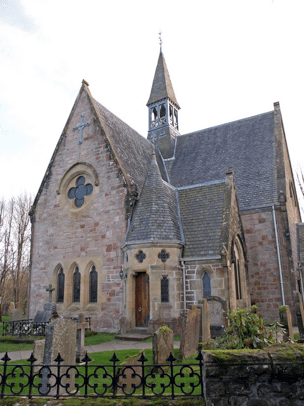
 

Credit: Luss_Parish_Church_By wfmillar, CC BY-SA 2.0, httpscommons.wikimedia.orgwindex.phpcurid=14350248


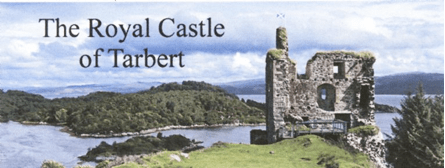
Still within the Loch Lomond area, is Tarbert. There is a castle there, as well. Here is some information I gleaned from Google Search and Wikipedia:

The castle at Tarbert was originally an iron age fort and was subsequently fortified by Robert the Bruce. By the 18th century it was in disrepair and most of the stone was re-cycled into expanding the port and the local houses.


From Tarbert, we drove through Crianlarich. Here’s some info on it, again from Wikipedia:

Crianlarich has been a major crossroads for north and westbound journeys in Scotland since mediaeval times. In the 1750s, two military roads met in the village; in the 19th century, it became a railway junction on what is now the West Highland Line; in the 20th century it became the meeting point of the major A82 and A85 roads. As such, it is designated a primary destination in Scotland, signposted from as far as Glasgow in the south, Perth in the east, Oban in the west and Fort William in the north…. Crianlarich is very popular with hillwalkers….In 2001, the village had a population of 185.

From Crianlarich, we drove through Callander and back through Stirling, and finally back to Edinburgh and a peaceful night in St. Valery’s Guest House – our final night’s stay in that lovely B&B.

~~~~~~~~~~To Be Continued~~~~~~~~~~


Circuitous Travel~Part 3

13 Aug

SUNDAY MEMORIES

Judy Wills


Circuitous travel, continued – last time I told you about how much we had enjoyed our time looking around the ruins of Fountains Abbey, near Ripon, England. In preparing for today’s episode, I found more pictures of Fountains Abbey, and would like to share some of them with you. If you ever get to England, this is a really neat place to visit.


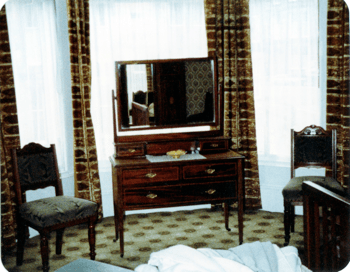
Most of our day, following our stay overnight in Durham, was traveling. I have no pictures that we took of Durham, or Newcastle – and none until we arrived in Edinburgh, Scotland. Here are a couple pictures of our room in the St. Valery’s Guest House.


It was a lovely place, and we stayed several nights there. It was managed by Mr. & Mrs. Robert Shannon. We had the good fortune to look out our room window one morning to capture this. They were still using a horse-drawn cart to deliver milk! Wonderful!


One funny incident – perhaps not funny at the time – happened there: One morning, Karen got up early and went to get her shower, before Janet woke up. When Karen went to go back into her room – the door was locked! And she had forgotten to take a key with her!! Since the girl’s room was next to ours, Fred began knocking on the wall next to their room, and eventually began knocking on the door, hoping to wake Janet up. After an excruciating 45 minutes of knocking, Mr. Shannon came up the stairs and asked if there was a “problem.” Fortunately, he had a key and let Karen in the room. Janet looked up, bleary-eyed and confused – and had not heard a single knock! She was a really hard sleeper! Karen never forgot the key after that!

The following morning we took a bus tour to St. Andrews. It was, essentially, an all-day tour, lasting from 9:30 a.m. until 6:30 p.m. Fred is a great fan of golf, so this was to be a special tour for him – to see where golf originated.

While there is some controversy about the origins of golf, I gleaned from Wikipedia:   The modern game originated in Scotland, where the first written record of golf is James II’s banning of the game in 1457, as an unwelcome distraction to learning archery. James IV lifted the ban in 1502 when he became a golfer himself, with golf clubs first recorded in 1503-1504: “For golf clubbes and balles to the King that he playit with”. To many golfers, the Old Course at St Andrews, a links course dating to before 1574, is considered to be a site of pilgrimage. In 1764, the standard 18-hole golf course was created at St Andrews when members modified the course from 22 to 18 holes. Golf is documented as being played on Musselburgh Links, East Lothian, Scotland as early as 2 March 1672, which is certified as the oldest golf course in the world by Guinness World Records


~~~~~~~~~~To Be Continued~~~~~~~~~~

Flying Legends Airshow~Part 6

30 Sep

A Slice of Life

Bill Lites

Flying Legends


Day 6 – Monday July 6th

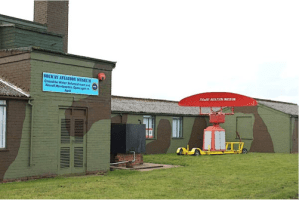
The first museum on my list for today was the Solway Aviation Museum in Carlisle. This museum was located adjacent to the small Carlisle County Airport, and was one of the smaller museums I have visited so far. They only had four static display airplanes outside, and they were not in very good shape. However, I was surprised to see that such a small museum was able to be the recipient of a Vulcan bomber, one of England’s most famous jet aircraft.

1

Next on the list was the Dumfries & Galloway Aviation Museum located just outside Dumfries, Scotland. This museum had 9 nicely restored static displayed aircraft outside. I was mainly interested in their Fairey Gannet AEW.3 (XL497) a carrier borne variant of the basic Fairey Gannet aircraft. This aircraft is unique because of its counter-rotating propellers which were driven by an Armstrong Siddeley Double Mamba ASMD 4 turboprop engine of 3875 ehp.

2

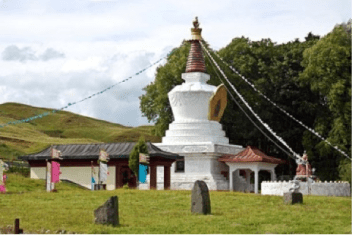
Since I had never visited a Buddhist monastery before, I had planned to just stop by the Klanyu Samye Ling Tibetan Buddhist Monastery, which is located in the hills, some 30 miles east of Dumfries. But on this day I was running behind on time and that extra hour of travel time wouldn’t have helped my schedule, so I saved that experience for another trip.

3


DiVoran had asked me to stop in Moffat, Scotland and buy her a pair of argyle knee socks from the Moffat Woolen Mill. The lady at the mill told me that the argyle socks were out of style and the mill did not make them anymore. She suggested that DiVoran might find them on the Internet but she wasn’t sure who might still be making them. When I told DiVoran, she said it was no big deal, and that she would check it out when she had time.

4

Next was a visit to check out the Tall Ship Glenlee, which is only part of the many displays at the Riverside Museum in Glasgow, Scotland. The Tall Ship Glenlee is a steel-hulled three-masted barque, one of many so called “baldheaded sailing ships” of the time. Built in 1896, she served Archibald Sterling & Co. of Glasgow, and other owners, until 1931, when she became part of the Spanish Republican Navy. In 1990, after many years of neglect, a British naval architect discovered the ship and she was rescued from being scrapped. The ship was subsequently bought and restored for public display by the Clyde Maritime Trust. I was surprised to see that the museum also had on display many transportation items, such as vintage bicycles, cars, trolleys and even a steam locomotive, inside their large museum building.

5

Next Greta and I tried to find the National War Museum, which is located in the Edinburgh castle, but the castle is located in the middle of the city of Edinburgh and the area was jammed with rush hour traffic. I did however see the beautiful Edinburgh Castle (from a distance) as I was directed through the center of town by Greta. I wasn’t able to stop long enough to take a good photo because of all the traffic, and no place to park.

7

When I arrived at the Edinburgh Lodges (which are actually located in the city of Musselburgh, Scotland) for the evening, I thought at first I might be sleeping in a castle, as that was where the lodges reception center was located.

8

I walked into this hugh sitting room, with a tall fireplace, and access to a large lounge and dining hall, all guarded by a knight in full battle armor.

9


As it turned out the guest rooms were located in more modern bungalows away from the castle, which were accessed by vine covered walkways from the castle. The castle and bungalow grounds were beautifully well kept and were lined with some of the most beautiful flowering bushes I have ever seen.

10


—–To Be Continued—–

Our Trip to the UK~Part 9

29 Jan

A Slice of Life

Bill Lites

When Hadrian’s Wall was completed, it is said to have consisted of many “turrets” and what were called “milecastles” used, not only for defense purposes, but also to house the upwards of 10,000 Roman troops required to man this massive defense system.  It is theorized to have been for the purpose of separating the Roman Empire subjects from the “Barbarians” to the North.  However, a number of theories have been presented by recent historians, that if not wholly, at least partially, the wall was constructed to reflect the power of Rome, and was used as a political point by Hadrian.

1


I didn’t realize it at the time, but have read that only 20 years later, another Roman Emperor, Antoninus Pius, had expanded the Roman Empire in Britain another 100 miles North, and constructed another barrier between what was then the Roman Empire and the “Barbarians” to their North.  Construction of this wall began in 142 AD, at Antoninus Pius’ order, and took about 12 years to complete. The Antonine Wall, as it was called, is a 40-mile long stone and turf fortification built across what is now the Central Belt of Scotland, between the Firth of Forth and the Firth of Clyde.  The Antonine Wall was designed with 19 forts and 6 fortlets spaced along its length, and was manned by as many as 5,000 Roman troops.  However, for military, political and economic reasons, maintenance and occupation varied at both Hadreain’s Wall and the Antonine Wall over the next 300 years, by which time both had been abandoned by the Romans.

2

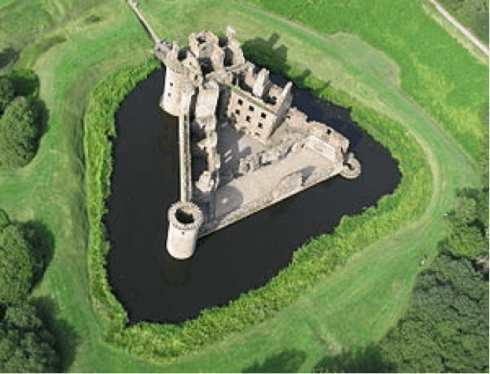
As we traveled north, next we stopped in Dumfries, Scotland where we visited the Robert Burns Center and drove across what is advertised as the oldest arch bridge (1431 AD) still in use in Scotland.  The next day we visited the unique triangular-shaped 13th century Caerlaverock Castle with its high towers and moat.  It was a stronghold of the Maxwell family from the 13th century until the 17th century. Then in the early 17th century, they built a new lodging within the walls, described as among the most ambitious early classical domestic architectures in Scotland.

3


One of the interesting features of the Scottish countryside was how rocky the soil was.  The people had to remove the stones so they could cultivate their land so, over the centuries they have used the stones for everything imaginable.  They built houses with them, they built fences with them and they lined the roads with them.  Some of the country roads are pretty narrow, and when you are driving on one of them (on the left side of course) at night, with four foot high stone walls on both sides of the road, and you meet a car or truck coming the other way, it can be mighty scary, take my word for it!4


At the “Locharthur House” B & B in Beeswing, Dumfries that evening, we met our wonderful hosts, Mr. & Mrs. Schoolings, and their cute little redheaded daughter Elizabeth.  The next morning “Beth” invited us to follow her around as she did the chores.  We saw her special fuzzy lop eared rabbits, her five young red pigs, and the cows in the field down by Loch Arthur.  Of course she had on her Wellington Rubber Boots or “Wellies” and we didn’t, and as a result we got our feet sopping wet trekking thru the field with all its early morning dew.  We were amazed when DiVoran asked Beth how old she was and she told us she was 12, and then added, “I’m wee for my age.” What a grand time we had experiencing the busy life of a young Scottish Lass and all her animals.

5


                                                                    —–To Be Continued—–         

My Favorite Author and Other Important Matters

19 Aug

My Take

 DiVoran Lites


My all time favorite author is D.E. Stevenson and I believe she is still www.oldthingsrnew.com, blog mistress, Onisha’s all time favorite too. D. E. Stevenson’s father was first cousin to Robert Louis Stevenson. Many of her books have been long out of print, but Persephone is beginning to publish her again. This I find true: “Her books are avidly sought by discerning readers throughout the English-speaking world: readers who appreciate endearing characters, familiar yet intriguing situations, and darn good stories,” from the D. E. Stevenson official website. She was born in 1892 and died in 1977 at eighty-one years of age. She is buried in the Moffat cemetery on the Edinburgh road. I was in Scotland once and got to walk around the outside of the two-story, Victorian house she lived in. I think it should be a museum.

Her books are an exception to my routine of giving novels away. I made a grand effort to collect as many as I could find. I now have thirty-eight of forty-three. For a long time I was able to buy her books at garage sales and used bookstores, but eventually she became rare. I do read them all through every five years or so. It’s unusual for me to read a book more than once, so that shows you how much I enjoy them. She wrote about love, people, houses, and families.

If I read about books that sound good or if I particularly enjoy an author I try to order the books from the library system. I’m not sure all counties have the arrangement we have, but you can look at the online card catalog and find books and no matter where they actually live in the county you can order them and they’ll be sent to your local library for pick-up. I’m only ordering one or two at a time now and that gives me plenty of time in the three weeks allowed to finish them and get them back.


DiVoran is correct. D.E. Stevenson continues to be my all-time favorite author. I love the music of her words, the kindness and insight of her characters. If anyone knows an author of a similar caliber, please share with me.-Onisha


I’m Looking For a Few Good Authors

17 May

On the Porch

Onisha Ellis

I’m looking for a few good authors. I’d like them to be no older than forty years of age. I’ve reached the time of life when the authors I spent my youth and middle age with are dying.  It just isn’t right.  One should never outlive their children or their favorite authors. I will tell you who my favorites are and you can tell me yours.

My all time favorite author is D.E. Stevenson. Here is what Wikipedia says about her. D.E. Stevenson was born in 1892 in Edinburgh, Scotland, and was educated at home by governesses. She started to write at eight, but because her parents and governesses disapproved she had to do this in secret. She later wanted to go to university but her father refused, concerned about having an educated woman in the family. Stevenson was married in 1916 to a captain in the 6th Ghurkha Rifles.

Isn’t that an  amazing bio? She died in 1973 after writing forty novels. It took me years to find all her books but I think I may have read almost all of them and she is one of the few authors I collect. Her books transported me to the gentle countryside of Scotland into the lives of everyday people getting into scrapes  and of course, food was mentioned a lot, which explains to some degree my fascination with her books.

After Stevenson there is no particular order to my favorite deceased authors. I do genuinely miss Eugenia Price. The St. Simon’s Trilogy was a favorite for myself as well as my daughter, requiring a girl’s weekend to St. Simons Island to visit the marshes and cemetery we felt a bond with. Even today all I have to say to my daughter is “John died” and we tear up. Now that is writing. Savannah Quartet is not to be missed either. I went to Goodreads to skim some reviews and refresh my memory and I was saddened to see how hardened some readers are. They can’t relate to a time when human honor and duty were valued.

Eugenia died in 1996 and was buried in her beloved Christ Church cemetery on St. Simon. I foresee another trip to the island to visit her grave. She is buried step away from the pastor she immortalized in her books.

Since I have a self-imposed five hundred-word limit for my blog posts, I can see this will have to be continued. I would love to hear from you. Which authors have you read for years and now they are gone?

: Christ Episcopal Church

: Christ Episcopal Church (Photo credit: Wikipedia)