Tag Archives: Travel

Circuitous Travel~Part 5

10 Sep

SUNDAY MEMORIES

Judy Wills


After a wonderful breakfast at the St. Valery Guest House in Edinburgh, we loaded up the car and headed to Wales.

Looking at the map, it is quite a distance from Edinburgh to the Eastern border of Wales. It has been so many years since we made this trip, that I honestly don’t remember all the towns and villages we passed through getting to Wales. I have a “log” where I wrote down where we went each day, and what we saw, but there are only two entries for this particular day.   I guess those two cities, with castles, were the main focus of our day.

And so, I will tell you what we saw that day. It was so awesome…and we enjoyed ourselves so much. I have not mentioned before that one of the things that has interested me and thrilled me so much on this trip – is all the castles and ruins that we have seen that were built by the Normans! And they are still standing! Many years ago, Fred and I made a trip to Greece, and the feeling of awe that I experienced there is much the same as it was on this trip to England, Scotland, and Wales. All these structures have been in existence for hundreds and hundreds of years – and are still standing! I remember Fred sitting on the stump of a column in Athens, on the Acropolis, and knowing that those buildings were there when Jesus walked the earth…and they are still standing! We stood on Mars Hill, where Paul preached his sermon. Yes, some structures or most are in ruins, but they are still there, to remind us of what was. Amazing!
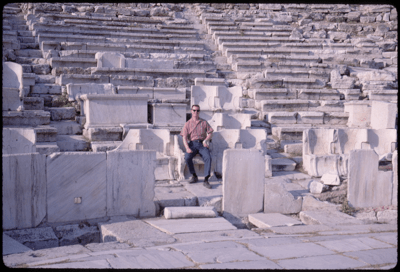
 

Fred sitting in the priests seats in Dionysus Amphitheater at the foot of the Acropolis

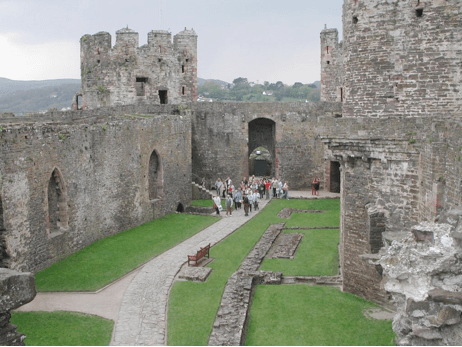
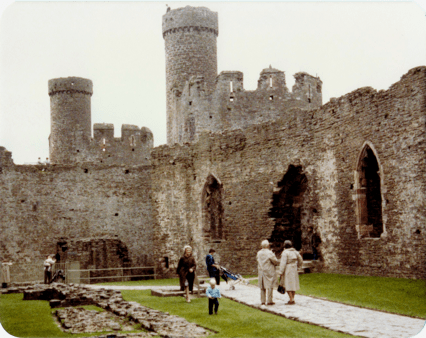
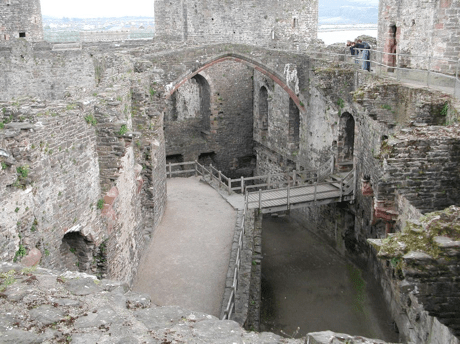
In any case, our first stop in Wales was in the town on Conwy. It is on the north coast of Wales. From a website on the castles of Wales, I learned:

Jeff Thomas, author:

Words cannot do justice to Conwy Castle. The best, simple description is found in the guidebook published by CADW, the Welsh Historic Trust, which states: “Conwy is by any standards one of the great fortresses of medieval Europe.” Conwy along with Harlech is probably the most impressive of all the Welsh castles. Both were designed by Edward I’s master castle builder James of St. George, and while Harlech has a more storied past, Conwy’s eight massive towers and high curtain wall are more impressive than those at Harlech.
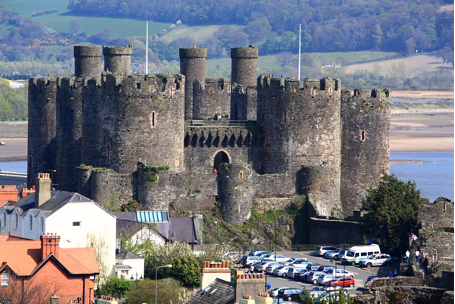
 

Credit Google Search and Jeffrey L. Thomas – Conwy Castle


 Unlike Harlech however, Conwy Castle and town are surrounded by a well-preserved wall lending an additional sense of strength to the site. Conwy’s well-preserved wall helps the town maintain a medieval character lost by other Welsh castle-towns over the years. Construction of Conwy began in 1283. The castle was an important part of King Edward I’s plan of surrounding Wales in “an iron ring of castles” to subdue the rebellious population. The highly defensible wall Edward built around the town was intended to protect the English colony planted at Conwy. The native Welsh population were violently opposed to English occupation of their homeland.


Conwy Castle entrance and bridge


Mr. Thomas continues:   Conwy is a town that time has simply chosen to pass by. Despite a few modern shops, Conwy still looks very similar to the town Edward envisioned some 700 years ago. The ancient town walls, castle and simple streets offer very little to remind the visitor of the modern world. Conwy is something of a paradox. Originally a symbol of English domination of Wales, in time the Welsh managed to reclaim the town, replacing English oppression with its own medieval character. Only at Conwy and St. Davids did we get the feeling of being transported back to ancient Wales.
 

Credit Google Search and Jeffrey L. Thomas


Credit Google Search and Jeffrey L. Thomas


Credit Google Search and Jeffrey L. Thomas

Credit Google Search and Jeffrey L. Thomas

Credit Google Search and Jeffrey L. Thomas
~~~~~~~~~~To Be Continued~~~~~~~~~~


America’s North Country~Trip Part 1

6 Sep

A Slice of Life

Bill Lites


Prolog:


Growing up in the Southwest (New Mexico), I have always been interested in the development of the western United States. I have visited all of the southwestern states many times, but have never ventured north. I had always wanted to visit the Western Plaines states or America’s North Country/ (as I call them), so I decided to take this opportunity to checkout this part of our beautiful country. During my research for this trip I quickly discovered that this area of our country is still pretty much wide-open and the trip was going to be much different from many of my recent trips. Whereas, I was accustomed to having multiple airplane, auto, railroad and maritime museums to choose from, I now found very few of these type museums. What seemed most prevalent in these states (Nebraska, North & South Dakota, Montana, Idaho & Wyoming) were Frontier type museums. This consisted of Historic Site & Town restorations, Pioneer Villages, Lewis & Clark Historic Sites, Territorial Prisons and Dinosaur museums. There would be a few airplane, car and railroad museums scattered along the way, but very few. What did I expect?


Day 1 (Friday)

The only city in any of the six states I was going to visit, into which I could get a non-stop flight on Southwest Airlines, was Omaha, NE. I was amazed to find the curbside check-in stand at the Orlando Airport with less than a dozen people in line to check their bags. The security check line was also minimal, and I was at the gate before I knew it.


My 2-hour, 10-minute Southwest non-stop flight from Orlando to Omaha, NE was smooth and comfortable. The Honey-Roasted peanuts were fresh and went well with two glasses of apple juice. I had brought along a couple of Roasted Almond Crunch bars to supplement the peanuts, so was not too hungry by the time we landed in Omaha.


At the rental car desk, the agent asked me where I would be traveling to, and I just picked Fargo, ND off the top of my head. I was informed that the rate I had been quoted by my travel agent would not allow me to take the car out of any state that did not border Nebraska. What kind of scam was this? What could I do? The agent said she could give me a “Commercial Rate” which would allow me to travel in any state I wished, for only $250 more! I said, “No Thanks” and went to another rental car desk. There I was able to rent a top-of-the-line car that I could travel anywhere in, for only about $40 more than my originally quoted price. That car had more “Bells & Whistles” than I knew what to do with.


With that task finally settled, and since I had gained an hour during my flight, I still had some time left to visit a few museums before they closed for the day. I headed across the Missouri River to visit my first museum. It was only about 3½ miles to the Union Pacific Railroad Museum in Council Bluffs, IA. This museum, located in the old, beautifully restored, Council Bluffs Carnegie Library, has several exhibits covering the construction of the Transcontinental Railroad in the years after the Pacific Railway Act was signed into law by Abraham Lincoln in 1862, and the ultimate growth of the Union Pacific Railroad system.


I had chosen to go to the Union Pacific Railroad Museum first because it closed early, so now I headed back across the Missouri River, to visit the Lewis & Clark Historic Trail Headquarters in Omaha, NE. I found it very interesting that this area, on the west bank of the Missouri River, was originally obtained by the U.S. Government in 1854 from the U-mo’n-Ho’n (Omaha Indians) or “upriver people.” I really had never related the word “Omaha” with an Indian tribe before. Doesn’t say much for my American History knowledge does it?


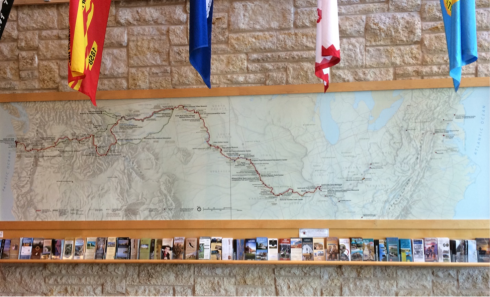
History seems to suggest that the wandering Omaha Indians established their first permanent village west of the Missouri River around 1734. I was impressed to learn that the Lewis & Clark Expedition Trail extends over 3700 miles, thru 11 states, from the St. Lewis area to Fort Clatsop in Oregon Country on the Pacific coast. As part of the Historic Trail, it is said that the Lewis & Clark Expedition traveled, camped, hunted and fished around this area. They also met and traded with the Omaha Indians, and held council with many of the Indian Chiefs in the middle Missouri River area. My travels on this trip would follow much of the northwestern portion of the original historic Lewis & Clark Expedition of 1804-1806.


Next it was just a short drive to where I visited the Durham Museum located in downtown Omaha. This museum is housed in the beautifully restored former Union Pacific Railway station, and has several displays depicting the early days of the Union Pacific Railway system during the growth of the city of Omaha. The museum also has a nice selection of restored rolling stock outside.


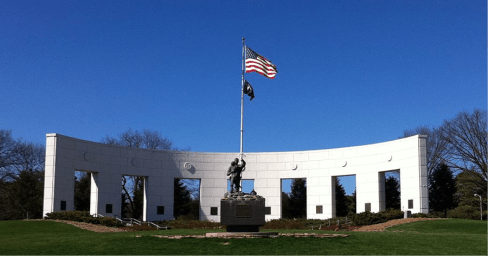
Next I visited the Omaha Memorial Park, located another few miles west of the Missouri River. This memorial park was dedicated in 1958 to honor all of the men and women from Douglas County, Nebraska who have served in the U.S. Armed Forces.


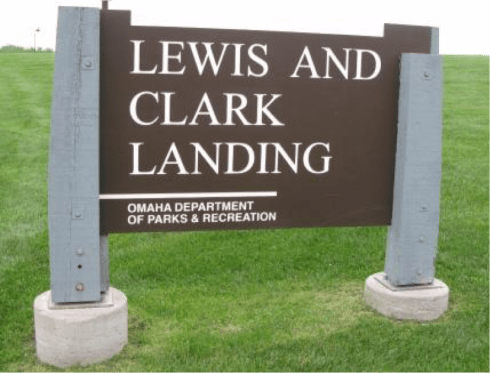
Then I drove a couple more miles to visit the Lewis & Clark Landing, located on the west bank of the Missouri River, also near downtown Omaha. The landing represents the original 1804 landing site, in the Omaha area, of the Lewis & Clark Expedition as they explored some of the vast lands (828,000 sq. miles) which made up part of the Louisiana Purchase for the U.S. Government.


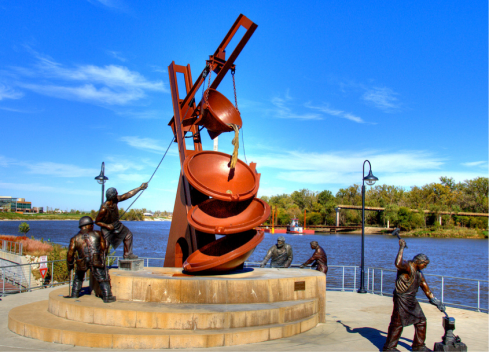
As an interesting side note, there was a “labor” sculpture adjacent to the landing to honor the many men who had been a part of the lead refining industry that operated in this area, by one name or another, from 1871 to 1997.

Note: See the man with the hammer raised over his head in the photo below? When I Googled this sculpture, I came across a photo of this same sculpture during the Great Flood of 2011, showing the water level so high that only his hand and the hammer were above the water, when the Missouri River crested between 30-35 feet above normal.


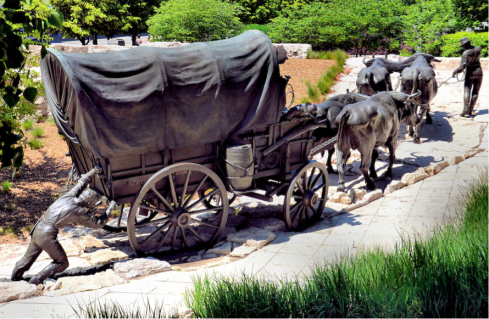
Another interesting area in downtown Omaha was the Pioneer Courage Park. This park represents the many struggles and hardships the early pioneers faces on their trip west thru this area. The picture of these stalwart pioneers is beautifully rendered in several bronze action sculptures, one of which is shown below.


On my way to visit the CAF Museum in Council Bluffs, IA I happened to spot sign for the River City Star. I stopped to see what it was all about and discovered that the “Star” is a passenger excursion riverboat that sails on the Missouri River and is docked at the Miller’s Landing & Yacht Club. The Yacht Club was closed, but a group had chartered the “Star” for a party and people were going aboard.


Since I was not invited to the party, I headed back across the Missouri River to check out the CAF Museum located at the Council Bluffs Municipal Airport. Unfortunately the museum was closed by the time I got there, so I just headed for my motel located there in Council Bluffs. However, before I got to the motel, I spotted a KFC restaurant and decided to have dinner with the Colonel. Yummm! I do like his chicken. The 3-piece chicken dinner came with green beans, mashed potatoes & gravy and one of their homemade biscuits with butter and honey for dessert. I had a very happy tummy after that delicious meal.


—– To Be Continued—–

Disney Springs and Resort Hopping

5 Sep

A Life to Live

Melody Hendrix


As a Florida resident we have some privelidges when it comes to Disney.


Even with the discounts, the parks are very expensive and many of us have been to most of them. I am continuing to explore Disney in a much different way. .. Cheap…  So here is a fun thing to do for a day or even many days.

Our first stop is Disney Springs.


It is free including parking. This is a shopping and eatiing adventure that has been transformed recently. . Beautifully designed with unique shops, yummy restaurants and evening entertainment. The springs theme represents the many springs in Florida.


Two of the restaurants that are fun for families are T-Rex


and Rainforest cafe.


both will keep you entertained with it’s animated life sized creatures. You may even go through a thunderstorm.

Another great restauraunt is The Boathouse. Guests can experience the thrill of a Captain’s guided tour aboard a rare Amphicar that drives on land and floats in the water. The $125 price tag includes your own Car Captain and seating for up to three guests.


My favorite restaurant is the amazing House of Blues. I can’t stop taking pictures of this place. The art and designs are crazy cool. And the food is good too.


Disney Springs takes on a whole different look at night. Much more entertainment and fun.


If you have daughters that love princesses, they can be one too.


Disney princesses will transform them. It’s such an exciting day  and they will look absolutely magical.

Day two. You may need another day at Disney Springs. There is so much to see and do.


However if you are ready for more exploration here is your second plan. We are going Disney resort hopping.

Go back to Disney Springs and park in the Lime parking garage. Go to the Town Center where you will see the busses that go to most resorts and parks. The parking is free and so are the busses.

https://disneyworld.disney.go.com/planning-guides/in-depth-advice/resort-transportation/

So let’s get on a bus that will take us to the Yacht Club.


The Yacht Club is one of four resorts that are side by side around a lake. From there you can walk or take the boat to The Swan and Dolphin. After that is The Boardwalk, then The Beach Club. In between are shops and restaurants. It feels like you have traveled to other parts of the world.

Swan and Dolphin was quite lovely and unique.


The Boardwalk. I love the look of this area.


The resorts welcome you to eat and shop. They cost anywhere from $300 to over $500 a night, so of course swimming in the pools or participating in planned activities are not allowed. To be in and explore this wonderful environment is a fun and entertaining thing to do, especially for free.

Day three

Drive to Animal Kingdom Resort. Tell the guard that you would like to look around the resort and have lunch. They will let you in and you can park for free. There are two buildings to this resort and you can travel back and forth free by bus or it’s walking distance.

This is the lobby.


When you look out this window you see a savannah with some animals.


If you like animals this resort has quite a few savannahs with animals. You can see them from most areas of the resort.


I plan to visit more resorts in the near future. I will share them with you when I do.


I am retired and enjoying life. My hobbies are my 5 grandchildren, son and daughter, and my loving husband. I am a photographer and extreme nature lover. I love spending time in my garden or in the wilderness connected to God my Creator.
Melody

Circuitous Travel~Part 4

3 Sep

SUNDAY MEMORIES

Judy Wills


 As an aside about Loch Lomond: Many years after this 1983 trip, Fred and I took a bus tour of England/Scotland with Fred’s parents and one of his sisters and her husband. I remember, as we passed by Loch Lomond, Fred’s parents were singing together the lovely song about the Loch, which was published in 1841. Here is the familiar chorus:


Oh, ye’ll tak the high road, and I’ll tak the low road,

And I’ll be in Scotland afore ye;

But me and my true love will never meet again

On the bonnie, bonnie banks o’ Loch Lomond.


As Fred read this post (he’s my first reader and gives suggestions and catches any mistakes or quirky stuff I do), he asked that I mention to you that, when he and his sister heard his parents singing this song, they both had tears in their eyes. It was a beautiful and memorable moment for them. One neither of them have forgotten.

Leaving Loch Lomond, we began our way back to Edinburgh. We passed through Luss. Of interest to me, I found on Google Search and Wikipedia:

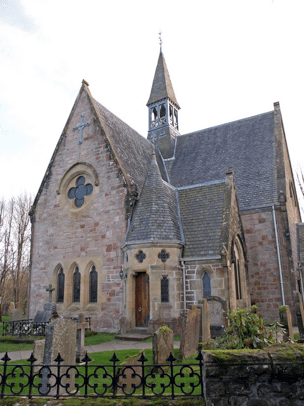
Saint Kessog brought Christianity to Luss at some uncertain date in the ‘Dark Ages’. A number of early medieval and medieval monuments survive in the present churchyard, including simple cross-slabs which may date to as early as the 7th century AD, and a hogback grave-cover of the 11th century. A well-preserved late medieval effigy of a bishop is preserved within the modern church. The present Church of Scotland place of worship was built in 1875 by Sir James Colquhoun, in memory of his father who had drowned in the loch in December 1873. The church is noted for its online services as well as for holding over one hundred weddings per year, most from outside the parish. Luss is the ancestral home of Clan Colquhoun. [Remember – I mentioned recently that my ancestral history is the Colquhoun clan! Wish I had known that when we were on this trip!!]

Here is a picture of the Luss Parish Church. Beautiful!


Credit: Luss_Parish_Church_By wfmillar, CC BY-SA 2.0, httpscommons.wikimedia.orgwindex.phpcurid=14350248


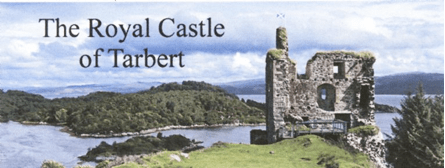
Still within the Loch Lomond area, is Tarbert. There is a castle there, as well. Here is some information I gleaned from Google Search and Wikipedia:

The castle at Tarbert was originally an iron age fort and was subsequently fortified by Robert the Bruce. By the 18th century it was in disrepair and most of the stone was re-cycled into expanding the port and the local houses.


From Tarbert, we drove through Crianlarich. Here’s some info on it, again from Wikipedia:

Crianlarich has been a major crossroads for north and westbound journeys in Scotland since mediaeval times. In the 1750s, two military roads met in the village; in the 19th century, it became a railway junction on what is now the West Highland Line; in the 20th century it became the meeting point of the major A82 and A85 roads. As such, it is designated a primary destination in Scotland, signposted from as far as Glasgow in the south, Perth in the east, Oban in the west and Fort William in the north…. Crianlarich is very popular with hillwalkers….In 2001, the village had a population of 185.

From Crianlarich, we drove through Callander and back through Stirling, and finally back to Edinburgh and a peaceful night in St. Valery’s Guest House – our final night’s stay in that lovely B&B.

~~~~~~~~~~To Be Continued~~~~~~~~~~


White Mountains, New Hampshire~Covered Bridges and Waterfalls

29 Aug

A Life to Live

Melody Hendrix


It was peak fall colors in Lincon, New Hampshire. We arrived at Rivergreen Resort right on the Pemigewasset river. Our home for 2 weeks. It was breathtaking. We set out on the Kancamagus Highway to see the beauty of the White Mountains.


We set out to photograph the fall colors, covered bridges and water falls. Being from Florida this was breathtaking beauty. It was cold, rainy and overcast. A disappointment to most, but perfect for photography.


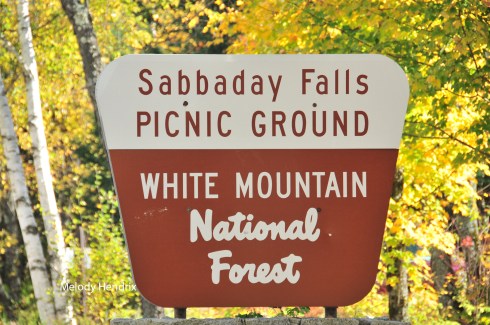
One of the first places we explored was Sabbaday Falls.


The falls were spectacular. There was much more to the park. It was all amazing. We spent most of the day there.

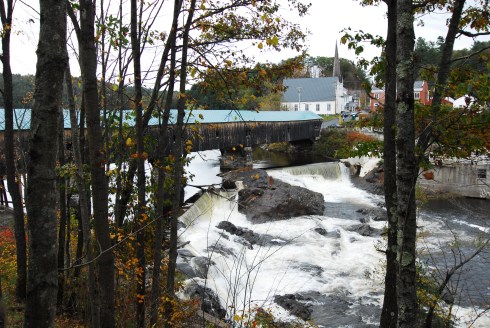
The next day we went to North Woodstock to see Clark’s Bridge.


Clark’s Bridge

Location: East of U.S. Route 3 in Clark’s Trading Post on Clark’s Short Steam Railroad

Clark’s Bridge was originally built in Barre, Vermont, in 1904 as a part of the Barre Railroad, to span the Winooski River. In 1960 the railroad line and the covered bridge were abandoned. The bridge was dismantled in East Montpelier and taken to its present site. The bridge was reassembled on dry land next to the Pemigewasset River. It was positioned over the river in 1965 and is still used as a part of Clark’s Short Steam Railroad. It appears to be the only Howe railroad bridge left in the world. Howe Truss; 116 feet long.

Our next covered bridge is the Saco River Bridge


Saco River Bridge

East Side Street

Conway, NH, 03818

Location: 0.4 miles north of the junction routes 16 and 153 on east side of road. In Conway Village go north on Washington Street and turn right at the fork; this is East Side Road.

This bridge, built in 1890 by Charles Broughton and his son, Frank, carries East Side Road over the Saco River a short distance north of Conway Center. In 1850s, Jacob Berry and Peter Paddleford built a covered bridge to replace a crudely framed log bridge that had collapsed at this site. The 1850 bridge stood until the Swift River covered bridge crashed into it in 1869 after that bridge was swept from its abutments. The bridge was rebuilt by Allen and Warren of Conway but it was destroyed again by a tannery fire in 1890. The existing structure replaces the one destroyed by the fire. Paddleford truss with added arches; 224 feet long. There is a small parking lot on the northeast side of the bridge.

Next is the Swift River Bridge


Location: One-half mile north of N.H. Route 16 at Conway Village

The first bridge at this site, crossing the Swift River, was built in 1850. In 1869, it was swept off its abutments by the raging Swift River and it rode downstream into the Saco River, where it crashed into the Saco River bridge. Debris from both bridges was salvaged and used in rebuilding this bridge. In 1974, the bridge was bypassed in favor of a new concrete and steel structure. Paddleford truss with arch; 133 feet long.

We visited a very interesting town called Bath.


The Bath Covered Bridge is a historic covered bridge over the Ammonoosuc River off US 302 and NH 10 in Bath, New Hampshire. The bridge, built in 1833 by the town of Bath, has a span of over 390 feet and a roadbed that is just over 22 feet wide.

The bridge was listed on the National Register of Historic Places in 1976.

The bridge was closed to traffic in October 2012 for safety, structural, and cosmetic reasons. After 21 months and $3 million in repairs, it re-opened in August 2014.

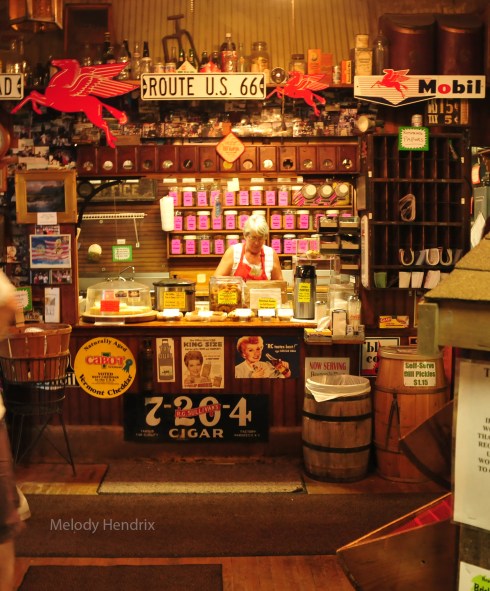
There is a famous place in Bath called The Brick Store, believed to be one of the oldest continually-operated general stores in America. Unfortunately, I believe it may have closed since I visited it several years ago.


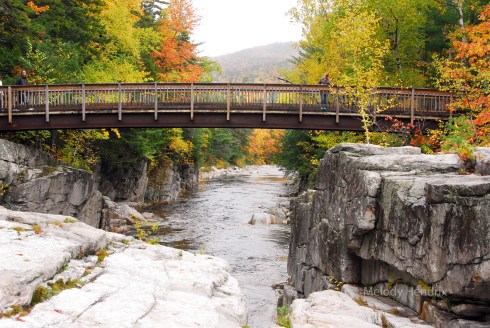
Another beautiful place to visit it the Rocky Gorge scenic area. 


There is a foot bridge over the gorge. The foot path on the other side of the bridge gradually ascends a small rise to Falls Pond. Located eight miles west of Conway on the Kancamagus Highway.


We are the World’s People. That was the Shakers’ name for everyone not a Shaker.

Canterbury Shaker Village, 288 Shaker Rd., Canterbury

You can visit the village. It’s a unique architectural and historical treasure nestled in the rollling hills of New Hampshire, with plenty of crafts, foods and gifts to buy.

One more place I would like to share is Echo Lake State Park .


One of the popular activities here is mountain climbing. There are eight mountain climers in this picture above.

From the scurrying chipmunks to magnificent water falls, the white mountains are a place of Gods beauty.


Please join me next week to parts unknown.


I am retired and enjoying life. My hobbies are my 5 grandchildren, son and daughter, and my loving husband. I am a photographer and extreme nature lover. I love spending time in my garden or in the wilderness connected to God my Creator.
Melody

Circuitous Travel~Part 4

27 Aug

SUNDAY MEMORIES

Judy Wills


After another good nights rest and breakfast at the St. Valery Guest House in Edinburgh, we took a bus tour of Edinburgh. We usually like to do that – take an official tour of whatever city we are in, then later, explore it on our own. The tour might take us to places and areas that we might not find on our own.

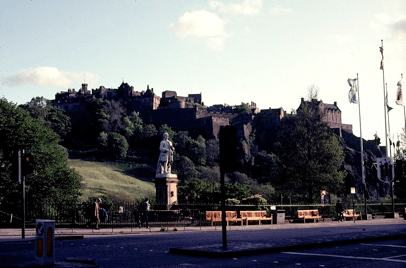
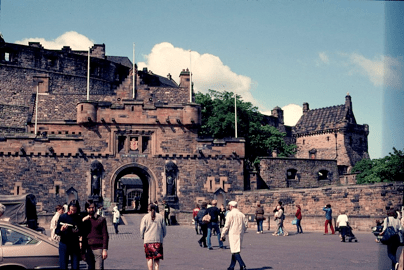
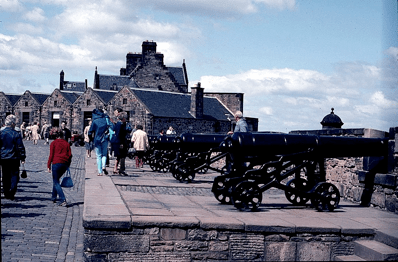
The tour took us to the Edinburgh Castle,


                                   The castle from the street below


                                    Main Gate to the Castle


                                   Battlements


Palace Holyrood,


St. Giles Cathedral.


                                  Credit Google Search


We were fascinated by it all. We were impressed to find a soldiers dog cemetery on the grounds.


While Fred’s ancestral family is from near Perth (actually Forgendenny in Perthshire), I’ve recently discovered that my ancestral family is from the southwest part of Scotland, Galloway. I didn’t know that then, or we might have made a special trip to that part of Scotland.

After the bus tour, we got in our car and did a driving trip around. We left Edinburgh and drove by the Firth of Forth bridges to Stirling. From Google search I found:

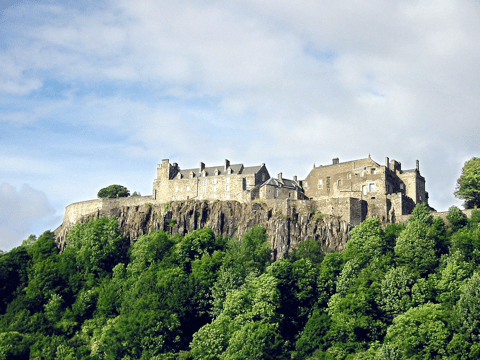
Stirling is a city in central Scotland. At the heart of its old town, medieval Stirling Castle is on a craggy volcanic rock. On the Abbey Craig outcrop, the National Wallace Monument is a 19th-century tower. It overlooks the site of the 1297 Battle of Stirling Bridge, where William Wallace defeated the English. The Battle of Bannockburn Experience has interactive 3D displays on the history of the 1314 conflict.


Here’s a picture of the Stirling Castle:


                          Stirling Castle – Lt.Wikipedia.org – Google search


We drove through Thornhill. From Google Search, I found:

Thornhill lies on the main A76 road from Dumfries to Kilmarnock as it follows Nithsdale north through the Southern Uplands. Its broad streets meet at a small roundabout on which you find the focal point of the village, the Mercat Cross [Scot for Market Cross].

The origins of Thornhill might date as far back as the Romans, who built a road through Nithsdale and a fort a little to the north at Carronbridge. By the 1600s there was an established settlement here, complete with a mill, though a wooden bridge over the River Nith built in the 1400s to provide a route to the west had already been lost in a flood.

I also found that there is a monument there to the explorer Joseph Thomson (after whom the Thomson’s Gazelle is named).

From Thornhill, we drove through the towns of Aberfoyle, Dryman, Balloch (where there is a castle situated at the southern tip of Loch Lomand), and Jamestown (which is rapidly becoming part of Balloch). Unfortunately, we apparently didn’t take any pictures of these towns.

We had wanted to see Loch Lomond, and we did, stopping only to take a few pictures.


~~~~~~~~~~To Be Continued~~~~~~~~~~

Circuitous Travel~Part 3

20 Aug

SUNDAY MEMORIES

Judy Wills


CIRCUITOUS TRAVEL – PART 3 continued

And so we left Edinburgh, went through Queensferry


Credit Google Search

to go over the Forth Bridge which goes over The Firth of Forth, an estuary of several Scottish rivers, and on to Dunfermline. Here are a few pictures we took of the Forth Bridge (for trains),


the bridge for trains and cars,


and the bridge for cars.

Again, from Wikipedia I gleaned: Dunfermline – The town was first recorded in the 11th century, with the marriage of Malcolm III, King of Scotland, and Saint Margaret at the church in Dunfermline. As his Queen consort, Margaret established a new church dedicated to the Holy Trinity, which evolved into an Abbey under their son, David I in 1128. Following the burial of Alexander I in 1160, the abbey graveyard confirmed its status as the burial place of Scotland’s kings and queens up to and including Robert The Bruce in 1329.


We found it to be a fascinating place to see. The ruins are beautiful, as is the current church, which is still in use.


The Church yard


Abbey & Palace – credit BikELove


Abbey & Palace – credit Historic Environment Scotland


Credit Google Search and TripAdvisor

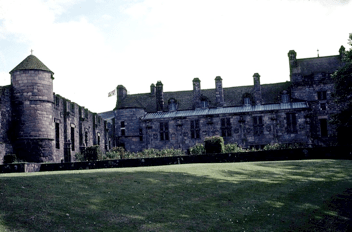
From Dunfermline, we drove to Falkland Palace and Garden. Here are a few pictures we took there.


Palace entrance


Falkland Palace


From the Falkland Palace website, I found: Falkland was the country retreat of the Stewart kings and queens of Scotland, located within easy reach of Edinburgh, yet far enough distant to provide a welcome escape. Here the royal court could indulge in hawking and hunting, plus more genteel recreations like archery. Falkland boasts the oldest real (or ‘royal’) tennis court in the world, built in 1539 for James V.

The Falkland Gardens are quite beautiful, but are relatively new, being laid out in 1947.

From Falkland Palace and Garden, we finally arrived in St. Andrews on the coast.


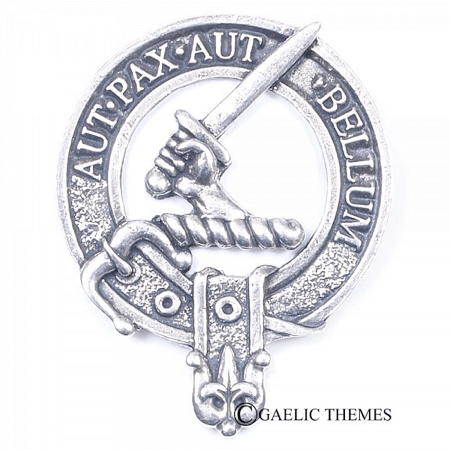
After wandering around the golf course and the original golf club house, we purchased some goodies for ourselves as mementoes. We purchased a cashmere scarf; I purchased some Gunn Clan pins (Fred is a direct descendent of the Gunn Clan);


Credit Google Search


Fred purchased a Gunn Clan tie, which he still wears proudly. Here is a swatch of the Gunn Clan tartan. We think it is quite beautiful.


We were told there, that when a Scot female marries, she is not allowed to wear her husband’s tartan. She is always associated with her father’s tartan. Interesting.

We returned to Edinburgh, where we walked around the town a bit and shopped, as well. I purchased a Gunn Clan book; a Gunn Clan pin and necklace; and one meter of the Gunn Clan tartan. I intended to make some garment for our daughters. I’m ashamed to say that I didn’t get that done until this past Christmas. I made a long scarf for each of them, with self fringe. They are delighted with it.

Also in all of this shopping – especially for the tartan, I discovered that I have a family tartan, as well. It is the Colquhoun Clan – very similar to our American word/name of Calhoun. The tartan is very similar to the Gunn tartan, with similar colors. I think it’s pretty, as well.


~~~~~~~~~~To Be Continued~~~~~~~~~~

Florida Travel~Next Stop Great Smoky Mountains National Park

15 Aug

A Life to Live

Melody Hendrix


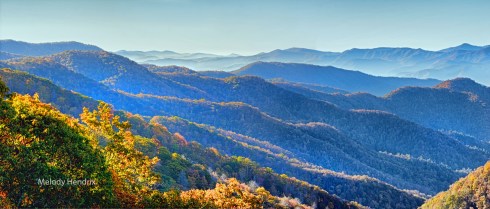
Smoky Mountains in the fall.


                  https://www.tripadvisor.com/Attractions-g143031-Activities-  Great_Smoky_Mountains_National_Park_Tennessee.html

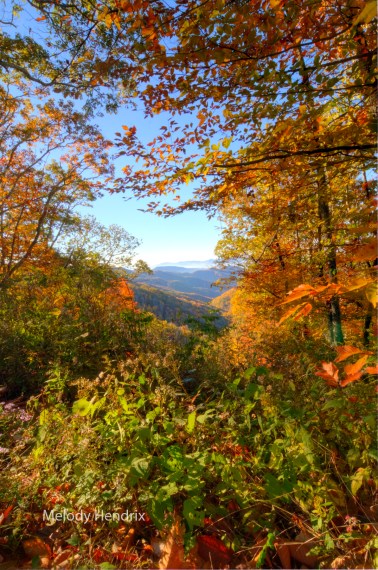
I haven’t traveled outside of Florida much, but I will say that The Great Smoky Mountains in the fall is the most beautiful place I have ever been. Being a native Floridian, a flatlander, I was overwhelmed by the mountains and the colors, the rocky creeks and the music of the water flowing over the rock.


Strangely what I loved the most is looking out and seeing the mesmerizing design from the abstract lines created by the shapes of each mountain and valley. And how each layer is a distinct shade and color. The morning sun outlining it all.  Almost Heaven is the feeling that comes over me. The crisp air awakening my senses. I feel so close to God being in the spectacular beauty of His handiwork. This place the finest candy for my eyes. The images etched in my soul forever.


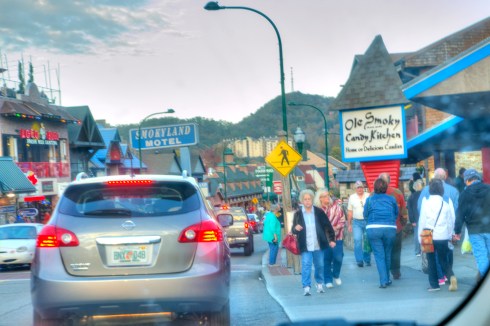
We stayed in Gatlinburg, at the heart of Great Smoky Mountains National Park. Here you will find lots to do if you have kids. It is similar to I-Drive in Orlando. It is also the gateway to 441 the main road through the mountains.


My favorite place here is Roaring Fork, a driving nature trail. This is a must. You drive through it, stopping all along the beautiful creek that runs along most of the way. There are many places to park and hike to falls. This is like all of the Smokies in one gorgeous road through Heaven.


Also along Roaring Fork are historic buildings.


You can explore them. It’s amazing to see how the people lived. At the end of the trail is a little store you can by goodies.

There are so many beautiful places, but I will tell you about some of my favorites. If you are going there, be sure to do your homework first, make a plan especially if you plan to visit some falls. There are some right on the road and there are some that are very difficult to get to.

Our first stop every morning is one of the few places you can enjoy a sunrise. Newfound Gap.


It’s an overlook with restrooms and an entrance to the Appalacian Trail.


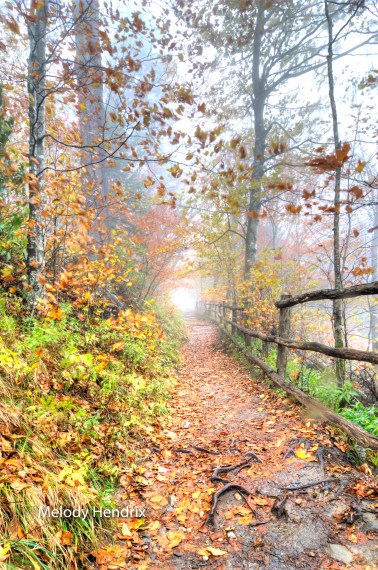
Take a walk on this beautiful trail. It’s just beautiful and so are the people you may meet traveling on it.


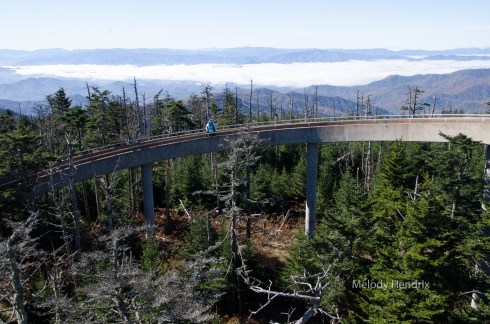
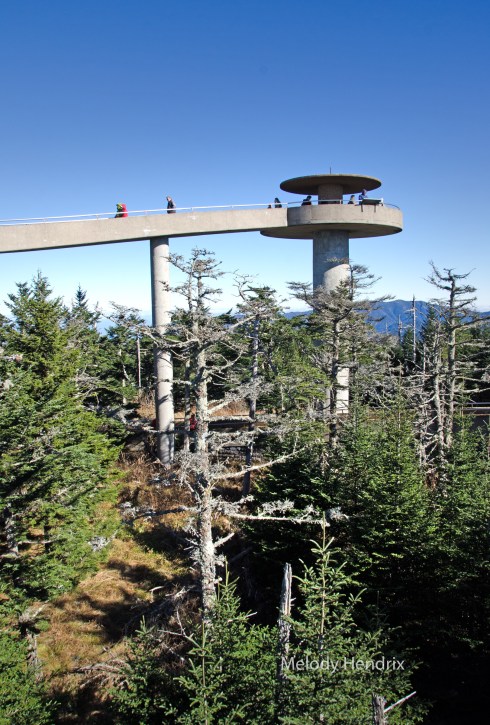
Clingmans dome is a popular stop. This tower is at 6643 feet which is the highest point in the smoky mountains national park. The view is spectacular, but the climb up is very difficult. It is a nice paved walk, but half a mile and very steep.


If you go to Cherokee, be sure to stop at Ocoaluftee visitor center. There is a lot there to see.


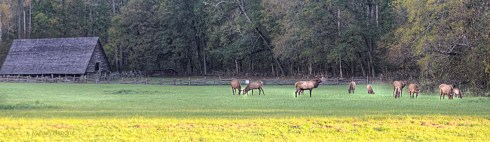
You can walk the short trail to the river, see historic buildings and you may see some elk in the field by the highway. Also near by is an easy walk to Mingus Mill. It is a working grist mill where you can buy goodies such as freshly ground corn meal.


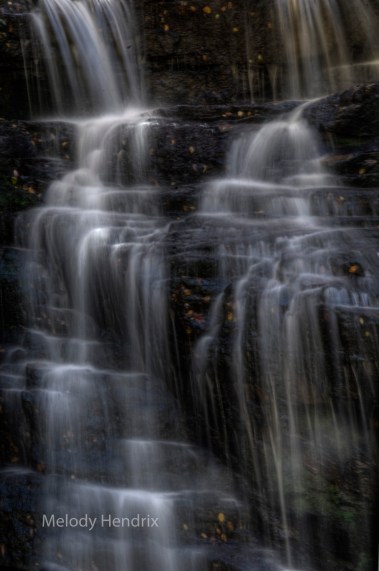
There are so many wonderful waterfalls. Many are not easy to get to. So check them out first according to which ones will fit you physically. They are all different and most are challenging to get to.


Wildfires in the beginning of this year destroyed a lot, but it is already healing and open to tourism.

Please join me next week. We are going to New Hampshires White Mountains.


Circuitous Travel~Part 3

13 Aug

SUNDAY MEMORIES

Judy Wills


Circuitous travel, continued – last time I told you about how much we had enjoyed our time looking around the ruins of Fountains Abbey, near Ripon, England. In preparing for today’s episode, I found more pictures of Fountains Abbey, and would like to share some of them with you. If you ever get to England, this is a really neat place to visit.


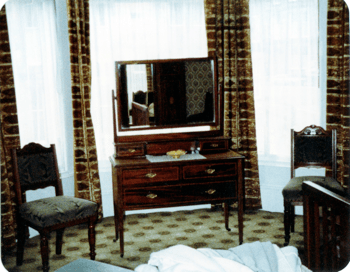
Most of our day, following our stay overnight in Durham, was traveling. I have no pictures that we took of Durham, or Newcastle – and none until we arrived in Edinburgh, Scotland. Here are a couple pictures of our room in the St. Valery’s Guest House.


It was a lovely place, and we stayed several nights there. It was managed by Mr. & Mrs. Robert Shannon. We had the good fortune to look out our room window one morning to capture this. They were still using a horse-drawn cart to deliver milk! Wonderful!


One funny incident – perhaps not funny at the time – happened there: One morning, Karen got up early and went to get her shower, before Janet woke up. When Karen went to go back into her room – the door was locked! And she had forgotten to take a key with her!! Since the girl’s room was next to ours, Fred began knocking on the wall next to their room, and eventually began knocking on the door, hoping to wake Janet up. After an excruciating 45 minutes of knocking, Mr. Shannon came up the stairs and asked if there was a “problem.” Fortunately, he had a key and let Karen in the room. Janet looked up, bleary-eyed and confused – and had not heard a single knock! She was a really hard sleeper! Karen never forgot the key after that!

The following morning we took a bus tour to St. Andrews. It was, essentially, an all-day tour, lasting from 9:30 a.m. until 6:30 p.m. Fred is a great fan of golf, so this was to be a special tour for him – to see where golf originated.

While there is some controversy about the origins of golf, I gleaned from Wikipedia:   The modern game originated in Scotland, where the first written record of golf is James II’s banning of the game in 1457, as an unwelcome distraction to learning archery. James IV lifted the ban in 1502 when he became a golfer himself, with golf clubs first recorded in 1503-1504: “For golf clubbes and balles to the King that he playit with”. To many golfers, the Old Course at St Andrews, a links course dating to before 1574, is considered to be a site of pilgrimage. In 1764, the standard 18-hole golf course was created at St Andrews when members modified the course from 22 to 18 holes. Golf is documented as being played on Musselburgh Links, East Lothian, Scotland as early as 2 March 1672, which is certified as the oldest golf course in the world by Guinness World Records


~~~~~~~~~~To Be Continued~~~~~~~~~~

Florida Travel Moves North

8 Aug

A Time to Live

Melody Hendrix


Savannah, Georgia

Exploring Savannah was so exciting. There is so much to see. So many wonderful restaurants and so much history. And of course it is an artist and photographers paradise.


On River Street, in the heart of historic Savannah, you’ll find everything from sweets to teddy bears, Harley Davidson apparel, and art galleries housed inside restored Cotton Warehouses. The working harbor—filled with ships of all kinds, horse-drawn carriage rides and street performers add to the enticement of this idyllic waterfront locale.


Stop in for a bite at any of 21 restaurants or simply enjoy the scenery.

Historic River Street, paved with 200-year-old cobblestones, runs along the length of the Savannah River.


The Port of Savannah is a major U. S. seaport. Savannah had a record year in fiscal 2007, becoming the fourth-busiest and fastest-growing container terminal in the U.S.


Once lined with warehouses holding King CottonWalk along the Savannah River;  Picture horse drawn wagons loaded with bails of cotton brought to be bid on, sold and unloaded here.


Follow the link below to discover the many things there are to do in Savannah.

https://www.trolleytours.com/savannah/attractions

Another place that is interesting is Bonaventure Cemetery.  The entrance to the cemetery is located at 330 Bonaventure Road. The peaceful setting rests on a scenic bluff of the Wilmington River, east of Savannah. This charming site has been a world famous tourist destination for more than 150 years due to the old tree-lined roadways, the many notable persons interred, the unique cemetery sculpture and architecture.


We are now headed to Tybee Island only 18 miles away. But we are going to make a stop at Fort Pulaski. It’s on the way.


in 1862 during the American Civil War, the Union Army successfully tested rifled cannon in combat, the success of which rendered brick fortifications obsolete. The fort was also used as a prisoner-of-war camp.


The brick and honey comb interior is stunning.


On our way again to Tybee Island we go over Lazaretto Creek. We can see the marina below.


http://www.tybeeislandmarina.com/


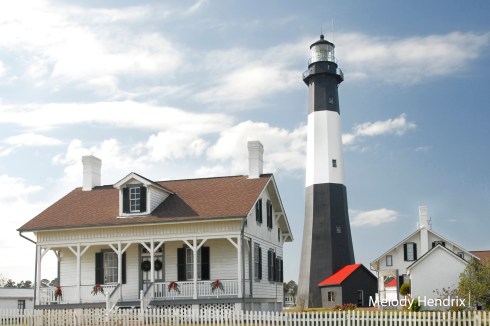
Tybee Island Light

Tybee Island is a barrier island and small city near Savannah, Georgia. It’s known for its wide, sandy beaches, including South Beach, with a pier and pavilion. In the island’s north, Fort Screven has 19th-century concrete gun batteries and the Tybee Island Light Station and Museum.


Swings found along the Tybee Island beach offer a great spot to relax and take in the views.


https://www.tripadvisor.com/Attractions-g35328-Activities-Tybee_Island_Georgia.html


Besides the beach there are quaint shops and restaurants. It’s a great destination.

Visit me next week for a visit to the mountains in fall. The Great Smoky Mountains National Park.


Smoky Mountains at sunrise.


I am retired and enjoying life. My hobbies are my 5 grandchildren, son and daughter, and my loving husband. I am a photographer and extreme nature lover. I love spending time in my garden or in the wilderness connected to God my Creator.
Melody