Tag Archives: Travel Series

My Colonial States Trip~Part 17

11 Mar

A Slice of Life
 Bill Lites

My friends from Boston and New York had advised me not to use the George Washington Bridge if I could help it, but that’s the way “Greta” took me on my way back to the west to visit the Aviation Hall of Fame in Teterboro, NJ. So, it was across the Throgs Neck Bridge, thru the Bronx, over the Hudson River on the G.W. Bridge to the museum. As it turned out, it must have been my lucky day for that crossing, because that trip was pretty much of a breeze and I made it to the museum in good time. This museum, located at the Teterboro Airport, displays historic aircraft and spacecraft equipment, artifacts and photographs along with a model aircraft collection, honoring the many New Jersey men and women who have helped make the aviation industry what it is today. There is a room filled with medallions honoring the over 160 inductees to date.

I woke up to rain the next morning. Up until now the weather had been perfect and I had just assumed it would be the same for the whole trip. Silly me. What was I thinking? Well, it rained that entire day as I sloshed my way toward Connecticut. I figured “Greta” would have routed me back across the G.W. Bridge and up I-95 to Bridgeport, CT before turning north. But I wasn’t ready to try my luck getting across the G.W. Bridge again, especially during the morning rush-hour traffic in the rain. So, I decided to take the northern route, using the Garden State Parkway, and then crossing the Hudson River at the Tappenzee Bridge. Well, wouldn’t you know, I missed the exit for the bridge. I stopped at a service center and asked how to get back to the bridge exit and the guy said, “Just take the next exit and do a “U” turn.” Right! It was 20 miles to the next exit and it ended up taking me 30 minutes and another 30 miles back to the bridge exit (all this in the pouring down rain).

3

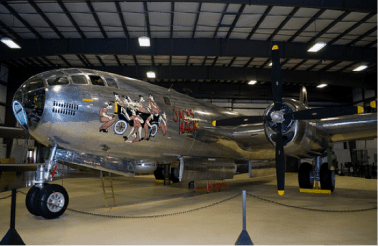
I finally made it to the right exit, across the Tappenzee Bridge, then thru Danbury and Hartford, CT to the New England Air Museum in Windsor Locks, CT. That ended up taking 1-½ hours longer than I had planned. What a waste of time that was! The museum displays over 60 beautifully restored aircraft and related artifacts/equipment in three hangers. As I followed a group into the B-29 hanger, I overheard someone say that the small group was honoring their 95 year old uncle who had been a navigator in B-29s during WWII. The elderly gentleman was overwhelmed by the occasion and the size of the aircraft. I heard him say, “I don’t remember it being so big!” What a nice thing for a family to do for their uncle. While I was in the area, I had planned to visit the American Museum of Aviation in Stafford Springs, CT but I discovered that visiting the museum was by appointment only. I was behind schedule anyway, so I just headed south to my next stop, at the New London Customhouse in New London, CT which is operated by the New England Maritime Association. This turned out to be a very small museum, so I didn’t spend much time there.
4

—–To Be Continued—–

My Colonial States Trip~Part 16

4 Mar

A Slice of Life

 Bill Lites

Bill Lites

Bill Lites


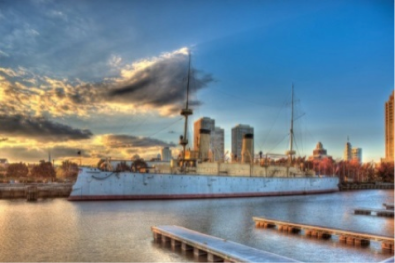
I saw the Dolly Todd (Madison) house, Edgar Allen Poe’s house, the Fireman’s Hall Museum, the Pine Street Presbyterian Church and the Mechanic’s National Bank. I had trouble finding the Seaport Museum, home of the USS Olympia, and when I did find it they wanted $15.00 to park and $10.00 admission, and this was another case of not feeling like I would have enough time to see the museum and the ship to justify the cost.

1


So, I headed back across the Delaware River to Camden, NJ to try to see the USS New Jersey before they closed, but didn’t make it. So, I just went on back to Gloucester City, where I had another fabulous rib dinner at the Texas Roadhouse restaurant before going back to the motel for the night.

2


The next day I passed up visiting the Simeone Auto museum and the Wings of Freedom Aviation Museum, as I saw so many things in Philadelphia that I ran out of time, and had to push on toward that day’s list of places to visit.

3


First on the list was the Air Victory Museum in Lumberton, NJ which was closed that day. When I was researching the drive from Lumberton to my next stop in Garden City, NY I was pleased to see that “Google Maps” routed me south, around New York City, on I-278 to miss the city traffic. So now, after inputting the Cradle of Aviation Museum address into “Greta”, I sat back to enjoy the ride. The first indication that something was not quite right was when I was directed to enter the Lincoln Tunnel. The next thing I knew I was stopped at a light at the corner of East 42nd Street and Madison Avenue.

4


What in the world was going on? “Greta” had done it to me again! All I could do at this point was follow her directions, as I had no idea how to get to Garden City by myself. She took me thru the Queens Midtown Tunnel onto the Long Island Expressway (I think) and somehow delivered me to the correct museum address in Garden City. Needless to say, it took a lot longer than I had planned to get there. When I finally pulled up in front of the Cradle of Aviation Museum, I was expecting to be thrilled with lots of beautifully restored aircraft in that magnificent facility. What greeted me, as I entered the front door was a huge mess of canvas tarps on the floor, with tables, buckets, and women everywhere, making preparations for a local flower show, of all things. As it turned out, the museum had a surprisingly small number of aircraft for the size of their facility. I guess the main reason for that was their emphasis is on education rather than strictly on aviation. In one area, on the ground floor, I came across the Nassau County Firefighters Museum & Education Center. What a surprise that was!

5


Next I continued about 15 miles east on Long Island to the American Airpower Museum located in Farmingdale, NY which is about the size of our Valiant Air Command Museum in Titusville, Florida. Most of their WWII aircraft housed in their large hanger are in flying condition, while their later era (more modern) planes, make up an impressive static display collection outside.

6


—–To Be Continued—–

My Colonial States Trip~Part 14

18 Feb

A Slice of Life

Bill Lites

Bill Lites


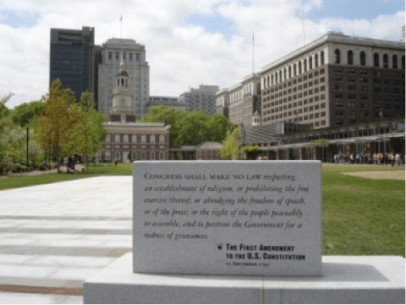
The “Declaration Chamber” in Independence Hall has been beautifully restored and arranged to represent the way it looked during the years between 1775 and 1783 when the Second Continental Congress used this chamber to meet, debate and eventually adopt our Declaration of Independence and U.S. Constitution.

1

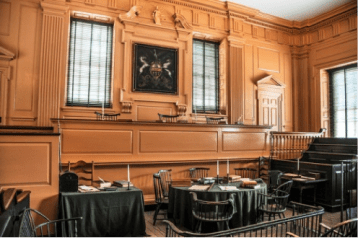
The “Supreme Court Chamber” has also been beautifully restored with ochre-painted walls and the coat of arms for the Commonwealth of Pennsylvania above the bench. This is the room where the Philadelphia Supreme Court conducted trials, and the state legislature conducted business in the early years of our nation. There are records that indicate the U.S. Supreme Court held proceedings in this chamber in 1791 and again in 1796. The judge’s bench and jury’s box overlooked the accused, who stood in the prisoner’s dock for the duration of his trial, giving rise to the expression “Stand Trial.”

2

Next I went to view the Liberty Bell and discovered that the bell was originally cast in London, England in 1752. The bell was installed in the State House and intended to be used to summon lawmakers to legislative sessions and to alert citizens of public meetings and proclamations, but it cracked the first time it was rung after arriving in Philadelphia. There isn’t actually any evidence that the bell was rung on July 4, 1776 to announce the signing of the Declaration of Independence. A story (fable) was written in 1847 about an elderly bell ringer who claimed he ran the bell on that date. People liked that story so much that it was adopted as fact, and has been perpetuated down through the years. It wasn’t until the 1830s that the bell was dubbed, by several abolitionist societies, as the “Liberty Bell” and used as a symbol of freedom by them during the 1830s and 1940s.

3

Then I boarded a city tour bus for a 90-minute guided tour of the city of Philadelphia with all its many historical places. Most people today don’t realize that Philadelphia was the first capital of the United States, or how many important events, which helped shape our country, took place in this city. I was amazed at how many famous people in our country’s early history lived and worked in this city, helping form the foundation of our nation as we now know it.

4

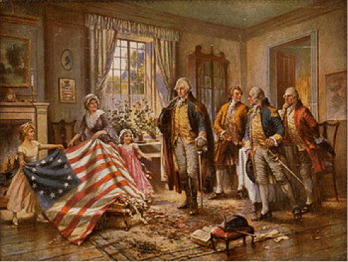
I saw the Betsy Ross house where it’s said that Betsy fashioned and made the first American flag in 1776, and later presented it to General George Washington (who by then had been appointed Commander-in-chief of the Continental Army).

5

I saw Ben Franklin’s print shop, where he became famous for printing The Pennsylvania Gazette; the President’s House site where George Washington
and John Adams created the Office of the President of the United States; the Christ Church Cemetery where Ben Franklin is buried, along with many of the signers of the Declaration of Independence and other famous leaders. I found it interesting as a side note, that it is said, Christ Church in Philadelphia is also where Colonial America made its initial break with the Church of England.


—–To Be Continued—–
My Colonial States Trip~Part 12

4 Feb

A Slice of Life

 Bill Lites

Bill Stars Plane

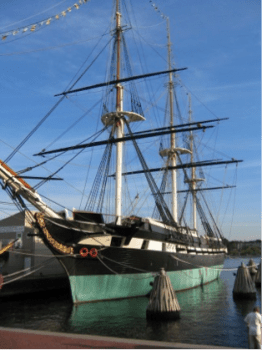
The next day I misread the opening time for the B & O Railroad Museum in Baltimore, MD so I was an hour early getting there. I parked in the museum’s free parking lot, and took the free “Charm City Circulator” bus to the Baltimore Inner Harbor. Since I had toured aboard other U.S. Navy ships and submarines, I only went aboard the USS Constellation. I did take photos and checked out the USCGC Taney, the submarine USS Tork, and the Lightship Chesapeake, but saved the time going aboard those ships, for another museum down the road that day. While waiting for the bus back to the B & O Railroad Museum, I struck up a conversation with a very nice lady who was on her way to work, and helped me with the number of the bus I would need to catch for my trip back to the RR museum, and my car.

1

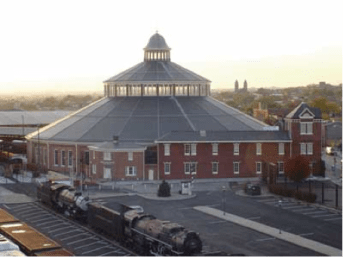
The B & O Railroad Museum is located in the old Monte Clare Station, and with its adjacent roundhouse, was part of the original Monte Clare Shops begun in 1829. The Shops are considered to be the oldest railroad manufacturing complex in the United States. The museum is massive, and has one of the world’s largest collections of 19th century rolling stock. The museum was also the site which received the first telegraph message, “What hath God wrought?” sent from Washington, D.C. to Baltimore, MD on May 24, 1844 using Samuel Morse’s new telegraph invention.

2

Next I took a quick drive north a few miles to visit the Glenn L. Martin Aviation Museum in Middle River, MD which was a small museum with only a dozen or so outside static display aircraft. I hadn’t planned to stay long (the Robert Frost poem comes to mind again), but I was their only customer and their very knowledgeable tour guide was a little long-winded with nothing else to do. I immediately realized I was trapped. I was afraid he was going to explain all about each of the 20,000 photos covering the walls of the small museum area and finally asked him if I could see the museum’s airplanes. He had to drive me to the static displays and started telling me all about each of the airplanes, and I was trapped again. They had two B-57 aircraft on static display, and I recorded the tail numbers so I could ask my friend Larry when I back to Titusville, if he had flown in either of them, during his time in the U.S. Air Force. I finally convinced him to take me back to my car so I could get on to the next stop. I’m sure I could have learned a lot if I had not been on such a tight time schedule that day.

3

Now I headed south around Chesapeake Bay to visit the U.S. Naval Academy Museum in Annapolis, MD which is located in the Preble Hall, just inside the Naval Academy premises. I parked and had to walk thru a security check point, and show my ID, in order to access the museum. The museum is a maritime museum started in 1845 and traces U.S. Naval history in the form of three dimensional artwork, paintings, model ships, uniforms and metals exhibits in its four galleries.

4


—–To Be Continued—–
My Colonial States Trip~Part 11

28 Jan

A Slice of Life
Bill Lites

Bill Red Spot Plane

Somehow I missed the turn (or maybe I wasn’t paying attention) outside of Harrisburg and ended up on I-81 (south) instead of following US #15 (south). This caused me to miss getting to visit the Gettysburg Train Museum and the Gettysburg Battlefield Museum, both of which I’m sure I would have enjoyed. It wasn’t until I came upon the Maryland Welcome Station that I realized what had happened, and by then it was too late in the day to go back, so I just kept on trucking. Just down the road I stopped to check out the Hagerstown Air Museum in Hagerstown, MD where I learned that several of the WW II USAAF training and transport aircraft were built by Fairchild Aircraft in 1some of the hangers where the museum’s aircraft are now housed. Among notable aircraft built by Fairchild during and shortly after WWII included the PT-19/PT-23/PT-26 Cornell trainers, the AT-21 Gunner twin-engine trainer, the C-61 Argus (For the RAF), and the C-82 Packet, C-119 Flying Boxcar and the C-123 Provider cargo planes. The museum wasn’t officially open, but one of the guys working at the airport hangar (where “Greta” delivered me) agreed to show me the museum’s aircraft collection and tell me a little about Fairchild’s roll in wartime Hagerstown.

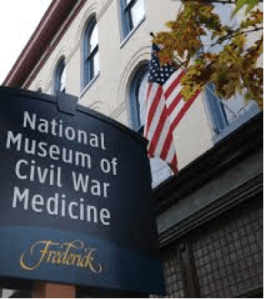
Next I headed southeast to visit the National Museum of Civil War Medicine in Frederic, MD which was a disturbing and visually graphic education of primitive methods of 2medical treatment used on the fighting men during the Civil War. It is surprising to me that as many men as did, survived their treatments, surgeries and amputations during that war. I guess the main reason for their survival rate was that they were young and healthy when they went into the war. It makes one appreciate modern medical practices such as the advances in cleanliness, antiseptics, surgical applications and especially prosthetics technology.

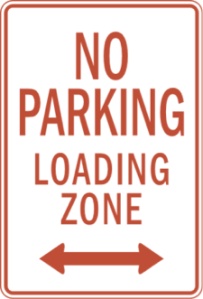
When I first arrived at the museum, I couldn’t see any place to park, as there were businesses on both sides of the street and signs were posted as “Commercial Loading Zones.” There were cars parked in those loading zones, on both sides of the street, so I stopped in 3front of the museum just long enough to go in and ask where to park. I couldn’t have been in the museum more than 3 or 4 minutes, but when I came out to move my car I had a parking ticket and the writer of that ticket was nowhere to be seen. He/she must have been lurking in some doorway, close by, just waiting for me to walk away from my car, because the ticket was a computer print-out with a “lot” of automobile information that had to have been observed and entered into their hand-held device. Man, was that fast! Needless to say, that was a costly museum visit.

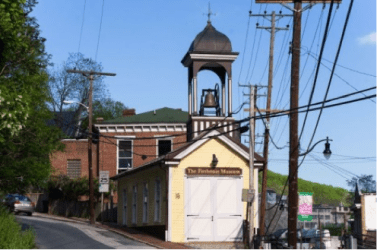
Next on my list, as I continued east, was The Firehouse Museum in Ellicott, MD which was closed that day. As you can see from the photo below, the museum is very small and is only open on Saturdays and Sundays. The museum is located in the very first Ellicott volunteer firehouse, which was built in 1889, and served as the town meeting hall, among other things, over the years. Then it was on east to Laurel, MD for dinner and the motel for the night.

4

—–To Be Continued—–
An Amazing Adventure~Part 14

25 Jan

SUNDAY MEMORIES

Judy Wills

JUDY


After our venture into the mountains, we drove back to Denver. We parked and walked some of the downtown area. It is a lovely city. We walked through Lincoln Park.


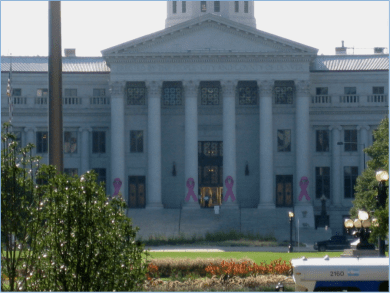
We saw, across the way, the County Courthouse, decked out with pink ribbons on the columns.

5


We saw a statue memorial to a Medal of Honor Recipient from World War 2;


we saw a cowboy and an Indian warrior.


We saw bronze statues,


and the library, and a cow!

12


In front of Katie Mullins bar were some bagpipers.

13


We went through the library and were fascinated by it. Very modern. It was of great interest to Karen, as she is a librarian in her hometown. We rode the downtown bus—free—for several blocks, just to take in some of the town, and the architecture.

Finally, tuckered out, we drove back to the hotel. Actually, we stopped at the Texas Roadhouse Grill for supper. The food was really good, but there was an enormous amount of it! We were stuffed! Then back to the hotel to pack and sleep.

The next morning, we checked out of the hotel, then went back to Rosie’s Diner for one more breakfast. Then Karen and Brian drove us to the airport, where we said our goodbyes to them. We then flew home. Karen and Brian had most of the day to do with, and they made a full day of it.

So, as you can see, the whole thing really was an A…M…A…Z…I…N…G adventure! One we would happily repeat!

As promised, one last word about the friends we stayed with our second night (I invite you to revisit my November 2, 2014 post).

14

Ruth Anne and I have known each other since early childhood. We both lived in New Mexico: she was in Deming, and I was in Albuquerque – about a four-hour’s drive apart. Our fathers played college basketball together in Louisiana (early 1920’s). We are fairly convinced that her father was partly responsible for bringing my father to Albuquerque. I would spend weeks in Deming in the summers with her, and she would spend weeks in Albuquerque with me. We met up with her and her husband while studying at Southwestern Baptist Theological Seminary in Fort Worth, Texas, in the early-to-mid 1960’s. Charles went on to become a pastor, while Fred went into the Air Force. We visited with them and their family once when we were all living in Kansas. After their daughters were grown and away from home, Charles and Ruth Anne went to the mission field, in Malaysia. They were invited back recently by the Malaysian Christians to help them. They are absolutely lovely people, and we rejoice that our family has stayed connected with them all these years.

~~~~~~~FINALLY…..The End…of an AMAZING adventure!~~~~~~~


The whole earth is filled with awe at Your wonders…..

Psalm 65:8

An Amazing Adventure~Part 13

18 Jan

SUNDAY MEMORIES

Judy Wills

JUDY


 Our next stop was Idaho Springs. This is an area that Karen and Brian had visited to go white-water rafting four years ago,. It is a quaint place, and we enjoyed visiting the town and the museum there.The Argo Tours leads tours through the old gold mine and mill. (We didn’t) There are rocks on display that show the placement of holes that held dynamite.

We took in the museum and were fascinated with all the displays and information about how the mine/mill worked in the old times. They had two life-size models dressed in what women of that day would have worn—even for traveling. Much different than today. They were very elegant.

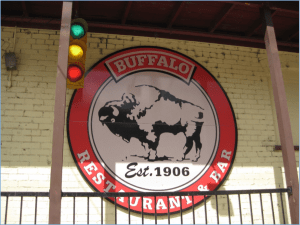
We had lunch at the Buffalo Restaurant.

5


Their specialty was buffalo meat! They explained to us that buffalo meat is much healthier than beef—it contains less fat, has more protein, and therefore better for you than beef! I had a buffalo burger that was delicious!

I took quite a few pictures of the inside of the restaurant. Lots of “old time” stuff.

This slideshow requires JavaScript.


But the most fascinating to me was the bar. It was a beautiful piece of furniture, and had a history, of course. According to the info on the menu, it was originally built in 1861 in Chicago. It traveled from Chicago to Denver, then eventually, to Idaho Springs. It’s amazing that it survived all those moves, but it did.

12


Behind the restaurant, by the road, there is a cliff, that has a waterfall. And by the waterfall is an old wheel.

13


There is also a small park (Turkey Lake Park) that contains a Narrow Gauge Colorado and Southern train on display. Brian even got up in the coal car for a look-around.


Leaving Idaho Springs, we went up to Echo Lake. Part of Echo Lake area is Summit Lake Park which tops out at 12,830’, and the temperature was a whopping 53°! Well above the tree line, so there was just scrub. We saw many, many Big Horn Sheep— some old, some young. They were close, not bothered by all those humans around them. It almost looked like they were eating the dirt! I got a good picture of one jumping over the fence. Someone brought out their dog—which looked like a sheep dog—and it really wanted to herd those sheep!

This slideshow requires JavaScript.


On our way down, we saw some Virga rain showers. Don’t know what that is? Neither did Brian. But my retired-meteorologist husband informed him that Virga is a rain shower that evaporates before it reaches the ground. As Brian stated—he continues to learn something new every day!

21


We stopped briefly at the Mount Goliath Station. Here is a cute sign:

22

We did stop and park at the Arapaho National Forest. There was a lovely small waterfall with more gorgeous Aspen stands across the road. Brian got down and personal with the waterfall.


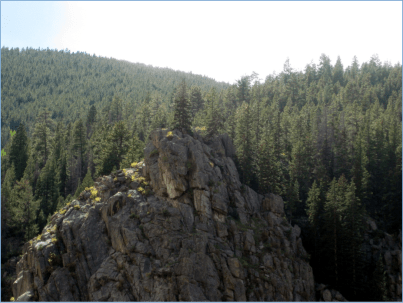
There was also a very large outcrop of rock that had a “Christmas” tree atop it. A little difficult to see in this picture, but it’s there. It fascinated me.

25


~~~~~~~To Be Continued~~~~~~~


An Amazing Adventure~Part 12

11 Jan

SUNDAY MEMORIES

Judy Wills

JUDY

After stopping for supper at Estes Park, we drove on to Denver, staying at an Extended Stay Hotel. Unfortunately, the chain was working on renovating this particular hotel, so it wasn’t in the best shape for our stay. However, we knew we wouldn’t be there during the day, so we stayed anyway.

Our final day in Denver—and our trip. But Brian had packed in a bunch of stuff for us to do. We began with breakfast—but not at the hotel! They only had cold cereal and some muffins. Brian had noticed a “Rosie’s Diner” nearby by hotel, so we went there for breakfast. It is a classic diner, and we thoroughly enjoyed our meal there. We learned (from Wikipedia) that Rosie’s was:   Humbly birthed in 1946 as the Silver Dollar Diner of Little Ferry, New Jersey. Rosie’s Diner earned national acclaim and took on its current name in 1971, when the Bounty paper towels “quicker picker upper” TV commercial made the diner and waitress Rosie (a.k.a. the late actress Nancy Walker) household icons.

2

We were also impressed to see, over the counter, a sign that read: We thank and pray for all who serve our country. We thanked the hostess for the sign, and she stated that three of her children were in the military.

Brian had wanted to tour the Denver Mint, but discovered that all the reservations for that day were filled. Shucks! Oh well, we had plenty of other stuff to see.

Our next stop was Red Rocks Park and Amphitheatre. I know some of you know about this place, but neither Fred nor I did. And we were blown away by it! We were impressed not only by the “red rocks” but the size of them!


But the amphitheatre was amazing!

5


Brian described how it was built. And we were also amazed to find that a LOT of Denverites use it as an exercise platform. We saw them jogging through the seating area. One little girl was learning early in life to exercise there.


But what amazed/impressed us the most, was a group of people who would stand on one bleacher, then JUMP to the next bleacher…UP! And then again. And then again. Really amazing!

8


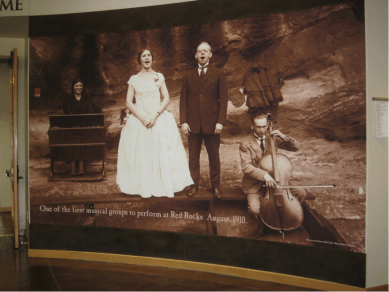
Inside the building, we found a wall of mementoes to people and groups who had performed in the amphitheatre from years past. We found the group “311” had performed there every year since 2008. That may not mean anything to you—but one of our nephews is a member of that particular rock band.   Brian tells us that, with the younger-than-40 crowd, 311 is a VERY hot group! We are pleased to see they are doing so well.

9


We drove then through Genesee Park, hoping to see some bison—but there were none to see. Genesee is reported to be a Native American term for “shining valley.”   It is Denver’s largest mountain park. Bison and Elk were brought into the park in the 1920’s, to help the endangered animals to repopulate. Apparently, as you drive along the Interstate, you can frequently see the Bison. They just weren’t out for us that day.


~~~~~~~To Be Continued~~~~~~~

My Colonial States~Trip Part 8

7 Jan

A Slice of Life

Bill Lites

As I headed south again, I passed thru Poughkeepsie, NY, Morristown, NJ and on across the border to the America on Wheels Museum in Allentown, PA which is a museum of all types of “Over the Road Transportation” vehicles that have been beautifully restored and displayed.

1

While I was in Allentown, I visited the Zion’s United Church of Christ (formerly the Zion’s Reformed Church) which houses the Liberty Bell Museumand a replica of the original Liberty Bell. The museum contains exhibits relating to the Liberty Bell (which was hidden, along with other bells, in the church during the Revolutionary War from September 1777 to June 1778) and other interesting memorabilia pertaining to liberty, freedom, patriotism and local history.

2

As I walking back to my car, I came across a Mennonite Choir singing hymns on a street corner. It was a beautiful day, and their music echoed off the adjacent buildings and was a delight to hear. They were passing out gospel tracts and giving away CDs of their choir music. I had wanted to visit these museums in Allentown because my route the next day took me south again, so I did a little back-tracking a short distance to Easton, PA for dinner and the motel that night.

3

The next day my first stop was to visit the Boyertown Museum of Historic Vehicles in Boyertown, PA but they were closed that day. Fortunately, the front door was unlocked and I just walked in and was surprised when a lady behind the counter said, “Since your here, I’ll turn on the lights and you can go ahead and have a look around.” I took her up on that deal, and was amazed at their wonderful collection of vintage vehicles and equipment, which included a 1920s Sun Oil Company gas station and wrecker truck and the old 1930s Reading Diner.


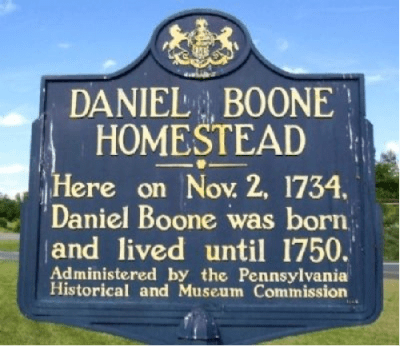
Only about 15 miles down the road was the Daniel Boone homestead in Birdsboro, Pa which was also closed that day, but I stopped and got as close as I could to take a couple photos. The homestead is located in the beautiful rolling hills of eastern Pennsylvania just north of the French Creek State Park.

6

Then it was on over to the Mid-Atlantic Air Museum located at the Carl A Spaatz Field in Reading, PA where many of their over 50 aircraft are on display. As I was pulling into the parking lot, I saw a beaver scurry down and embankment and into a drain pipe. What a surprise that was! The Mid-Atlantic Air Museum is in the process of restoring a Northrop P-61B Black Widow fighter to complete flight configuration, which will make it the only flying P-61 in the world. The P-61 has always been one of my favorite WWII aircraft, ever since I attended Northrop University where I went to school to receive my BS degree in Mechanical Engineering along with an Airframe & Power Plant license. Of course, the P-61 was used as an example in many of the classroom courses of study, such as sheet metal, electronics, hydraulics and pneumatics.

—–To Be Continued—–
 

An Amazing Adventure~Part 11

4 Jan

SUNDAY MEMORIES

Judy Wills

JUDY

After we had crossed the Continental Divide at Milner Pass, we drove on up to and stopped at the Alpine Visitor Center, at 11,796’ above sea level.

The air temperature was only 56°!! We were glad we had our sweaters and jackets with us! The tree line is at about 11,000’, so we were well above that, and vegetation was sparse, and we were glad we were inside the vehicle!

5


On one side of the mountain was some left-over snow! I guess the sun doesn’t get to that side of the mountain very often.

6

There were about a dozen chipmunks running around there—all along the stonewall– at least five or six were running at a time. One even jumped on Brian’s jacket, before jumping off quickly. They were really cute—standing on their hind legs, paws up, begging.

We drove along the Trail Ridge Road and it’s reported to be the highest continuous PAVED highway in the United States. It was still pretty rough and narrow, but at least it was paved.

We drove to and parked at the Bear Lake Ranger Station.

There was a trail Brian wanted to walk, but thought it would be too difficult for us, so he took off by himself. We were to meet up back at the parking lot. Karen, Fred and I began our “virtually flat” walk around the lake. We discovered that their idea of virtually flat and ours, differed greatly! There were times it was pretty rough going—but we eventually made it. It was a lovely walk and a gorgeous lake to walk around. Again, there were stands of Aspen trees that were just beautiful.


As we were leaving Bear Lake, we came upon a LOT of cars parked by the side of the road. So we stopped to see what was going on. And we were so glad we did! There was a heard of Elk in the meadow—one bull and about 10 cows, with one rather young calf in the mix. We got a lot of good pictures. We were amused to see that the bull was chasing after one particular cow—and she was having absolutely NOTHING to do with him! He bellowed quite a few times. It was so funny!

As we drove off again, we came to a few more Elk by the side of the road– just eating. We stopped and took more pictures. They seemed to pay us no mind at all.

16

It was time to head to Denver for our final two nights. But we stopped in Estes Park for dinner. We stopped at a place called Baba’s Burgers and Gyro’s—just a small diner on the side of the road. They were actually about to close, but they told us we could come on in and eat. We were glad they did, because those who came in after us were turned away! There was one other couple in the diner, and as we all got to talking, it turned out they were from Orlando, as well! Small world! The food was really good, and we were glad we had stopped.


~~~~~~~To Be Continued~~~~~~~