Tag Archives: #Travel series

Memory Lane Road Trip Part 16

17 Oct

A Slice of Life

Bill Lites


Day 16 – Wednesday 5/2/2018 


Because of my word dyslexia, I don’t really like to read, so to satisfy my literary needs, I listen to audio books on CDs in my car.  One of my favorite authors is James Lee Burke, many of whose books are read by Will Patton.  One of Burke’s series revolves around a detective, Dave Robicheaux, whose duties take place in and around the south Louisiana town of New Iberia, and Will Patton makes Burke’s characters come alive for me.  Since my route today was taking me south, on U.S.- 90 from Lafayette, my first stop was in New Iberia, to visit the Bayou Teche Museum.  Who knows, I might even meet James Lee Burke, somewhere on Main Street, on my way to the museum.


This is a small museum that displays memorabilia and artifacts related to the people, history, culture, and industry of New Iberia and the surrounding area.  In addition to being the hometown for Burke’s detective, Dave Robicheaux, (who I didn’t see at the museum or in town) it was at one time the hometown of Blue Dog artist George Rodrigues.


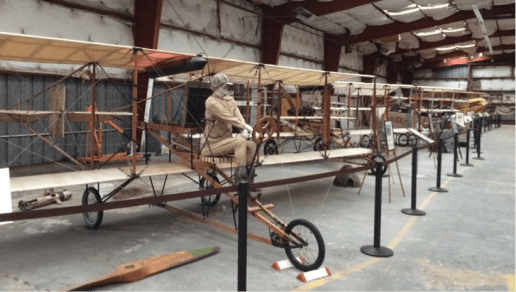
I continued southeast on U.S.- 90 to visit the Wedell-Williams Aviation Museum located in Patterson, LA.  This is a good-sized museum filled with artifacts and memorabilia related to the Golden Age of Aviation.  The museum also has nine beautifully restored Golden Age Racer airplanes that flew in air races all over the country during the 1920s and 1930s.  I have read about these very airplanes for years, but it’s something else to see them in person, and so well taken care of.  The Wedell-Williams Air Service was formed in 1928, and became Louisiana’s first commercial airline, providing passenger and mail service between New Orleans and Houston.


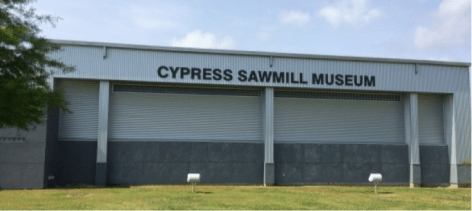
The museum building actually is home to two museums, the Wedell-Williams Aviation Museum and the Cypress Sawmill Museum.  I had no idea that Jimmie Wedell’s partner, Harry P. Williams was associated with the Cypress lumber business.  As it turns out Harry P. Williams was the son of Frank B. Williams, who is credited with starting the Cypress Milling Industry in Louisiana, and was also known as “The King of the Cypress Industry.”  This museum displays memorabilia, artifacts, and machinery related to the harvesting and milling of Cypress lumber in south Louisiana dating from the late 1800s.  I was amazed at the size of some of the Cypress logs (cross section) and the machinery needed to handle those huge logs.


Heading east a few miles on U.S.- 90 I visited the International Petroleum Museum located in Morgan City, LA.  This museum consists of a full-sized ocean oil drilling rig and barge, on which is displayed the associated equipment to support ocean oil drilling operations. If you have ever seen photos of an ocean oil drilling rig, then you can understand why I didn’t want to climb up to the base of the rig.  I’m sure my bad knees wouldn’t have survived the climb to where the museum’s artifacts and memorabilia are located.  The photo below will just have to suffice.

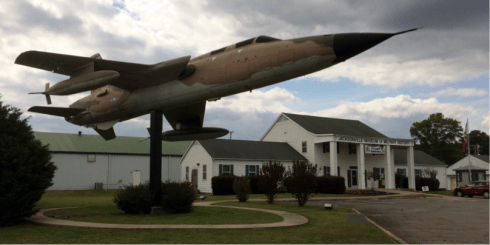
Continuing east on U.S.- 90 I visited the Regional Military Museum located in Houma, LA.  I was surprised to find a museum of this size out in the middle of what I call bayou country.  This is a fairly large museum that displays artifacts and memorabilia from all branches of the U.S. military services.  They have one tank, one howitzer, one helicopter, one air force airplane, one navy airplane, two jeeps, a motorcycle with sidecar, and a cruise missile. It didn’t take me long to go thru this museum.

During my 2016 Midwest America trip, a couple of museums, not far from New Orleans, had been closed and I thought I would try them again today.  So I headed northeast on U.S.- 90 until I picked up I-310/I-10 around New Orleans, and headed east to visit the Busted Wrench Garage Museum located in Gulfport, MS. I was looking forward to getting some photos of the 50+ restored automobiles of all makes and models.  As luck would have it, the museum had closed to the public sometime in February of this year.  Phooey!


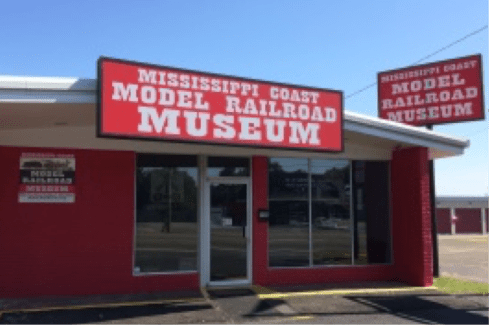
And to top it off, the Model Railroad Depot Museum located in Bay St. Louis, MS was closed when I got there.  Not to be deterred I stopped, on the way back to New Orleans, at the Slidell Municipal Airport to see if anyone was sky diving on this beautiful afternoon. The answer was NO.  They are only open on the weekends.  The Skydive Nawlins hanger was closed, but I got a big kick out of their sign on the door that read, “SKYDIVENAWLINS.COM,”


So I gave up for today and asked Greta to take me to my motel for tonight.  After I got checked in, I asked the desk clerk about a good place to eat and he said he liked Don Jose’s Mexican Grill not too far down the road. I had Don Jose’s Chili Relleno filled with shrimp and cheese.  It was delicious and was a new taste treat for me.  As usual, there was nothing worth watching on TV, so it was early to bed for me again tonight.


—–To Be Continued—–


Bill is a retired Mechanical engineer living with his wonderful artist/writer wife, DiVoran, of 61 years in Titusville, Florida. He was born and raised in the Southwest, did a tour of duty with the U.S. Navy, attended Northrop University in Southern California and ended up working on America’s Manned Space Program for 35 years. He currently is retired and spends most of his time building and flying R/C model airplanes, traveling, writing blogs about his travels for Word Press and supporting his wife’s hobbies with framing, editing and marketing.  He also volunteers with a local church Car Care Ministry and as a tour guide at the Valiant Air Command Warbird Museum there in Titusville.  Bill has two wonderful children, two outstanding grandchildren, and a loving sister and her husband, all of whom also live in Central Florida, so he and DiVoran are rewarded by having family close to spend lots of quality time with.


Bill


One of Bill’s favorite Scriptures is:  John 10:10

Memory Lane Road Trip~Part 11

12 Sep

A Slice of Life

Bill Lites


Day 11 – Friday 4/27/2018


After a great complimentary breakfast at the motel this morning, I headed east on I-40 to visit the Fire Museum of Memphis located just as I crossed the Mississippi River in west Memphis, TN.  This museum is located in the 1910 Fire House No.1, where they display several beautifully restored early 1900s fire engines.  Other fire station artifacts and memorabilia displayed in the museum, tell the story of the Memphis Fire Department as far back as the late 1800s.


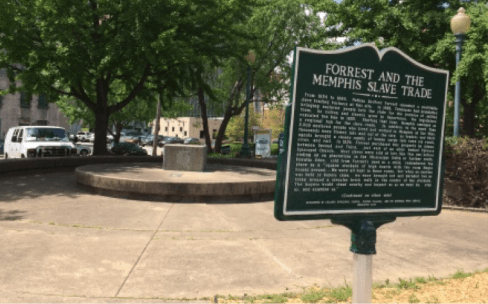
As I headed for my next museum, I passed a Historical Marker relating the story of the Memphis slave trade. I parked so I could get out to read about the history and get some photos.  I was not aware that Memphis was, in around 1855, considered a regional hub for the slave trade.  This turned out to be the exact corner where Nathan Forrest established his slave auction block (circle) in 1854.


He continued his lucrative business there (owner of some 3000 slaves himself) until 1860 when he moved his auction center one block north.  When Tennessee seceded from the Union in June of 1861, Forrest joined the Confederate Army.  Distinguishing himself during the Civil War, General Forrest left the Army at the end of the war in 1865.  Wikipedia states that in 1866 Forrest joined the KKK, and was later voted the first “Grand Wizard” of the KKK in 1867.


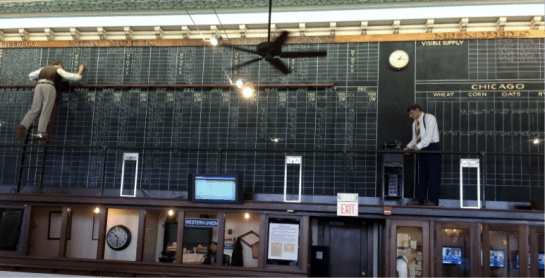
Now I headed a few blocks south to visit the Cotton Museum located in the Cotton Exchange building, at #65 Union Avenue there in Memphis.  This museum tells the story of how the cotton industry influenced the lives and economic growth of the area in and around Memphis from the mid-1800s.


The Memphis Cotton Exchange was founded in1874 to handle the growing cotton market in the area.  Once established, the Memphis Cotton Exchange was connected with the New York and New Orleans Cotton Exchanges to regulate standards for the buying and pricing of cotton in the Memphis area and the mid-south.


It was only another few blocks south to visit the Memphis Rock ‘N’ Soul Museum.  I never did find that museum in the maze of “Jazz Joints” there on Beale Street.  They all advertised to be the original source, location, and very best of Memphis “Jazz”/”Blues”/”Soul” music.


Then there was the “Orpheum Theater”, that advertised to have the very best entertainment in town.   They had listings for all kinds of modern day performers that I had never heard of.   And of course, Elvis is still a big name anywhere you go in Memphis.


The Orpheum Theater was built on this corner in 1928, to replace the original “Grand Opera House” of 1890.  That structure had burned down in 1923.  They had their own “Walk of Fame” on their sidewalks, around the theater, that included some of the big names in the entertainment business down thru the years.


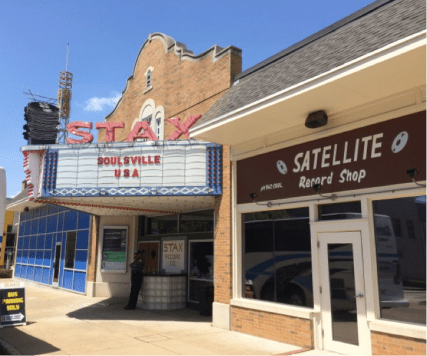
About three miles south of Beale Street I visited the Stax Museum of American Soul Music, there in Memphis.  I didn’t know until I got home and Googled the Stax Museum, that the building is actually a “replica” of the old Capital Theater, which Stax Records (1957-1976) used as their recording studio.  Known as one of America’s original promoters of Southern Soul music, this is where many early artists cut their famous record albums.  Stax also released many gospel, jazz, and blues recordings from this studio over the years.


Now I headed north, back toward downtown, to visit the Slave Haven Underground Railroad Museum.  This museum is housed in a small 1849 clapboard house built by Jacob Burkle, who was at the time, a well-known livestock trader.   The museum is filled with exhibits and artifacts that tell the story of the system known as the “underground railroad” in this part of Tennessee during the mid-1850s.


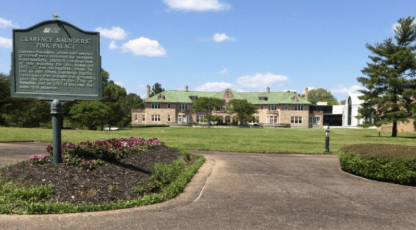
Next I headed east a few miles to visit the “Pink Palace Museum” located adjacent to the Memphis Lake and Chickasaw Garden Park. This turned out to be a huge “Family of Museums” that included a museum, displaying artifacts and memorabilia related to the history of the Memphis area, a Giant CTI 3-D theater, and the Sharpe Planetarium.  Since I wanted to get to my next museum before they closed, I opted not to spend the time in this “Museum.”


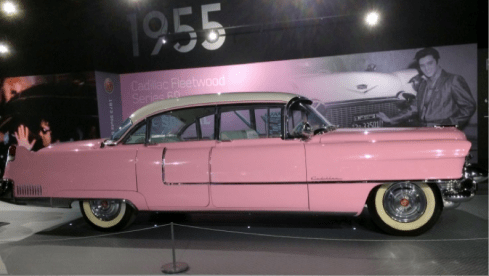
Now I headed for the Elvis Presley Auto Museum (at least that’s where I thought I was going) located in the Bluebird Estates area of Memphis.  The Internet listing indicated the Auto Museum was a separate museum.  Having never been to Graceland, I thought I could view Elvis’s cars and airplanes separately.  Silly me!  Of course all the collections are together, and everyone just HAS to go thru his mansion. So I ended up paying for the whole works, when I only wanted to see the autos and airplanes.  What a scam!


His 30+ cars, motorcycles, boats, and off-road vehicle collection is impressive, but really not worth the price I had to pay for admission (including getting to see his famous pink Cadillac).  And I had often wondered where all the Convair 990 aircraft ended up.  I have to admit the Elvis mansion is beautiful, and his family lived in opulent splendor.  But here again, what do you expect of people who have more money than they know what to do with?


After I finished with that impressive attraction, I ask Greta to take me to the motel, there in Memphis, so I could relax and enjoy my leftover Mexican Dinner from Papito’s Mexican Grill.  Yummm!


—–To Be Continued—–


Bill is a retired Mechanical engineer living with his wonderful artist/writer wife, DiVoran, of 61 years in Titusville, Florida. He was born and raised in the Southwest, did a tour of duty with the U.S. Navy, attended Northrop University in Southern California and ended up working on America’s Manned Space Program for 35 years. He currently is retired and spends most of his time building and flying R/C model airplanes, traveling, writing blogs about his travels for Word Press and supporting his wife’s hobbies with framing, editing and marketing.  He also volunteers with a local church Car Care Ministry and as a tour guide at the Valiant Air Command Warbird Museum there in Titusville.  Bill has two wonderful children, two outstanding grandchildren, and a loving sister and her husband, all of whom also live in Central Florida, so he and DiVoran are rewarded by having family close to spend lots of quality time with.


Bill


One of Bill’s favorite Scriptures is:  John 10:10

Memory Lane Road Trip~Part 10
5 Sep

A Slice of Life

Bill Lites


Day 10 – Thursday 4/26/2018
 

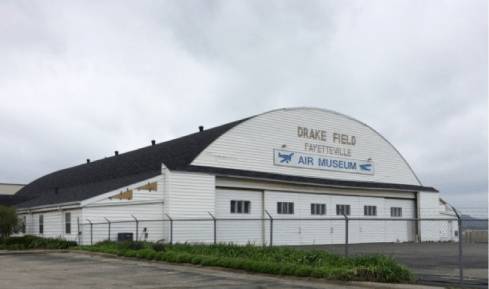
This morning I headed north on I-40 to visit the Arkansas Air & Military Museum, located at Drake Field just south of Fayetteville, AR.  This is a good size museum, filled with aviation and military artifacts and memorabilia.  Their nicely restored aircraft date from the Golden Age of Aviation to the jet age.   They have several aircraft displayed outside that could use a little TLC.  The museum also has military artifacts and memorabilia from WW2 thru current conflicts and restored military equipment of all types.


Now I headed southeast on SR-23 & I-40 to visit the Museum of Automobiles located in Morrilton, AR. Once I got off I-40 and headed south to find the museum, I thought Greta had lost her satellite contact.  The roads got smaller and the forest around me got denser and darker, and I just knew we were lost.  Then as I rounded a bend in the road, Greta announced, “Arriving at your destination on the right.”  Well, what do you know; she knew where she was all the time.


This turned out to be an amazing museum, out in the middle of nowhere.  The museum has around 50+ beautifully restored automobiles dating from 1904 to 1967, six motorcycles dating from 1913 and a large license plate collection. There were also antique arcade machines, antique player pianos, and an antique gun collection, all beautifully restored and in working condition.


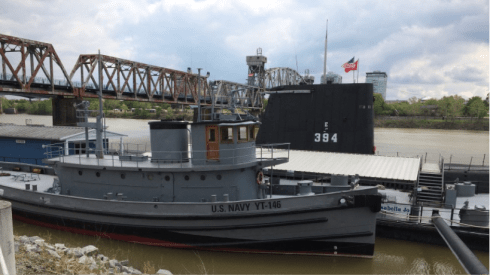
We really did get lost as we tried to find our way back to civilization.  Greta was so confused that I had to turn her off, and stop to ask directions, once I came across a small general store.  Then we were on our way southeast, on I-40 again, to visit the Arkansas Inland Maritime Museum located in North Littlerock, AR.  This “museum” turned out to be a WW2 tugboat, the Hoga (YT-146), and a WW2 submarine, the USS Razorback (SS-394), which gives visitors an idea of what it would be like to live and work on a submarine during WW2.


There were also two memorials to submariners: one for the USS Snook (SS-279) and one for the USS Scorpion (SSN-589).  This is all outdoors and situated at the North Shore Riverwalk Park there on the Arkansas River.


While visiting my cousin Milton in Arlington, he had mentioned another relative contact in Little Rock.  I gave him a call while I was there in the Little Rock area.  He told me one of his sons was into genealogy, and had a lot of information on the Lites family tree.  He couldn’t meet me today, but I made arrangements to contact him again after he had had a chance to talk to his son.  I was thrilled to come across another relative (no matter how distant) who might help me track down our roots.


Now I headed northeast a few miles, on US-167, to visit the Arkansas Military History Museum located in Jacksonville, AR.  This is a small museum with displays and exhibits that include memorabilia and artifacts related to the military influence, in and around the Jacksonville, Arkansas area from Civil War days up to the present time.


Next I wanted to check out the Little Rock Air Force Base Museum, which was just a few miles north of the Jacksonville Museum of Military History, but was informed at the gate that their museum was not open to the public.  So I took a couple photos of their C-130 Gate Guard and headed for the motel there in Jacksonville.


After I got checked in at the motel, I ask the clerk for restaurant recommendations and she said her favorite was Papito’s Mexican Grill.  That sounded good to me, so I gave Greta the address and said, “Go Girl.”  I had a Papito’s Special Dinner, which included one each: Chalupa, Taco, Tamale, Enchilada, and Chili Relleno with rice and beans.  Of course you’re right!  I couldn’t eat all of that at one sitting, but I had planned to take half back to the motel for tomorrow’s dinner.


—–To Be Continued—–


Memory Lane Trip~Part 7 (Continued)

15 Aug

A Slice of Life

Bill Lites


Day 7 – Monday 4/23/2018


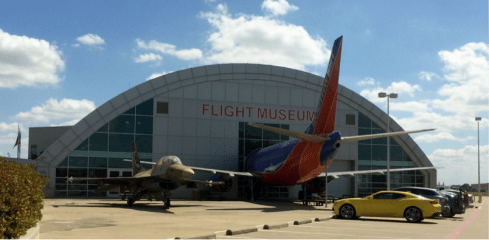
As you might have guessed by now, this was turning out to be a really busy day.  Next on my list, there in Dallas, was a visit to the Frontier of Flight Museum a few miles north of downtown Dallas, located at the Dallas Love Field Airport.  This is the best aviation museum I have visited on this trip so far.  This is a large museum with two large display areas and 30+ beautifully restored airplanes.


One of the museum’s most unique displays is their complete Boeing 737 airliner. The nose section of the airplane is inside the building and the passenger section is outside the building.  Visitors can access the airplane from inside the building and examine the entire complete interior at their leisure.


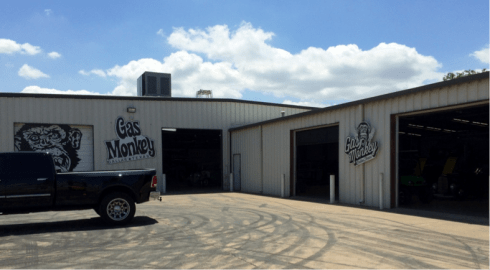
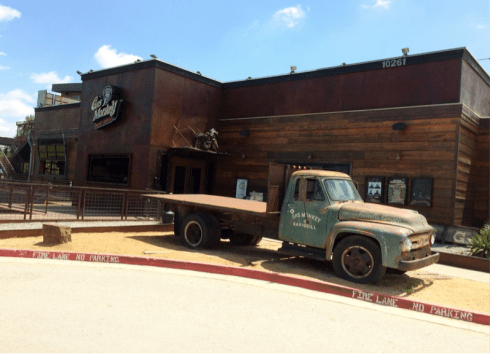
One of my favorite TV series of late, is “Fast N’ Loud” which follows the exploits of hot rod hunter, Richard Rawlings, and his Gas Monkey Garage crew, located there in northwest Dallas.  I’m constantly amazed by the crew’s talents, as they transform “barn finds” or a “basket case” car into some of the most beautiful and unusual road machines ever. Since I was in Dallas, I decided to stop in at the Gas Monkey Garage and see what was happening.


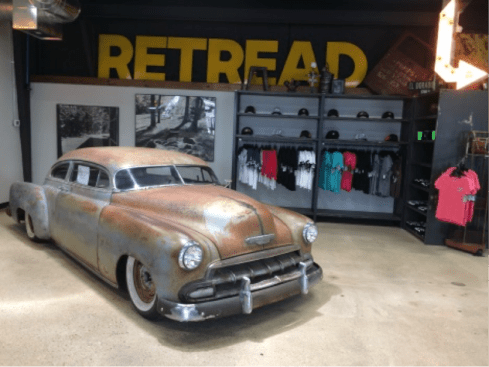
Surprise!!  The episodes of the TV series I have seen are mostly confined to the garage area, as seen in the photo above, with Richard’s office cubical in the back of the garage.  So imagine my surprise to find that Richard has expanded his Gas Monkey complex to include Corporate Offices, and the “Merch” store, which is an apparel store feathering “Trending Threads” and Gas Monkey souvenirs.


As luck would have it, the Discovery film crew was working on another episode, and access to the garage area was restricted.  I was disappointed not to be able to meet any of the “Monkeys” to tell them how much I enjoy the series and the wonderful work they do.


One of Richard’s ventures, since the series started, was the opening of the Gas Monkey Bar & Grill, located just a few miles north of the Garage, on I-35E.  I stopped by to check out this beautiful restaurant, but things were very quiet, as the dinner crowd had not started showing up, so I headed west on I-30 to meet my cousins in Arlington, TX.


I had made arrangements to meet three of my first cousins in Arlington for dinner and some reminiscing. These cousins were from my father’s side of the family, and I hadn’t seen any of them in almost 20 years.  Our family had made several visits to see them, in central Louisiana, when I was 6 or 8 years old.  Milton is my age, so we ran around with each other during those visits.  Gerry and Delois were Milton’s older sisters, and as you can imagine, we had lots to talk about.  Well, as luck would have it, we had a communications breakdown, and we missed each other at the restaurant.  After driving around a while trying to connect with them, I finally gave up and stopped to enjoy some really delicious St. Louis Ribs with baked beans and cold slaw at Jambo’s BBQ Shack there in Arlington.


With the help of my cousin, Gerry, I had made reservations, before I started this trip, for a room at the Texas Masonic Retirement Center, where Gerry and her husband George live. This was a great arrangement for the two nights I planned to stay in the Dallas/Fort Worth area, as it included three meals each day if I so elected.  And, I would be right there in the same building with two of my cousins.  Later, when we finally did find each other, there at the center, we had a wonderful time going over some of our family history. Gerry’s sister, Delois, also lives in the Masonic Retirement Center, and she joined us in Gerry’s apartment for the festivities.

—–To Be Continued—–


Bill is a retired Mechanical engineer living with his wonderful artist/writer wife, DiVoran, of 61 years in Titusville, Florida. He was born and raised in the Southwest, did a tour of duty with the U.S. Navy, attended Northrop University in Southern California and ended up working on America’s Manned Space Program for 35 years. He currently is retired and spends most of his time building and flying R/C model airplanes, traveling, writing blogs about his travels for Word Press and supporting his wife’s hobbies with framing, editing and marketing.  He also volunteers with a local church Car Care Ministry and as a tour guide at the Valiant Air Command Warbird Museum there in Titusville.  Bill has two wonderful children, two outstanding grandchildren, and a loving sister and her husband, all of whom also live in Central Florida, so he and DiVoran are rewarded by having family close to spend lots of quality time with.


Bill

Memory Lane Trip~Part 5

18 Jul

A Slice of Life

Bill Lites


Day 5 – Saturday 4/21/2018


After a very nice complimentary breakfast of eggs, sausage, toast and orange juice, I gave Greta the address to take me to visit the Texas Air Museum located adjacent to the Stinson Municipal Airport there in San Antonio.  This is a large one hanger museum that is filled with memorabilia and artifacts, covering aviation from its inception to the present time.  The museum’s outdoor static display aircraft were in bad need of some TLC.


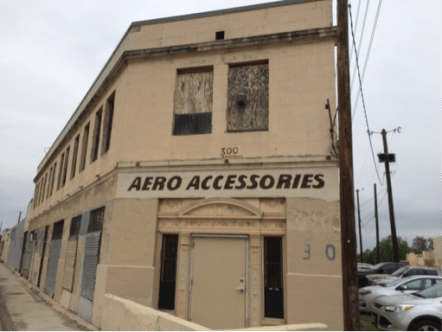
Next I ask Greta to take me to the Aero Accessories Inc. facility located just a few miles south of the Transportation Museum there in San Antonia.  This turned out to be your basic aircraft small accessories overhaul and repair station.  This business was operating in what I would call “primitive conditions” with respect to the modern equipment they were working on.  There was really nothing much to see, so I moved on.


Now I headed for a try at getting into the Fort Sam Houston base, there in San Antonio, to visit the Army Medical Museum.  I had given up trying to visit the USAF Airman’s Museum yesterday, after being turned away from three different gates.  I wish if military establishments (bases) are going to advertise their museums as being open to the public, that they would provide instructions for how the public is to gain access to those museums.  Today I called the museum first, and that was a big help.  I asked them which gate I should approach first in order to get a pass onto the base to visit their museum.  This worked out fairly well, as I was able to get a pass, and I was impressed with the museum’s large number of displays and memorabilia. They had a 1917 U.S. Army ambulance similar to the one my father, as a corps man, drove during WWI.


Next I had Greta take me to the Alamo Plaza located in the Historic District of downtown San Antonio. After getting some pictures of the Alamo, I took a one-hour trolley ride around the city, stopping at the Marketplace Plaza.


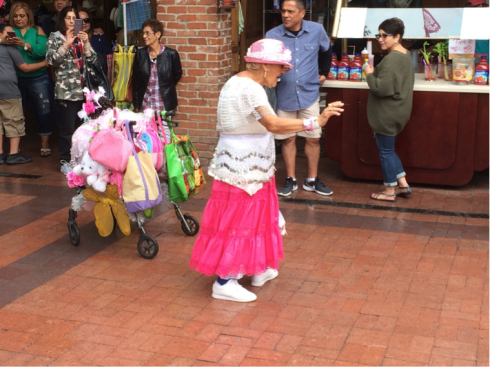
The Marketplace Plaza was brightly decorated and crowded with people.  As I strolled through the Plaza, the crowd was entertained with live music and breakdancing, as the smell of freshly cooked foods of all types attacked our nostrils.  At one point I came across a tiny Hispanic woman (someone said she was 83 years old) jiving away on the walk-way to boom box music.  She was moving like a saucy senorita. She wore a long, hot-pink tiered skirt that fell just above her ankles and exposed her sturdy white shoes. A lace shawl and a feisty pink hat decorated with flowers completed her ensemble.  I Hope I can move that well when I’m that old. Wait a minute.  I am ALMOST that old, and I can’t move near that well now!


A rain squall came up about that time, so I put off my track along the famous River Walk.  I’m not sure how much I really missed. Maybe next time I’m in San Antonio it won’t be raining.  I called my friends Ken & Debbi, who live there in the San Antonia area, but they were in Florida on vacation.          


By now I had been bumped, pushed, and jostled enough for one afternoon, and asked Greta to take me back to the motel, where I could relax and enjoy my delicious leftover Chili Relleno dinner.


—–To Be Continued—–


Bill is a retired Mechanical engineer living with his wonderful artist/writer wife, DiVoran, of 58 years in Titusville, Florida. He was born and raised in the Southwest, did a tour of duty with the U.S. Navy, attended Northrop University in Southern California and ended up working on America’s Space Program for 35 years. He currently is retired and spends most of his time building and flying R/C model airplanes, writing blogs for Word Press and supporting his wife’s hobbies with framing, editing and marketing. He also volunteers with a local church Car Care Ministry and as a tour guide at the Valiant Air Command Warbird Museum in Titusville. Bill has two wonderful children, two outstanding grandchildren, and a loving sister and her husband, all of whom also live in Central Florida, so he and DiVoran are rewarded by having family close to spend lots of quality time with.
Bill’s favorite Scripture is: Philippians 1:6

America’s North Country Trip~Part 13

13 Dec

A Slice of Life

Bill Lites


Day 13 (Wednesday)


This morning I headed east on I-80,across the border into Nebraska, to visit my first museum, the Mansion on the Hill Museum located in Ogallala, NE. This is the restored 1887 Victorian residence of former Opallala banker, H. L. Williams, and his family. The museum is beautifully furnished with original period furnishings, and includes a servant quarters. Other buildings on the premises include a 1902 one-room school house and an early 1900 homestead dwelling.


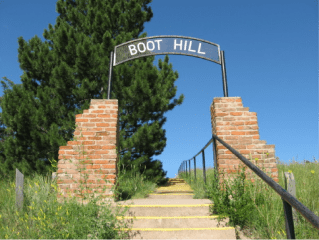
Just around the corner and up the street, I checked out the Boot Hill Cemetery there in Ogallala. Buried there are people from all walks of life, who found themselves in Ogallala, NE (Cowboy Capital) at the end of their life for whatever reason. RIP.


Now I headed east on I-80 again, and was hoping that Greta could help me find the Buffalo Bill Ranch located on the west side of North Platte, NE. The original Second Empire style home was built in 1886, and resides on what is now the 25 acre Buffalo Bill Ranch State Historical Park (also known as Scout’s Rest Ranch) adjacent to Scout Creek. The house is furnished with period furnishings, and includes servant’s quarters, an ice house, and a large barn.


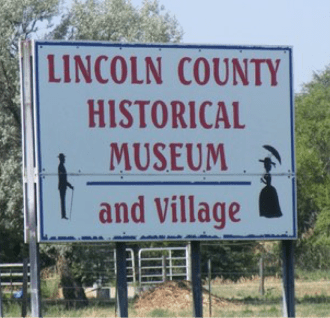
As I headed toward North Platte, I stopped to visit the Lincoln County Historical Museum & Village, located just south of the North Platte River. This was another frontier village type museum, located on 8-acres, with a main building displaying local central Nebraska historical artifacts and memorabilia. There is also a restored early 1800’s “Main Street” town with several period buildings including; general store, schoolhouse church, blacksmith shop, and barn.


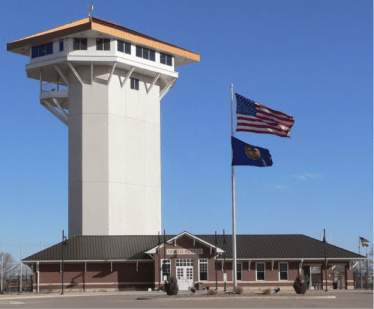
While I was in the area, just south a couple of miles, I visited the Golden Spike Museum & Baily Yard. The museum was an unusually shaped 8-story structure that gave the visitor a grand view of the huge “Baily Yard” operated by the Union Pacific Railroad. I had seen many very long coal trains during this trip, and I asked the tour guide how long the trains were. He said, “From 125 to 145 cars. We have a length restriction of 8-miles.” I was stunned, and asked him why 8-miles and he said, “Because the sidings are only 9-miles long, and the train has to fit on the siding.” Then I asked him how much coal each car could carry, and said, “Each car can carry 100 tons of coal, and each coal car weighs 20 tons.”  I did the math. WOW! What a load!   What did you get? I guess that’s why there are two diesel engines pulling and two diesel engines pushing those long coal trains across the open plains.


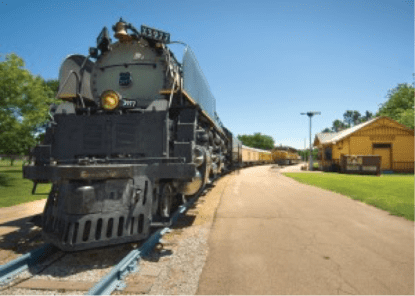
Now I headed across the north part of North Platte to visit the Cody Park Railroad Museum located just north of the North Platte River. This is a small museum with local Union Pacific artifacts and memorabilia in the restored train depot, and the only Challenger 3900 series steam locomotive on public display. The museum also has several nicely restored items of rolling stock attached to the locomotive.


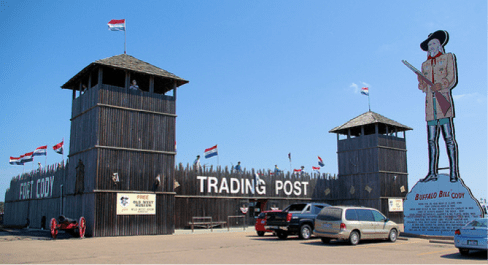
Greta took me on U.S.83 south thru the city, across the South Platte River back toward I-80 to visit the Fort Cody Trading Post. This looked to me like nothing more than a big tourist trap, so I took a couple of photos and was on my way east on I-80.


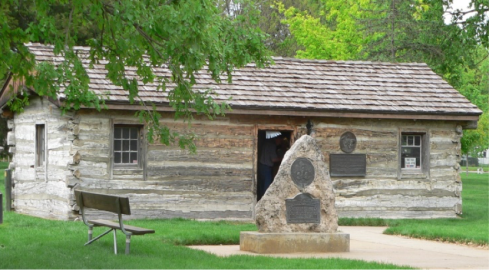
I had picked up a brochure for a Pony Express station museum somewhere along the way on this trip, and planned to stop and check it out now if time permitted. I took the #211 exit off I-80, turned north across the North Platte River, into the city of Gothenburg, NE. I found the Pony Express Station Museum on the south edge of Ehmen Park in the middle of town. The museum was a restored one-room log cabin that had originally been used as a fur trading post and ranch house before being used as a Pony Express Station in 1860 – 1861.


The curator gave me a lot of information about the Pony Express that I had never known. First of all, I had no idea that the Pony Express was only in operation for 19 months in 1860-1861. Started by three business men in 1860, it was initially called the Leavenworth & Pike’s Peak Express Company, and provided “fast” (10 days) mail service between St. Joseph Missouri and Sacramento, California. The approximately 1900 mile route consisted of 120 riders, 157 Pony Express stations (spaced every 10 miles), 400 horses, and was manned by several hundred men. The express rider would stop at each station, change to a fresh horse, taking only the mail pouch called a mochila (Spanish for pouch) with him. The mochila was thrown over the saddle and held in place by the weight of the rider sitting on it.  The mochila could carry 20 lbs. of mail in four pockets (two on each side) that would be padlocked.


The initial price was $5.00 per ½ ounce to send mail by the Pony Express route. The transcontinental telegraph (Telegraph Act, authorized by congress in 1860) completed in 1861, put an end to the Pony Express, and it is said the investors lost over $200,000 (1860 dollars) during the short period of time their mail service system was in operation.


After that informative stop, I told Greta it was time to find my motel for the night, located down the road a ways in Cozad, NE. She did a good job, and before I knew it, I was there and checked in. The desk clerk informed me that there were very few restaurants in town that he could recommend, and directed me toward the ones he thought best. I looked them over and selected the El Paraiso Mexican Restaurant, where I had one of the best combination plates of chili relleno, enchilada and taco dinner I’ve had in a long time. Yummm!


—–To Be Continued—–

America’s North Country Trip~Part 5

11 Oct

A Slice of Life

 Bill Lites


Day 5 (Tuesday)

This morning I headed west again on I-94 a short distance, to visit the Fort Lincoln Trolley Co. located in Mandan, ND. This is an attraction that utilizes 1890s open-air trolleys that travel from the old Third Street Station in downtown Mandan to the Fort Lincoln State Park and back. Since they weren’t open and I didn’t have the time to wait for the next trolley (1:00pm), I saved that ride for another trip.


While I was there in Mandan, I decided to check out the North Dakota State Railroad Museum. This turned out to be another small museum which was also closed. Their website indicates the museum displays mostly local railroad memorabilia; however, they do have several nicely restored items of rolling stock outside.


On the way to my next museum, I saw a sign for the Theodore Roosevelt National Park and decided to stop in and see what it was all about. The park is located in western North Dakota where the Great Plains meet the rugged Badlands. There wasn’t much to see from the Visitor’s Center, and I didn’t want to take the time to drive around the “Loop” which would have passed the Maltese Cross Cabin where President Roosevelt once lived.


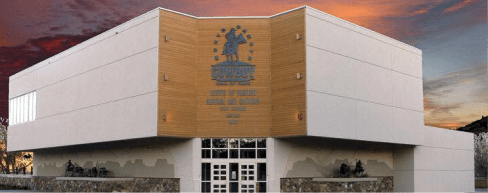
After using the restroom there at the Visitor’s Center, I continued west for a visit at the Cowboy Hall of Fame Museum located in Medora, ND. This museum tells the story of the northwest plains horse and cattle culture which is a unique way of life in western America, and includes the Native Americans of the area, Western Ranching and Rodeo history.


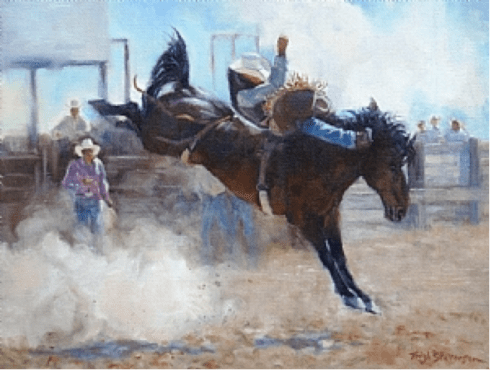
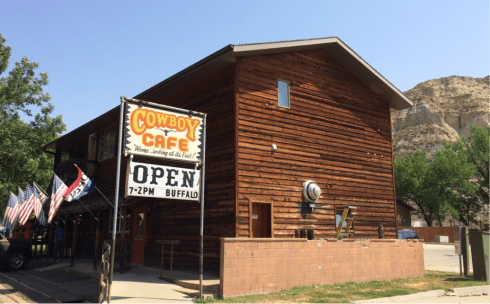
In the Rodeo Hall of Fame Inductees area I saw several photos mentioning the “North Dakota Six Pack” of Rodeo champions spanning the 1850s-1960s, when North Dakota rodeo riders ruled the National Rodeo Circuit. When I asked the curator where I could find additional information about these men, she directed me to the “Cowboy Café down the street, where the wife of one of the sons of a “Six pack” was the owner.


So I walked down to the Cowboy Café and ordered one of their special Buffalo Burgers. I asked the waitress if the owner was there, and she said she would get her from the kitchen. It turned out that she was the daughter of Thomas J. Tescher, who was one of the “North Dakota Six Pack” champions. His family had been cattle ranchers there in North Dakota for generations. She was very nice and gave me a quick run-down of the family history and their involvement in the National Rodeo Circuit. Her father, Tom, one of 15 Tescher children, entered his first rodeo at age 17 and went on to be ranked in the top 10 saddle bronc riders from 1955 to 1958, and qualified for the National Finals Rodeo in Dallas in 1959.


Note: “The North Dakota Six Pack” was a group of North Dakota rodeo competitors who dominated the national rodeo scene during the 1950s and 1960s. They included (L to R Below) Tom Tescher, Duane Howard, Dean Armstrong, Joe Chase, Jim Tescher, and Alvin Nelson.


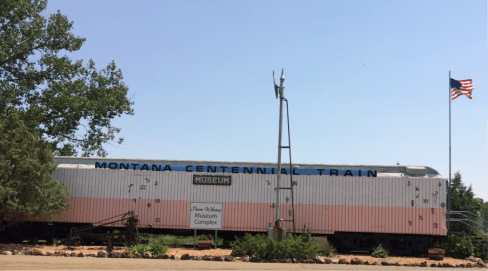
With a full tummy, I now headed west again, crossing the border into Montana, to visit the Wibaux Railroad Museum located in the little town of Wibaux, MT. This museum turned out to be one train car (the museum) one caboose, and a monument sign telling about Pierre Wibaux, the founder of the town of Wibaux.


Heading west again, I next visited the Frontier Gateway Museum located in Glendive, MT. This was a small museum that was a mix of displays including fossils recovered from the local area, Native American artifacts, homesteader’s items, settler’s tools, cattlemen’s paraphernalia, and Northern Pacific railroad information.


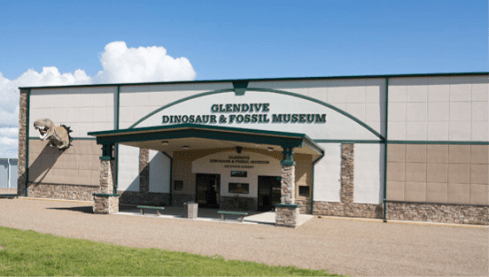
Located just down the street was the Glendive Dinosaur & Fossil Museum. This museum has more than 23 full-sized dinosaur and fossil exhibits. It claims to be the largest dinosaur and fossil museum in the United States to present its fossils in the context of biblical history. This unique museum also sponsors “Dig-for-a-day” fossil digs in the badlands close to Glendive, which gives participants an opportunity to experience paleontology first hand as they learn how to identify, collect and interpret fossils from a Biblical creationist’s perspective.


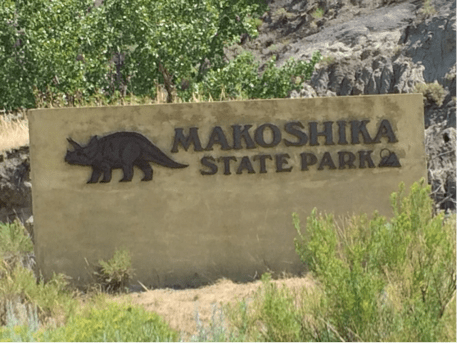
While I was in Glendive, I stopped by to check out the Makoshika State Park. The word Makoshika (Ma-ko-shi-ka) is a variant spelling of the Lakota phrase meaning “bad land” or “bad spirits.” The park was closed and from the map at the visitor’s center, there didn’t seem to be much to see. So I headed for the motel, to get checked-in and look for a place to eat.


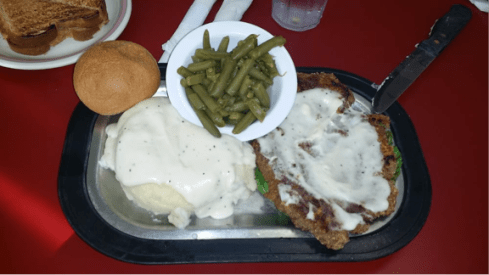
The motel clerk recommended CC’s Family Café down the road, so I headed that way and enjoyed their delicious Ground Beef Steak dinner which included green beans, mashed potatoes & gravey with Apple Crisp for dessert. Very satisfying!


—–To Be Continued—–

Circuitous Travel~Part 5

10 Sep

SUNDAY MEMORIES

Judy Wills


After a wonderful breakfast at the St. Valery Guest House in Edinburgh, we loaded up the car and headed to Wales.

Looking at the map, it is quite a distance from Edinburgh to the Eastern border of Wales. It has been so many years since we made this trip, that I honestly don’t remember all the towns and villages we passed through getting to Wales. I have a “log” where I wrote down where we went each day, and what we saw, but there are only two entries for this particular day.   I guess those two cities, with castles, were the main focus of our day.

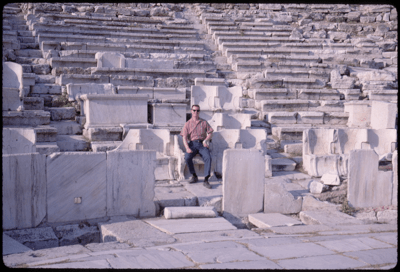
And so, I will tell you what we saw that day. It was so awesome…and we enjoyed ourselves so much. I have not mentioned before that one of the things that has interested me and thrilled me so much on this trip – is all the castles and ruins that we have seen that were built by the Normans! And they are still standing! Many years ago, Fred and I made a trip to Greece, and the feeling of awe that I experienced there is much the same as it was on this trip to England, Scotland, and Wales. All these structures have been in existence for hundreds and hundreds of years – and are still standing! I remember Fred sitting on the stump of a column in Athens, on the Acropolis, and knowing that those buildings were there when Jesus walked the earth…and they are still standing! We stood on Mars Hill, where Paul preached his sermon. Yes, some structures or most are in ruins, but they are still there, to remind us of what was. Amazing!

 

Fred sitting in the priests seats in Dionysus Amphitheater at the foot of the Acropolis

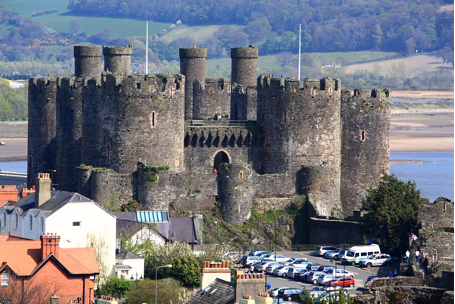
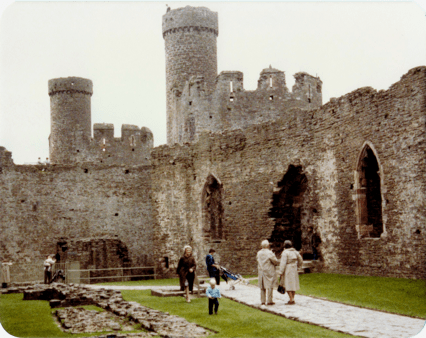
In any case, our first stop in Wales was in the town on Conwy. It is on the north coast of Wales. From a website on the castles of Wales, I learned:

Jeff Thomas, author:

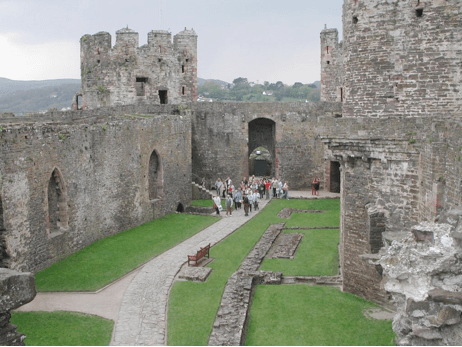
Words cannot do justice to Conwy Castle. The best, simple description is found in the guidebook published by CADW, the Welsh Historic Trust, which states: “Conwy is by any standards one of the great fortresses of medieval Europe.” Conwy along with Harlech is probably the most impressive of all the Welsh castles. Both were designed by Edward I’s master castle builder James of St. George, and while Harlech has a more storied past, Conwy’s eight massive towers and high curtain wall are more impressive than those at Harlech.


Credit Google Search and Jeffrey L. Thomas – Conwy Castle


 Unlike Harlech however, Conwy Castle and town are surrounded by a well-preserved wall lending an additional sense of strength to the site. Conwy’s well-preserved wall helps the town maintain a medieval character lost by other Welsh castle-towns over the years. Construction of Conwy began in 1283. The castle was an important part of King Edward I’s plan of surrounding Wales in “an iron ring of castles” to subdue the rebellious population. The highly defensible wall Edward built around the town was intended to protect the English colony planted at Conwy. The native Welsh population were violently opposed to English occupation of their homeland.


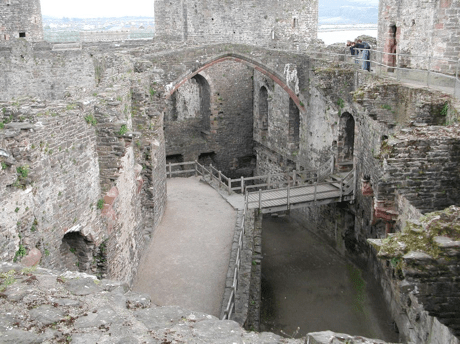
Conwy Castle entrance and bridge


Mr. Thomas continues:   Conwy is a town that time has simply chosen to pass by. Despite a few modern shops, Conwy still looks very similar to the town Edward envisioned some 700 years ago. The ancient town walls, castle and simple streets offer very little to remind the visitor of the modern world. Conwy is something of a paradox. Originally a symbol of English domination of Wales, in time the Welsh managed to reclaim the town, replacing English oppression with its own medieval character. Only at Conwy and St. Davids did we get the feeling of being transported back to ancient Wales.


Credit Google Search and Jeffrey L. Thomas


Credit Google Search and Jeffrey L. Thomas


Credit Google Search and Jeffrey L. Thomas

Credit Google Search and Jeffrey L. Thomas

Credit Google Search and Jeffrey L. Thomas

~~~~~~~~~~To Be Continued~~~~~~~~~~


Circuitous Travel~Part 4

3 Sep

SUNDAY MEMORIES

Judy Wills


 As an aside about Loch Lomond: Many years after this 1983 trip, Fred and I took a bus tour of England/Scotland with Fred’s parents and one of his sisters and her husband. I remember, as we passed by Loch Lomond, Fred’s parents were singing together the lovely song about the Loch, which was published in 1841. Here is the familiar chorus:


Oh, ye’ll tak the high road, and I’ll tak the low road,

And I’ll be in Scotland afore ye;

But me and my true love will never meet again

On the bonnie, bonnie banks o’ Loch Lomond.


As Fred read this post (he’s my first reader and gives suggestions and catches any mistakes or quirky stuff I do), he asked that I mention to you that, when he and his sister heard his parents singing this song, they both had tears in their eyes. It was a beautiful and memorable moment for them. One neither of them have forgotten.

Leaving Loch Lomond, we began our way back to Edinburgh. We passed through Luss. Of interest to me, I found on Google Search and Wikipedia:

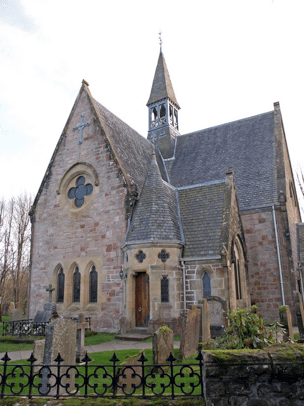
Saint Kessog brought Christianity to Luss at some uncertain date in the ‘Dark Ages’. A number of early medieval and medieval monuments survive in the present churchyard, including simple cross-slabs which may date to as early as the 7th century AD, and a hogback grave-cover of the 11th century. A well-preserved late medieval effigy of a bishop is preserved within the modern church. The present Church of Scotland place of worship was built in 1875 by Sir James Colquhoun, in memory of his father who had drowned in the loch in December 1873. The church is noted for its online services as well as for holding over one hundred weddings per year, most from outside the parish. Luss is the ancestral home of Clan Colquhoun. [Remember – I mentioned recently that my ancestral history is the Colquhoun clan! Wish I had known that when we were on this trip!!]

Here is a picture of the Luss Parish Church. Beautiful!


Credit: Luss_Parish_Church_By wfmillar, CC BY-SA 2.0, httpscommons.wikimedia.orgwindex.phpcurid=14350248
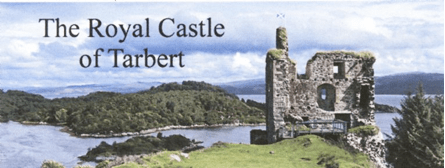
 

Still within the Loch Lomond area, is Tarbert. There is a castle there, as well. Here is some information I gleaned from Google Search and Wikipedia:

The castle at Tarbert was originally an iron age fort and was subsequently fortified by Robert the Bruce. By the 18th century it was in disrepair and most of the stone was re-cycled into expanding the port and the local houses.


From Tarbert, we drove through Crianlarich. Here’s some info on it, again from Wikipedia:

Crianlarich has been a major crossroads for north and westbound journeys in Scotland since mediaeval times. In the 1750s, two military roads met in the village; in the 19th century, it became a railway junction on what is now the West Highland Line; in the 20th century it became the meeting point of the major A82 and A85 roads. As such, it is designated a primary destination in Scotland, signposted from as far as Glasgow in the south, Perth in the east, Oban in the west and Fort William in the north…. Crianlarich is very popular with hillwalkers….In 2001, the village had a population of 185.

From Crianlarich, we drove through Callander and back through Stirling, and finally back to Edinburgh and a peaceful night in St. Valery’s Guest House – our final night’s stay in that lovely B&B.

~~~~~~~~~~To Be Continued~~~~~~~~~~


White Mountains, New Hampshire~Covered Bridges and Waterfalls

29 Aug

A Life to Live

Melody Hendrix


It was peak fall colors in Lincon, New Hampshire. We arrived at Rivergreen Resort right on the Pemigewasset river. Our home for 2 weeks. It was breathtaking. We set out on the Kancamagus Highway to see the beauty of the White Mountains.


We set out to photograph the fall colors, covered bridges and water falls. Being from Florida this was breathtaking beauty. It was cold, rainy and overcast. A disappointment to most, but perfect for photography.


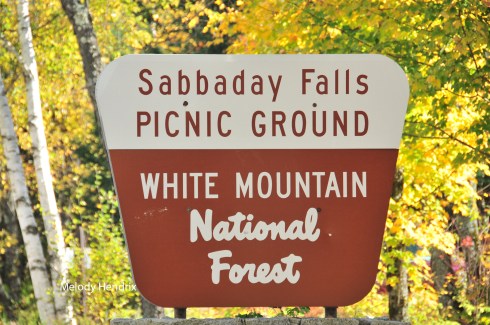
One of the first places we explored was Sabbaday Falls.


The falls were spectacular. There was much more to the park. It was all amazing. We spent most of the day there.

The next day we went to North Woodstock to see Clark’s Bridge.


Clark’s Bridge

Location: East of U.S. Route 3 in Clark’s Trading Post on Clark’s Short Steam Railroad

Clark’s Bridge was originally built in Barre, Vermont, in 1904 as a part of the Barre Railroad, to span the Winooski River. In 1960 the railroad line and the covered bridge were abandoned. The bridge was dismantled in East Montpelier and taken to its present site. The bridge was reassembled on dry land next to the Pemigewasset River. It was positioned over the river in 1965 and is still used as a part of Clark’s Short Steam Railroad. It appears to be the only Howe railroad bridge left in the world. Howe Truss; 116 feet long.

Our next covered bridge is the Saco River Bridge


Saco River Bridge

East Side Street

Conway, NH, 03818

Location: 0.4 miles north of the junction routes 16 and 153 on east side of road. In Conway Village go north on Washington Street and turn right at the fork; this is East Side Road.

This bridge, built in 1890 by Charles Broughton and his son, Frank, carries East Side Road over the Saco River a short distance north of Conway Center. In 1850s, Jacob Berry and Peter Paddleford built a covered bridge to replace a crudely framed log bridge that had collapsed at this site. The 1850 bridge stood until the Swift River covered bridge crashed into it in 1869 after that bridge was swept from its abutments. The bridge was rebuilt by Allen and Warren of Conway but it was destroyed again by a tannery fire in 1890. The existing structure replaces the one destroyed by the fire. Paddleford truss with added arches; 224 feet long. There is a small parking lot on the northeast side of the bridge.

Next is the Swift River Bridge


Location: One-half mile north of N.H. Route 16 at Conway Village

The first bridge at this site, crossing the Swift River, was built in 1850. In 1869, it was swept off its abutments by the raging Swift River and it rode downstream into the Saco River, where it crashed into the Saco River bridge. Debris from both bridges was salvaged and used in rebuilding this bridge. In 1974, the bridge was bypassed in favor of a new concrete and steel structure. Paddleford truss with arch; 133 feet long.

We visited a very interesting town called Bath.


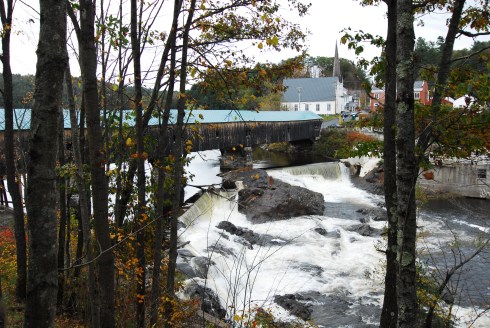
The Bath Covered Bridge is a historic covered bridge over the Ammonoosuc River off US 302 and NH 10 in Bath, New Hampshire. The bridge, built in 1833 by the town of Bath, has a span of over 390 feet and a roadbed that is just over 22 feet wide.

The bridge was listed on the National Register of Historic Places in 1976.

The bridge was closed to traffic in October 2012 for safety, structural, and cosmetic reasons. After 21 months and $3 million in repairs, it re-opened in August 2014.

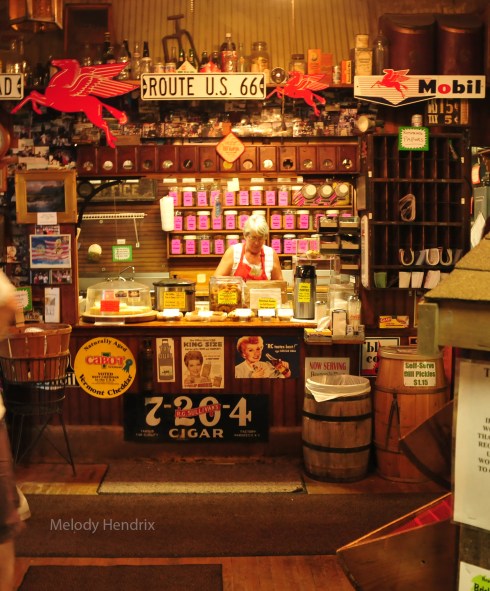
There is a famous place in Bath called The Brick Store, believed to be one of the oldest continually-operated general stores in America. Unfortunately, I believe it may have closed since I visited it several years ago.


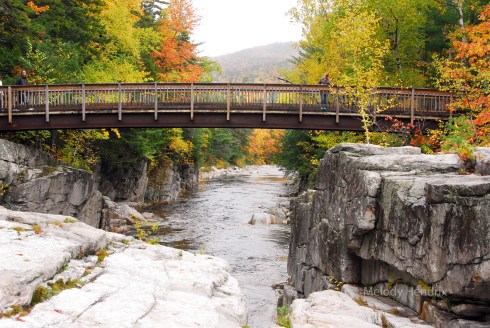
Another beautiful place to visit it the Rocky Gorge scenic area. 


There is a foot bridge over the gorge. The foot path on the other side of the bridge gradually ascends a small rise to Falls Pond. Located eight miles west of Conway on the Kancamagus Highway.


We are the World’s People. That was the Shakers’ name for everyone not a Shaker.

Canterbury Shaker Village, 288 Shaker Rd., Canterbury

You can visit the village. It’s a unique architectural and historical treasure nestled in the rollling hills of New Hampshire, with plenty of crafts, foods and gifts to buy.

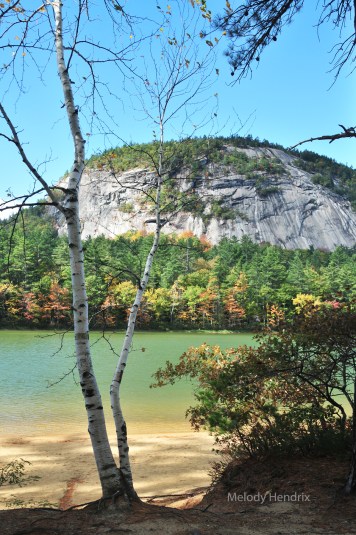
One more place I would like to share is Echo Lake State Park .


One of the popular activities here is mountain climbing. There are eight mountain climers in this picture above.

From the scurrying chipmunks to magnificent water falls, the white mountains are a place of Gods beauty.


Please join me next week to parts unknown.


I am retired and enjoying life. My hobbies are my 5 grandchildren, son and daughter, and my loving husband. I am a photographer and extreme nature lover. I love spending time in my garden or in the wilderness connected to God my Creator.
Melody