A Time to Live
Melody Hendrix
Raising your own butterflies
Raising your own Monarch butterflies at home can be fun and exciting. Especially if you have children or grandchildren that can experience it with you. It’s a wonderful display of God and nature. It also teaches struggles and responsibility for being a good stuart of our planet.
Let’s start with what you will need.
1. You will need a container. What size and what kind depends on how much you want to engage in butterfly rearing and for how long. If you just want to raise a couple of butterflies, you can use a large jar, or anything that doesn’t give off chemicals. Just put a paper towel on the bottom and a stick that the caterpillar can climb up on inside. Mesh or panty hose secured with a rubber band at the top. Don’t use a jar lid with holes poked in because it is not enough air circulation and it can cut the caterpillars.
I recommend, for ease and enjoyment, that you purchase a butterfly house made for raising butterflies. They are made of a fine mesh that the caterpillars can easily climb. They keep out most preditors. They allow air to circulate. They are lightweight and fold up when not in use, and they can be cleaned and sterilized easily. I prefer a large one because I can put in a whole potted plant in it. When it is eaten, I exchange it with another and set the eaten one outside to regrow. Otherwise in a small container, you have to put cuttings in a vase with water. Caterpillars can fall into the water, so be sure to put foil or moss or something so there are no gaps in the stems for the caterpillars to fall through.
The caterpillars when ready to stop feeding, will make their way to the top of the mesh container or a stick. They will either climb a limb that is touching the mesh side, or most likely they will climb down the plant, across the bottom and up the mesh side to the top.
Monarch butterflies are the easiest to raise because their nectar plant and host plant is the same. So you can have many potted milkweed plants in your yard for the butterflies to have nectar and keep some in the butterfly house for the caterpillars. Try to keep the potted plants free of ants and insects by setting the pot on something instead of the dirt. Check plant for spiders or other insects that may be harmful. Water the plant and rinse the leaves before you put it in the house.

There are many sizes and shapes.
2. Host plants. Be sure to buy enough host plants to last. It’s shocking to see how fast the caterpillars can consume an entire potted plant.
3. Mist bottle. With all the machanics that go on inside the caterpillar, it needs moisture to be successful. Mist inside of the house and on the plants every few days. You can also keep damp newspaper on the bottom if you are raising them inside. It is better that they are kept outside unless it is cold.
4. Calendar. You will want to know when to expect stages to happen so you won’t miss anything
5. Q-Tips. You may need to move a caterpillar from the garden to the buttefly house. It is best to just break off the stem and lay it on top on the designated plant. It will move on it’s own. Or you can take a q-tip and gently work its feet off the plant. Extreme care must be taken not to drop or injure it in anyway.
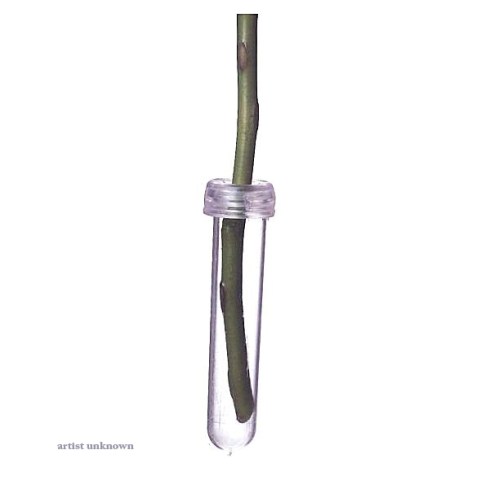
6. If you have a small container, you can put host plant cuttings in a flourist water pick which will supply water to the plant for a day or two. Or use a vase as mentioned above.
7. Something to climb up on. In a mesh butterfly house, you don’t necessarily need anything for the butterfly to climb up on because it will find it’s way up the mesh sides and form it’s chrysalis at the top. If it is in glass, it will need to climb a stick to form it’s chrystalis at the top of the stick. Be sure there is a clear path from the plant to the stick. Make sure there is plenty of room for the butterflies wings to expand once it’s emerged.
8. Weight. The mesh butterfly houses can blow away. If you have potted plants inside, there is no worry, but if you just have a vase or something plastic, you may need something sitting on the bottom to keep it from moving. Usually the house comes with tie downs to anchor it, but some rocks or brick sitting on the floor, will weight it down.
9. Newspaper. Caterpillars poop a lot. You may wish to put some newspaper in your caterpillar condo to catch the frass and make it easy to dispose of. It’s very important to get rid of it – if frass stays in their refuge, they could get sick and die. Make sure where ever you will be raising your butterflies that it is not in a windy location. That will dry them out. Also keep them out of extreme cold or heat. They like humidity, but not to the point of growing mold.
If a chrysalis falls off, but not injured, you can hot glue, tape or pin the silk that holds the chrystalis to the top of the mesh house. The chrystalis can lay on the bottom on a paper towel, but when it emerges, it must have a way to immediately climb up on something to pump it’s fluid into it’s wings.
It will take 9 – 14 days for the butterfly to emerge once it makes it’s chrystalis. Mark it on the calendar. You will see it turn from green to almost black with color showing through. It will emerge the next morning. Probably very early. If the chrystalis stays black for more than 2 or 3 days. It’s dead. Remove it.
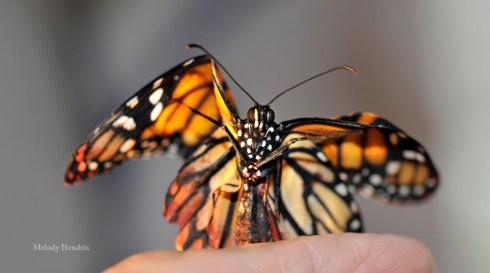
When the butterfly is ready to emerge, it does so very quickly. So be ready. Observe the butterfly for a few hours. When its wings are almost dry, you can put your finger under its legs and it should hop on your finger. Walk outside and set it on a flower for some great photos. It cannot fly until the wings have completely dried. It’s a perfect time to get great pictures. You won’t have to chase it all around the garden.
If you see a butterfly laying eggs on a plant, you can collect that plant, keep it in a water source and put it in the buttfly house to allow the eggs to develope and become the butterfly that laid the eggs. Keep picking fresh leaves from the same plant. Most butterflies drink from many different plants for nectar, so your new butterfly will likely have a food source nearby. Having many kinds of nectar plants is the key to attract many different kinds of butterflies.
Raising butterflies can be bitter sweet. They are not all meant to survive. Many things can go wrong and there are enemies lurking. but you can help its chance to survive and multiply. With more and more habitates lost and deadly chemicals everywhere, helping nature is a good thing.
One common problem is when the butterflies wings don’t get proper circulation for the wings to inflate and don’t straighten. It will never fly. The best thing you can do is set it concealed on a nectar plant and let nature take it’s course. Once I thought I would keep one alive. You can feed them red gatorade or cut some bananas or other fruit and they will eat the nectar juice. I wouldn’t recommend doing this. It lived 3 weeks. An unnecessary tedious effort.
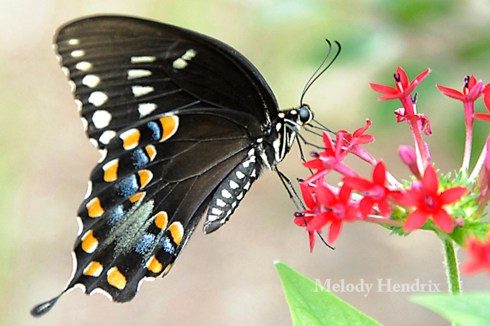
Next week I will profile another easy to raise butterfly…. The Black Swallowtail. It loves dill and parsley.
I am retired and enjoying life. My hobbies are my 5 grandchildren, son and daughter, and my loving husband. I am a photographer and extreme nature lover. I love spending time in my garden or in the wilderness connected to God my Creator.
Tags: Florida Butterflies, Florida Nature Photoblogger, nature





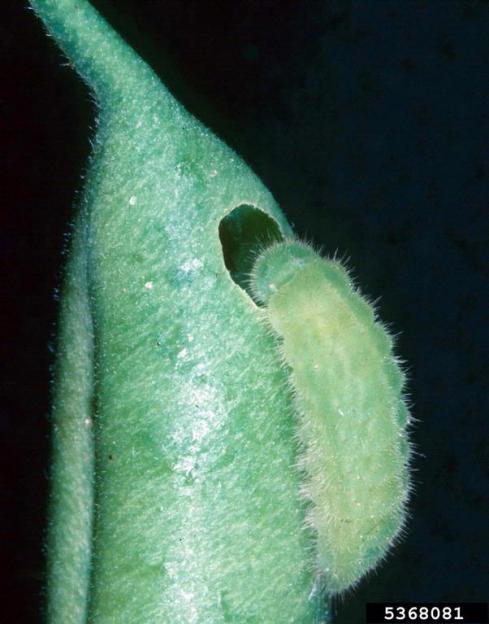




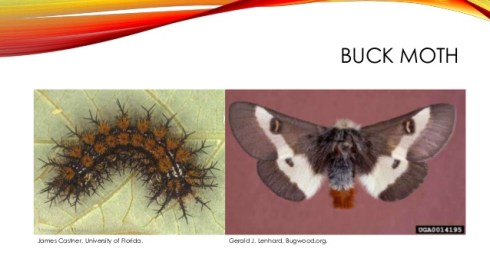 The adult buck moths have a flight period that occurs between October and November. as late as December in Florida. The adults are active during the day and are very quick fliers, and can be found flying most commonly between noon and 2:00 pm in oak forests during sunny weather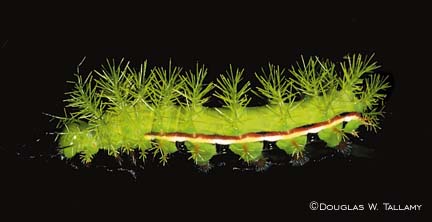
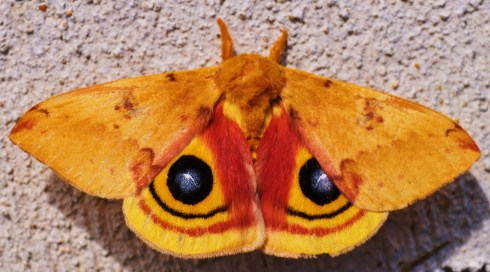 Lo Moth found on Ixora and rose. Adult moths are strictly nocturnal, flying generally only during the first few hours of the night.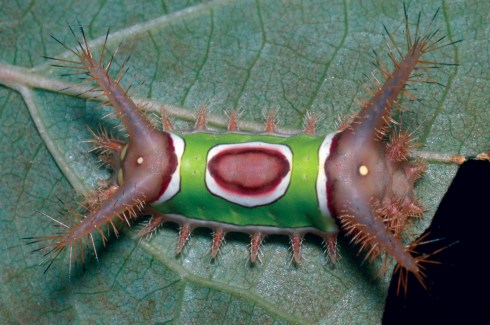
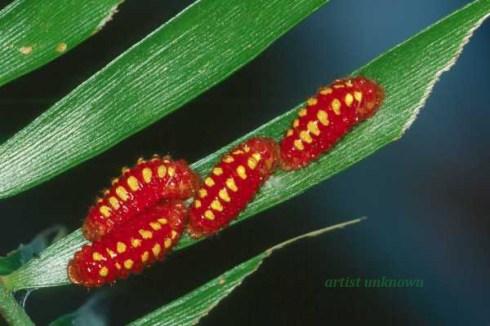
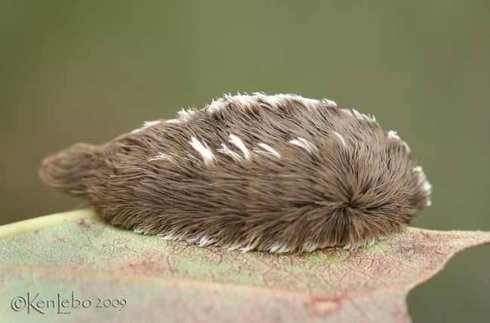
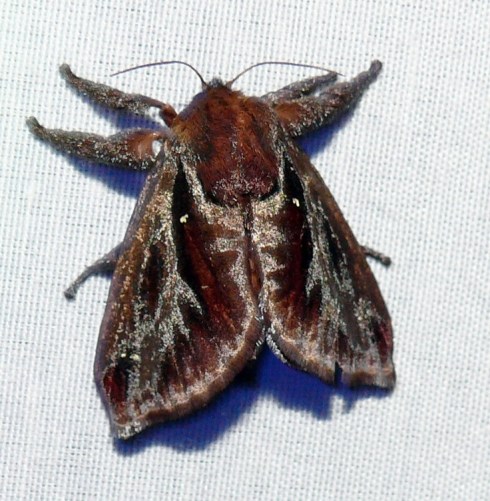 Saddleback caterpillar and moth. Host plants are many plants, vegetables, flowers, citrus, maples, oaks, and blueberries.















































 Old Things R New