Tag Archives: Military Life

Treasures From Germany~Part 2

30 Oct

SUNDAY MEMORIES

Judy Wills


Another musing about our time in Germany. We had such a great time, and enjoyed just everything there. The food was one of the best things! We never had a bad meal, even if we stopped at a Gasthaus in a small town we were traveling through. I remember we went to sight-see in one town, but when it came time to eat, we left the town and went to a Gasthaus in a smaller town down the road.


1

The Schwartzer Adler Gasthaus – Courtesy Google search


Our girls didn’t understand our reasoning, until I explained to them:   If the food in the larger, tourist town isn’t too good, well, the patrons are just tourists and won’t be back. However, if the food in the Gasthaus, which is patronized by the locals, isn’t good, then the local people won’t be back, and the Gasthaus will close down. So the food has to be good. And it was VERY good!

We had several favorite restaurants within both Wiesbaden and Heidelberg that we frequented. I’m told that our very favorite in Heidelberg is no longer an eatery – it is now a bank! Noooooo! Unfortunately, we haven’t been back to see it ourselves, but our Karen and her husband, Brian, have, and gave us the bad news. Shucks!

Here are some of the treasures we picked up while in Germany. I’m not sure I remember where I purchased this candle, but I have enjoyed it for many years. While it is a candle, and “decorated with grapes and vines,” it is also painted with silver. Most unique.


2


When we lived in Wiesbaden, our first apartment was on Albrecht Dürerstrasse (Albrecht Dürer Street). When we found this etching of the “Praying Hands” – and since we knew the story behind the hands, we purchased it. It hangs on a short wall in our entryway, along with a scripture verse, and reminds us of our Lord and Savior, Jesus Christ.


3


Here’s an abbreviated version of the “Praying Hands:”

Albrecht Dürer was one of 18 children. He and his brother both wanted to be artists, but knew their father couldn’t pay for their studies. They flipped a coin – the winner would go to art school, the loser would work in the mines to support the winner. Albrecht won. His work at the academy was an immediate sensation. Albert worked the mines for four years to support Albrecht.

 Following his return to Nürnberg, and a festive dinner, Albrecht raised a toast to his brother and said that, now it was Albert’s turn to study. With tears in his eyes, Albert showed his hands that had been so damaged working in the mines, that he was unable to even hold a paint brush, and so unable to study art. It was “too late” for him.

 Tradition has it that Albrecht’s drawing of the “Praying Hands” are those of his beloved brother in prayer.

There are other versions of this story, but this one touches my heart.

~~~~~~~~~~To Be Continued~~~~~~~~~~

Treasures From Germany~Part 1

23 Oct

SUNDAY MEMORIES

Judy Wills


We were blest with being able to live in West Germany for a total of six years. We spent three years in Wiesbaden, then 10 years later, we returned to Germany for another three years in Heidelberg.   Both tours of duty were precious to us. God gave us the opportunity to live in a country that wasn’t our native land, to see the beauty of other parts of the world, and to know another culture. I wish every American citizen could have that experience – to see the United States from the viewpoint of other countries. It certainly helped us to see what a wonderful and free country we live in.

One thing we did, that I wish was imperative for every American, was to visit a World War 2 concentration camp. We visited Dachau several times – on our own, and with friends and family that came to visit us.


Dachau has been really “cleaned up” from what it was during the war, but the atmosphere is still there. It truly makes us appreciate the United States so much more.


But there were other things that we did in Europe to make us wish we could have stayed longer. We traveled to England.


4


We traveled to Italy.


5


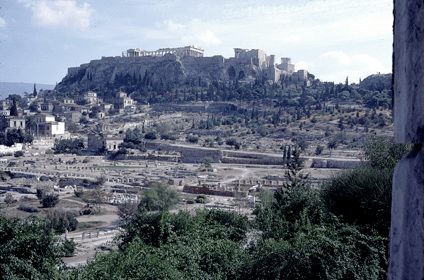
We traveled to Greece.


6


We traveled to Switzerland.


7


We traveled to Austria and Liechtenstein.


8

Mozartplatz in Salzburg


We traveled to France.


9


As you can see, we were well-traveled. We saw beauty everywhere. And we saw treasures everywhere we went. Some of those treasure we bought and brought home with us.

I’ve mentioned the alabaster lampstands, and onyx “eggs” that we enjoy. We had a friend in Maine who was a bit of a germaphobe and actually boiled the alabaster items her husband brought back! They literally crumbled in her hands! Ouch!

Somewhere along the line, we picked up this set of bells.


10


When I had a meal ready, I would “ring the bells” to let everyone know that it was time to gather at the table. I still have the bells, but don’t usually ring them anymore. I just yell for Fred to come.

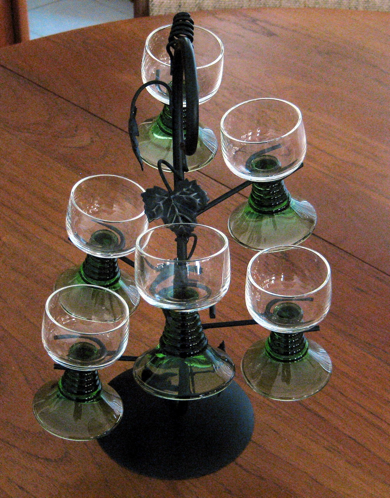
I have never developed a taste for beer, wine, or any other alcoholic drink. However, that didn’t prevent me from purchasing this cute miniature wine-glass set.


11


When I saw it, it just struck my fancy. And as for the beer and schnapps glasses – they were a gift from a delightful German girl who came and stayed with us for a few weeks.


12


The York High School in Yorktown, Virginia, has a German “sister city” – Zweibrücken – and some of their students came to stay in Virginia to see how we lived. A lovely girl named Astrid stayed with us, and her thank-you gift was this beer and schnapps glass. We don’t use it, but think of her and the time we had together when we look at it.

~~~~~~~~~~To Be Continued~~~~~~~~~~

Christmas in Germany

27 Dec

SUNDAY MEMORIES

Judy Wills

JUDY


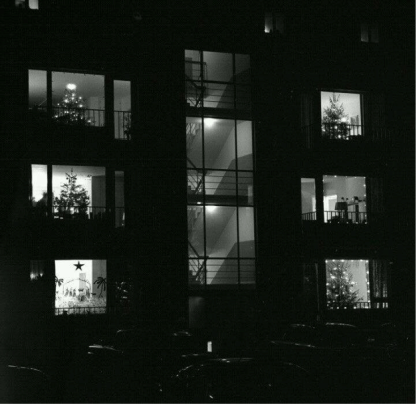
Recently, on facebook, I saw that our daughter, Karen, has posted a picture that took me right back to our first tour of Germany. She stated that it: “brings back memories of living in Germany!”  We were in Wiesbaden, living in government quarters, which was a “stairwell” with two “apartments” on each level. And there were two stairwells in each building. We happened to live on the top floor, which we later discovered was the best place to live. No one above us…if we needed a breeze, we had it whether or not the other levels had the breeze or not. The only drawback was carrying grocery sacks up those three flights of stairs – and laundry down to the basement!

But usually, at Christmas, we were encouraged to decorate our picture window. I seem to recall there were competitions among the buildings to see who had the “best” or most elaborate decorations, or the most meaningful….you get the picture.

Therefore, this picture really reminded me of that time. Here is the picture Karen posted:

2

I’m sorry this picture is in black and white. However, let me show you one of the building we lived in, and what we did one of the Christmases:

3

Our apartment is the upper left one – the one with the silver bells. I don’t think we won any awards, but it was fun, anyway.

Here is another picture, but not of our stairwell. They may have won an award!

4

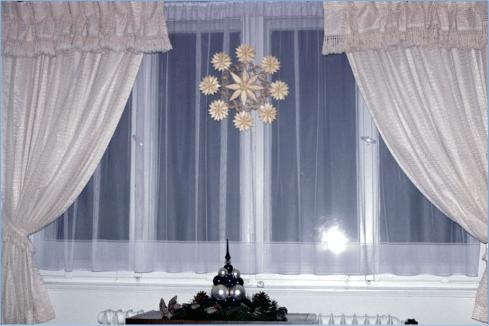
Ten years later, we were stationed in Heidleberg. We lived in a different “type” of government housing, with the picture window at the end of the building/room, rather than like the housing in Wiesbaden. Here is what I did for our window treatment there.

5


The Germans made these wonderful decorations out of wood/wood shavings. That’s what this one was. Unfortunately, I must not have packed it well enough, because it arrived in the States rather beaten up, and unusable. In any case, I don’t have it any more. But we enjoyed it while there.

My taste in Christmas decorating may not be very elaborate, but Fred and I both enjoy what we put together to decorate our house.

But more than that, many of our decorations and tree ornaments are from Germany, and we are reminded of our time there every time we decorate our tree, or put together some sort of decoration in the house. It was a wonderful time in our lives, and we are thankful God gave us the opportunity to live outside our country.


Keukenhof Gardens, Holland~Part 2

5 Apr

SUNDAY MEMORIES

Judy Wills

JUDY


2


Last time, I wrote about the Keukenhof Gardens, in Lisse, Holland. We so thoroughly enjoyed our visits there, and want to share this beautiful place with everyone we know.

3

Here is some history about the tulips we found interesting from the Fluwell website:

“during World War 2, people ate tulip bulbs. The only reason for this was hunger. The Netherlands suffered a great famine in the winter of 1944-1945. Eating tulip bulbs is not something our ancestors did for fun, they did it because there was nothing else to eat.

 Many Dutchmen of certain age remember the famine and the tulip bulbs they ate. In our theme park Tulpenland, we have a lot of customers that share their memories with us. They sometimes still find it difficult to see tulip bulbs back, although they know that we use them only for flowers, not for food. Hunger is a deep emotion that is not easily forgotten.

 The Dutch famine was the result of the lost Battle of Arnhem (1944), when allied forces failed to liberate the northern provinces of the country. The northern provinces became isolated from the liberated parts of Europe. Food stocks ran out, as did fuel stocks. Then a harsh winter began. Thousands of Dutch citizens starved or froze to death.

 Due to the war situation, tulip growers had not planted tulip bulbs that year; so great amounts of tulip bulbs were stocked on farms throughout the country. During the famine authorities decided to use these stocks as food for the starving populations. The old, dry tulip bulbs were sold in grocery stores, and newspapers published recipes with tulips. The tulip bulbs were nutritious and relatively easy to cook, so that less fuel was needed.

 The tulip bulbs that people ate in the Second World War cannot be compared with modern day, fresh tulip bulbs. The war bulbs were old and dry and did not taste like fresh tulips. A fresh tulip bulb has a sweet, milky flavor that is actually not very bad. The tulip bulbs that were eaten during the war had a very bitter and dry taste instead.

 Eating tulip bulbs is not as bad as it sounds like, as long as you eat fresh tulips that were not sprayed. Unfortunately, such bulbs were not available during the last winter of WW2. It is important that this sad history is not forgotten. Dutch children are still raised with the words: you are not hungry, you only have appetite (Je hebt geen honger, je hebt trek). Real hunger makes you eat everything you can get, even old, dry tulip bulbs, as they were eaten during the Dutch famine.”


Amazing!

Just a side note here – there is a wonderful place to visit outside The Hague, called Madurodam. It is a miniature city, built to scale. It includes the normal things you would find in a city – churches, office buildings, and even Schiphol Airport in Amsterdam, with working airplanes. It’s a fun thing to see during the day, but miniature lights come on at night, and it’s quite the fairyland.

14


The family of Old Things R New wishes each of our visitors a blessed Easter. He is risen!

Tennis Anyone?

1 Feb

SUNDAY MEMORIES

Judy Wills

JUDY

As a child, it seems like I was always pretty active. I mean, back in that day, we didn’t have a TV to watch all day long, nor a computer or iPhone to keep us entertained. We were outside most of the time, with our friends and those of us in the neighborhood just playing our hearts out.

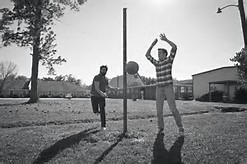
I remember being in elementary school and playing tether ball. I was actually pretty good at it – even beating some of the boys! That was fun!

1

And then there was the school field day – where there were races and high jump and broad jump. I think I remember getting a blue ribbon for the broad jump one or two years.

However, when I got to high school, we had to choose between sports and music. And music won out for me. So I went into the chorus program, rather than PE. Of course, most of the popular girls were in sports, cheerleading, etc. But that didn’t bother me. I just loved that music so much.

Then came college. I attend Eastern New Mexico University (ENMU) for one semester and had to take PE. Since I came from a land-locked state, I had never had the proximity of large lakes or rivers or oceans, so I chose to take swimming. I passed the class, but it was by the skin of my teeth!

When I transferred to the University of New Mexico (UNM) in Albuquerque, I thought to take up tennis. My parents surprised me with my first tennis racket. It was the greatest thing – wooden frame and all! That’s all there was at that time. I found that I really LOVED to play tennis! I think I had a pretty good rhythm for it – since I have the music background, and rhythm is everything!

So, feeling very sure of myself, I took Fred out to play a match – and he beat me!! That is soooo not nice! It’s especially not nice, since golf is really his game. (I actually tried one time to play golf, but gave it up. I was using Fred’s clubs and was so afraid of breaking the clubs that I swung at the ball more than I hit it. I thought for sure that he would kill me if I damaged his clubs!)

When we were stationed in Florida (Tyndall AFB, Panama City), I was involved with a Wive’s Club league. I played with them for about four years. When I arrived one morning, there was a man wanting to play some tennis, and the girls told him that one of their “best players” would be there shortly – and pointed to me. He and I played for a while, and he complimented me on my play, but said I had a “baby” serve. After that I took lessons to improve my serve.

But all good things must come to an end – and so did tennis for me. I hadn’t played in a while and tried to play in a “league” set up by our church. When I realized how badly my knees were hurting, that’s when I knew that I needed to stop playing.

But I must say that it didn’t stop me from watching. I just devour anything tennis I can find on the TV. We watch all of the major tournaments – the Australian Open is on right now, and I’m lovin’ it.

Through the years we’ve had our favorite – and most unfavorite – players. They have come and gone, as well. I am distressed to find that women’s tennis has become a screaming match – who can scream the loudest? Nothing classy about it at all – not like when Chris Evert and Margaret Court and Yvonne Goolagong were playing. Now THOSE were classy players! I can understand a “woof” of air after hitting ball, but a screech? I usually have to watch women’s tennis with the mute button on.

But that doesn’t stop me from watching – and screaming (inside my head, of course) for my favorite player to win!

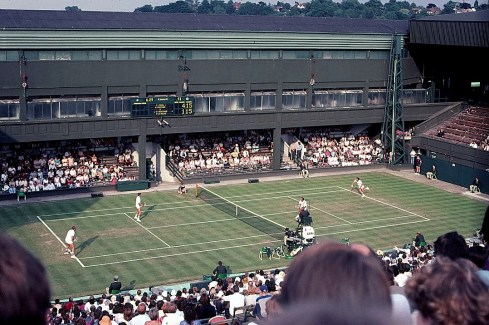
Men's Doubles match - John Newcombe_Tony Roche vs. Casal_Hocevar


This picture was taken when we stopped at Wimbledon in 1983 – on our way home from Germany.  We were in the nose-bleed-standing-room-only area.  But it was still exciting for us.


My Colonial States Trip~Part 11

28 Jan

A Slice of Life
Bill Lites

Bill Red Spot Plane

Somehow I missed the turn (or maybe I wasn’t paying attention) outside of Harrisburg and ended up on I-81 (south) instead of following US #15 (south). This caused me to miss getting to visit the Gettysburg Train Museum and the Gettysburg Battlefield Museum, both of which I’m sure I would have enjoyed. It wasn’t until I came upon the Maryland Welcome Station that I realized what had happened, and by then it was too late in the day to go back, so I just kept on trucking. Just down the road I stopped to check out the Hagerstown Air Museum in Hagerstown, MD where I learned that several of the WW II USAAF training and transport aircraft were built by Fairchild Aircraft in 1some of the hangers where the museum’s aircraft are now housed. Among notable aircraft built by Fairchild during and shortly after WWII included the PT-19/PT-23/PT-26 Cornell trainers, the AT-21 Gunner twin-engine trainer, the C-61 Argus (For the RAF), and the C-82 Packet, C-119 Flying Boxcar and the C-123 Provider cargo planes. The museum wasn’t officially open, but one of the guys working at the airport hangar (where “Greta” delivered me) agreed to show me the museum’s aircraft collection and tell me a little about Fairchild’s roll in wartime Hagerstown.

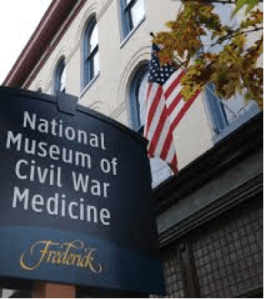
Next I headed southeast to visit the National Museum of Civil War Medicine in Frederic, MD which was a disturbing and visually graphic education of primitive methods of 2medical treatment used on the fighting men during the Civil War. It is surprising to me that as many men as did, survived their treatments, surgeries and amputations during that war. I guess the main reason for their survival rate was that they were young and healthy when they went into the war. It makes one appreciate modern medical practices such as the advances in cleanliness, antiseptics, surgical applications and especially prosthetics technology.

When I first arrived at the museum, I couldn’t see any place to park, as there were businesses on both sides of the street and signs were posted as “Commercial Loading Zones.” There were cars parked in those loading zones, on both sides of the street, so I stopped in 3front of the museum just long enough to go in and ask where to park. I couldn’t have been in the museum more than 3 or 4 minutes, but when I came out to move my car I had a parking ticket and the writer of that ticket was nowhere to be seen. He/she must have been lurking in some doorway, close by, just waiting for me to walk away from my car, because the ticket was a computer print-out with a “lot” of automobile information that had to have been observed and entered into their hand-held device. Man, was that fast! Needless to say, that was a costly museum visit.

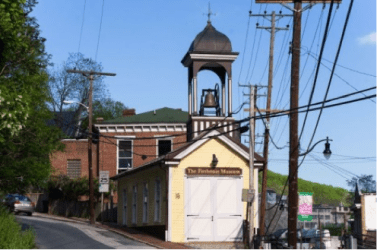
Next on my list, as I continued east, was The Firehouse Museum in Ellicott, MD which was closed that day. As you can see from the photo below, the museum is very small and is only open on Saturdays and Sundays. The museum is located in the very first Ellicott volunteer firehouse, which was built in 1889, and served as the town meeting hall, among other things, over the years. Then it was on east to Laurel, MD for dinner and the motel for the night.

4

—–To Be Continued—–

WWI Trench Art

12 Nov

A Slice of Life

Bill Lites

Bill


For DiVoran’s birthday I took her to the Orange County History Center in Orlando, Florida so she could view the “Gone With The Wind” exhibition on display there.   She loved it. While she was enjoying the exhibits about that famous story of Rhett Butler and Scarlett O’Hara, I strolled around the galleries on the other three floors of the building. It was a pretty impressive arrangement, with exhibits covering mostly Florida history.

1

One exception was the WWI Trench Art exhibit. I was simply amazed at what some of those soldiers had done with what was called, in one description, “War Waste.” There was no end to the creativity shown by the many different examples displayed. There were creations using the smallest rifle cartridges, to those using some of the largest canon shell casings. There were pieces ranging from a small crucifix, to a multi-bulbed desk lamp. And some of the artistic work was breathtaking!


To think that in the midst of one of the world’s worst conflicts, and in the cold and muddy trenches filled with the smell of death, that it was possible for men to be able to remove themselves (thoughts and emotions) in a way as to create such beauty out of some the very components that they were using to perpetuate that devastation.

4

It’s disturbing for me to think about the millions of young men who have had to go to a war for any reason, but especially those with such talent as displayed in these art forms. Of course, there was the much used reference of “Turning Swords into Plowshares” which didn’t help when I tried to imagine how much talent has been wasted over the centuries because of the many wars that have been fought around the world. There was a picture of a huge pile of shell casings, which must have been the source of some of the “War Waste” referred to in one of the articles about Trench Art.

5

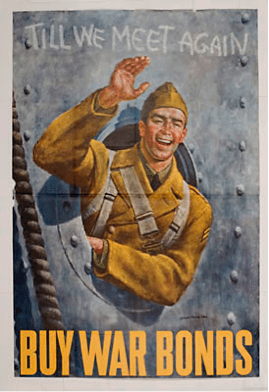
There were several WWI posters (collector items by now) encouraging Americans to “Buy War Bonds” to support the war effort. I remember the stories about how the people of this country tried to stay out of the “War Over There” but how they rallied together to support out military once the U.S. joined the fight.

6

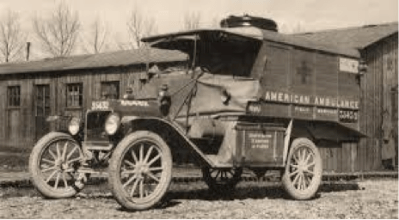
It reminded me of pictures and stories of my dad, who had been a medic and ambulance driver with the U.S. Army in France during WWI. I’m sure he saw his share of terrible things during that conflict, as did many, but like most of them he never talked about it to us.

7

If you get a chance to visit the Orange County History Center in Orlando, Florida in the near future, be sure to see the “WWI Trench Art” exhibit (there until 12/31/2014). If not, you can go on the internet and Google WWI Trench Art and you’ll be amazed, as I was, with what you will see posted there, and with many references to other links. Enjoy!


—–The End—–

http://www.trenchartofww1.co.uk

How We Met~Part 2

12 Oct

SUNDAY MEMORIES

JUDY

Let me add a bit of Fred’s history here. He is the oldest of four children in his family.

His father had been in World War 2 as a Chaplain, after being through seminary and pastorate. When the Army Air Corps decided to break apart and the Air Force became its own entity, his dad went with the AF rather than Army. So the family moved around quite a bit – not only in the States, but also had a tour in Italy after the war.

When Fred was in high school, his dad was sent to Japan.

4

The family followed, but it took a while. The year they moved, Fred went to three different high schools! (In his public school years, he went to 23 different schools!) They started in Panama City, Florida, then moved to Danville, California (near Walnut Creek) for a while, then on to Japan. He was ticked that the California school he was in – San Ramon Valley Union High School – which was supposed to be top-of-the-line at that time, didn’t offer either Latin or advanced Algebra – both of which he’d studied in Florida. The California schools also didn’t want to let him take upper-level American history (a junior course, and he was just a sophomore), saying that he couldn’t possibly be ready for that class. His father convinced them to let him take a test to measure his level – and he aced the test! In any case, they were there only a few months before the move to Japan.

Fred’s sisters told me later that he went straight from age 12 to 20! He apparently got serious about his studies and girls just fell by the wayside! I guess it was a good thing, since he was Valedictorian of his high school graduating class in Japan! None of that moving around stunted his brain power, it seems. He actually said it was an education within itself, and he was grateful for that opportunity.

5

Because of his grade average, he had applied to – and been accepted by and had a line number for – four universities: Purdue, Florida State, the University of Illinois, and Washington State. He just hadn’t made his choice yet.

Fred had always had a bit of a problem with hay fever, but it got worse while he was in Japan. He was talking with the librarian in his high school on Johnson AFB, Japan, one day. She was from Albuquerque, and she suggested that the dry climate in New Mexico might actually be good for his hay fever. So, late in June that year, he applied for admission to the University of New Mexico – and was accepted.

And that’s how he came to be in Albuquerque. God just brought him there for us to meet. Isn’t it amazing how God works things out?


For I know the plans I have for you,” declares the Lord, “plans to prosper you and not to harm you, plans to give you hope and a future.     Jeremiah 29:11


~~~~~~~~~~To Be Continued~~~~~~~~~~

How We Met~Part 1

5 Oct

SUNDAY MEMORIES

Judy Wills

JUDY

Wow…….to think back all those 56+ years ago to how Fred and I met……..I really have to stretch my memory. Do you know how much fun it is to look back at those times? It’s almost like living them again. I was in my junior year of high school.

2

I belonged to a Baptist organization call BHiU – as in Baptist High (school) Union. If you are at all familiar with Baptist organizations on a college campus, you might be familiar with BSU – Baptist Student Union. It was the same thing, just on a high school level. We met in a church not far from my high school, and kids from Baptist churches around the area that went to that school met there before classes one morning each week. It was mostly Bible study and testimonies. Anything inspirational to help us get through the day and week in public school.

Being an officer in my group, I had been invited to attend a BSU meeting on the local college campus – the University of New Mexico(UNM). As we were gathered in the room, I remember someone asking, “Where’s Fred Wills? He said he would be here.” And then someone else said, “He’ll be here – oh! here he is now.” I remember seeing him come in and sit down. That was my first glimpse of him. But I didn’t remember him.

The next year, all of us that were seniors in the BHiU were invited to attend the state-wide BSU convention. It was during a long weekend. This particular year, it was being held in the town of Portales (por-TAL-es), New Mexico, (peanut capitol of NM) about a four-hour drive from Albuquerque. We stayed in a hotel near ENMU – Eastern New Mexico University, and held our meetings in a conference room in the hotel.

34


As it turned out, Fred and I rode in the same car together with others from Albuquerque. We all got settled into our rooms and had the first meeting that evening. Then, since Fred’s parents were stationed at Cannon AFB in Clovis, NM, just 18 miles away from Portales, about 10 of us piled into the car and drove that distance, to take Fred to his family’s home. We all then piled out of the car and traipsed into their house, and we got to meet his family.


5

Oh yes, one little tidbit I forgot to mention – since there were 10 of us in the car – we had to double up. And yep – I sat on his lap all those 18 miles! I think by the time we were at Cannon, I had decided that this was someone I wanted to date!


~~~~~~~~~~To Be Continued~~~~~~~~~~

My Husband…My Hero

21 Sep

SUNDAY MEMORIES

Judy Wills

JUDY

After the birth of our second child in 1971, we moved from Loring AFB, Maine, to San Antonio, Texas, where Fred would become an instructor at the Officer Training School (OTS) at Lackland AFB. Since our marriage, we had always lived in either apartments or government quarters. We felt it was time to own our first home. So we began looking at houses not too far from Lackland.

We didn’t actually have a realtor, but kept seeing signs for “Ray Ellison Homes” all around that area, so we checked them out. There was a subdivision of new homes there – within our price range – and we found one we liked. It wasn’t terribly large, but it had three bedrooms and TWO BATHROOMS!! WOW! We snapped it up.

2

The bedroom windows in this house were high and long – narrow. They were high enough that we could hang a picture above our bed (no headboard). One night in 1972, about 2:00 a.m., we both were awakened by a bright light. We got up and looked out our bedroom window – and saw flames roaring from the garage in the house next to us! It took us a few seconds to recognize what was happening, then we swung into action. I called the fire department, then ran to get the girls. I was in such a state that I forgot to bring extra diapers for Janet! The firemen told us we had to leave the house, so we went to the neighbor’s house across the street.

In the meantime, Fred ran next door to the burning house. He began ringing the doorbell and pounding on the door. I heard him yelling “FIRE” several times. He woke them up. To his amazement – they ran back into the house to get “stuff” before leaving. They told us later that, while they usually left their bedroom doors open at night, they had each closed their doors that particular night, and so didn’t know their house was on fire.

3

None of the family members were injured in the fire, while the entire house was destroyed. Fred suffered some burns on his forehead from blowing embers. After rousing the house members, he grabbed our garden hose and began spraying the side of our house, trying to save it from as much damage as possible. Some of our windows shattered, but we had the blinds closed, and so the shards were contained mostly in the carpet. We had about $500 damage to our house, including the soft water tank on that side of the house. But Culligan came and replaced it with no charge to us.

4

It took until after daybreak for the fire to be under control. We were amused to see that some of the neighbors came out to retrieve their newspapers and found fire trucks and hoses in the street! They hadn’t heard or seen anything during the night! Heavy sleepers, huh?

I volunteered to help do some salvage. What amazed me was in the kitchen – the door of the dishwasher was completely mangled and warped. But under the top cabinets hung a roll of paper towels, completely untouched by the fire!

Two years later, the house on the OTHER side of us caught fire in the early morning. And we learned that, after we left San Antonio, the house two doors down from THAT one burned. Seems like it skipped every other house. We’re just glad ours was one of the “skipped” ones!

But Fred is my hero – thinking of the neighbors as he did.