
SUNDAY MEMORIES
Judy Wills

This day’s trip into London was a bit of a busy one. According to my notes, we made our way to a Christian bookstore to purchase a copy of the book The Flying Scotsman, the story of Eric Liddell. If you remember, and according to Wikipedia:
“Eric Liddell was a Scottish athlete, rugby union international player, and missionary, who chose his religious beliefs over competing in an Olympic race held on a Sunday.
At the 1924 Summer Olympics in Paris, Liddell refused to run in the heats for his favoured 100 metres because they were held on a Sunday. Instead he competed in the 400 metres held on a weekday, a race that he won [in record time. His record held for 20 years]. He returned to China in 1925 to serve as a missionary teacher. Aside from two furloughs in Scotland, he remained in China until his death in a Japanese civilian internment camp in 1945 [of an inoperable brain tumor].
Liddell’s Olympic training and racing, and the religious convictions that influenced him, are depicted in the Oscar-winning 1981 film Chariots of Fire…”
We had been most impressed with the movie about Eric Liddell, and wanted the full story about him, hence the purchase of the book. This is a picture from Google and Park Baptist Church that tells of his running philosophy. Amazing.

After that stop, we went to a china rejects shop to look for some replacement china pieces we had broken. Really exciting, huh?
After that, we found a Scottish House that sold Scotland garments, cloth (tartans) and other items from Scotland. We were looking specifically for Fred’s clan’s tartan (Gunn Clan),
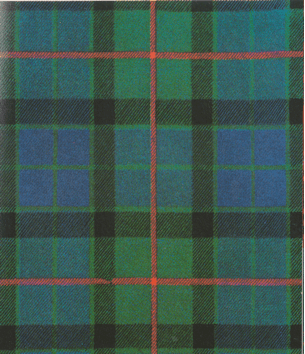
The Gunn Tartan
and a Gunn pin.

The Gunn Crest. Credit Google search
I had intended to make some kind of tartan garments for our daughters. I’ve since made a shawl for each of them. The pin has been lost, unfortunately.
Our next stop took a bit of time, and we thoroughly enjoyed it all. We went to Madame Tussauds wax museum, and the Planetarium . That was such fun to wander through and see all the wax figures there. We were most impressed with the figures of the Royal Family. Here are some pictures we took.


Our final stop of the day was to head out to Wimbledon to see a Wimbledon tennis match, if possible. At first, we were only allowed admittance to the “nose-bleed” section, which is also the “standing-room-only” section. Later, as the day wore on, and people began to leave, we were permitted to go down to some of the seats and finish out the match. Much better!! What we saw that day, was a doubles match, between John Newcombe and Tony Roche vs. Casal and Hocevar (sorry, I can’t seem to find the first names of Casal or Hocevar).


It was such fun to be able to see it in person! Much as we enjoy watching tennis on TV, there’s just something about being “in the stands” to see it live that makes it more enjoyable.
It was a good day, but we were eager to get back to the B&B and rest.
~~~~~~~~~~To Be Continued~~~~~~~~~~





 we finally got there just before dusk. Newton Cottage B & B was an “Olde Worlde” (circ.1670) thatched roof house, that we learned was listed as a building of historic and architectural interest. It was typical of a lot of the homes in this area, many of which had been converted into B & Bs. This was the only B & B reservation we had made from the U.S. and we were thrilled with the accommodations. Of course, the doorways and ceilings were very low, the stairs and floors squeaked, and when the ad said “Central Heat” that meant warm enough for the English, not for someone use to Florida weather.
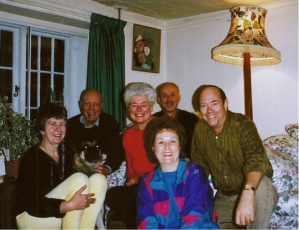 wonderful time comparing travel notes. The local Pub, where we took our evening meals, was just across the street from our B & B, and down a small tree covered lane. What a picture that made! As it turned out, the Pub owner collected matchbook covers, as I did, and he gave me some of his duplicates. I made arrangements to send him some of my duplicates as soon as we got home. (Another fun hobby lost to the demands of the environmentalists).
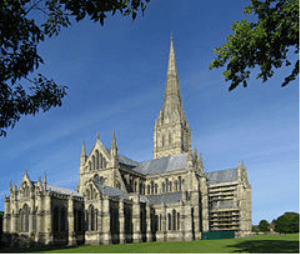 1260 AD, after the city was first established in approximately 1220 AD. We visited a unique War Memorial and cemetery for the men from this southern Wilshire area who fought and died in what was then called “The Great War” (1914-1917).
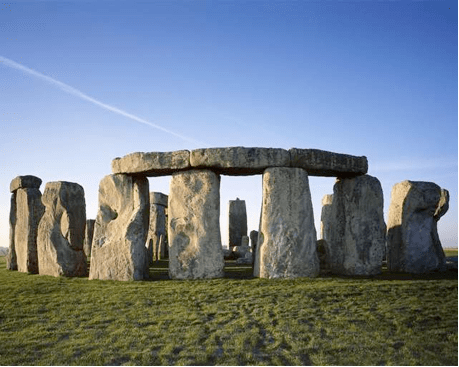
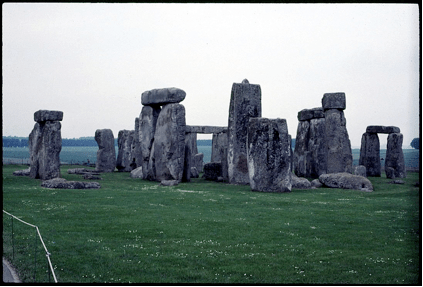
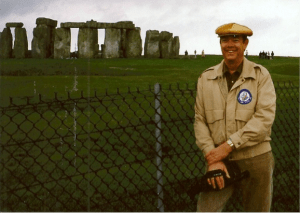 many different cultures. Whatever religious, mystical or spiritual elements were central to the construction of Stonehenge over the centuries, its design includes a celestial observatory function, which might have allowed for the prediction of eclipse, solstice, equinox and other celestial events important to contemporary religions of those different times.

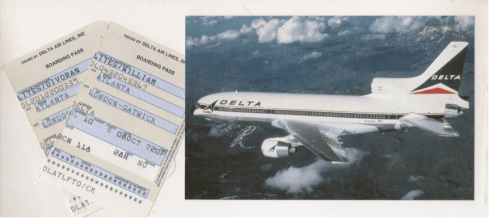
 of the road, and steer from the right side of the car; that meant I was going to have to drive with my right hand and shift with my left hand, while trying to keep from hitting a pedestrian or running off the road into a ditch. Are you beginning to get the picture? All this, while trying to read the road signs and dealing with the “Round-A-Bout” intersections, that were new to both DiVoran and me. I was going to have to retrain my brain if we were going to live to see the rest of the UK we had come to visit. DiVoran and I agreed that she would remind me to stay on the left side of the road every time I started to stray to the right. Leaving the rental car agency parking area dumped us right into Charlwood city traffic, so it was white knuckle driving from the “get-go” with DiVoran yelling, “KEEP LEFT” – “KEEP LEFT” at every cross-street and round-a-bout.
 those cool looking red telephone booths to call the rental car agency, who told us we would have to take the car to a Vauxhall dealer in the area to get them fixed. Great! Now we had to locate a Vauxhall dealership in a town we knew nothing about, and pray they wouldn’t give us a hassle reserved for “American Tourists.” As it turned out, we were able to find the Vauxhall dealership without too much trouble, and they fixed the wiper motor, without as much as a, “And where are you from, Yank?”
 Museum there. The Royal Pavilion was built in three stages, beginning in 1787, as a seaside retreat for George, Prince of Wales, and was not finished until 1822, where it was used as a remote location for the discreet liaisons of the then King George IV. The Brighton Museum & Art Gallery contains beautiful displays of Art Nouveau, Art Deco furniture and other decorative art. There are also Sussex area archaeology relics and the history of Brighton. The Booth Museum of Natural History, the Preston Manor and the Grange Rottingdean are short distances away, but we were getting tired and saved them for another day.

 Old Things R New