A Slice of Life
Bill Lites

The B & B guidebook neglected to mention the fact that our next overnight stop was at a pig farm, and we found the smell was overwhelming. But, we figured that since we would be gone most of the day, we could stand the smell long enough to get to sleep at night. The rehearsal lasted a little longer than we had expected, and then we got lost in the fog on the way back to the B & B. When we finally got there, we found our suitcases on the front stoop. Our hostess informed us she had reserved her only room to a family (who weren’t sure when they would be there) before we got there, and now they had showed up and she felt obligated to give them the room. She said she had made a reservation for us at a friend’s B & B down the road and she was expecting us. We were just a little miffed, as you might expect, but the family was already asleep in our bed, so we loaded up our bags and went down the road. When we got there, we couldn’t believe our eyes! It was the nicest, cleanest accommodations we could have ever asked for. We thought, “Isn’t God good to us, moving us to this beautiful B & B, and at the same price as that smelly pig farm.”
The next day we headed northeast, through some of the most beautiful and exquisite Welch towns and landscapes you can imagine, and then finally, crossed back into England. This time we headed for the county town of Warwick, to visit one of the most famous English fortresses, Warwick castle. Warwick Castle was a med-evil fortress, developed from an original fortress, built by William the Conqueror in 1068, and is situated at a bend in the River Avon in Warwickshire. During the centuries that followed, the use and miss-use of the fortress and its lands traditionally belonged to the ruling Earl of Warwick, and served as a symbol of his power. Then, during the 15th and 16th centuries, as ownership of the castle and the lands associated with the earldom were passed back and forth from various earls, and The Crown, portions of the fortress were slowly converted for use as a castle. But, during much of this time no one in particular wanting to foot the cost of keeping up repairs or restoring the structures, so by 1600 the castle, ended up in a state of disrepair.
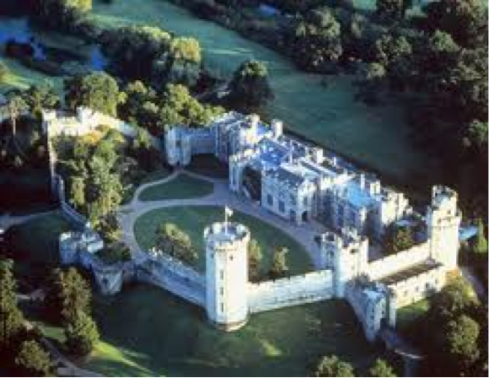
In 1604, Warwick castle and its lands were given to the Sir Fulke Greville (1st Lord Brooke) by James I. Over the years, Greville spent £20,000 (£3 million today) making many improvements to the castle, one being to convert a portion of the castle into his residence, which was typical of many of the castle conversions taking place during that time period.
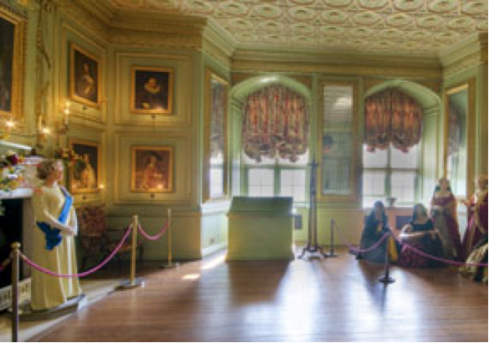
Individuals have been visiting the castle since the end of the 17th century, and this practice grew in importance through the 19th century. Then, during the 20th century, successive earls expanded its tourism potential until, in 1978, after 374 years in the Greville family, it was sold to the Tussauds Group, a media and entertainment company,who opened it as a tourist attraction.

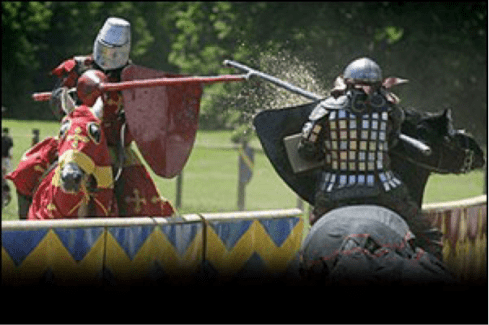
The castle tour was wonderful, with representations dating from mid-evil times to the early 20th century. There were collections of mid-evil suits of armor and war weapons inside, and staged jousting matches on the courtyard grounds during the summer months, weather permitting.
The interior rooms are decorated for various periods, with wax figures dressed in period attire, and even a recording of a famous opera singer in the grand ballroom. The furnishings are beautiful and help one to get an idea of how the inhabitants lived and worked during the various times depicted. As an example, in 1898, Frances Countess of Warwick, who was more affectionately known as Daisy, hosted a lavish weekend party for many of society’s elite, at the castle, in which the principal guest was the Prince of Wales, who would later become Edward VII. Much of the Grand Ballroom authentic furniture and furnishings depict the grandeur that those guests would have experienced at such a party
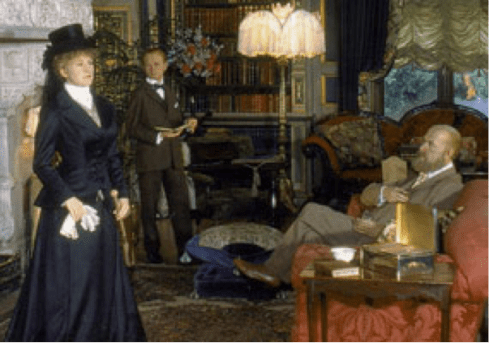
DiVoran loved the various costumes, including the scene of a maid getting one of the children ready for his bath in one of the upstairs rooms. As part of our tour, we climbed the 200 steps, to the top of one of the towers, and DiVoran thought she would never get her breath back. Of course, it didn’t bither me a bit.

—–To Be Continued—–





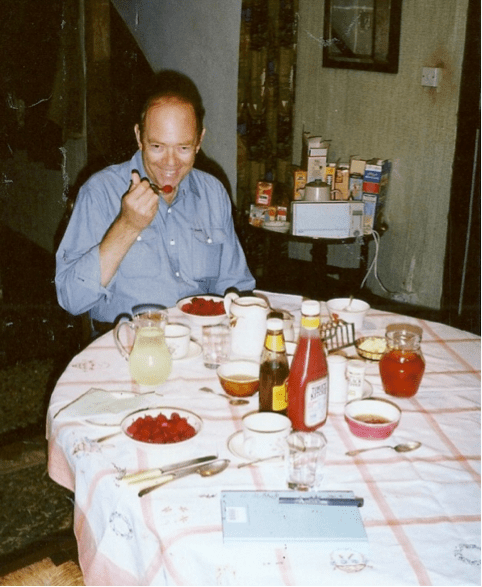



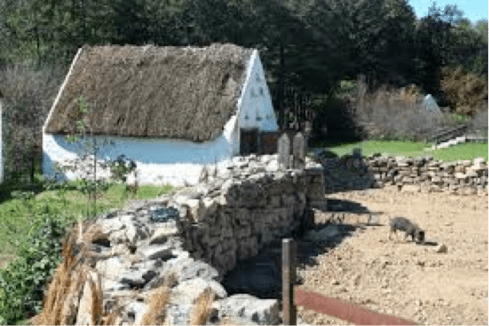
 we finally got there just before dusk. Newton Cottage B & B was an “Olde Worlde” (circ.1670) thatched roof house, that we learned was listed as a building of historic and architectural interest. It was typical of a lot of the homes in this area, many of which had been converted into B & Bs. This was the only B & B reservation we had made from the U.S. and we were thrilled with the accommodations. Of course, the doorways and ceilings were very low, the stairs and floors squeaked, and when the ad said “Central Heat” that meant warm enough for the English, not for someone use to Florida weather.
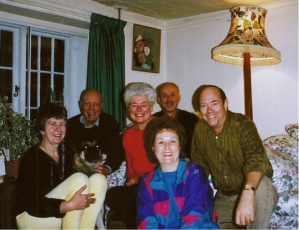 wonderful time comparing travel notes. The local Pub, where we took our evening meals, was just across the street from our B & B, and down a small tree covered lane. What a picture that made! As it turned out, the Pub owner collected matchbook covers, as I did, and he gave me some of his duplicates. I made arrangements to send him some of my duplicates as soon as we got home. (Another fun hobby lost to the demands of the environmentalists).
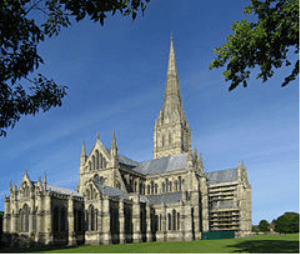 1260 AD, after the city was first established in approximately 1220 AD. We visited a unique War Memorial and cemetery for the men from this southern Wilshire area who fought and died in what was then called “The Great War” (1914-1917).
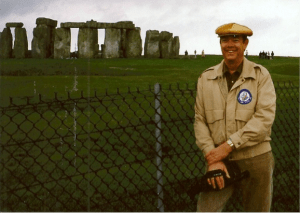 many different cultures. Whatever religious, mystical or spiritual elements were central to the construction of Stonehenge over the centuries, its design includes a celestial observatory function, which might have allowed for the prediction of eclipse, solstice, equinox and other celestial events important to contemporary religions of those different times.

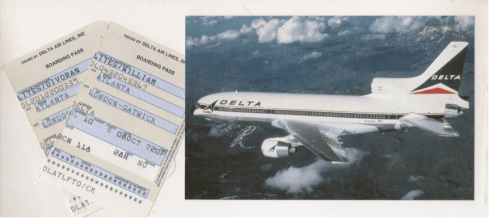
 of the road, and steer from the right side of the car; that meant I was going to have to drive with my right hand and shift with my left hand, while trying to keep from hitting a pedestrian or running off the road into a ditch. Are you beginning to get the picture? All this, while trying to read the road signs and dealing with the “Round-A-Bout” intersections, that were new to both DiVoran and me. I was going to have to retrain my brain if we were going to live to see the rest of the UK we had come to visit. DiVoran and I agreed that she would remind me to stay on the left side of the road every time I started to stray to the right. Leaving the rental car agency parking area dumped us right into Charlwood city traffic, so it was white knuckle driving from the “get-go” with DiVoran yelling, “KEEP LEFT” – “KEEP LEFT” at every cross-street and round-a-bout.
 those cool looking red telephone booths to call the rental car agency, who told us we would have to take the car to a Vauxhall dealer in the area to get them fixed. Great! Now we had to locate a Vauxhall dealership in a town we knew nothing about, and pray they wouldn’t give us a hassle reserved for “American Tourists.” As it turned out, we were able to find the Vauxhall dealership without too much trouble, and they fixed the wiper motor, without as much as a, “And where are you from, Yank?”
 Museum there. The Royal Pavilion was built in three stages, beginning in 1787, as a seaside retreat for George, Prince of Wales, and was not finished until 1822, where it was used as a remote location for the discreet liaisons of the then King George IV. The Brighton Museum & Art Gallery contains beautiful displays of Art Nouveau, Art Deco furniture and other decorative art. There are also Sussex area archaeology relics and the history of Brighton. The Booth Museum of Natural History, the Preston Manor and the Grange Rottingdean are short distances away, but we were getting tired and saved them for another day.
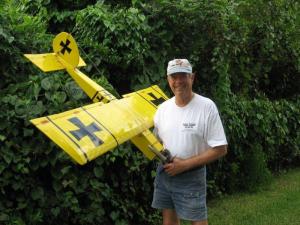
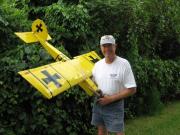
 taking off from. I walked down the street a couple of blocks, and came upon the entrance to the AOPA 2013 AirPortFest. I couldn’t believe my luck! I ask the people at the gate if there was a fee to enter, and they said “No” so I walked in and spent a couple of hours checking out all the latest in General Aviation aircraft. What a great show that was! And of course, that’s where the C-47 was giving rides around Ft. Worth, if you had the price of a ticket. I didn’t ask.
 One of the most interesting planes I saw there was actually a glider. The German built Stemme S10 MotorGlider has a retractable Rotax 914 F2/S1 supercharged flat-four engine in the nose, providing 113.5 hp for takeoff and climb, retractable landing gear, and a range of over 900 nautical miles; all for that special low price of $390,000 (US) when “you” pick it up at the factory in Strausberg, Germany. Of course, you have to go by yourself as there is only room for the pilot.
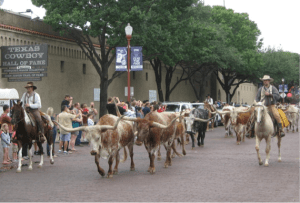 morning, and I guess they must have all been at church (?) So, I drove down to the Ft. Worth Stockyards Station and played the part of a tourist, while taking in the sights. Most memorable was the video story of the western cattle industry development, how Ft. Worth became the rail yard hub for that industry, and how the cowboy was instrumental in making all that happen. Then at 11:00, there was the real Longhorn cattle drive down Main Street. What a sight that was! Of course, back in the late 1800s, there would have been a lot more than 40 Longhorns running down a dirt street kicking up a lot of dust or mud, depending on the season.

 I arrived in Orlando in time to take DiVoran to a delicious Baby Back Rib dinner at one of my favorite restaurants before heading home to Titusville, and my own bed. Have you ever noticed how much better your bed at home feels compared to any motel bed? It’s just not the same comfort level is it? At least not for me, it isn’t. Now don’t get me wrong, I love to travel, visit museums and see the sites, but it’s always nice to get home to the one I love and to my own bed. So, until next time, enjoy each and every day God gives you and let’s “Keep ‘em Flying.”

 boarded up store fronts, while the Kimo Theater and the Indian Jewelry stores are still going strong. “Old town Albuquerque is a thriving tourist center, and the Rio Grande River actually had water in it. Of course, most of that water had probably come from the heavy rains and flooding in Colorado. The city has expanded toward all points of the compass, and is no longer the Albuquerque where I grew up. Now it’s just another big city, with all the big city problems, as far as I am concerned.
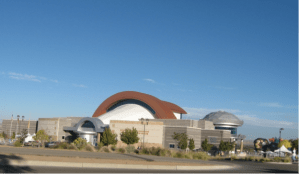 would have been really disappointed if I had traveled all that way for the Balloon Fiesta, only to have rainy and windy weather the only two days I was there. Actually, I hadn’t even realized I was going to be in Albuquerque during the Balloon Fiesta until I had made all my motel reservations, and couldn’t change them. However, the Anderson-Abruzzo International Balloon Museum Foundation has built a beautiful big Balloon Museum since I had last been in Albuquerque, so I was able to visit the museum in spite of the bad weather.
 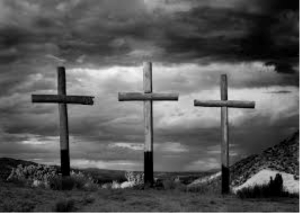 that had always been there since I was a teenager. We had heard all kinds of stories about the closed society of “Los Penitentes” or “The Brothers of the Pious Fraternity of Our Father Jesus the Nazarene” who lived somewhere in the Tijeras Canon area, and practiced their mysterious rituals there. They were known for their ascetic practices, which included self-flagellation in private ceremonies during Lent, and processions during Holy Week which ended with the reenactment of Christ’s crucifixion on Good Friday. Thus, the crosses we guessed. I never knew anyone who witnessed one of their ceremonies or knew a Penitente personally.
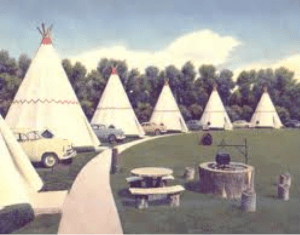 Then it was on thru Moriarty, NM with its Tee-Pee Motel and Santa Rosa, NM, which I had missed on that scary day, on my way to Albuquerque, just a few days before. Then I passed thru Tucumcari, NM, back across the border into West Texas, thru Wildorado,TX with its many wind generators, and finally into Amarillo, TX.
 the Texas Air & Space Museum located at the Rick Husband International Airport, and the Kwahadi Museum of the American Indian located on I-40 just east of the city. This American Indian Museum had some of the most beautiful paintings, and when I ask about them, was told most of them were painted by an author named Thomas E. Mails, as illustrations for his book “Mystic Warriors of the Plains.”

 on a 2-lane road out in the middle of nowhere. I had not studied the map too closely, but thought I remembered that all I had to do was to stay on U.S. 84 (4-lane road) until I picked up I-40 at Santa Rosa, NM. In reality, U.S. 60 had split off from U.S. 84 at Fort. Sumner, NM and I didn’t realize I had missed the turn. I had traveled several miles without seeing a road sign of any kind, and began to worry about my being stranded on this lonely road that looked like it never ended.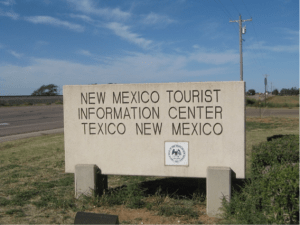
 childhood friend, Leon, who still lives in the same house he did when we were growing up together in the mid-1940s. We had a great time recalling our younger days and he introduced me to his cat, Rusty, and gave me a tour of his model circus railroad project. Later he went with me to the National Nuclear Museum and the Ernie Pyle Library. We experienced one of New Mexico’s dust storms late that afternoon, and I remembered how the wind could almost knock you over, and the wind driven sand could blast the paint off the front of your car and pit your windshield, if you were foolish enough to drive into one of those storms. And, there was no way you could get your house windows closed tight enough to keep that fine sand from filtering into the house, and getting all over things.
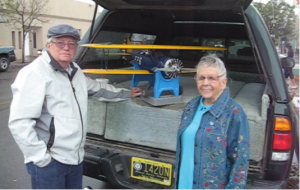 motels I used to throw papers to were still in business, and the Highland Theater where DiVoran worked selling tickets was still there. Leon told me he was a ticket taker and usher at the Highland Theater about the same time that DiVoran was working there, but he didn’t remember ever meeting her there. The Ice Arena had been turned into part of a shopping center, and Highland High School, where DiVoran and I met, all those many years ago, was now three times as big as it was when we attended. Further down Central, our football rivals, Albuquerque High School had been closed and converted into condos (of all things), while the First Baptist Church, which my folks and I attended all the years we lived there, had moved and their buildings were now empty and up for sale. What a shock that was!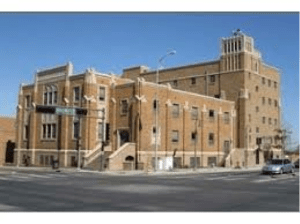

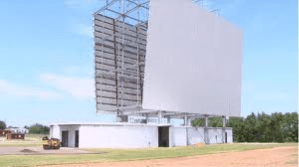 oil field, with working oil pumps outside the parking area on three sides. I guess those Texas oil people don’t let anything slow down getting that “Black Gold” out of the ground. The other thing was how flat West Texas is, and how there is nothing to stop the wind, which blows dust and tumble weeds across many of the hiways.
 either side of the hiway or Interstate, with entrance and exit lanes at intervals. Then at the next crossroad, there is a “Loop” lane, which allows you to access businesses on the other side of the main Hiway or Interstate. I guess they set that system up to reduce the number of overpasses they had to build in that flat part of the state. Anyway, It was a real challenge for me when I first encountered the system, but once I got the hang of it, I found it fairly manageable. Of course, it didn’t confuse “Greta” my Garmin road helper, as she spouted out directions like; “…continue .8 miles, then take ramp on left to I-35East North…” Or “…in .5 miles, keep right on I-35East South…” Or “…in .6 miles keep left on Texas 12 loop East to I-20 West…” I’m just glad I had her with me for all that. What a lifesaver she was!
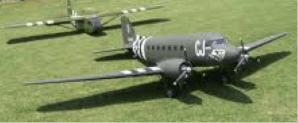 during that conflict. Also, the C-47 “TICO Bell” at the VAC Warbird Museum in Titusville, Florida where I am a tour guide one day a week, towed gliders and dropped paratroopers in support of the D-Day Normandy invasion, and survived the many hazards it and its crew encountered on that famous day in history.