Tag Archives: Travel

Memories of New Mexico~Part 12

14 May

SUNDAY MEMORIES

Judy Wills


One of my fondest memories is of the old KiMo Theater (we pronounced it kee’-mo) in downtown Albuquerque. According to Google Search, it was built in 1927, and opened on September 19 of that year.


Credit Google Search and Daniel Schwen photographer


U.S. Route 66 was Central Avenue through Albuquerque, east to west, the main street through town. The KiMo Theater, located on Central Avenue, is now listed on the National Register of Historic Places, and the New Mexico Register of Cultural Properties (credit Wikipedia).


Credit Google Search and On The Road with Jim and Mary


The KiMo Theater began to fall into disrepair after a stage fire in the early 1960’s, and the “exodus” of much of the downtown. The Theater was scheduled for demolition, but the city of Albuquerque bought the KiMo building in 1977, and restored it to its original glory. It is considered to be Pueblo Deco architecture style, which combines the Indian cultures of the Southwest with the flavor of Art Deco.


“The colorful Kimo building in downtown Albuquerque, done inside and out in Indian motif, is of interest to all new-comers.” Theatre Posts Credit Google search

According to Wikipedia, The word KiMo translated means “Mountain Lion” in the Tewa language. This word is also loosely translated to mean “king of its kind”….Due to the use of the name outside it’s native Tiwa culture, it is now a ‘dead’ word and is no longer used by native speakers.

I remember being fascinated by all the Indian symbols around the theater. The decorations were absolutely unique, and different from any other movie theater in town. I spent many movie hours in that theater.
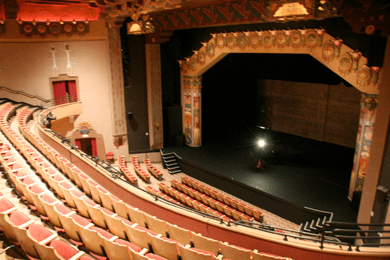
 

Credit Google Search and Mark Bayes Photography

Credit Google Search and Alamy

Credit Google Search and Mygola
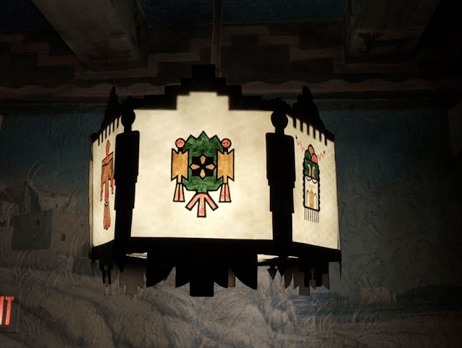
Credit Google Search and Trip Advisor

Credit Google Search and The wanderer.net

Credit Google Search and Getty Images
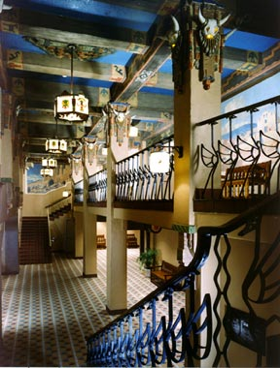
Credit Google Search

Credit Google Search and Trips Into History

Credit Google Search and Alamy


Although I don’t remember any mention of the theater being haunted, apparently KiMo has that reputation. Again, according to Wikipedia:

 For decades the KiMo has housed the spirit of a restless child. In August of 1951 a 6-year-old boy, Robert “Bobby” Darnall was attending a screening of an Abbott and Costello movie at the KiMo with his parents.

 Bobby was sitting in the balcony with friends when something on the screen frightened him. He ran down the stairwell just as a water heater or boiler in the basement under the lobby’s food concession counter exploded.

 More than a dozen people were injured in this accident. Bobby was rushed to a hospital but died en route.

 After his death his ghost returned to the KiMo theater. Bobby’s spirit quickly gained a reputation for impish behavior.

The KiMo Theater was beautifully restored in September, 2000 and is now a prime venue for concerts, civic events, and the performing arts. The theater’s resurgence represents the city’s recent upturn with new development and stores popping up throughout downtown. (Credit Cinema Treasures)

There has been a resurgence of “downtown” in many cities in recent years, and I’m glad to see it. Albuquerque wasn’t too large when I was young, and cruising “downtown” was one of our favorite things to do. It was especially fun at night – we would drive to the sand mesa to the west of town, turn around and drive slowly back to town, admiring the city lights all the time.

I was also in the Rainbow Girls organization, and our meetings were held in the Masonic Lodge, also located on Central Avenue, not far from the KiMo Theater.


I learned many years later that the Lodge had also been destroyed by fire. There was a lot of my history in downtown Albuquerque.


~~~~~~~~~~To Be Continued~~~~~~~~~~


Peru and Amazon River~Part 5

9 May

A Time to Live

Melody Hendrix


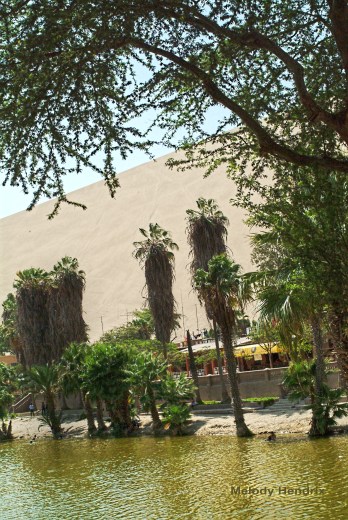
Huacachina, an oasis Huacachina


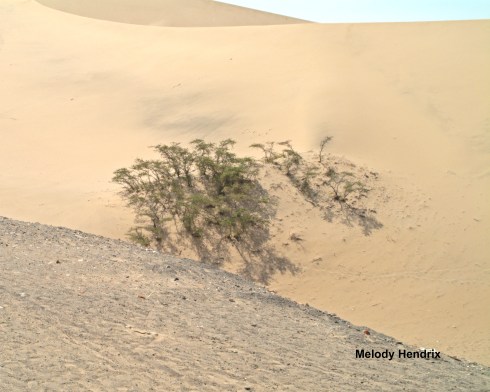
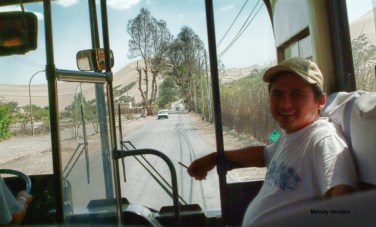
Our next adventure took us to a real live oasis. Just like in the movies. As we traveled there to see it, we passed mostly very poor living conditions and such a harsh environment. It was for the most part, sand, heat and dry.


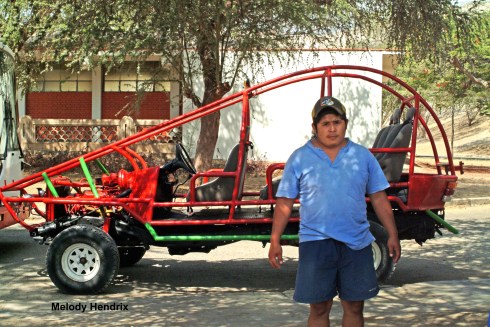
We arrived and were greeted with locals renting four wheelers to have a blast riding in the sand. We passed on that.


Huacachina is a village in southwestern Peru, built around a small oasis surrounded by sand dunes.

\


According to local legends the water and mud of the area is supposed to have curative powers and both locals and tourists often bath in the waters or plaster themselves with the mud in an attempt to cure ailments such as arthritis, rheumatism, asthma and bronchitis.

5


Water stopped seeping into the lake in the 1980s and this has now started to become a threat to the lagoon. Recently, private landowners near the oasis have installed wells, which has reduced the level of water in the oasis. To compensate for this water loss, and preserve the oasis as an aesthetically pleasing destination for tourists, a group of ten businessmen devised a plan to pump water from a nearby farm into the lagoon.


The actual process of artificially pumping water into the oasis began on April 2, 2015 and since then more than 73,000 cubic meters of water has been pumped into the lagoon raising the height of the water by as much as 3 meters. The governor of the region was highly appreciative of the effort. It was announced in 2016 that the Peruvian scientist Marino Morikawa, who created a nanobubble system to decontaminate lake El Cascajo, will be given the project of restoring the Huacachina lagoon.


I wish him well. It is an amazing place, I was in total amazment that such a place could really be possible. As far as you could see were hills and beautiful hills of sand. Just sand.


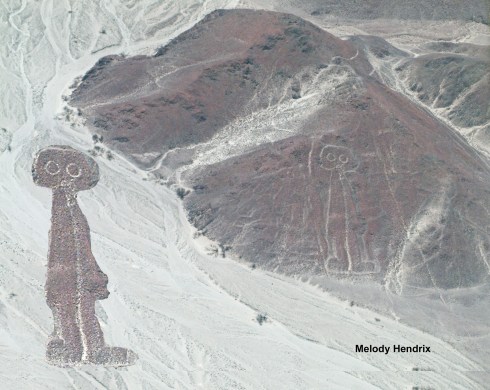
Follow me next week. Our adventure will take us to the Nazca lines. A mystery to this day.


I am retired and enjoying life. My hobbies are my 5 grandchildren, son and daughter, and my loving husband. I am a photographer and extreme nature lover. I love spending time in my garden or in the wilderness connected to God my Creator.
Melody

Peru and the Amazon River~Part 4

2 May

A Life to Live

Melody Hendrix

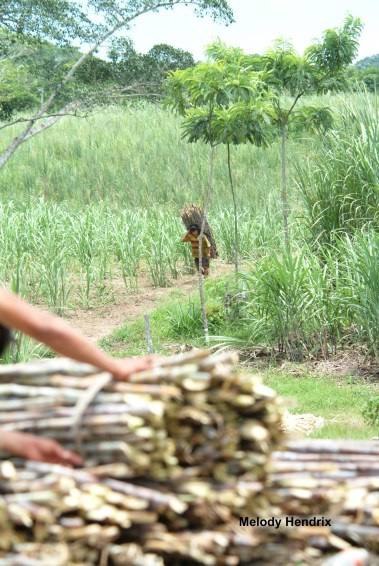
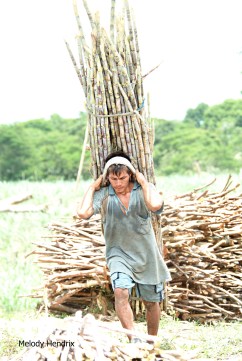
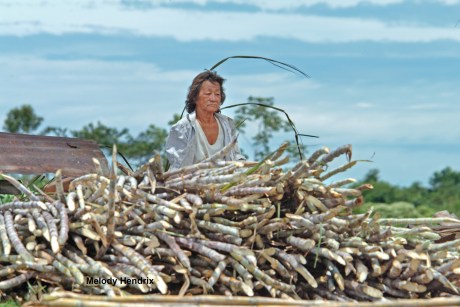
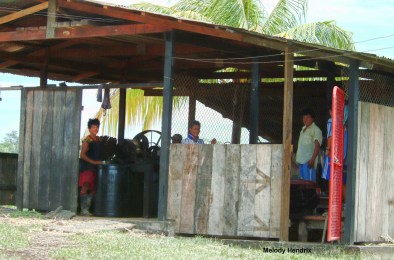
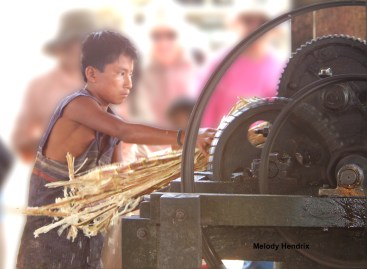
Yagua Village’s Rum distillery and sugar cane fields


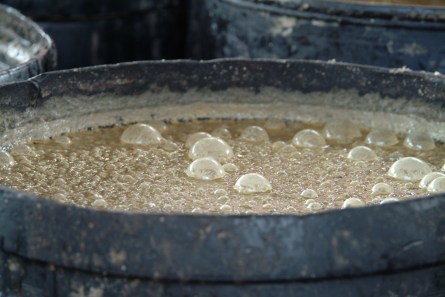
Our next adventure was to see one of the Amazons distilleries. This one produces rum from sugar cane, but others in the rainforest offer a variety of products including ethanol a biofuel made from sugar cane and other crops, which are a cleaner source of fuel, but still has a huge negative impact on the rainforest .


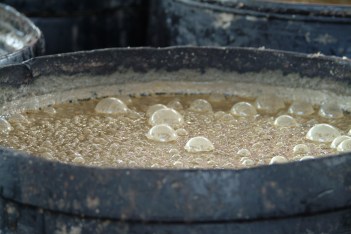
This was truly a primitive distillery. We all tasted four types of the rum. The pure sugar cane rum is called agua gente meaning burning water.


We also tasted rum mixed with molasses, rum mixed with molasses & ginger. This is often used for medicinal purposes. The natives often mix different medicinal or healing herbs with the rum. One mixture of rum and seven root is called jungle Viagra or underwear breaker. They use the molasses on cake or bread. This distillery makes about 1200 liters a year.


Next week, we will be going to Huacachina, an unbelievable oasis in the middle of the desert.

Peru and Amazon River~Part 3

25 Apr

A Life to Live

Melody Hendrix

Shaman of the Amazon rainforest

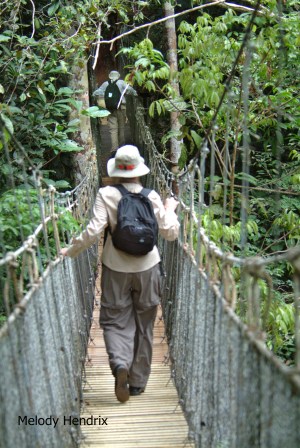
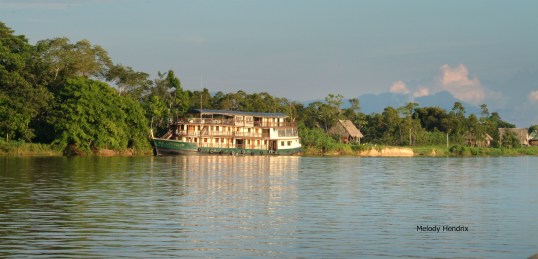
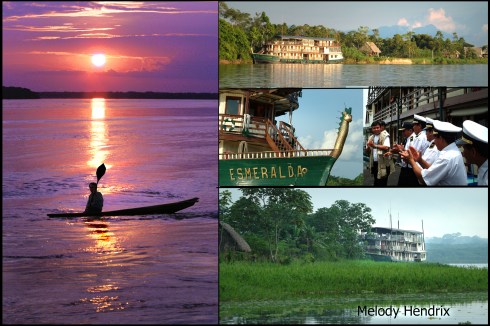
After waking and eating another delicious breakfasts on the boat that always included delightful papya and bananas, we were off on our walk through the rainforest to meet the Shaman.


]

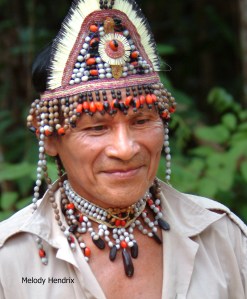
We sat in an open hut in a circle. We were all given a personal blessing. The Shaman would walk among us saying prayers in his native tongue and blow smoke on us as he chanted. We spent about an hour there. The experience was quite interesting. He had eyes full of knowledge and concern. His head dress was of meaningful feathers and his apprentices head dress was made of seeds and forest elements.


To some, the term “Shaman” may conjure up images of tricksters more than healers.


But authentic Shamans are masters of a sacred craft, living repositories of centuries of therapeutic wisdom.

The depth of shamans’ knowledge on preventive medicine and diagnostics has astonished even physicians who have studied their approach.

Shaman know the forest and medicinal treasures better than we do. And better than we ever will.


They will tell you that many human afflictions and diseases are from the heart, mind and spirit. Western medicine can’t touch them. He cures them.

Most medicine men and women and shamans remaining in the Amazon Rainforest are 70 years old or more.

Most of the shamans today do not have apprentices. So when a shaman dies, thousands of years of accumulated knowledge come completely and irreversibly to an end.

On our walk back we stopped in a location that had been logged. Each of us had an opportunity to give back to nature and plant a brand new tree.


Back on the boat and we will be stopping at our next excursion to a village that makes distilled rum from sugar cane. Please join me next week.


I am retired and enjoying life. My hobbies are my 5 grandchildren, son and daughter, and my loving husband. I am a photographer and extreme nature lover. I love spending time in my garden or in the wilderness connected to God my Creator.
Melody

Peru and the Amazon River~Part 2

18 Apr

A Life to Live

Melody Hendrix

Amazon River Commerce

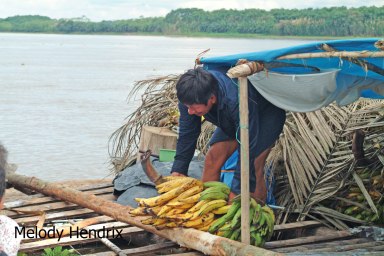
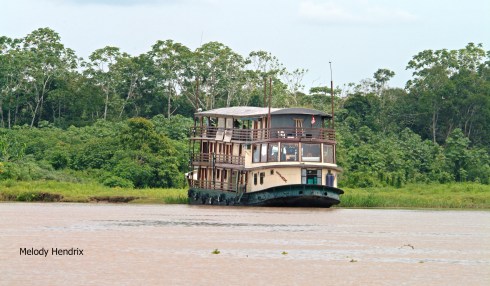
As we traveled to our next location on the live a board, we saw several rafts along the way. They are going to a market to sell their goods.

They would build live aboard rafts with everything sellable even the balsa wood that makes the raft. They would live in them for days or weeks until reaching their destination where they could sell the goods. Then take a water service back home.


There are no bridges that cross the Amazon, mostly because there is no need, the majority of the Amazon River runs through rainforests rather than roads or cities.

The river is the principal path of transportation for people and produce in the regions, with transport ranging from balsa rafts and dugout canoes to hand built wooden river craft and modern steel hulled craft.


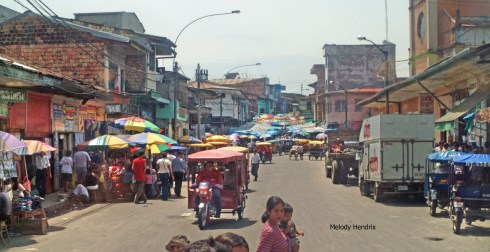
The river markets are busy. This is their grocery, pharmacy, household supplies and gathering place. They can buy many things including natural medicines for healing from the rainforest.


Some goods are brought to street markets in other locations. We were able to walk around here, but the guide would not allow us to bring money or cameras because of the pick pockets. A small distance away was a tent village full of the extremely poor.


Back on the boat, we docked at our next location where we will take a walk in the rainforest and visit the Shaman.


I am retired and enjoying life. My hobbies are my 5 grandchildren, son and daughter, and my loving husband. I am a photographer and extreme nature lover. I love spending time in my garden or in the wilderness connected to God my Creator.
Melody

A 2016 Dawn Patrol Rendezvous Trip~Part 15

12 Apr

A Slice of Life

Bill Lites


Day 15 (Thursday Oct.13, 2016)


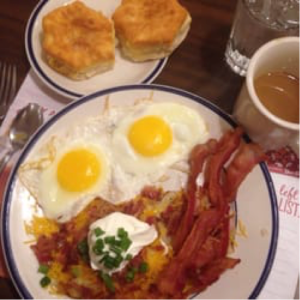
I was up early this morning, and had a delicious breakfast at the Bob Evens Restaurant just down the road from the motel. With a full tummy, and since I didn’t have to be at the airport until after lunch (2:00 pm), I decided to drive around the Columbus area, to see what I could find of interest.


I drove up and down what looked like busy business streets, but came across nothing much of interest in the area where I had stayed. I Googled “Things to do in Columbus,” and one of the things recommended was German Village. So I picked the Schiller Park, which was said to have an interesting “Umbrella Girl Fountain” on display. It turned out to be a beautiful but small park, and the fountain display was very restful.


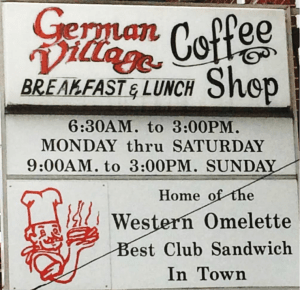
By the time I got through checking out the Schiller Park and the “Umbrella Girl Fountain” it was getting close to noon, and I thought I better get something to eat to tide me over, on the Southwest “Peanut Flight” back to Orlando. Google had also informed me, that one of the best places to eat, in the German Village area, was the “German Village Coffee Shop” located on Thurman Street. I found it (it was tiny) and tried one of their grilled ham and cheese sandwiches. I’m not sure what all the “Hoopla” is about?


Then I headed for the Enterprise Rental Car office to turn in my car. That process went well, and I tried to call an Uber ride. That didn’t go so well, until one of the Enterprise agents helped me out. I had a ride within ten minutes, and was delivered to the John Glenn Columbus International Airport in another fifteen minutes. What a great service!


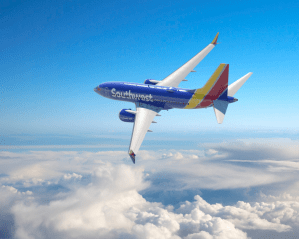
The non-stop Southwest flight from Columbus to Orlando was on time, smooth, and the peanuts were fresh. Those peanut bags are really small, and I had to ask for an extra bag. I was in the first row isle seat on the left, so was one of the first off the plane in Orlando. The walk from the arrival gate, to the tram into the main terminal, and the wait at Baggage Claim took almost as long as the flight had.


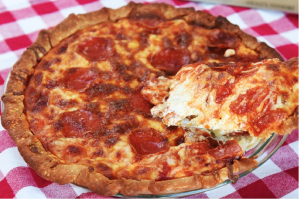
My lovely wife, Divoran, picked me up at the arrival area, and we headed north on SR-436 looking for somewhere to eat dinner. She let me know that she had her mouth set for pizza, and we were able to find a small Pizzeria not far from the airport. We enjoyed the food and time alone together, bringing each other up to date, mostly about her adventures with Hurricane Matthew.


The trip home to Titusville was uneventful, and I was glad to be home where I could unwind and sleep in my own bed for a change. Living out of a suitcase gets old in a hurry, and people’s loud TV at night doesn’t help. And as they say, “Home is where the heart is.” At least until I can plan another of my exciting travel adventures. Hope you have enjoyed hearing about this road trip and will join me for the next trip, when I will be exploring the many museums of the American North Country.


—–The End—–

Peru and the Amazon River~Part 1

11 Apr

A Life to Live

Melody Hendrix

The Amazon and it’s Indigenous People


The Amazon River is the greatest expression of life on earth. The rainforest holds answers to questions we have yet to ask. But it is rapidly disappearing.


The Amazon River is by far the world’s largest river by volume. It has over 1,100 tributaries, 17 of which are longer than 1000 miles. The Amazon rainforest is the largest tropical rainforest in the world, covering 1.4 billion acres.

The Amazon is home to more species of plants and animals than any other terrestrial ecosystem on the planet — perhaps 30 percent of the world’s species are found there.

Although indigenous people have lived on their lands for thousands of years, they do not own it, because they have not filed “deeds” of land and do not possess a “title.” Therefore governments and other outsiders do not recognize their rights to the land. Indigenous peoples possess an enormous body of almost irreplaceable information and skills about living in the rainforest without destroying it.


“Within the next few decades, the fate of the world’s remaining indigenous peoples, the fragile environments they occupy, and the valuable knowledge that they embody could well be decided once and for all. A number of individuals, corporations, and states are already pursuing their own “final solutions.”


The 20th century will be remembered either as the century when we destroyed much of the Earth’s genetic and cultural diversity, or the century when peoples learned to live together and share their knowledge in order to maintain the diversity upon which we all depend. Great civilizations like the Mayas, Incas, and Aztecs developed complex societies and made great contributions to science. Living from nature and lacking the technology to dominate their environment, native peoples have learned to watch their surroundings and understand the intricacies of the rainforest. Over generations these people have learned the importance of living within their environment and have come to rely on the countless renewable benefits that forests can provide.


Cattle ranching accounts for roughly 70 percent of deforestation in the Amazon. The world’s forests need to be seen for what they are—giant global utilities, providing essential public services to humanity on a vast scale. They store carbon, which is lost to the atmosphere when they burn, increasing global warming. The life they support cleans the atmosphere of pollutants and feeds it with moisture. They act as a natural thermostat, helping to regulate our climate and sustain the lives of 1.4 billion of the poorest people on this Earth. And they do these things to a degree that is all but impossible to imagine.


I am retired and enjoying life. My hobbies are my 5 grandchildren, son and daughter, and my loving husband. I am a photographer and extreme nature lover. I love spending time in my garden or in the wilderness connected to God my Creator.
Melody

Memories of New Mexico~Part 6

9 Apr

SUNDAY MEMORIES

Judy Wills


I really love New Mexico. I actually don’t remember anything about living in Dallas, Texas, but then, I was only four years old when we moved from there to Albuquerque. I think the “memories” I have of the house in Dallas are from pictures I’ve seen, and the stories others have told me about it.


I do have one memory of Dallas – we attended the First Baptist Church in Dallas. I have a very vague memory of black-and-white tiles on a floor, and the smell of Pinesol. Mother told me that the nursery at the church had a floor like that, and that they used Pinesol as a cleaner. But that’s it!

Now, New Mexico…that’s a whole different story. I’ve given you pictures of our house – we lived in that house the entire time I lived there. It wasn’t sold until after my father died – and mother lived there more than five years until she married again and they moved into an apartment.

I had a most unique experience with that house in later years. It was in 1993, when my mother died. Fred and I, as well as my brother, Bill and his wife, DiVoran, flew out for mother’s funeral. Our oldest daughter, Karen and her husband, Brian, decided to drive from South Carolina to Albuquerque for the funeral, as well. On this particular day – the day after the funeral – Fred and Bill had stayed at the apartment to arrange shipment of some of mother’s things that each of us wanted. Brian drove his car with Karen, DiVoran and myself in it. I wanted to show him where we had lived and grown up.

We drove to the house, and he stopped the car in front of the house. As we sat, looking at the house, with me describing what was where, the couple who owned the house, came out and looked at us. I rolled down my window, and assured them that it was okay – that I had grown up in that house. I nearly fell out of the car when they asked if we would like to come in and see it now. Remember now, it had been about 22 years since I had been in that house!

I was NOT about to pass up that invitation!! So we all piled into the house. I would point out things for Brian – I think Karen might have been a bit too young to remember much about it, as well – and tell what we had then. When we arrived in the kitchen, I mentioned that mother had painted the cabinets pink, and that we had green linoleum on the floor. The husband looked at me and said, “ I remember stripping pink paint from those cabinets!” DiVoran and I then explained that mother had pink plastic (like Melmac) dishes, and she wanted to “match.”


Pink cabinets, green linoleum – Granny holding Trixie, Mom, Boots the cat, all in the kitchen

When we got to the bathroom, I told them that we had green tile around the tub/shower. Again, he looked at me, and said, “I tiled white tiles over those green ones.” I guess it showed him that I had, indeed, grown up in that house. I told him how mom and dad had added the patio and cover that joined the house to the garage. They had a large bamboo shade that they could roll up or down, depending upon whether the sun was beating down on it, such as at supper time. We enjoyed many, many meals out on that patio.

I still think it was quite brave of that couple to invite four strangers into their house!

More memories to come…..


~~~~~~~~~~To Be Continued~~~~~~~~~~


A Journey to Peru and the Amazon River

4 Apr

A Time to Live

Melody Hendrix

As a child, I remember my father always watching travel shows on tv. Later in his life he was able to travel extensively after playing the stock market. He said he made more money doing that than ever working. I was so happy for him and my Mom. However, my Mom tired of traveling so my dad would go alone.
One day he asked me to go vacation with him to Peru on a live aboard boat down the Amazon River. I couldn’t contain my excitement. What an awesome opportunity he gave me. It was his last trip before he passed away. It was a most precious time.
I would like to share this series of incredible events and sights on this trip, which includes Peru, Nazca lines, the Amazon people and the way they live.


I am retired and enjoying life. My hobbies are my 5 grandchildren, son and daughter, and my loving husband. I am a photographer and extreme nature lover. I love spending time in my garden or in the wilderness connected to God my Creator.
Melody

Memories of New Mexico~Part 6

2 Apr

SUNDAY MEMORIES

Judy Wills


Last time, I showed you our “new” house in Albuquerque, and the Bataan Memorial Park across the street from our house. Now let me tell you a bit about some of the other parks in Albuquerque.

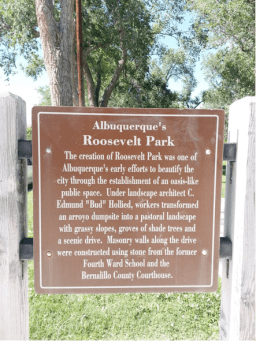
One that I really enjoyed going to was called Roosevelt Park.


From Google Search I found the following:

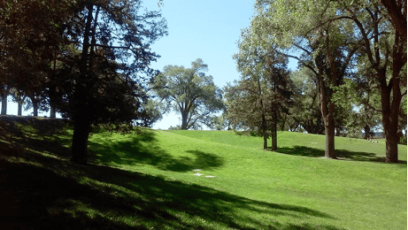
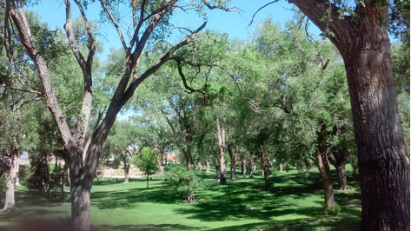
Roosevelt Park was built in 1933 with federal Civil Works Administration funds. Originally called Terrace Park, it was later renamed after President Franklin Roosevelt. The park survived periods of neglect, crime, and dying trees to undergo a $2.8 million renovation and clean up in 2007. Today, it endures as one of Albuquerque’s oldest and most cherished public spaces.

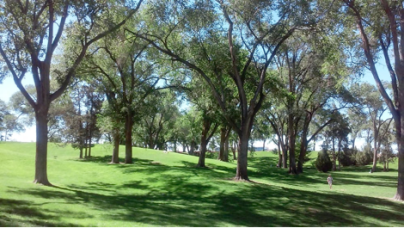
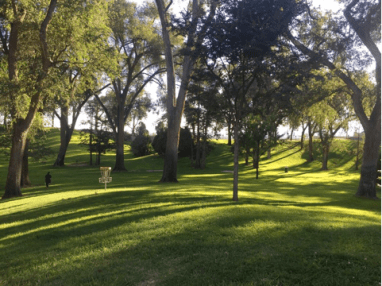
 The park’s 13 acres feature more than 2,250 trees and bushes, including umbrella catalpas and some 200 Siberian elms. There are grassy areas for picnicking, along with a Frisbee golf course. Of interesting note, the abutment on the south side of the park was made from stone recovered when the county jail at Rio Grande and Central was demolished.


While this notation says that it was renovated in 2007, it was always a lovely, grassy, rolling-hill park when I was just a child, and my family and I thoroughly enjoyed going there.

Credit Google Search

Credit Google Search

Credit Google Search

Credit Google Search


I remember having my “surprise” 12th birthday party there. My Aunt Jessie had told Mother – within my hearing – that she was going to Roosevelt Park, and with my childish begging, asked to go with her. When they both consented, I thought I had really pulled the wool over their eyes….until we arrived at the park and found a dozen of my girlfriends there with cake and presents for me!

When I got to high school, there was a “reputation” about the park, that made us not want to go there after dark. From some of the reviews I read on Google Search, that might still be a problem – with other problems as well. But apparently it is still a family-friendly park, that has added a frisbee golf course (I have no idea what that is!) and walking paths.

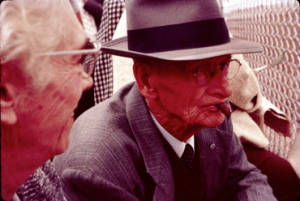
Another park we went to occasionally was Tingley Park, or Tingley Field as we called it. I really don’t remember much about it, except that we would go there for baseball games. I really never got interested in baseball, so I’m not sure that sport was why I went there. Probably my parents enjoyed it, so we went. I have one picture of my Grandmother (Granny) and her Uncle Jess, sitting in the bleachers at a baseball game at Tingley Field. (Please see my post of April 7, 2013, titled Uncle Jess) He was a pistol, for sure.


I’ve also found on Google Search that the Albuquerque Zoo is located within Tingley Park. I remember going to the zoo, but only occasionally. Apparently it is quite a good zoo.

As I looked at Google Search for parks in Albuquerque, there are so many of them that I don’t remember, but then, we’ve been away from there for the 55 years we’ve been married – only back for visits, and parks are not usually on the itinerary.


~~~~~~~~~~To Be Continued~~~~~~~~~~