Tag Archives: #Roadtrip

My Colonial States Trip~Part 17

11 Mar

A Slice of Life
 Bill Lites

My friends from Boston and New York had advised me not to use the George Washington Bridge if I could help it, but that’s the way “Greta” took me on my way back to the west to visit the Aviation Hall of Fame in Teterboro, NJ. So, it was across the Throgs Neck Bridge, thru the Bronx, over the Hudson River on the G.W. Bridge to the museum. As it turned out, it must have been my lucky day for that crossing, because that trip was pretty much of a breeze and I made it to the museum in good time. This museum, located at the Teterboro Airport, displays historic aircraft and spacecraft equipment, artifacts and photographs along with a model aircraft collection, honoring the many New Jersey men and women who have helped make the aviation industry what it is today. There is a room filled with medallions honoring the over 160 inductees to date.

I woke up to rain the next morning. Up until now the weather had been perfect and I had just assumed it would be the same for the whole trip. Silly me. What was I thinking? Well, it rained that entire day as I sloshed my way toward Connecticut. I figured “Greta” would have routed me back across the G.W. Bridge and up I-95 to Bridgeport, CT before turning north. But I wasn’t ready to try my luck getting across the G.W. Bridge again, especially during the morning rush-hour traffic in the rain. So, I decided to take the northern route, using the Garden State Parkway, and then crossing the Hudson River at the Tappenzee Bridge. Well, wouldn’t you know, I missed the exit for the bridge. I stopped at a service center and asked how to get back to the bridge exit and the guy said, “Just take the next exit and do a “U” turn.” Right! It was 20 miles to the next exit and it ended up taking me 30 minutes and another 30 miles back to the bridge exit (all this in the pouring down rain).

3

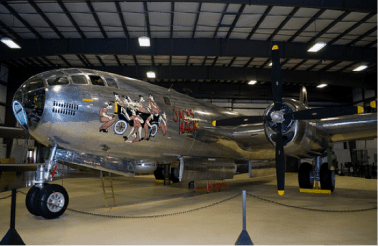
I finally made it to the right exit, across the Tappenzee Bridge, then thru Danbury and Hartford, CT to the New England Air Museum in Windsor Locks, CT. That ended up taking 1-½ hours longer than I had planned. What a waste of time that was! The museum displays over 60 beautifully restored aircraft and related artifacts/equipment in three hangers. As I followed a group into the B-29 hanger, I overheard someone say that the small group was honoring their 95 year old uncle who had been a navigator in B-29s during WWII. The elderly gentleman was overwhelmed by the occasion and the size of the aircraft. I heard him say, “I don’t remember it being so big!” What a nice thing for a family to do for their uncle. While I was in the area, I had planned to visit the American Museum of Aviation in Stafford Springs, CT but I discovered that visiting the museum was by appointment only. I was behind schedule anyway, so I just headed south to my next stop, at the New London Customhouse in New London, CT which is operated by the New England Maritime Association. This turned out to be a very small museum, so I didn’t spend much time there.
4

—–To Be Continued—–

My Colonial States Trip~Part 16

4 Mar

A Slice of Life

 Bill Lites

Bill Lites

Bill Lites


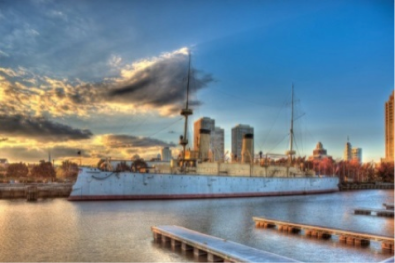
I saw the Dolly Todd (Madison) house, Edgar Allen Poe’s house, the Fireman’s Hall Museum, the Pine Street Presbyterian Church and the Mechanic’s National Bank. I had trouble finding the Seaport Museum, home of the USS Olympia, and when I did find it they wanted $15.00 to park and $10.00 admission, and this was another case of not feeling like I would have enough time to see the museum and the ship to justify the cost.

1


So, I headed back across the Delaware River to Camden, NJ to try to see the USS New Jersey before they closed, but didn’t make it. So, I just went on back to Gloucester City, where I had another fabulous rib dinner at the Texas Roadhouse restaurant before going back to the motel for the night.

2


The next day I passed up visiting the Simeone Auto museum and the Wings of Freedom Aviation Museum, as I saw so many things in Philadelphia that I ran out of time, and had to push on toward that day’s list of places to visit.

3


First on the list was the Air Victory Museum in Lumberton, NJ which was closed that day. When I was researching the drive from Lumberton to my next stop in Garden City, NY I was pleased to see that “Google Maps” routed me south, around New York City, on I-278 to miss the city traffic. So now, after inputting the Cradle of Aviation Museum address into “Greta”, I sat back to enjoy the ride. The first indication that something was not quite right was when I was directed to enter the Lincoln Tunnel. The next thing I knew I was stopped at a light at the corner of East 42nd Street and Madison Avenue.

4


What in the world was going on? “Greta” had done it to me again! All I could do at this point was follow her directions, as I had no idea how to get to Garden City by myself. She took me thru the Queens Midtown Tunnel onto the Long Island Expressway (I think) and somehow delivered me to the correct museum address in Garden City. Needless to say, it took a lot longer than I had planned to get there. When I finally pulled up in front of the Cradle of Aviation Museum, I was expecting to be thrilled with lots of beautifully restored aircraft in that magnificent facility. What greeted me, as I entered the front door was a huge mess of canvas tarps on the floor, with tables, buckets, and women everywhere, making preparations for a local flower show, of all things. As it turned out, the museum had a surprisingly small number of aircraft for the size of their facility. I guess the main reason for that was their emphasis is on education rather than strictly on aviation. In one area, on the ground floor, I came across the Nassau County Firefighters Museum & Education Center. What a surprise that was!

5


Next I continued about 15 miles east on Long Island to the American Airpower Museum located in Farmingdale, NY which is about the size of our Valiant Air Command Museum in Titusville, Florida. Most of their WWII aircraft housed in their large hanger are in flying condition, while their later era (more modern) planes, make up an impressive static display collection outside.

6


—–To Be Continued—–

My Colonial States Trip~Part 14

18 Feb

A Slice of Life

Bill Lites

Bill Lites


The “Declaration Chamber” in Independence Hall has been beautifully restored and arranged to represent the way it looked during the years between 1775 and 1783 when the Second Continental Congress used this chamber to meet, debate and eventually adopt our Declaration of Independence and U.S. Constitution.

1

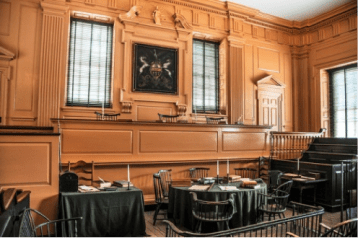
The “Supreme Court Chamber” has also been beautifully restored with ochre-painted walls and the coat of arms for the Commonwealth of Pennsylvania above the bench. This is the room where the Philadelphia Supreme Court conducted trials, and the state legislature conducted business in the early years of our nation. There are records that indicate the U.S. Supreme Court held proceedings in this chamber in 1791 and again in 1796. The judge’s bench and jury’s box overlooked the accused, who stood in the prisoner’s dock for the duration of his trial, giving rise to the expression “Stand Trial.”

2

Next I went to view the Liberty Bell and discovered that the bell was originally cast in London, England in 1752. The bell was installed in the State House and intended to be used to summon lawmakers to legislative sessions and to alert citizens of public meetings and proclamations, but it cracked the first time it was rung after arriving in Philadelphia. There isn’t actually any evidence that the bell was rung on July 4, 1776 to announce the signing of the Declaration of Independence. A story (fable) was written in 1847 about an elderly bell ringer who claimed he ran the bell on that date. People liked that story so much that it was adopted as fact, and has been perpetuated down through the years. It wasn’t until the 1830s that the bell was dubbed, by several abolitionist societies, as the “Liberty Bell” and used as a symbol of freedom by them during the 1830s and 1940s.

3

Then I boarded a city tour bus for a 90-minute guided tour of the city of Philadelphia with all its many historical places. Most people today don’t realize that Philadelphia was the first capital of the United States, or how many important events, which helped shape our country, took place in this city. I was amazed at how many famous people in our country’s early history lived and worked in this city, helping form the foundation of our nation as we now know it.

4

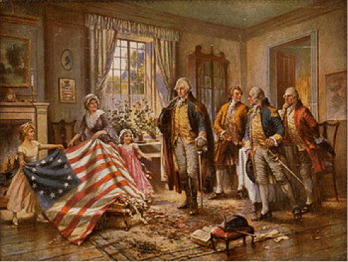
I saw the Betsy Ross house where it’s said that Betsy fashioned and made the first American flag in 1776, and later presented it to General George Washington (who by then had been appointed Commander-in-chief of the Continental Army).

5

I saw Ben Franklin’s print shop, where he became famous for printing The Pennsylvania Gazette; the President’s House site where George Washington
and John Adams created the Office of the President of the United States; the Christ Church Cemetery where Ben Franklin is buried, along with many of the signers of the Declaration of Independence and other famous leaders. I found it interesting as a side note, that it is said, Christ Church in Philadelphia is also where Colonial America made its initial break with the Church of England.


—–To Be Continued—–
My Colonial States Trip~Part 12

4 Feb

A Slice of Life

 Bill Lites

Bill Stars Plane

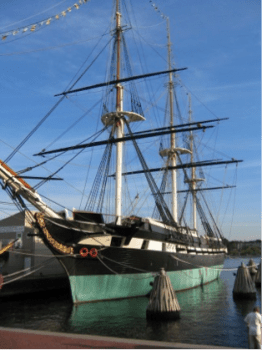
The next day I misread the opening time for the B & O Railroad Museum in Baltimore, MD so I was an hour early getting there. I parked in the museum’s free parking lot, and took the free “Charm City Circulator” bus to the Baltimore Inner Harbor. Since I had toured aboard other U.S. Navy ships and submarines, I only went aboard the USS Constellation. I did take photos and checked out the USCGC Taney, the submarine USS Tork, and the Lightship Chesapeake, but saved the time going aboard those ships, for another museum down the road that day. While waiting for the bus back to the B & O Railroad Museum, I struck up a conversation with a very nice lady who was on her way to work, and helped me with the number of the bus I would need to catch for my trip back to the RR museum, and my car.

1

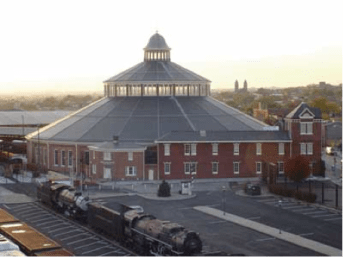
The B & O Railroad Museum is located in the old Monte Clare Station, and with its adjacent roundhouse, was part of the original Monte Clare Shops begun in 1829. The Shops are considered to be the oldest railroad manufacturing complex in the United States. The museum is massive, and has one of the world’s largest collections of 19th century rolling stock. The museum was also the site which received the first telegraph message, “What hath God wrought?” sent from Washington, D.C. to Baltimore, MD on May 24, 1844 using Samuel Morse’s new telegraph invention.

2

Next I took a quick drive north a few miles to visit the Glenn L. Martin Aviation Museum in Middle River, MD which was a small museum with only a dozen or so outside static display aircraft. I hadn’t planned to stay long (the Robert Frost poem comes to mind again), but I was their only customer and their very knowledgeable tour guide was a little long-winded with nothing else to do. I immediately realized I was trapped. I was afraid he was going to explain all about each of the 20,000 photos covering the walls of the small museum area and finally asked him if I could see the museum’s airplanes. He had to drive me to the static displays and started telling me all about each of the airplanes, and I was trapped again. They had two B-57 aircraft on static display, and I recorded the tail numbers so I could ask my friend Larry when I back to Titusville, if he had flown in either of them, during his time in the U.S. Air Force. I finally convinced him to take me back to my car so I could get on to the next stop. I’m sure I could have learned a lot if I had not been on such a tight time schedule that day.

3

Now I headed south around Chesapeake Bay to visit the U.S. Naval Academy Museum in Annapolis, MD which is located in the Preble Hall, just inside the Naval Academy premises. I parked and had to walk thru a security check point, and show my ID, in order to access the museum. The museum is a maritime museum started in 1845 and traces U.S. Naval history in the form of three dimensional artwork, paintings, model ships, uniforms and metals exhibits in its four galleries.

4


—–To Be Continued—–
My Colonial States~Trip Part 7

31 Dec

A Slice of Life

Bill Lites

Bill Red Spot Plane

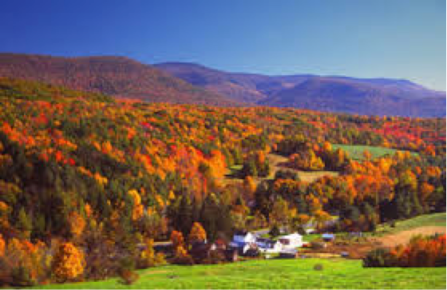
The reason it was late in the day when I arrived in Saratoga Springs was because when I left the Bellow Falls, “Greta” told me to head north 27 miles when I should have been heading south!  What was that all about?  Even though I had missed seeing a couple of museums, it had been a very delightful day’s journey, as the changing of the tree colors had been growing more beautiful as I traversed thru northern New Hampshire, Vermont and New York.

1

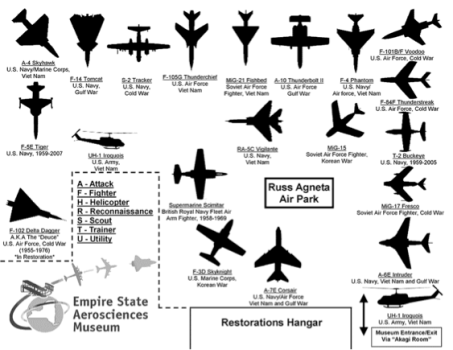
Even though it was late in the day, I hustled down to Glenville, NY to check out the Empire State Aerosciences Museum, but missed getting in to see their hangered collection by 30 minutes (they closed at 4:00 pm).  I was really hoping to visit this museum as I was looking forward to seeing their restoration hanger projects, which I understood was extensive.  I was however, able to get a few pictures of their outdoor static display aircraft, but had to shoot through the chain-link fence.    But, oh well, you can’t see them all.  Maybe next time.

2


I ended the day by taking a leisurely drive thru Schenectady, NY to Albany, NY where I had a wonderful meal of Fall-Off-The-Bone Ribs at the Texas Roadhouse restaurant, and then it was just a matter of finding my motel for the night.

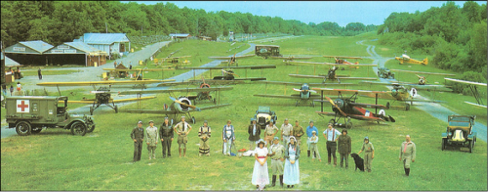
The next morning I headed south again thru Germantown, NY to be re-acquainted with some really old friends (aircraft) at the Old Rhinebeck Aerodrome in Red Hook, NY.  I had visited the Aerodrome back in 2011, during a trip to the up-state New York area, and wanted to check out any new aircraft they might have added to their collection.

3


 I also wanted to see their freshly restored 1917 Albatros D.Va replica.  This Albatros replica had been built in the 1970s by Aerodrome founder Cole Palen, and finished in the colors of WWI Bavarian fighter ace Eduard Ritter von Schleich of Jasta 21 in 1917.

4

The plane had been an Old Rhinebeck Airshow favorite for many years.  Part of the recent complete restoration included a new paint scheme depicting one of the aircraft flown by another well-known WWI Bavarian fighter ace in 1918, Lieutenant Walter Boning of Jasta 76b.

5

Two more of my favorite aircraft in the Old Rhinebeck Aerodrome collection are the 1911 Curtiss Model D Pusher, and the 1909 Bleriot XI, which has the distinction of being the oldest flying aircraft in the United States.

6

      1911 Curtiss Model D Pusher

7

1909 Bleriot XI

It was hard to pull myself away from this museum, but I needed to keep moving if I was going to see all the places on my list for that day.  So, heading south a short distance, I skirted the Catskill Mountains on my way to visit the Trolley Museum of New York in Kingston, NY.  This small museum wasn’t open until later in the day, but the lady saw me at the door and let me in any way.  That was nice as I had the entire museum and its rolling stock all to myself.  The museum operates a trolley line ride from Gallo Park to Kingston Point providing scenic views along the Hudson River.

8

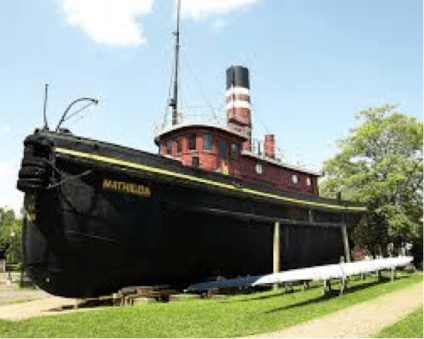
As I was leaving the Trolley Museum I noticed that the surrounding area looked very familiar.  I had been so intent on finding the Trolley Museum that I had driven right past the Hudson River Maritime Museum, one of the museums I had visited during my Upstate New York trip back in 2011.  I stopped long enough to take a couple of photos of the “Mathilda” which is a 1898 steam tug boat, and then I was on my way again. 

9

—–To Be Continued—–
My Western Trip~Part 6

11 Jun

 A Slice of Life

By Bill Lites

Bill Small Red Plane


Next, it was over to Simi Valley, CA for a tour of the Ronald Reagan Presidential Library & Museum. I was impressed with the 24 different galleries, which traced Reagan’s life from his early days as local hero, college standout, glamorous Hollywood actor, then as governor of California, and ultimately to the presidency of the United States. There was even a full-sized replica of the Oval Office in one of the galleries. But, of course the thing that impressed me the most was Air Force One (S/N 27000), also known as “The Flying Whitehouse” and the Marine One helicopter (S/N 150611), both of which Reagan used while President. I asked one of the Docents how they got the plane in the building, and she said, “They built three sides of the new building, took the wings and tail assembly off the plane, so they could bring it in through the fourth opening, and re-assembled the airplane inside. Then they finished the fourth all glass wall. For the full story of how the U.S. President’s airplane got its name, Google “Air Force One.” It’s a fascinating story I think you will enjoy knowing.

1


Before leaving Simi Valley, I stopped at the Santa Susana Railroad Depot & Museum to get the history of an early California railroad depot and its operations. This was one of the most unusual and interesting small museums. The depot is an example of what the Southern Pacific Railroad called their Standard No. 22 Depot in 1903. The depot has been meticulously restored with many original furnishings and working equipment, that the Docent uses to explain to visitors how the depots operated in the early 20th century. Today, on what was the old Southern Pacific rails, Amtrak’s Coast Starlight trains head up and down the coast, and the daily Surfliner and Metrolink trains ferry commuters in and out of Los Angeles.

2


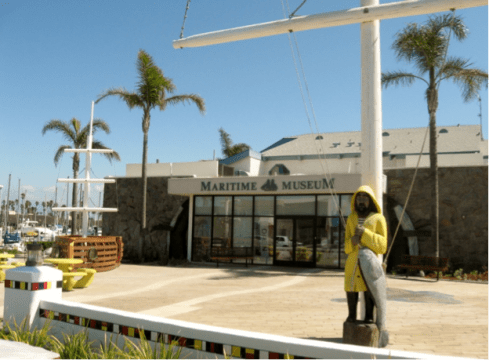
Now, because of a time constraint, I headed west to Oxnard, CA where I quickly visited the small Mullin Automotive and Murphy Auto Museums. I also visited the Channel Island Maritime Museum, there in Oxnard, where I learned something very interesting about some of the early 17th century Dutch Maritime painters. It seems that some of them painted in such detail that (with a very strong magnifying glass) one can see that each of the distant subjects in the painting has been given details such as a pipe in the mouth, some with a mustache and all with a nose, ears and even eyebrows. The kind of details you might expect in a close-up portrait painting, but not in a battle scene at sea. And, then there were the fabulous model ships, many of them crafted by the Curator/Docent that took me on a tour of the museum. The model ship detail was outstanding! What a great tour.

3


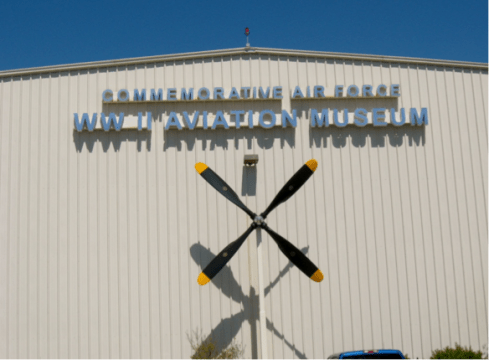
Then, to round out the day, I visited the CAF WWII Aviation Museum in Camarillo, CA. This museum is very similar in size and display aircraft to the Valiant Air Command Warbird Museum here in Titusville, FL where I volunteer as a tour guide one day each week. They had an AT-6 and a two-place P-51 Mustang, both actively giving rides while I was there, and I got some really good close-up photos of both as they fired up their engines, taxied out with their passengers and took off. I always get a thrill when I hear the sound of a Rolls-Royce Merlin engine at full throttle passing overhead.

4


—–To Be Continued—–