Tag Archives: Italy

Our Trip to Italy~Part 8

24 Apr

A Slice of Life

Bill Lites

Bill

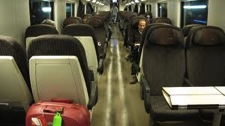
 The train trip back to Mogliano Veneto that afternoon was uneventful, and gave us a chance to read up on all the Renaissance art and history surrounding much of we had seen that day.  A very kind older Italian man insisted on sharing his cookies with the “American Tourists” when he discovered we had just been to visit his beloved Florence.

1


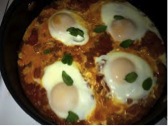
During an early breakfast the next morning, Erika was trying to help Marcia with some of her Italian, and we heard Erika say, “Marcia, please don’t tell anyone I am your Italian teacher.” We all laughed, because we had just learned from Erika the translation for poached eggs is, “Eggs with a shirt,” and the translation for raisins is, “After they are grapes.”   It’s funny how some words differ from one language to the next.  Marcia and Erika went to work, while DiVoran and I stayed around the apartment, enjoying a day of rest and planning our next day’s visit to Venice.

2

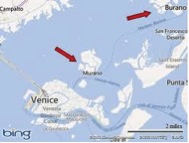
After work, Marcia took us to one of her favorite restaurants, the Ai Portici Ristorante there in Mogliano Veneto, for another wonderful Italian meal.  Marcia had told us the trip to Venice would probably be a long day, because we planned to include visits to the islands of Murano, where much of the famous hand blown Italian glass is made, and colorful Burano, which is famous for its beautiful handmade lace.

3

The next morning Marcia dropped us off in Venice on her way to work.  We strolled along the Grand Canal for a while, window-shopping, then decided to revisit the Saint Mark’s Basilica and take in its opulent gilded Byzantine and Gothic design with its spectacular mosaics.  A Museum, which is a part of the Basilica, located between the historic area on the Basilica’s vestibule and the former Doge’s Sala dei Banchetti (Banquet Hall), contains many Persian carpets, liturgical vestments, illuminated manuscripts with some of the texts of St. Mark liturgies.  There are also tapestries in wool, depicting episodes from the Passion of Christ, with others in silk and silver illustrating some of the many stories of St. Mark.

4


And there, wouldn’t you know, as we entered upon the piazza, was a couple having their wedding pictures taken in front of St. Mark’s Basilica.  Amazingly, DiVoran and I seem to visit churches, wherever we go, just as a wedding is over and we get to see the new couple emerge for pictures.  It has happened in Mexico, England, Scotland, Orlando Florida, Rome and now Venice, Italy, and it’s always a beautiful sight and a thrill for us!

5

During our brief tour around Venice, we came across a group of street vendors at small kiosks selling just about anything you could imagine.  DiVoran bought me a fedora to keep my head warm, and we bought a couple of festive hats for Billy & Renie.  Luckily, we were able to find our way through the maze of small canals, and narrow streets, to the lunch ristorante Marcia had recommended, down a narrow walkway, had some really great pizza, hot lemon tea and a rest.

6

After lunch, we took a waterbus to the island of Murano to check out the hand blown glass.  It was amazing to enter these beautiful showrooms of fine glasswork, and then walk through a door into a small shop where people of all ages were creating these fabulous works of art before our very eyes.  Just to get a feel for the cost of some of these items, we asked about the price of one of the smaller items ($400 US) and later during our tour, a larger item ($1500 US).  I could not even imagine what some of the large chandeliers would have cost.  We were told a  person could even request special order items, and if the item was small enough, you could watch them create the item while you waited.

7


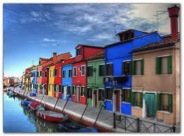
Then it was on by water bus to the island of Burano to see about the famous handmade lace creations we had heard so much about.  The first thing that gets your attention as you approach Burano is the brightly painted houses.  They stand out and are reflected on the calm water of the adjacent canals.  Even their personal boats, tied up in the canal, are painted bright colors, and many match the color of the houses their owners live in.

8

Inside, the women sit with bolsters on their laps, creating some of the most beautiful and delicate lace work we had ever seen.   DiVoran bought a beautiful “thread-drawn” tablecloth and napkin set, which we still have and enjoy to this day.  What a great way to remember some of the fabulous times we had exploring the places and visiting with some of the people of Italy.

9


—–To Be Continued—–

Our Trip to Italy Part 7

17 Apr

A Slice of Life

Bill Lites

Bill


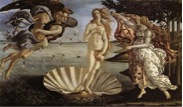
Next, we visited the Uffizi Art Gallery, reportedly the oldest and most famous art Museums in the Western World.  A large part of the art in the Uffizi dates back to the periods between the 12th to 17th centuries, with art by great Italian artists such as Botticelli’s “Birth of Venus,” (Shown below), Giotto, Cimabue, Michelangelo and  Raffaello to name just a few of the most famous.

1


Then it was on to the Accademia Gallery and the bigger than life and magnificent “David” by Michelangelo.   Originally commissioned in 1501 as one of a series of statues of the prophets to be positioned along the roofline on the east end of the Florence Cathedral, but instead was placed in the public square, outside the Palazzo della Signoria in 1504.   Because of the nature of the hero that it represented, it soon came to symbolize the defiance of civil liberties embodied in the Florentine Republic, an independent city-state threatened on all sides by more powerful rival states at the time.  The original statue was moved inside the Accademia Gallery from the piazza in 1873 and finally replaced with a replica in 1910.

2

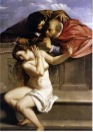
Among some of the other many extraordinary sculptures and artwork at the Accademia Gallery are contributions by Francesco de Sangallo, Agnolo Bronzino, Benvenuto Cellini, Giorgio Vasari, Bartolomeo Ammannati, Giambologna and Artemisia Gentileschi.       It was taken for granted at the outset that all members of the Accademia would be male, so when the Accademia welcomed the Baroque painter, Artemisia Gentileschi, into its membership in 1620, it was a great honor for the woman painter, and was a great influence for the feminist movement in Italy.

3

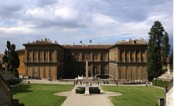
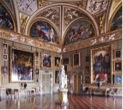
Then it was on to the Palazzo Pitti, which dates from 1458 AD, and was originally the residence of Luca Pitti, an ambitious Florentine banker at the time.  The palace was bought by the Medici family in 1549 AD, and became the chief residence of the ruling families of the Grand Duchy of Tuscany for many years.

4


In the late 18th century, the palazzo was used as a power base by Napoleon, and later served for a brief period as the principal royal palace of the newly united Italy.   Between 1865-1871 it was the residence of King Victor Emmanuel II, when Florence was the capital of Italy.  Today, it houses several minor Italian collections in addition to those of the Medici families.

5

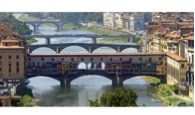
From there we strolled over to the famous Ponte Vecchio bridge which is one of many bridges now spanning the Arno River in Florence.  The Medieval bridge first appears in a Roman document of 996 AD, after which it was destroyed twice by floods, and the stone bridge was finally rebuilt in its current form in 1435.   We took time to check out the many shops that are permanently located on the bridge, which was the custom when the bridge was first built.

6

After all that Renaissance art by the so many of the great masters, our heads were buzzing, so we stopped for lunch at McDonald’s.  I, for one, was ready for a burger and fries, and besides that, Marcia informed us that McDonald’s is the only eating establishment in Italy where a woman could be sure to find a sit-down toilet.


7

—–To Be Continued—–


Our Trip to Italy~Part 6

10 Apr

A Slice of Life

Bill Lites


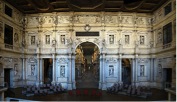
After leaving Verona, we drove over to Vicenza where we saw the Olympic Theater, which was designed by the famous Italian Renaissance architect Andrea Palladio and constructed between 1580-1585.  The theatre was inaugurated on March 3, 1585, with a production of Sophocles’ “Oedipus the King.”

1


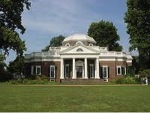
Then we toured the Monticello shaped residence, “Villa Capra La Rotonda” which was also designed by Andrea Palladio.  President George Washington selected the site for the future “President’s House” in 1791.  And then, interestingly, Thomas Jefferson anonymously submitted a design as part of the 1792 competition for the project, that was a variation on the Villa Rotonda.  That design was selected, and ultimately would become what we now know as the White House.   The first President to use the President’s House as his residence was President John Adams, and his wife Abigail, who moved into the  unfinished house in 1800.

2

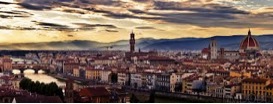
On the last day of January, Marcia and Erika joined us for a 2½-hour first class train trip to the beautiful city of Florence.  With its many art galleries and museums, this ancient and beautiful city is known as the cradle of the Renaissance.  Founded around 50 BC, the city soon became an important trade center.  As the city grew, Byzantine walls were added to the Roman walls around 540 AD for protection.  Additional walls were also added from the 1st to the 13th centuries for additional protection of the inhabitants and commerce of the city.   Lorenzo the Magnificent ruled from 1469-1492, at the time considered to be Italy’s artistic highpoint.  In 1494 Florence surrendered to Charles VIII of France at Sarzana.  1865 Florence is made the capital of the newly united Kingdom of Italy, with King Vittorio Emmanuele being installed in Palazzo Pitti.

3

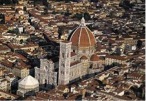
The Basilica di Santa Maria del Fiore (Duomo) was magnificent.  Originally designed by Arnolfo di Cambio, construction began in 1296 AD.  During the next 140 years it took to complete the basic structure of the cathedral, many designers and architects added their inputs to the basic design.  When completed and consecrated, in 1436, the cathedral still had no dome.  Because of the many opinions at the time about the best dome design, it would be another 10 years before designer Filippo Brunelleschi won the design competition and began construction of the dome.  The conical roof was crowned with a gilt copper ball and cross, containing holy relics, by Verricchio in 1469.  The decorations of the drum gallery by Baccio d’Agnolo were never finished after being disapproved by none other than Michelangelo.

4


As can be seen in the picture above, across the piazza from the Duomo was the Baptistery of St. John, one of the oldest buildings in Florence, thought to have been built between 1059 & 1128 AD.  The Baptistery is renowned for its three sets of artistically important bronze doors with relief sculptures. The south doors were done by Andrea Pisano, the north and east doors by Lorenzo Ghiberti.  The east pair of doors were dubbed by Michelangelo as “The Gates of Paradise.”

5

The bronze-casting and gilding on the main entry doors was done by the Venetian Leonardo d’Avanzano, widely recognized as one of the best bronze smiths in Europe. It took him six years, with the doors being completed in 1336.  These proto-Renaissance doors consist of 28 quatrefoil panels, with the twenty top panels depicting scenes from the life of St. John the Baptist.  The eight lower panels depict the eight virtues of Hope, faith, charity, humility, fortitude, temperance, Justice and prudence.

6


—–To Be Continued—–

Our Trip to Italy-Part 4

28 Mar

A Slice of Life
Bill Lites

Bill

 We had a wonderful lunch experience at the Caffé Pedrocchi.  DiVoran had “Toast” which was a grilled cheese and ham sandwich and hot chocolate with whipped cream on top, while Marcia, Erika and I had pizza, hot tea and coffee.  It was all Yummy!  After lunch, we checked out the many shops around the Prato della valle where Erika bought a copy of Taming of the Shrew in English and DiVoran bought some Italian puzzles for Billy and Renie.

1

We discovered that the famous University of Padua was built around 1190 AD, and had the first operating theater in history.   I’m sure it was very primitive and unsanitary with all the doctors and spectators watching and asking questions as the doctor tried to operate

2

And, it is said that Padua was the setting for Shakespeare famous play “The Taming of the Shrew” which it is believed he wrote sometime between 1590 and 1594.  We strolled around the beautiful Prato della Vallethe central square, which is lined with 78 statues of famous Italian citizens from over the centuries.

1a

That evening, we went to a pig roast hosted by Marcia’s friends Stephano and Roberta, at their horse ranch.  The occasion was a surprise birthday party for David, one of Marcia’s co-workers.  The party was held in a large dining hall above the tack room, where their family and friends met every Sunday for their meals.  The matriarch, Maria, had done all the cooking and had it laid out with the whole small pig as the center piece.  The food was wonderful and was served with five different types of wine and two different desserts, plus Grapa.

4

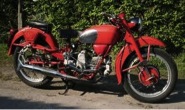
I met Roberta’s 67-year-old uncle Lorenzo who, after he found out I was a motorcycle rider, took me down to the garage and showed me his 1952 single cylinder 500cc Moto Guzzi motorcycle that was in mint condition.  He told me that he and about 20 of his friends go riding every weekend, weather permitting.  They all ride vintage Moto Guzzi motorcycles of one model or another, and love them.

5

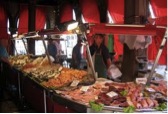
On Monday, DiVoran rested while I walked into Mogliano Veneto to the farmer’s market and bought fresh bread and artichokes.  The farmers market had every vegetable you could imagine, and the fresh fish stalls had every kind of fish and shellfish including lots of squid and eels (live and dead).

6

That evening we had a 5-course dinner with five of Marcia’s cast members  at the Hotel Vicenza in Mestre.  This time there were only 3 kinds of wine and 2 kinds of dessert plus Sconti.  We found out that the Italians really enjoy their food and eat very slowly-this meal lasted from 7:00 to 11:00 PM.

7

On Tuesday, Marcia took the day off and we drove to the little mountain town of Asolo, at the foot of the Italian Alps.  We walked up and down the streets of the town checking out the little shops.

8

The Hotel Villa Cipriani was the most beautifully decorated and picturesque place I have ever seen.  We had lunch at a very nice little Ristorante there in Aslol, and then went to Treviso to see some of the sights of this beautiful walled city.  Marcia, Erika and DiVoran cooked their version of an Italian dinner that evening and we ate in the apartment.

9

—–To Be Continued—–

Our Trip to Italy-Part 3

21 Mar

A Slice of Life

Bill Lites

Bill

Marcia got her wonderful second floor apartment through an agent, and because it was the home of an elderly couple that ran a business, it came completely furnished.  The owners ran an interior design firm and have their showroom on the ground floor below and live in their own apartment next door.  Marcia’s apartment was rather formal, decorated with flocked wallpaper and Persian rugs that soften and helped warm the marble floors.  The original householder was a WWII POW for five years, and after the war, when vacationing, he collected many of the unique furnishings that filled the apartment.

1

Our room was elegantly decorated with objects d’ art from many European countries and some from Egypt.  The bedrooms also beautifully decorated and the beds were soft, warm and comfortable.  One of the most interesting features of the house to DiVoran, was the kitchen with its dishwashing arrangements.  After washing and rinsing the dishes by hand, you would slot the dishes into racks in a cupboard directly over the sink and close the doors, leaving the dishes  to drain discreetly into the sink.

2

This is where we met Erika, Marcia’s young Italian friend and Language teacher while she was in Italy.  Erik  was 27 years old, spoke excellent English, and had a delightful sense of humor.  She was the assistant to the president of a small firm that produced radio control systems.  She had been filling a big part of Marcia’s life and heart now that Marcia was away from home and family for such a long time.  She was intrigued with the fact that DiVoran kept a daily journal and wanted to know all about the nature and advantages of the process.

3

The next day was Sunday and Marcia and Erika drove us to Padua for a guided tour of the city and its sights.  Padua is called the city of (1) the Saint with no name, (2) the park with no grass and (3) the coffee shop with no doors.

4

The Shrine of St. Anthony in Padua was completed in 1301 AD to house and honor the relics of St. Anthony of Padua.   Born Fernando Martins de Bulhoes in 1195 Lisbon, St. Anthony is the saint depicted in many early paintings holding the Christ child.  My study of St. Anthony reveled no reference to the term “The St. with no name”, so it’s a mystery to me why he is called that.

5

The “Prato della valle” is the largest square (piazza) in Italy, and is called “the park with no grass”. The Romans founded the city of Padua in the 4th century BC and created this square for military training and gatherings. Later, in the Middle Ages, the square became the courtyard of a church, then a big open-air theatre for dramas and games and even a large open-air market.

6

The  “Caffé  Pedrocchi” is known as the “coffee shop with no doors” because of the ancient tradition of staying open all night.  Founded in the early 18th century, the ground floor was completed in 1831.  Then the gothic pastry shop called “Pedrocchino” was built in 1839. During the “Fourth Congress of Italian Scientists” in 1842, the rooms of the upper floor were added, and Vincenzo Gazzotto, painted the ceiling in the Renaissance Room.  The caffé has historical prominence because of its role in the 1848 riots against the Austrian Hapsburg monarchy, as well as for being an attraction for artists over the last century, from the French novelist Stendhal to Lord Byron, to the Italian writer Dario Fo.  The Caffé Pedrocchi has been continuously open for business 24/7since 1831.

7

—–To Be Continued—-

Our Trip to Italy Part 2

13 Mar

                                                                                                                                                                Bill Lites


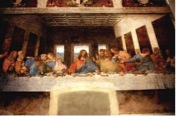
After breakfast at the Flut Bar the next morning, we took the city tram to see Leonardo da Vinci’s fresco of the Last Supper at the Santa Maria delle Grazie.  They were still working on the five-year restoration of the painting, and were meticulously removing centuries of soot and grime.   DiVoran really enjoyed finding out how the fresco had originally been painted, and now seeing how the restoration process worked in detail.

1

Then it was on to explore the many shops in the beautiful indoor Gallera Vittorio Emenuele Mall, and to have lunch at the American Bar Ristorante there.  This is where we first witnessed “The Italian Coffee Break.”  It seems that the Italian men would come into their favorite ristorante in twos and threes, dressed in their business suits, overcoats and fedoras, walk up to the espresso bar, and order their coffee.  It came in tiny cups, into which they would stir in sugar and then throw the entire cup down their throats in one gulp, pay and be gone before we knew what was happening.  We figured they were on their way home for their afternoon “sonnellino” (nap).

2

Our Kodak moment for the day was one that DiVoran saw and wished we had a video camera to capture the entire scene.   It was of a young woman with her two small daughters in the Duomo.  DiVoran said all three wore wool coats like she had worn in the 40’s.  The beautiful mother helped the little girls select candles and light them.  The littlest one, who couldn’t have been more than three, started to sing “Happy Birthday” in Italian, but her mother gently hushed her.  All the while, the candle flames lit their small faces and made their large brown eyes glow with excitement and wonderment.

3

We headed for Venice the next morning with a 3-hour train ride on one of Italy’s 1st class Europe Rail  high-speed trains through the country side from Milan.  Marcia picked us up at the train station in Venice and showed us some of the main attractions of Venice including the San Giovanni E San Padio, Santa Maria Glorosa Dei Frari and Scuala Di San Rocco churches.

4

We had lunch at the Bora Bora Ristorante with Marsha, and two of her fellow Disney cast members.  After lunch we strolled along the Grand Canal to the famous Rialto Bridge, where we shopped the many shops located within the bridge.

5

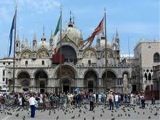
Continuing on with our mini-tour, next we visited the beautiful St. Mark’s Basilica, known for its unique Italian Gothic and Byzantine architecture.  This Patriarchal Cathedral Basilica of Saint Mark is the church of the Roman Catholic Archdiocese of Venice, and was completed in 1071 AD.  This famous structure is rumored to house the relics of St. Mark the Evangelist, which were stolen from their original resting place in Alexandria, Egypt by Venetian merchants, and brought to Venice in 828 AD.  The adventure is depicted in the 13th-century mosaic above the door farthest on the left of the front entrance of the Basilica.  What a magnificent experience that was, with the many and varied mosaic creations throughout the entire edifice.

6

After leaving St. Mark’s we caught a water-bus for a quick tour of the Grand Canal, on the way back to the train station and Marcia’s car.  From there, it was a short 18,5 km drive to Marsha’s apartment, on the outskirts of Mogliano Veneto, met her landlords and to finish the day with a fabulous Italian dinner.  After that, we were ready for bed, and what a bed it was.  But, you will have to wait for Part 3 to find out what I mean, so don’t go too far away.

—–To Be Continued—–

Our Trip to Italy-Part 1

6 Mar

A Slice of Life

 Bill Lites

Bill

 It was the Winter of 1999, and our friend Marsha was in the middle of an 18-month TDY assignment with Disney in Porte Marghera, Italy as part of the group supporting constructionof their second Disney cruise ship, the “Wonder.”  Marsha was a longtime writing friend of DiVoran’s who had worked for Disney on their first Disney cruise ship, the “Magic” and was very familiar with the surrounding Italian area.

1

She asked DiVoran and I if we would like to come visit her, as she had plenty of room for the both of us, in the rented apartment she was living in at the time.  She also mentioned that she could take some time off, if we came, and escort us around central Italy to see some of the many interesting and historical sites that area of the country had to offer.  Since I had accrued enough Sky miles with Delta Air Lines to get free round-trip flights for both of us, we thought, “This could be an opportunity of a lifetime!”  It didn’t take much arm-twisting to get us to agree to go, and we started making reservations.  The next thing we knew, were on our way.2

 Our first stop was in Milan.  After a one-hour bus ride from the airport to the Metro station, we took a 30-minute underground train ride to the town center, where we had lunch at the Autogrill.  Once we found our small quaint Hotel Speronari, we had a nap and our first laugh of the trip.  DiVoran spotted the “In case of fire” instructions on the back of our hotel room door; it read “Remain in a quiet and calm mood, walk on your fours, and protect your nose and mouth with a damp handkerchief.” What a hoot!  But then, how silly that would sound if I tried to say that in Italian?  After a cup of tea, we were ready to venture out to see some of the sights of the city.

3

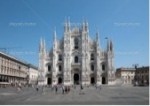
Our hotel was just one block off the city square, which was surrounded with elegant shops, filled with beautiful jewelry, furs, and luxurious fabrics.  Every third woman was wearing some type of fur coat.  We had never seen so many fur coats in our lives.  The Duomo (cathedral) in Milan’s, city square was a must see, and we were properly impressed.  It is the third largest Duomo  in Europe and took 500 years to build.  It is beautifully decorated inside with 52 Sequoia columns, each 150 feet tall, and as many as 2000 carved statues gracing the outside.

4

A Japanese couple, who had just been married, were in the process of having their pictures taken in the Piazza Duomo among all the pigeons and tourists.  What a sight that was.  After that, we got directions on how to get to the Castello Sforzesco, which was built in the 15th century and houses Michelangelo’s unfinished Rondanini Pieta.

5

 Back in the city square, we strolled the streets looking at the many fresh fruit and vegetable stands.  Then we came across a candy store where their fruits looked so real we couldn’t believe it, and sure enough, they weren’t, they were Marzipan.  What a surprise!  Of course, DiVoran had to have some, and boy were they good.  They were so unusual that we brought some home and kept them in our freezer for years.

6

    —–To be Continued—–