Archive | Bill Lites A Slice of Life- Wednesday RSS feed for this section

My Colonial States~Trip Part 7

31 Dec

A Slice of Life

Bill Lites

Bill Red Spot Plane

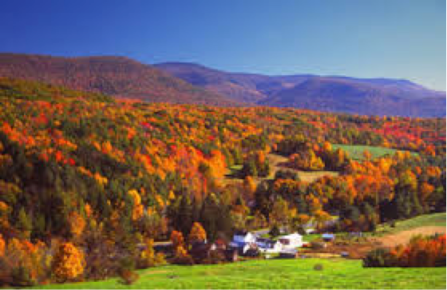
The reason it was late in the day when I arrived in Saratoga Springs was because when I left the Bellow Falls, “Greta” told me to head north 27 miles when I should have been heading south!  What was that all about?  Even though I had missed seeing a couple of museums, it had been a very delightful day’s journey, as the changing of the tree colors had been growing more beautiful as I traversed thru northern New Hampshire, Vermont and New York.
1

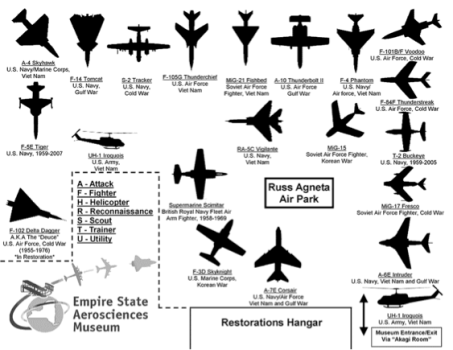
Even though it was late in the day, I hustled down to Glenville, NY to check out the Empire State Aerosciences Museum, but missed getting in to see their hangered collection by 30 minutes (they closed at 4:00 pm).  I was really hoping to visit this museum as I was looking forward to seeing their restoration hanger projects, which I understood was extensive.  I was however, able to get a few pictures of their outdoor static display aircraft, but had to shoot through the chain-link fence.    But, oh well, you can’t see them all.  Maybe next time.
2


I ended the day by taking a leisurely drive thru Schenectady, NY to Albany, NY where I had a wonderful meal of Fall-Off-The-Bone Ribs at the Texas Roadhouse restaurant, and then it was just a matter of finding my motel for the night.

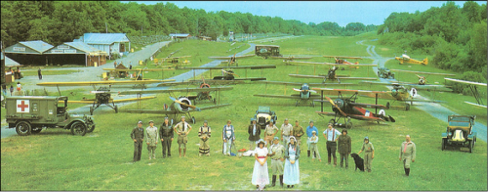
The next morning I headed south again thru Germantown, NY to be re-acquainted with some really old friends (aircraft) at the Old Rhinebeck Aerodrome in Red Hook, NY.  I had visited the Aerodrome back in 2011, during a trip to the up-state New York area, and wanted to check out any new aircraft they might have added to their collection.
3


 I also wanted to see their freshly restored 1917 Albatros D.Va replica.  This Albatros replica had been built in the 1970s by Aerodrome founder Cole Palen, and finished in the colors of WWI Bavarian fighter ace Eduard Ritter von Schleich of Jasta 21 in 1917.

4

The plane had been an Old Rhinebeck Airshow favorite for many years.  Part of the recent complete restoration included a new paint scheme depicting one of the aircraft flown by another well-known WWI Bavarian fighter ace in 1918, Lieutenant Walter Boning of Jasta 76b.

5

Two more of my favorite aircraft in the Old Rhinebeck Aerodrome collection are the 1911 Curtiss Model D Pusher, and the 1909 Bleriot XI, which has the distinction of being the oldest flying aircraft in the United States.

6

      1911 Curtiss Model D Pusher

7

1909 Bleriot XI

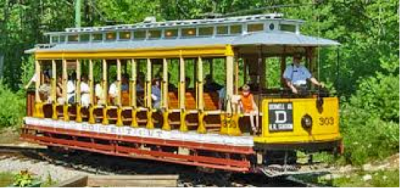
It was hard to pull myself away from this museum, but I needed to keep moving if I was going to see all the places on my list for that day.  So, heading south a short distance, I skirted the Catskill Mountains on my way to visit the Trolley Museum of New York in Kingston, NY.  This small museum wasn’t open until later in the day, but the lady saw me at the door and let me in any way.  That was nice as I had the entire museum and its rolling stock all to myself.  The museum operates a trolley line ride from Gallo Park to Kingston Point providing scenic views along the Hudson River.

8

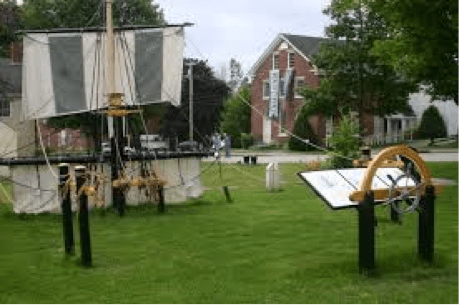
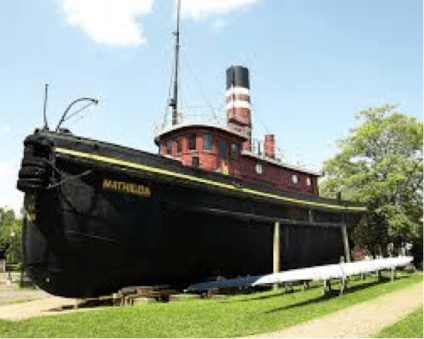
As I was leaving the Trolley Museum I noticed that the surrounding area looked very familiar.  I had been so intent on finding the Trolley Museum that I had driven right past the Hudson River Maritime Museum, one of the museums I had visited during my Upstate New York trip back in 2011.  I stopped long enough to take a couple of photos of the “Mathilda” which is a 1898 steam tug boat, and then I was on my way again. 
9

—–To Be Continued—–

My Colonial States Trip~Part 6

24 Dec

A Slice of Life

Bill Lites

Bill Lites


I headed west back across the border into Maine toward my next stop in Bangor, ME to get a picture of the 31 foot tall Paul Bunyan statue. It is rumored that the Paul Bunyan myth originated in the early 1800s with lumberjacks exchanging many of their tall-tales across the northern territories, including in and around the northern Maine forest area known as The Devil’s Half-Acre. The story has grown to great proportions over the years, most usually with Paul Bunyan being accompanied by his faithful companion “Babe” the blue ox. Paul Bunyan was said to have wondered the woods displaying his bigger than life super-human strength and abilities.

1

While I was in Bangor, I visited the Cole Land Transportation Museum which houses an amazing collection of vehicles from bicycles, motorcycles, cars, trucks to a diesel locomotive and a WWII tank. This museum’s dedication to honoring America’s military personnel and the equipment they used in the various war efforts our country has been involved in was truly gratifying.

2

Before leaving Maine I wanted to be sure I experienced a New England lobster meal, so I had dinner at the Weathervane Seafood Restaurant in Waterville, ME where I had a bowl of New England Clam Chowder, as an appetizer, followed by a 1-pound Maine lobster. The chowder was excellent as was the lobster, even if it was a battle getting to the tail meat. I guess I’ve been spoiled with how the Florida restaurants split the underside of the Florida lobster tails for their guests, making it much easier to get at that delicious tail meat.

3

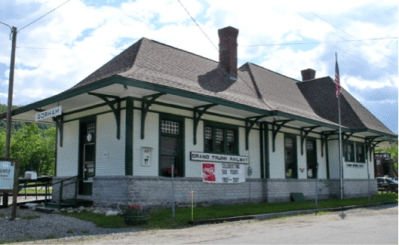
Having satisfied my Main lobster craving, I now headed west again thru the upper part of Maine and into New Hampshire to visit the Gorham Railroad Museum in Gorham, NH where I got a personal tour of the station museum, as well as a running history of the Grand Trunk Railway system, that pretty much put the city of Gorham on the map in 1751. At the end of the tour, Bob, my tour guide even gave me a homemade muffin his wife had baked that morning. Now you can’t beat that for museum hospitality can you?

4

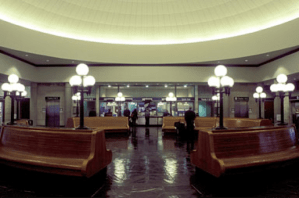
Next it was west again to check out the Vermont Railroad Museum in White River Junction, VT which actually turned out to be an active Amtrak station. The station is also used by the Green Mountain Railroad to provide passenger excursion trains to Thetford and Norwich, VT. The station was built in 1937 as a Union Terminal to serve the Boston & Maine Railroad, the Central Vermont Railroad and the Rutland Railroad.

5


While I was in Vermont I planned to visit the Railroad Museum in Bellow Falls, VT only to find that the museum and most of its rolling stock had been incorporated into the Steamtown U.S.A. collection, run by the National Park Service and moved to Scranton, PA. Since by now I was headed south, I decided not to make a side trip that far west and continued toward my next stop at the Saratoga Automobile Museum in Saratoga Springs, NY. As it turned out, I got to the museum late in the day and the museum was hosting a huge auto show. All the cars were in an enclosed area where the admission ticket was more than I wanted to pay, since I wouldn’t have had time to see the entire display.

6


—–To Be Continued—–


My Colonial States Trip~Part 5

17 Dec

A Slice of Life

Bill Lites

Bill Stars Plane

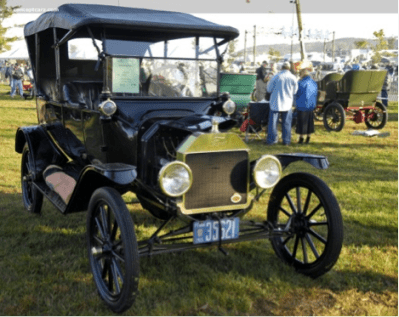
The next morning I planned to start the day with a visit to the Maine Maritime Museum located in Bath, ME but they didn’t open until later in the day and as                                                                                                                                                      the poem by Robert Frost goes, “The woods are lovely dark and deep, but I have promises to keep and miles to go before I sleep, and miles to go before I sleep.” So I just kept on trucking up US #1 toward Owls Head, ME and the Transportation Museum there. This is one of the best transportation museums I have ever visited, where many of their over 150 transportation vehicle collection are from the pre-1920s era, and they all operate as originally designed. I got my first ride in a 1915 Ford Model T, and it ran like a sewing machine. What a thrill that was!

1

I would like to have stayed longer in that museum, but I headed north on US #1 again toward my next stop at the Penobscot Marine Museum in Searsport, ME. This museum is Maine’s oldest maritime museum and is designed to preserve Searsport’s unique maritime and shipbuilding history. It is laid out as a 19th century seafaring village, with thirteen buildings, housing a collection of archival items focusing on the maritime history and life in New England during the early 18th century.

2

Now I was headed for Bar Harbor and Acadia Nation Park, located near the mouth of the Bay of Fundy, at the northeast edge of Maine. It was a beautiful day and the drive around Acadia National Park was breath-taking. The leaves on the trees were just beginning to turn, making the scenery that much more beautiful.

3

Next it was back thru Ellsworth, Maine and the long drive up US #1 thru Columbia Falls and Jonesboro to Calais and the Canadian border, where I was asked where I was going and what the purpose of my trip was.   After I crossed the border into New Brunswick, for some reason, Greta wouldn’t recognize the motel address. It was after dark, and I didn’t have a map of the area, so I called the motel and the clerk told me which exit to take and then talked me into Fredericton, NB and to the motel. Wow, that was a life-saver, and what a relief it was! The next morning I visited the Christ Church Cathedral before heading out of town. The beautiful cathedral was built in 1853 and has continued to hold services right up to modern times. The front door was open and wonderful organ music was being played by someone on the church’s four-manual Casavant Freres Opus 2399 organ (which has more than 2500 wood and metal pipes). What a beautiful way to start one’s day.

4

I headed west to visit the Kings Landing Historical Settlement which is a late 18th century living museum, made up of almost 70 buildings, located on 300 acres, where period life of the “United Empire Loyalists” is re-created by costumed interpreters that bring to life the era with explanations of how the people lived, worked and played during that time in New Brunswick. As I walked toward the bridge, I was pleased to hear a mellow singing voice echoing across the water to me. When I arrived at the King’s Head Inn, there was the singer, sitting on a bench with his guitar, strumming more early British folk tunes for the people passing by. The village was very interesting but the usual transportation wagon never showed up and it ended up being quite a walk back to my car!

5


—–To Be Continued—–

My Colonial States Trip~Part 4

10 Dec

A Slice of Life

 Bill Lites

Bill Small Red Plane


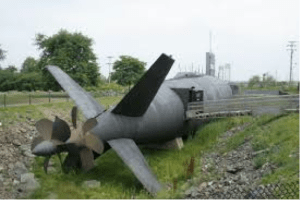
My first stop the next day was to visit the Albacore Submarine Museum in Portsmouth, NH where I took a quick tour thru the U.S. Navy’s unique research submarine that was used in the 1950s to study streamline hull/propeller designs along with various propulsion systems. I had toured other submarines, but this one was by far the most compact vessel I had ever seen. I don’t have claustrophobia, but I sure wouldn’t have volunteered for duty in that sub.

1

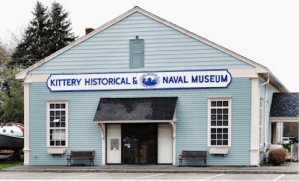
Just a few miles up the road I crossed the border into Maine and stopped to visit the Kittery Historical & Naval Museum in Kittery, ME where I discovered a small but amazing collection of local Kittery area historical memorabilia, including many maritime and military contributions.

2


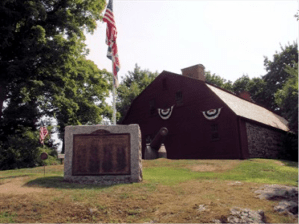
Another 5 miles up US #1 was the Old York Gaol (jail) which served as a colonial debtor’s prison in York County Maine as far back as 1656. The present structure was an expansion of the original jail and was in use from 1719 to 1879 when it was closed and converted to a school. It was not open when I was there, but I took time to take a peek thru the windows.

3

Then it was on north to visit the Seashore Trolley Museum in Kennebunkport, ME which is one of the oldest and largest museums of mass transit vehicles. The price of a ticket will get you a 30-minute ride into yesteryear on the museum’s 1918 electric trolley that was once used on the Eastern Mass Street Railway line.  

4

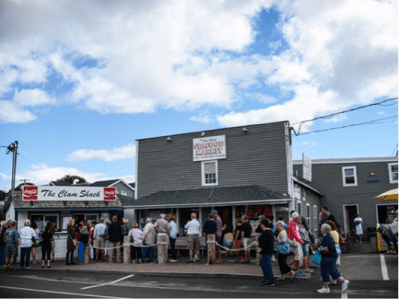
As part of my research for this trip up the Eastern Seaboard, I had Googled “Lobster Restaurants” and discovered that a guy named Mike Urban had come up with a list of the “12 Best Lobster Shacks in New England and one of them was “The Clam Shack” right there in Kennebunkport, ME.   So, of course, I had to try one of their lobster rolls for lunch. Yummy, was that ever good! If you are ever in Kennebunkport, try to find a place to park, and walk across the Kennebunk River bridge to “The Clam Shack, and whatever you do, don’t miss the opportunity to try one of their famous lobster rolls. You won’t be sorry.

5

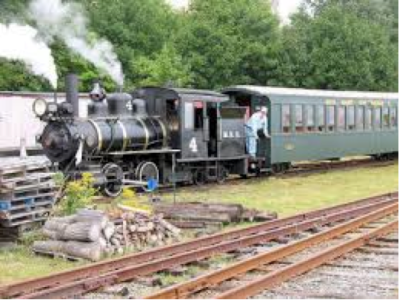
Next I visited the Maine Narrow Gauge Railroad Museum in Portland, ME where they have a collection of narrow gauge rolling stock and artifacts that were used in Maine during the late 19th century and early 20th century. The museum operates a 1½ mile long narrow gauge railroad, using vintage equipment, which carries passengers along the waterfront of Casco Bay and parallels Portland’s Eastern Promenade.

6

While I was in Portland, I visited the Portland Observatory which was built in 1807 and is the last surviving maritime signal tower in the United States. The observatory is an 86 feet tall hexagon shaped structure which sits atop Munjoy Hill, which itself is 222 feet above sea level. Originally located to be seen from the open ocean and the Portland wharfs, the observatory served as a primitive means of ship-to-shore communications for merchantmen and was even used successfully as a watchtower during the War of 1812. Then it was on north another 25 miles or so to Brunswick, ME where I spent the night.


     —–To Be Continued—–
 

My Colonial States Trip~Part 2

26 Nov

A Slice of Life

Bill Lites

Bill Stars Plane


When I arrived at the Providence station, I was surprised to see several security personnel (including a guard dog) milling around in the lobby. It made me wonder if there was a real security problem or what? I discovered later that they must have been at a shift change, as they soon all seemed to melt into the crowd, and I didn’t even see any homeless people in the station. I called the rental car company for a ride to get my car and was told to wait outside the “Downtown” exit for him. While I was waiting, one of the first persons I saw come out of the station was an attractive “Hooker” dressed in a tight sweater, skin tight leather pants, calf-length high heel boots and a Lady Star style leather cap. She really got the attention of a few convention men there waiting there for their rides.

1

After picking up my rental car, I headed east on I-195 to visit the New Bedford Whaling Museum.   I couldn’t believe it when the clerk at the museum asked me where I was from and I said, “You probable have never heard of Titusville, FL.” And he said, “Yes I have, I’m from Orlando.”   And I was thinking “What a small world we live in.” The whaling museum was very interesting, with five different full-size whale skeleton displays and a history of the American whaling industry from its earliest times. They even have a complete large-size whaling ship model of the “Lagoda” on display inside one of the galleries that you can go aboard and explore how life must have been sailing on one of those early whaling ships.

2

Then it was on east to the Pilgrim Monument in Providencetown, MA located on the northern tip of Cape Cod. On the way I passed thru towns with some of the most unusual names, such as Sandwich, Mashpee and Barnstable. I wouldn’t even begin to try to pronounce those names correctly. The 252 foot high Pilgrim Monument was erected in 1910 to commemorate the first landfall of the Pilgrims in 1620 and the location of their signing of the Mayflower Compact, which was the first governing document of the Plymouth colony. It was an impressive structure to say the least.

3

On the way back to the motel in West Yarmouth, MA I stopped for dinner at the “Moby Dick’s Seafood Restaurant” in Wellfleet, MA. Advertising to serve some of the freshest seafood in the Cape Cod area, and taking the New England clam shack to a new level, they are also uniquely a BYOB restaurant. They served me some of the best fish and chips I have ever had. What a treat after a long day in the air and on the road.

4

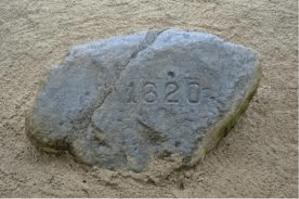
Early the next day I headed north to Plymouth, MA to visit the Pilgrim Memorial State Park, which is the site of the first Pilgrim Colony, and to see the famous “Plymouth Rock” and the “Mayflower II” ship. Interestingly, there is actually no historical mention of the Pilgrims “landing on a rock at Plymouth” until 1715. That’s when the rock first appeared in a Plymouth town boundary record as “the great rock.” And, it wasn’t until 1741 that the first written mention of the Pilgrims landing on a rock showed up.

5

The story goes that a 94 year-old church elder, Thomas Faunce, claimed he knew the precise boulder the Pilgrims first stepped on when they landed in the new world. I’m sure you would find the Googled history of “Plymouth Rock” as interesting as I did. I didn’t go aboard the Mayflower II because I had planned a full day of exploring Old Boston and the Boston Inner Harbor, and needed to be on my way

6


—–To Be Continued—–
 

My Colonial States Trip~Part 1

19 Nov

A Slice of Life

 Bill Lites

Bill Red Spot Plane


Since I always wanted to visit the northeastern U.S. Colonial States during the fall foliage color change, I decided to give late September and early October a try this year. My primary museum resource was, of course, my Guide to Over 900 Aircraft Museums – USA & Canada, which gave me an approximate route for my trip. Next came the airline and rental car research. One friend, who had lived in the Boston area and still had relatives living there, recommended the Providence, RI airport for two reasons. One, because Southwest Airlines (I could fly free with points) had non-stop flights from Orlando to the T.F. Green airport in Warwick, RI; and two, because it was a smaller airport with much less hassle than JFK or LaGuardia.   When I checked out the rental car prices, I found I could save over $250 by renting the same car at a downtown Providence location instead of at the airport. That savings would go a long way toward paying for my gas on this trip. Here again my Boston friend was able to assist me with Rapid Transit information to and from the airport to Providence. On most of my trips I find that talking to friends who have lived in the areas I plan to visit is a great source of valuable information. Next, I researched the Internet for “Things to do” and “Points of Interest” in the major cities of the states where my initial route seemed to be taking me. This narrowed the route down to more specific locations along the way. Then I approximated the distances between museums or attractions (including time at the museum/attraction) along my route to look for motel locations and rates (nights for the lowest points) so that hours on the road per day were reasonable. All this makes for a very time consuming process, but I enjoy the research and thinking about all the fun places and things I am going to be seeing.

1


I had planned to start my first day (flight day) after arriving in the Providence area, to pick up my rental car, and then visiting a museum and a memorial park before checking into the motel for the night. I was a little concerned about the timing of all this because my flight was scheduled to arrive at the T. F. Green Airport at 12:50 pm and the commuter train left the airport stop for Providence at 1:25 pm. If the plane was late, it would mess up my whole evening as the next commuter train would not leave the airport until 3:55 pm. My Boston friend assured me that I would have plenty of time to make the 1:25 train and not to worry. Right, easy for him to say! Well, as it turned out, the flight was early getting into the T.F. Green Airport, and I got to the train stop in plenty of time. Interestingly, there was a young man waiting for the same train I was, and I asked him about how to know which train was my train. He kindly explained and come to find out he was from Melbourne, FL (about 40 miles from Titusville, FL where I live) and had been on the same flight that I was on from Orlando. He was there to visit relatives and was very helpful with information about the commuter train system.

2


—–To Be Continued—–
 

WWI Trench Art

12 Nov

A Slice of Life

Bill Lites

Bill


For DiVoran’s birthday I took her to the Orange County History Center in Orlando, Florida so she could view the “Gone With The Wind” exhibition on display there.   She loved it. While she was enjoying the exhibits about that famous story of Rhett Butler and Scarlett O’Hara, I strolled around the galleries on the other three floors of the building. It was a pretty impressive arrangement, with exhibits covering mostly Florida history.

1

One exception was the WWI Trench Art exhibit. I was simply amazed at what some of those soldiers had done with what was called, in one description, “War Waste.” There was no end to the creativity shown by the many different examples displayed. There were creations using the smallest rifle cartridges, to those using some of the largest canon shell casings. There were pieces ranging from a small crucifix, to a multi-bulbed desk lamp. And some of the artistic work was breathtaking!


To think that in the midst of one of the world’s worst conflicts, and in the cold and muddy trenches filled with the smell of death, that it was possible for men to be able to remove themselves (thoughts and emotions) in a way as to create such beauty out of some the very components that they were using to perpetuate that devastation.

4

It’s disturbing for me to think about the millions of young men who have had to go to a war for any reason, but especially those with such talent as displayed in these art forms. Of course, there was the much used reference of “Turning Swords into Plowshares” which didn’t help when I tried to imagine how much talent has been wasted over the centuries because of the many wars that have been fought around the world. There was a picture of a huge pile of shell casings, which must have been the source of some of the “War Waste” referred to in one of the articles about Trench Art.

5

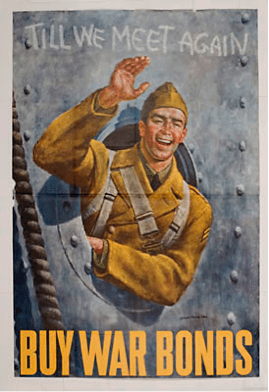
There were several WWI posters (collector items by now) encouraging Americans to “Buy War Bonds” to support the war effort. I remember the stories about how the people of this country tried to stay out of the “War Over There” but how they rallied together to support out military once the U.S. joined the fight.

6

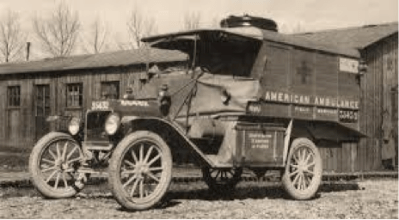
It reminded me of pictures and stories of my dad, who had been a medic and ambulance driver with the U.S. Army in France during WWI. I’m sure he saw his share of terrible things during that conflict, as did many, but like most of them he never talked about it to us.

7

If you get a chance to visit the Orange County History Center in Orlando, Florida in the near future, be sure to see the “WWI Trench Art” exhibit (there until 12/31/2014). If not, you can go on the internet and Google WWI Trench Art and you’ll be amazed, as I was, with what you will see posted there, and with many references to other links. Enjoy!


—–The End—–

http://www.trenchartofww1.co.uk

The Best Job I Ever Had~Part 3

29 Oct

A Slice of Life

By Bill Lites

Bill Lites

Bill Lites


One of the largest assignments I was responsible for was the 1st /2nd stage separation system. This system was used in two places on the S-II stage of the Saturn V launch vehicle; to separate the first stage S-IC from the second stage S-II, and again 30 seconds later, to separate the protective S-II Interstage from around the S-II engines. The S-IC and S-II stages were both 33 feet in diameter, so the test fixture used to test the full scale separation system was massive.

1


The test fixture was designed to lift a simulated section of the separation plane off the ground so that when the explosive system fired, the lower portion could be photographed while it fell to the ground. This was the closest we could come to simulating the actual event, and we learned several important things from these tests that would drive the final design of the separation system itself. The first thing we discovered, was that the originally designed charge assembly would warp as it was unreeled from the installation spool, making it difficult to keep it lying flat on the tension plates it had to cut. Next, we found out that any amount of water between the charge assembly and the tension plate would diffuse the cutting ability of the explosive. The Los Angeles fog taught us this fact. This happened when we installed the separation system one day for a full-scale test the next day, and when the fog rolled in that night, the moisture ran down the stringers, onto the tension plates, and collected in the “V” of the shaped charge in several places. The final design consisted of a vinyl wrapped charge assembly that kept the moisture out of the cutting area, and a retention system that held the charge assembly tight against the tension plates. The manufacturer of the charge assembly also supplied a disposable holder that kept it from warping as it came off the installation spool.

2


This separation system did not use a large size explosive charge, but because it had to cut the 216 tension straps around the 103 foot outside circumference of the vehicle, it ended up being a large explosion. After the first three tests, we had to move the entire test fixture to an El Centro desert facility because of complaints from the local Downey, CA residents.

3

After finalizing the ordnance systems testing for the Apollo and Saturn S-II vehicles, I was transferred to the NAA Field Operations Group and moved to Florida in 1965 to be one of the Field Test Engineers responsible for the processing and installation of many of those same ordnance systems I had tested in California. My job now was to write the procedures for, and supervise the processing and installation of, these flight ordnance systems on the Saturn S-II launch vehicle that helped boost the Apollo Astronauts and their spacecraft to the Moon. What a thrill it was to be able to watch that giant 363 foot high Saturn V launch vehicle lift off, in all its glory, and see those systems work as they had been designed and tested. But of course, as it turned out, that job wasn’t near as much fun as the job of blowing up those system test specimens back in the early days at the home plant (Will I ever grow out of being a kid?).

4


You may have seen the picture below or a video clip of it in an Apollo documentary or an advertisement, but this was the S-II Interstage falling away from the S-II Stage booster 30 seconds after separation from the S-IC stage, which occurred during each Apollo/Saturn V launch from the Kennedy Space Center.

5


Most people have no idea how many unseen systems have to work perfectly, and in the proper sequence, during any rocket launch. I still get thrilled every time I watch a video of one of the Apollo/Saturn V launches, and see each of the many ordnance systems function as they were designed. And, it’s gratifying to know that I played a small part in that historical program to place the very first men on the moon.

6


—–The End—–


The Best Job I Ever Had~Part 2

22 Oct

A Slice of Life

 Bill Lites

Bill


I would design and have built any test fixtures required. Then I would coordinate with the various support groups necessary for each test. In most cases, the specimen would have to be tested in at least the three realms I mentioned (high temp, low temp, vibration) to verify that they would function under those conditions. This meant the Ordnance Design Engineer had to have at least three of his system specimens built and supplied to the Test Group for testing. It was something to be able to blow up these various test specimens when they worked as designed, but when they didn’t, and the Ordnance Design Engineer had to take the mangled pieces back to his office and his drawing board, to figure out how to make the system work properly, it was rather sad for him. You might have heard the old saying, “Well, it’s back to the drawing board.”  Well, that’s just what he had to do. This would go on until the system was perfected and the test results satisfied the original/modified system designed acceptance requirements. Of course, everyone had their own critical time schedule that they were working to, and any delays caused by malfunctions or unexpected test results only added to the pressure each group involved would feel.

1


Many of the system specimens we tested were small, which made them easy to setup and test. They included mostly self-contained fuse assemblies and guillotine type cutters, used for cutting such things as parachute shroud lines, etc. The guillotine cutters used pressure cartridges to instantly force the cutting blade thru the lines. The reason most of the explosive systems used on the Apollo Spacecraft and the Saturn V Launch Vehicle had to be self-contained was to prevent damage to the vehicle in which they were located.

2                                                                     

For example, one of the main explosive systems used to ignite solid rocket motors was Confined Detonating Fuse (CDF). This was a small flexible lead sheathed explosive core wrapped in alternating layers of plastic and fiberglass weaved cloth. This allowed the explosive train to be routed thru various parts of the vehicle to the rocket motors, or other explosive devises, and still confine the explosion. Then there were the parachute mortars, which were used to deploy the various parachute systems during spacecraft re-entry.  The diagram below shows an example of how CDF was routed and connected for use on a retrorocket system.

3

There were also various methods of separating the multiple components and stages from each other. All of these explosive devises had to work as designed and exactly when required to insure specific component and overall mission objectives.


—–To Be Continued—–
How We Met~Part 3

19 Oct

SUNDAY MEMORIES

Judy Wills

JUDY


As it turned out, Fred was attending the same church where I was a member. So we kept seeing each other there, and were in the same youth group.

2

It didn’t take long for me to realize the he was probably the most shy guy I had ever met. He also had never been on a date – so I was his first! And as for the first date – the youth group was having a hay ride up to the mountains – and I had to ask HIM if he would like to go with me! I told you he was shy!! He also didn’t have a driver’s license, so anywhere we went, I was the driver.

3

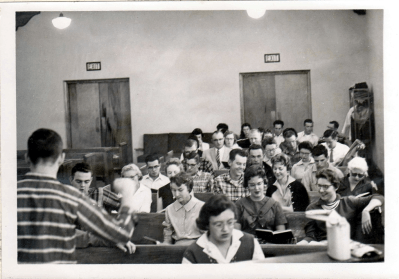
Chapel service at the UNM BSU Center


I remember that the BSU had a Halloween haunted house, and I went there with Fred. It was a neat thing. In a darkened room, they had you put your hand in a bowl of peeled grapes as eyeballs, spaghetti noodles as brains…you get the picture. One of the adult sponsors of the BSU was good at story-telling, and she had on a black outfit with glow-in-the-dark gloves, and told some sort of tale. Everyone had on some kind of costume. There was bobbing for apples and other such games. It was really a lot of fun. You remember – the way we used to do it.


The group had retreats in the mountains outside Albuquerque (Sandia Mountains); they had retreats at Glorieta Baptist Conference Center near Santa Fe; all those things Fred and I went to together, becoming more familiar with each other.


Fred started coming to our BHiU meetings – by walking from UNM to the church where my group met – about a three mile hike – and all before he had to go to his own classes! He said he doesn’t remember ever riding the bus there – perhaps the bus schedule at that hour of the morning didn’t fit our meeting time. In any case – he walked there.


Fred started spending time at my house, getting to know my parents.

9

My brother, Bill, had already gone into the Navy and wasn’t there to meet him. It wasn’t until we were engaged to be married that Bill and Fred met. We had been dating for about 18 months before Fred popped the question. I said “yes – but not yet.” We were engaged for another 18 months before we married.

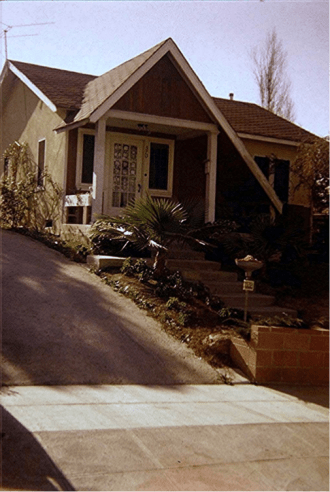
Fred, my parents, and I drove from Albuquerque to Los Angeles (Inglewood), California, to spend Christmas with Bill and DiVoran in 1960. They had a little house and we were really crammed into that space.

10

Dad told me later that Bill had pronounced Fred to be “a man’s man” as we left. Bill had always been my protector – when Daddy was out on the road as much as he was, Bill was the one to meet my dates. And intimidate them, if possible! He was bigger than most of them. But he and Fred got along, right from the start.

The last year of Fred’s UNM experience, he roomed at our house. He paid my parents what he would have paid the university for room and board. It made us very comfortable with each other – we saw each other last thing at night and first thing in the morning. So we both went into our marriage with our eyes wide open!

 We married on June 20, 1961. It’s been a great 53+ years of marriage. We are grateful to God for all these years together.


~~~~~~The End~~~~~~