Tag Archives: Travel

Visits with Ivan & Dora Part 2

5 Jun

A Slice of Life

Bill Lites

Bill

1png My work during those years took me to the Southern California area frequently, and this was great for us, because Ivan and Dora would always invite us to come visit them in whatever location they happened to be that summer.  I would take DiVoran with me for a week of vacation before or after my business in California and we would spend our vacations relaxing with Ivan and Dora.  We made several summer visits to their home in Vista, one visit to the Salton Sea (226 ft. below sea level), two visits while they were staying at Smithy’s on Marrowstone Island and one visit to Sapinero in Colorado.

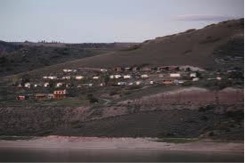
Sapinero is a small community located on U.S. Highway 50, along the shore of the 2Blue Mesa Reservoir in western Colorado.  Ivan had wanted to move to Montrose, Colorado but couldn’t talk Dora into a permanent move, so summers at Sapinero were the next best thing he could come up with.  The community is made up of mostly part-time summer folks with their motor homes and travel trailers, who like Ivan, like the lake fishing.

3In 1955 Sapinero became an example of those stories about a riverside community being moved to a new location when those in power decided they needed to dam up the Gunnison River to provide water for the surrounding area.  The original Sapinero community now resides under some 300 feet of water.  The reservoir was stocked with Kokanee Salmon and Tilapia, which at the time I had never heard of, but were fun to catch and wonderful eating.

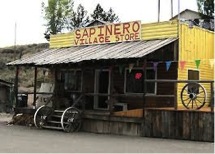
In addition to the rustic “Village Store”, which included the “Ley-Z-B Restaurant”, 4there are several old “rustic cabins”, one of which we rented for our one and only stay at Sapinero.  The problem with the cabins was that they were very primitive, and provide only the basic needs, such as very cold water and one 60-watt light bulb.  The bed sagged so badly that DiVoran and

I tended to roll in toward each other in the middle, and there was a 2” gap under the door.

5The two-hole outhouse was 30 feet down the drive and very dark at night, which reminds me of a little “outhouse trivia” you may not know.  It’s said that the first outhouse designs used a crescent moon cut into the door to identify the “Ladies” and a star cut into the door to identify the “Men’s” privies.  Then after a while, the star was dropped and privies became unisex in nature, mainly because the women kept their privies cleaner than the men did.  Bet you had never heard that one before!  I hadn’t.

One night while we were fast asleep, dreaming of how nice it would be to be to be sleeping in our own bed at home, DiVoran suddenly jumped out of bed screaming and brushing wildly at her hair.  I was still half-asleep and couldn’t figure out what was going on.  Finally, she calmed down long enough to tell me that something had 7run through her hair, and about that time, we saw this field mouse scurry out through the gap under the door.  Then I had visions of what else could find its way through that gap into our cabin looking for a warm place to sleep.  Well, you better believe we didn’t waste any time blocking that gap with towels, but I’m not sure how much better that helped us sleep that night.

8 Ivan had built a wooden cover and porch structure over his travel trailer to help shade them from the sun and give them a place to relax in the evenings.  TV reception at Sapinero was almost non-existent, so most evenings a bunch of the folks and/or some of the local cronies would gather at the Ley-Z-B Restaurant for dinner and/or to spend the evening sharing some of the many stories for which traveling folks and old cronies are known to have an endless supply.

Every Saturday evening the Ley-Z-B Restaurant hosted a western style Bar-B-Q at the Village Store.  People of all ages came from all around the immediate area to 9enjoy the great food. We even saw some bikers stop in to try out the ribs.  Someone would usually bring a guitar or banjo and provide the music for the evening’s sing-a-long, and a great time was had by all.

These are just a few of the more memorable times we have spent with Ivan and Dora over the years.  They knew how to relax and have a good time where ever they were, and that made It  relaxing and fun for DiVoran and me to spend time with them.  What wonderful memories!  We would love to do any of those trips over again if it were only possible.

—–The End—–

Our Trip to Italy~Part 11

15 May

  A Slice of Life

Bill Lites                                                        


We discovered St. Peter’s basilica was designed principally by Donato Bramante, Michelangelo, Carlo Maderno and Gian Lorenzo Bernini.   St. Peter’s is one of the most renowned works of Renaissance architecture in Italy, and remains one of the largest churches in the world.

1

In Roman Catholic tradition, the basilica is the burial site of its namesake Saint Peter, one of the twelve apostles of Jesus, and according to tradition, the first Bishop of Rome and therefore first in the line of the papal succession.  Tradition and some historical evidence also hold that Saint Peter’s tomb is directly below the altar of the basilica. There has been a church on this site since the time when Constantine the Great was the Roman Emperor from 306 to 337 AD. Construction of the present basilica, replacing the Old St. Peter’s Basilica of the 4th century, began in 1506 and was completed in 1626.

2

Not long after the crucifixion of Jesus in the second quarter of the 1st century AD, it is recorded in the Biblical book of the “Acts of the Apostles” that one of his twelve disciples, Simon known as Peter, a fisherman from Galilee, took a leadership position among Jesus’ followers and was of great importance in the founding of the Christian Church.  It is believed that Peter, after a ministry of about thirty years, ended up in Rome and met his martyrdom there in 64 AD, during the reign of the Roman Emperor, Nero.

3

We were able to see St. Peter’s tomb and many of the fabulous works of art by some of the most famous Renaissance masters.  Michelangelo’s famous Pieta sculpture, depicting Mary holding Jesus after he was removed from the cross, was just inside the entrance to the basilica,  on the right, and was one of the most life-like sculptureI had ever seen.

4

Later, after our tour of St. Peter’s basilica, we checked out the Vatican guards, who are actually Swiss Army soldiers, who have served as bodyguards, ceremonial guards, and palace guards at foreign European courts since the late 15th century.   The name Swiss Guard generally refers to the Pontifical Swiss Guard of the Holy See.   The use of Swiss soldiers as Royal guards and as the Pontifical Guard stems from their reputation for discipline and loyalty, and their employment of revolutionary battle tactics.   Apart from household and guard units, regular Swiss mercenary regiments have served as line troops in various armies; notably those of France, Spain and Naples up to the 19th century.

5

In 2006, to celebrate 500 years in the line of duty, a group of veteran Swiss Guards marched from Switzerland to Rome, a month-long journey through Italy.   In a public ceremony, at the end of their march, 33 new guards were sworn in on the steps of St. Peter’s Basilica, instead of the traditional venue in the San Damaso Courtyard. The photo below is the Papal Swiss Guard, at their station, guarding the access to one of the entrances to Vatican City.

6

—–To Be Continued—–

Our Trip to Italy~Part 10

8 May

A Slice of Life

Bill LItes

After a wonderful Continental breakfast with the sisters of our convent lodgings, we started our day with a tour of the Vatican Museum and the Sistine Chapel. 5

The Vatican Museums were founded under the patronage of two 18th century popes – Clement XIV (1769-1774) and Pius VI (1775-1799) – who were among the first to open collections of art to the general public.  The idea was to provide some of the Vatican collections for viewing, therefore promoting culture among the masses. As the decades passed, more popes added to the already impressive collection of diverse artworks owned and displayed by the Vatican.  Today, there are 13 museums in about different Vatican palaces that are now included in what is called the Vatican Museum Complex, and can be toured by the general public.


1

Our Rick Steves tour book says the tour leads you through almost four miles of galleries and art treasures before you get to the Sistine Chapel.  Well, we believe him now!   They provided a great self-guided audio tour, and we were absolutely amazed at the quantity of Great Masters’ art treasures in the museum.  I can’t begin to imagine the overall worth of all 13 museums.

2

In one of the corridors, DiVoran was especially interested in a woman copying paintings in miniature from some of the Master paintings there in the Vatican museum. She wore a fur hat and a heavy coat because it was so cold in there. The lighting was spectacular and all natural. What a way to make a living!

3

It was like being saturated with so much art, my brain couldn’t hold any more.  We spent a good 4 hours trying to see as much as we could before we were able to work our way to the Sistine Chapel, and that was by cutting short a number of galleries.  I can now better appreciate the pain and agony Michelangelo had to endure those 4 years (1508-1512) he spent, laying on his back, painting all those magnificent works of art.  Then, at the end of the chapel, is what many call his most crowning achievement in painting, The Final Judgment, which itself, took 4 years (1535-1539) to complete.

4

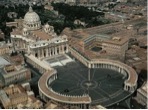
We had a delicious lunch in the Vatican Museum cafeteria.  Then it was on to St. Peter’s Basilica.  The basilica itself is approached via St. Peter’s Piazza (otherwise known as St. Peter’s Square) and is bordered on either side by semi-circular colonnades, which, according to Bernini, symbolize the out-stretched arms of the church embracing the world. The colonnades were built around 1660 and consist of four rows of columns with in total 284 Doric columns and 88 pilasters.  A total of 140 statues were installed on top of the colonnades, all created by Bernini and his students at the time. These statues depict popes, martyrs, evangelists and many other important religious figures.

The facade of the basilica stretches across the end of the square and is approached by steps on which stand two 20 ft high statues of the 1st century apostles to Rome, Saint Peter on the left side and Saint Paul on the right side.  It’s amazing for me to think of news reports, I’ve seen on TV, such as the appearance of the newest, Pope Francis, where as many as 250,000 people have been known to crowd into St. Peter’s Square for the special event.

6

—–To Be Continued—–

Our Trip to Italy~Part 9

1 May

A Slice of Life

Bill Lites  

Bill


On Wednesday, DiVoran and I walked into Mogliano Veneto so she could see the small part of the town we were staying in close up, and pick up some fresh fruit for our train trip to Rome the next day.  We had a lovely time visiting the many shops and the open-air town market.  We stayed around the apartment most of the rest of the day, visiting the furniture shop down stairs, packing our suitcases and resting.  After work, Marcia took us to Mestre, which is located on the mainland across the Lagoon from Venice to show us the many sights of that interesting city.

1

According to legends, Mestre was founded by Mesthles, a companion of the mythical hero Antenor, a fugitive from Troy who founded Padua. The true origins of the city are uncertain, although it is known that a Roman fortress that existed there was destroyed by Attila the Hun sometime in the 5th century, and rebuilt later around the 10th century.  In 1152, a papal bull by Pope Eugene III recognized the Bishop of Treviso as lord of Mestre, citing the existence of the church of St. Lawrence.

2

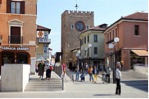
The city had many lovely stores and shops, but since we were expected to meet  Marcia’s friend Erkia for dinner, we restricted our site-seeing visit the Clock Tower in Piazza Ferretto, and the 17th century Cathedral of St. Lawrence.

3  In a country that is widely known for its vast number of breathtaking and awe-inspiring cathedrals, this is one of the most beautiful in northern Italy.

After all that walking around Mestre, we were ready for some good Italian food, and Marcia took us to the Da Roberta’s Ristorante, which was one of her favorites.  She was right, the food was outstanding, and our last visit with Marcia and Erkia was memorable.

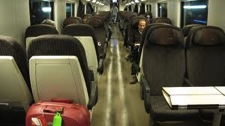
The next morning, after breakfast, Marcia and Erika took us to the train station and it was “arrivederci” to our truly grand friends for a wonderful guided tour to some of northern Italy’s most beautiful cities.  It was hard to believe our visit to Italy was almost over.  Our 1st class train trip to Rome took us 5 hours.  Lunch on the train was nothing special, but a new and different experience.  We had stops at Padua, Bologna and Florence before arriving at the Italian capital.

4

After leaving Florence, our route took us through some of the most beautiful countryside with castles, ancient arched bridges and through at least 30 tunnels (the longest being 23km). 5 Here again, the train trip gave us time to study up on the location of our lodgings and some of the points of interest we planned to visit in Rome.

At the train station information booth, it was suggested that we NOT take the inexpensive 30-minute bus ride to the Vatican area, as the buses were always very crowded and a favorite haunt of the local pickpockets.  So, we took a 10-minute “life changing” taxi ride through the city to the doorstep of the German-Italian convent where we had reservations7

The accommodations at the Suore Missionarie Pallottine convent were very clean, sparse and quiet.  After a brief rest, we headed out to see some of the sights within walking distance.   It was UP a steep hill and DOWN a steep street from the convent to get to the main avenue where we enjoyed some window shopping, and roast chicken at the Pinelli Pizzaria-Toyola Calda.  By the time we made it back to the convent, we were ready for a shower and some sack time.

8

—–To Be Continued—–

Our Trip to Italy~Part 8

24 Apr

A Slice of Life

Bill Lites

Bill

 The train trip back to Mogliano Veneto that afternoon was uneventful, and gave us a chance to read up on all the Renaissance art and history surrounding much of we had seen that day.  A very kind older Italian man insisted on sharing his cookies with the “American Tourists” when he discovered we had just been to visit his beloved Florence.

1


During an early breakfast the next morning, Erika was trying to help Marcia with some of her Italian, and we heard Erika say, “Marcia, please don’t tell anyone I am your Italian teacher.” We all laughed, because we had just learned from Erika the translation for poached eggs is, “Eggs with a shirt,” and the translation for raisins is, “After they are grapes.”   It’s funny how some words differ from one language to the next.  Marcia and Erika went to work, while DiVoran and I stayed around the apartment, enjoying a day of rest and planning our next day’s visit to Venice.

2

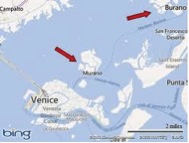
After work, Marcia took us to one of her favorite restaurants, the Ai Portici Ristorante there in Mogliano Veneto, for another wonderful Italian meal.  Marcia had told us the trip to Venice would probably be a long day, because we planned to include visits to the islands of Murano, where much of the famous hand blown Italian glass is made, and colorful Burano, which is famous for its beautiful handmade lace.

3

The next morning Marcia dropped us off in Venice on her way to work.  We strolled along the Grand Canal for a while, window-shopping, then decided to revisit the Saint Mark’s Basilica and take in its opulent gilded Byzantine and Gothic design with its spectacular mosaics.  A Museum, which is a part of the Basilica, located between the historic area on the Basilica’s vestibule and the former Doge’s Sala dei Banchetti (Banquet Hall), contains many Persian carpets, liturgical vestments, illuminated manuscripts with some of the texts of St. Mark liturgies.  There are also tapestries in wool, depicting episodes from the Passion of Christ, with others in silk and silver illustrating some of the many stories of St. Mark.

4


And there, wouldn’t you know, as we entered upon the piazza, was a couple having their wedding pictures taken in front of St. Mark’s Basilica.  Amazingly, DiVoran and I seem to visit churches, wherever we go, just as a wedding is over and we get to see the new couple emerge for pictures.  It has happened in Mexico, England, Scotland, Orlando Florida, Rome and now Venice, Italy, and it’s always a beautiful sight and a thrill for us!

5

During our brief tour around Venice, we came across a group of street vendors at small kiosks selling just about anything you could imagine.  DiVoran bought me a fedora to keep my head warm, and we bought a couple of festive hats for Billy & Renie.  Luckily, we were able to find our way through the maze of small canals, and narrow streets, to the lunch ristorante Marcia had recommended, down a narrow walkway, had some really great pizza, hot lemon tea and a rest.

6

After lunch, we took a waterbus to the island of Murano to check out the hand blown glass.  It was amazing to enter these beautiful showrooms of fine glasswork, and then walk through a door into a small shop where people of all ages were creating these fabulous works of art before our very eyes.  Just to get a feel for the cost of some of these items, we asked about the price of one of the smaller items ($400 US) and later during our tour, a larger item ($1500 US).  I could not even imagine what some of the large chandeliers would have cost.  We were told a  person could even request special order items, and if the item was small enough, you could watch them create the item while you waited.

7


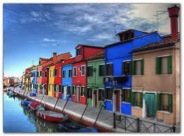
Then it was on by water bus to the island of Burano to see about the famous handmade lace creations we had heard so much about.  The first thing that gets your attention as you approach Burano is the brightly painted houses.  They stand out and are reflected on the calm water of the adjacent canals.  Even their personal boats, tied up in the canal, are painted bright colors, and many match the color of the houses their owners live in.

8

Inside, the women sit with bolsters on their laps, creating some of the most beautiful and delicate lace work we had ever seen.   DiVoran bought a beautiful “thread-drawn” tablecloth and napkin set, which we still have and enjoy to this day.  What a great way to remember some of the fabulous times we had exploring the places and visiting with some of the people of Italy.

9


—–To Be Continued—–

Our Trip to Italy Part 7

17 Apr

A Slice of Life

Bill Lites

Bill


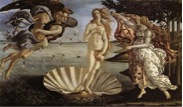
Next, we visited the Uffizi Art Gallery, reportedly the oldest and most famous art Museums in the Western World.  A large part of the art in the Uffizi dates back to the periods between the 12th to 17th centuries, with art by great Italian artists such as Botticelli’s “Birth of Venus,” (Shown below), Giotto, Cimabue, Michelangelo and  Raffaello to name just a few of the most famous.

1


Then it was on to the Accademia Gallery and the bigger than life and magnificent “David” by Michelangelo.   Originally commissioned in 1501 as one of a series of statues of the prophets to be positioned along the roofline on the east end of the Florence Cathedral, but instead was placed in the public square, outside the Palazzo della Signoria in 1504.   Because of the nature of the hero that it represented, it soon came to symbolize the defiance of civil liberties embodied in the Florentine Republic, an independent city-state threatened on all sides by more powerful rival states at the time.  The original statue was moved inside the Accademia Gallery from the piazza in 1873 and finally replaced with a replica in 1910.

2

Among some of the other many extraordinary sculptures and artwork at the Accademia Gallery are contributions by Francesco de Sangallo, Agnolo Bronzino, Benvenuto Cellini, Giorgio Vasari, Bartolomeo Ammannati, Giambologna and Artemisia Gentileschi.       It was taken for granted at the outset that all members of the Accademia would be male, so when the Accademia welcomed the Baroque painter, Artemisia Gentileschi, into its membership in 1620, it was a great honor for the woman painter, and was a great influence for the feminist movement in Italy.

3

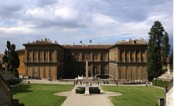
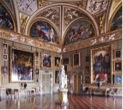
Then it was on to the Palazzo Pitti, which dates from 1458 AD, and was originally the residence of Luca Pitti, an ambitious Florentine banker at the time.  The palace was bought by the Medici family in 1549 AD, and became the chief residence of the ruling families of the Grand Duchy of Tuscany for many years.

4


In the late 18th century, the palazzo was used as a power base by Napoleon, and later served for a brief period as the principal royal palace of the newly united Italy.   Between 1865-1871 it was the residence of King Victor Emmanuel II, when Florence was the capital of Italy.  Today, it houses several minor Italian collections in addition to those of the Medici families.

5

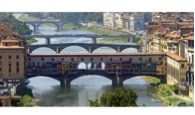
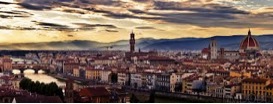
From there we strolled over to the famous Ponte Vecchio bridge which is one of many bridges now spanning the Arno River in Florence.  The Medieval bridge first appears in a Roman document of 996 AD, after which it was destroyed twice by floods, and the stone bridge was finally rebuilt in its current form in 1435.   We took time to check out the many shops that are permanently located on the bridge, which was the custom when the bridge was first built.

6

After all that Renaissance art by the so many of the great masters, our heads were buzzing, so we stopped for lunch at McDonald’s.  I, for one, was ready for a burger and fries, and besides that, Marcia informed us that McDonald’s is the only eating establishment in Italy where a woman could be sure to find a sit-down toilet.


7

—–To Be Continued—–


Our Trip to Italy~Part 6

10 Apr

A Slice of Life

Bill Lites


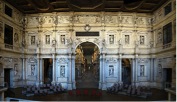
After leaving Verona, we drove over to Vicenza where we saw the Olympic Theater, which was designed by the famous Italian Renaissance architect Andrea Palladio and constructed between 1580-1585.  The theatre was inaugurated on March 3, 1585, with a production of Sophocles’ “Oedipus the King.”

1


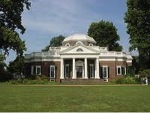
Then we toured the Monticello shaped residence, “Villa Capra La Rotonda” which was also designed by Andrea Palladio.  President George Washington selected the site for the future “President’s House” in 1791.  And then, interestingly, Thomas Jefferson anonymously submitted a design as part of the 1792 competition for the project, that was a variation on the Villa Rotonda.  That design was selected, and ultimately would become what we now know as the White House.   The first President to use the President’s House as his residence was President John Adams, and his wife Abigail, who moved into the  unfinished house in 1800.

2

On the last day of January, Marcia and Erika joined us for a 2½-hour first class train trip to the beautiful city of Florence.  With its many art galleries and museums, this ancient and beautiful city is known as the cradle of the Renaissance.  Founded around 50 BC, the city soon became an important trade center.  As the city grew, Byzantine walls were added to the Roman walls around 540 AD for protection.  Additional walls were also added from the 1st to the 13th centuries for additional protection of the inhabitants and commerce of the city.   Lorenzo the Magnificent ruled from 1469-1492, at the time considered to be Italy’s artistic highpoint.  In 1494 Florence surrendered to Charles VIII of France at Sarzana.  1865 Florence is made the capital of the newly united Kingdom of Italy, with King Vittorio Emmanuele being installed in Palazzo Pitti.

3

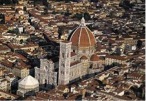
The Basilica di Santa Maria del Fiore (Duomo) was magnificent.  Originally designed by Arnolfo di Cambio, construction began in 1296 AD.  During the next 140 years it took to complete the basic structure of the cathedral, many designers and architects added their inputs to the basic design.  When completed and consecrated, in 1436, the cathedral still had no dome.  Because of the many opinions at the time about the best dome design, it would be another 10 years before designer Filippo Brunelleschi won the design competition and began construction of the dome.  The conical roof was crowned with a gilt copper ball and cross, containing holy relics, by Verricchio in 1469.  The decorations of the drum gallery by Baccio d’Agnolo were never finished after being disapproved by none other than Michelangelo.

4


As can be seen in the picture above, across the piazza from the Duomo was the Baptistery of St. John, one of the oldest buildings in Florence, thought to have been built between 1059 & 1128 AD.  The Baptistery is renowned for its three sets of artistically important bronze doors with relief sculptures. The south doors were done by Andrea Pisano, the north and east doors by Lorenzo Ghiberti.  The east pair of doors were dubbed by Michelangelo as “The Gates of Paradise.”

5

The bronze-casting and gilding on the main entry doors was done by the Venetian Leonardo d’Avanzano, widely recognized as one of the best bronze smiths in Europe. It took him six years, with the doors being completed in 1336.  These proto-Renaissance doors consist of 28 quatrefoil panels, with the twenty top panels depicting scenes from the life of St. John the Baptist.  The eight lower panels depict the eight virtues of Hope, faith, charity, humility, fortitude, temperance, Justice and prudence.

6


—–To Be Continued—–

Our Trip to Italy-Part 5

3 Apr

A Slice of Life

Bill Lites

Bill

Wednesday DiVoran woke up with a bad cold, so she stayed at the apartment to rest while I checked out the bus and train routes into Venice from Mogliano Veneto.  I lucked out and met an Italian student on the bus who spoke enough English to help me with the transfer from the bus to the right train to get me into the Venice train station, and then which train and bus to catch to get back to the Mogliano Veneto station.

1

I had a snack at a small caffe on the Grand Canal and then checked out some of the smaller shops, staying close to the canal, as it is easy to get lost in the tangle of narrow streets and waterways in Venice.  I bought DiVoran a small glass aquarium in hopes that it would cheer her up some.  The trip back to the apartment was uneventful, and we ate roast pig leftovers, with artichokes and fresh Italian bread that evening at the apartment.

2

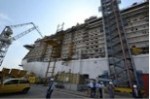
On Thursday, Divoran was still not feeling up to par, so she stayed at the apartment again, and I went to work with Marcia so I could see where she worked and to get a tour of the new Disney cruise ship “Wonder” in its final stages of completion.  The Wonder was built at the celebrated Fincantieri shipyards, displaces 83,000 tons, is 964 feet long and 106 feet wide, and features 11 massive decks which can accommodate 2700 passengers along with 960 cast and crew members.  I’m always amazed at how these giant ships are put together one piece at a time.

3

Then at 4:00 in the afternoon, Marcia took me to the dentist.  The morning before, at breakfast, I broke one of my top front crowns in half, and it looked terrible, and had sharp edges.  Just by chance we had met the lady, Marcia’s dentist friend, at the pig roast a few nights before, and now she had made arrangements for me to get my crown repaired.  Some people might like to call this a coincidence, but think it’s just another example of how God is watching over us, were ever we find ourselves in this world.

Well, Marcia got lost looking for the dentist office, but the dentist stayed open to wait for us.  She did a great repair job on my crown, and then wouldn’t take any pay for the work, no matter how hard I tried.  Just try to find that kind of hospitality anywhere in the U.S.

Friday, DiVoran and I tested my bus/train memory to get into Venice for some shopping, a quick lunch, and then rode the train back to Mogliano Veneto.  That wore DiVoran out, so that night, I went with Marcia, Stephano, Roberta and five Disney cast members to the Di Marcone Ristorante (a special family owned restaurant) for a grilled chicken dinner.  They are only open Friday, Saturday and Sunday, and only cater to large groups.  You have to reserve your table and they expect you to stay the entire evening.  The food and the company were great, but we were there from 8:00 PM until after 12:00 Midnight

4

The next day we drove with Marcia and Erika to Verona, to see the sights of that famous city, where it is alleged the balcony is, on which Juliet stood when Romeo wooed her from the courtyard below, in Shakespere’s famous play of the early 1500’s.  For a few Lira, lovers can write their names on the wall under that famous balcony, and of course we did.

5

One of the most interesting things we saw in Verona was all the trash dumpsters on the streets were painted by the local school children and are very bright and cheery.  It really brightened up the streets and some of them even made us laugh.

6

—–To Be Continued—–


Our Cruise to Mexico-Part 4

31 Mar

SUNDAY MEMORIES

 Judy Wills

Judy

Our last port of call was Key West.  Fred had been there on one of his Air Force business trips, but it was new to me.  I knew there were a lot of bars there, and that was of no interest to me.  But I also knew there was a lot of history there, and was eager to see the sights. We docked at a good time, but for some reason, they wouldn’t let us off the ship for two hours!  There were people in boats below us yelling for us to “come on down!”  And we wished we could.

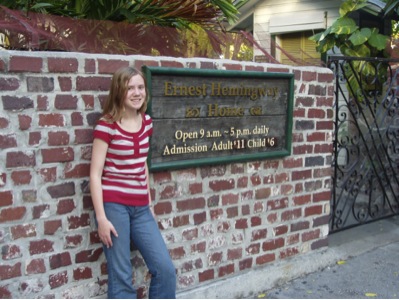
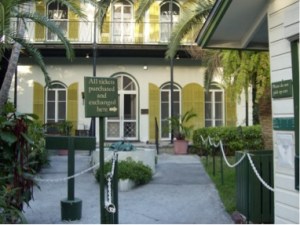
And so, when we finally were able to disembark, everything BUT the bars was closed!  We had no opportunity to see Hemingway’s house,

 1


2

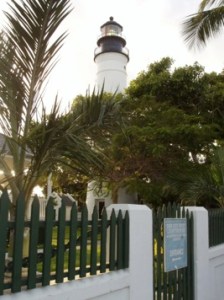
or the lighthouse and keeper’s house,


3


4


or the Key West Museum of Art and History

5

– or just about anything else.  We were quite disappointed.  But it was still daylight enough to see the outsides of the buildings and bronze plaques annotating the sites.

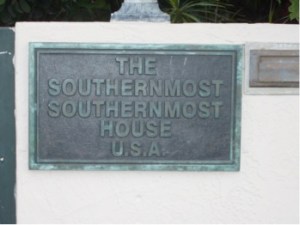
We were able to see the southern most house in the U.S.,


6a


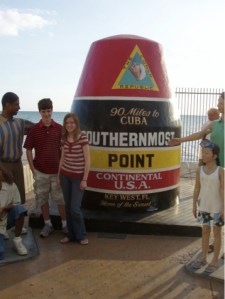
and the southern most point in the continental U.S.,


7and other things.  We saw the Mile Marker 0 (Zero) sign for U.S. 1.  That was important to Fred and me, since we had seen the other end of it when we lived in northern Maine.


8


There was a “street party” going on that lasted past the sundown, which was fun and interesting.  We wandered our way through that, and around some shops, then watched the sun sink slowly behind the horizon.  Our last glimpse was of a tall ship, which was really pretty against the setting sun.


9

Back to the ship and head for Charleston and home.

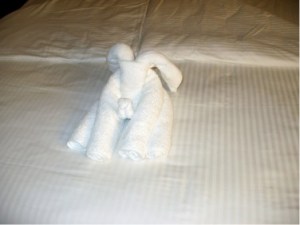
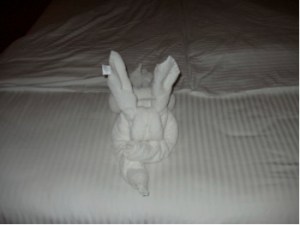
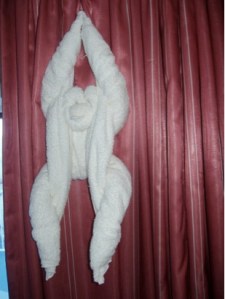
We had always been delighted and amused while on board cruises, to find the “towel animals” that the crew put together – and on our bed each night.  Most were fairly recognizable – some required some imagination.  But it was fun to see what animal was going to greet us as we returned to our stateroom each evening.  What do you think?

10


11


12


13


Our Trip to Italy-Part 4

28 Mar

A Slice of Life
Bill Lites

Bill

 We had a wonderful lunch experience at the Caffé Pedrocchi.  DiVoran had “Toast” which was a grilled cheese and ham sandwich and hot chocolate with whipped cream on top, while Marcia, Erika and I had pizza, hot tea and coffee.  It was all Yummy!  After lunch, we checked out the many shops around the Prato della valle where Erika bought a copy of Taming of the Shrew in English and DiVoran bought some Italian puzzles for Billy and Renie.

1

We discovered that the famous University of Padua was built around 1190 AD, and had the first operating theater in history.   I’m sure it was very primitive and unsanitary with all the doctors and spectators watching and asking questions as the doctor tried to operate

2

And, it is said that Padua was the setting for Shakespeare famous play “The Taming of the Shrew” which it is believed he wrote sometime between 1590 and 1594.  We strolled around the beautiful Prato della Vallethe central square, which is lined with 78 statues of famous Italian citizens from over the centuries.

1a

That evening, we went to a pig roast hosted by Marcia’s friends Stephano and Roberta, at their horse ranch.  The occasion was a surprise birthday party for David, one of Marcia’s co-workers.  The party was held in a large dining hall above the tack room, where their family and friends met every Sunday for their meals.  The matriarch, Maria, had done all the cooking and had it laid out with the whole small pig as the center piece.  The food was wonderful and was served with five different types of wine and two different desserts, plus Grapa.

4

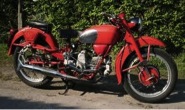
I met Roberta’s 67-year-old uncle Lorenzo who, after he found out I was a motorcycle rider, took me down to the garage and showed me his 1952 single cylinder 500cc Moto Guzzi motorcycle that was in mint condition.  He told me that he and about 20 of his friends go riding every weekend, weather permitting.  They all ride vintage Moto Guzzi motorcycles of one model or another, and love them.

5

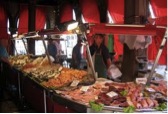
On Monday, DiVoran rested while I walked into Mogliano Veneto to the farmer’s market and bought fresh bread and artichokes.  The farmers market had every vegetable you could imagine, and the fresh fish stalls had every kind of fish and shellfish including lots of squid and eels (live and dead).

6

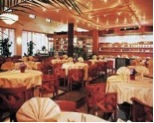
That evening we had a 5-course dinner with five of Marcia’s cast members  at the Hotel Vicenza in Mestre.  This time there were only 3 kinds of wine and 2 kinds of dessert plus Sconti.  We found out that the Italians really enjoy their food and eat very slowly-this meal lasted from 7:00 to 11:00 PM.

7

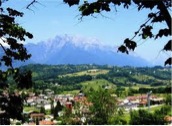
On Tuesday, Marcia took the day off and we drove to the little mountain town of Asolo, at the foot of the Italian Alps.  We walked up and down the streets of the town checking out the little shops.

8

The Hotel Villa Cipriani was the most beautifully decorated and picturesque place I have ever seen.  We had lunch at a very nice little Ristorante there in Aslol, and then went to Treviso to see some of the sights of this beautiful walled city.  Marcia, Erika and DiVoran cooked their version of an Italian dinner that evening and we ate in the apartment.

9

—–To Be Continued—–