Tag Archives: Travel

Our Trip to Maui~Part 6

26 Oct

SUNDAY MEMORIES

 Judy Wills
 JUDY


Our next adventure took us on “The Road to Hana.”  Never heard of it?  Neither had we until this trip.  I guess it’s fairly famous in Maui terms.  We were up early – on the road by 7:00 a.m.  The “road” is only 52 miles from Kahului to Hana – but it takes four hours to drive it – each way!!  It has 59 one-lane bridges to go over.  So it was to be an all-day trip for us.  As one advertisement told us – “On the Hana Highway – The Journey is the Adventure.”  And so it was.2

 Hana itself was on the complete opposite side of Maui from Napili, where we were staying, and there is no through-way to get there.  Of course, the Haleakala Crater is right across the pathway, so that explains the round-about way we had to drive.

The road is almost completely filled with hairpin or serpentine curves.  And I don’t mean just those little squiggly curves – this road sign is VERY descriptive!
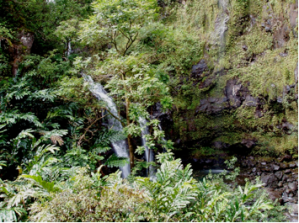
3In any case, we thoroughly enjoyed the ride, stopping along the way to see some gorgeous scenery.  Waterfalls everywhere.

We saw sugar cane fields in abundance.  A note from the historical side – “Before WW2, Hana was a busy sugar port.  After the war, cane fields gave way to pasture for beef cattle, and the town developed into a trade center for surrounding ranches.”  Interesting.Miles and miles of eucalyptus trees – the fragrance was incredible!  And we saw a rooster walking down the middle of the road, just daring us to hit it!  We didn’t.

On the way up, we stopped at the Wai’anapanapa State Park and Cave.  This area completely fascinated me – the sand is BLACK!4
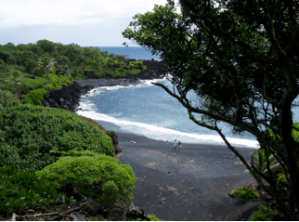
It’s actually the small Honokalani Black Sand Beach and is composed of small, smooth lava pebbles.  The volcanic rock must be good soil, as the area is quite lush with greenery.  One of the most fascinating sights to me was the “arch” – the volcanic rock worn away by the ocean, leaving the arch.

5

I’m assuming that some day it will be worn enough to collapse.   And there is a legend about the caves, but too lengthy to share here.

Again, since we are so directionally challenged, we missed the town of Hana!  However, we were headed to a restaurant that was recommended to us by the AAA travel book and other people.  It was Mama’s Fish House in Kuau Cove.       The food was excellent, but the advertised low price was not!  It was one of the most expensive meals we had while on Maui!  So be warned!


We finally made it home for a quiet evening together.  It was a long and exhausting day – for the driver and the riders.  But we enjoyed everything we saw!

~~~~~More to come~~~~~

My Southwest Adventure Part~1

23 Oct

A Slice of Life

Bill Lites

Bill

The main reason for this trip was to attend the CAF AirPower Expo in Addison, Texas, where “FIFI”, the only flying B-29 in the world and her CAF 1companion B-24, “Diamond Lil”, were to be featured, along with a varity of other WWII Warbirds.  I had seen static B-24 and B-29 displays at museums, but this would be a special treat to see these famous WWII Warbirds fly.  Then after that experience, I planned to complete an 11-day, 2660-mile circuit of aviation museums and other attractions in Central/West Texas and New Mexico.
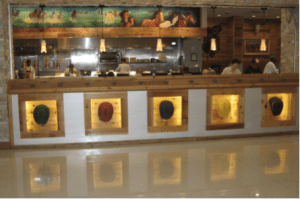
I knew I was headed for Texas, because on the first leg of my flight to Austin, Texas I sat next to an older couple who were dressed in western togs.  The man was holding his 10-gallon hat in his lap the whole trip, because he couldn’t wear it and lean back in his seat.  I didn’t pay much attention to that until we got ready to disembark in Austin, at which time 2he and his wife kept taking things out of his hat; like her watch and hair comb, and his glasses and billfold.  Now I knew cowboys used their hats on the trail, to give their horses a drink of water, but I never thought about how convenient those big hats would be to carry things in!  Then I arrived at the Dallas airport, many of the people were dressed in their western clothes and boots, and I saw this 10-gallon hat display used as a window decoration for a restaurant.  The next thing I noticed, after obtaining my rental car was the Geico billboard sign, with the Gecko wearing a 10-gallon hat.  Yep, I was in Texas for sure!

The next day, at the CAF AirPower Expo, as advertised, “FIFI” and “Diamond Lil” thrilled the crowd and gave us all a sense of being a part of the past, that few people of the modern generation can appreciate.  The many other WWII Warbirds participating in the Expo made for a special day for me to remember.  Being trained as an Airframe & Engine mechanic in college, I still love the sights, sounds and smells of the round-engine propeller airplanes from the 1930s-1950s era.

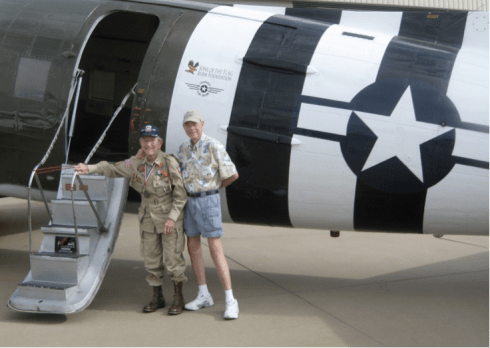
One of the most memorable things for me at the Expo was meeting Bob Searden, who was part of the 507th Airborne Infantry Regiment, parachuting into Normandy in the early hours of D-Day.  Bob was all decked out in his jump uniform, metals, and even a pair of jump boots.  I was privileged to have my picture taken with Bob, who I consider a real WWII hero.  Check out Bob’s memoir To D-Day and Backwhich chronicles his experiences on D-Day and his subsequent capture and life as a POW.

5 


——To Be Continued——


Our Trip to Maui~Part 4

13 Oct

SUNDAY MEMORIES

 Judy Wills


 After a good night’s rest, we were ready to start our Hawaiian adventures! First off, we went to the Maui Ocean Center – a really neat aquarium and sealife center. We enjoyed everything about it.  Especially the to-life-sized bronze tortoise – with eggs! – near the entrance to the center.

The center contained all the things one might expect in such a facility – a living reef, a surge pool, a turtle lagoon, a touch pool, sharks, whales, and how the Hawaiian’s related to all of it.  Most fascinating.  We spent several hours there.

3Next, we went into Lahaina proper to see the city and all it holds.  One of the most interesting sights is a huge banyan tree.  It was planted in 1873, and has grown so that it’s limbs cover the entire city center.  Many of the limbs need to have supports so they don’t drag the ground.  It is over 60′ high, and covers more than 2/3 of an acre.  It was planted to mark 50 years of Protestant missionary work in Lahaina.

Next we saw the Baldwin Home.  It was built in 1834 as the home for Dwight Baldwin, Protestant medical missionary to Lahaina.  The house served as a medical office, and the general center for missionary activity from mid-1830’s to 1868.

We saw the ruins of the brick palace of King Kamehameha 1.  The footprint seemed really tiny, but the accompanying legend shows it to be a two-storied thatched building.  So I guess important guests were more impressed than we were.  It was built near 1800, one of the first western buildings on the island, and the bricks were locally made. We saw ruins of the old fort.

We saw the Ko’a Fisherman’s Shrine along the harbor, as it faced Molokai.

We went into Lahaina proper and to the waterfront.  A cruise ship was in port that day, and we watched as the ferry brought tourists from the ship to Lahaina, as the port isn’t deep enough for the ship to anchor right at the harbor.

As we walked along Front Street, we saw some young men tossing literally dozens of Mahi-Mahi into the back of a pick-up truck.  Amazing.

7

A good day in Maui.  This was such fun for us.  Something we shall never forget.

~~~~~More to come~~~~~

You’re In The Navy Now Part~11

9 Oct

 A Slice of Life

Bill Lites

Navy


On a guided tour of the island, we stopped for lunch at a beautiful restaurant located at the top of one of the high hills overlooking Victoria Harbor, where we could see Kowloon, Mainland China in the distance.1  That sight gave me a very uncomfortable feeling at the time, knowing I was eating lunch that close to Communist China.  Another part of the tour was to the amazing Tiger Balm Gardens.  The gardens consist of acres of Chinese figures cut into a hillside, and painted some of the most vivid colors you can imagine.  Overall, the trip to Hong Kong was really great, and a one-of-a-lifetime experience. I would like to go back some day to see how it has changed over the years, as modern pictures show a very modern city compared to what I remember.
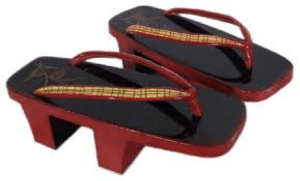
A few months later, Hector’s six-month tour of duty in Sasebo was extended, and the ship made another quick trip, this time to Nagasaki, 2Japan.  I can’t remember just what the occasion was for our visit, but the day after we got there the ship hosted an “Open House” for the Japanese people.  We had the ship roped off so the visitors would walk in a line, in one direction, through only certain areas.  We had a solid stream of people, walking through the ship all day long, and I didn’t notice until it was all over, but all those wooden shoes the Japanese women wear had chipped the paint right off the decks, everywhere the tour went on the ship.

Our stay in Nagasaki was short, however, one of the most interesting 3places I visited while there, was the “Ground Zero Museum.”  The museum houses many graphic artifacts from the ruins of the city, and photographs of what was left of the city after the Atomic Bomb (Fat Man) was exploded 1540 feet above the city on August 9, 1945.

The devastation was total, and this was another time, when being in that spot, gave me a very uneasy feeling.  Think about it.  Here I was, standing at “Ground Zero” only 12 years after that history changing event.  Was all the radiation gone?  How long did it take for it to be safe for people to tread on this uniquely damaged soil?  Was I being zapped as I stood there?  Those were some of the thoughts that were running through my mind, as I remembered what had happened at this very spot on the day the world came to an end for roughly 70,000 people.

4


                                                            —–To Be Continued—–

You’re In The Navy Now~Part 6

4 Sep

A Slice of Life

Bill Lites

Navy

Our first stop was in Santos, Brazil where, at that time, the people had never seen an American warship in their harbor before.  Because many of our crew would have to return to the east coast after we left the Coral Sea in its west coast shipyard, those crew members had been allowed to take their private cars aboard the ship for their return trip.  It caused quite a 

1stir when the people in Santos saw all those cars on the ship.  No telling what they must have thought we were doing with them, especially since there were no American cars in Santos at that time.  Moreover, because they exported most of their country’s coffee, the coffee they served there was very strong and served in tiny cups.  I had to fill the cup half full with cream in order to drink it, and then, of course, all the locals laughed at me.


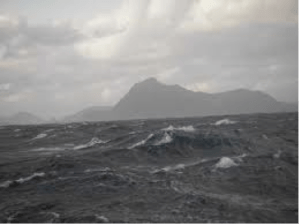
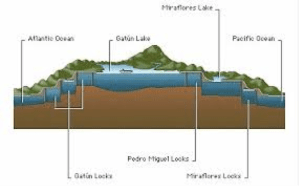
2Because the ship was too wide to pass through the Panama Canal locks, we had to sail completely around the tip of South America.  As we traveled south, we were forced to change back into our winter blues as we neared and rounded Cape Horn.  The winds and waves in that area were constantly pounding the ship, and I was glad to be able to stay inside, out of the gale force winds and the freezing sea spray.

As we headed north, up the western side of South America, our next stop 3was Valparaiso, Chile, where we enjoyed experiencing much of South America’s ancient culture up close.  Nicknamed “The Jewel of the Pacific”, the city of Valparaíso is a vibrant center of Chilean culture.  We didn’t get to stay long there, but much of what we saw was breathtaking.

 4UntitledContinuing north, it was back into our summer whites, as we crossed the Equator again, and stopped at Balboa, Canal Zone in Panama.  It was there that we learned all about the history of the canal, it’s locks, and how they are used to move ships from one ocean  to the other, and how many days and miles of travel we would have saved, not having to go around Cape Horn, if only the Coral Sea had not been too wide to fit through those huge locks.

After leaving Panama, our next stop was at the Alameda Naval Air Station, in San Francisco, where I enjoyed some of the best fried oysters I have ever eaten.  As it turned out, this would not be the last time I was to visit San Francisco with the Navy.  More than a year later I would end my two-year active duty time with the Navy, and be processed back into Naval Reserve status at the Treasure Island Naval Station, there in San Francisco.  Yummm! More delicious fried oysters and other seafood delights

5


                                             —–To Be Continued—–

You’re in the Navy~Part 4

21 Aug

A Slice of Life

Bill Lites

Bill

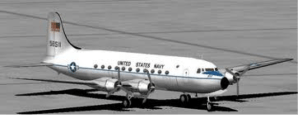
My orders, following my two-weeks leave, had me reporting to Norfolk, VA for assignment to the aircraft carrier USS Coral Sea (CVA-43), which at the time was on patrol in the Mediterranean.  To get to the ship, I was flown from Norfolk, to Cannes, France (On the French Riviera!) with stops or layovers in Gander, Newfoundland, the Azores, and French Morocco, North Africa.1

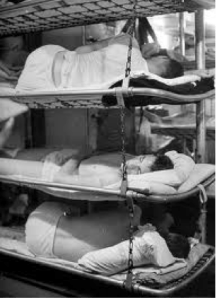
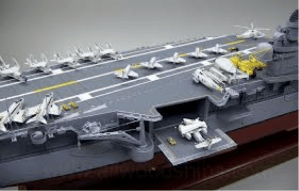
I arrived in Cannes, France on Christmas Eve (Aw, shucks, it was cold in Cannes, and there were no girls on that famous French beach).  When I got my first up close look at the Coral Sea, I couldn’t believe how big it was.  I 2reported aboard and was directed to follow a Seaman to the compartment where I would live for the next six months.  I followed him thru one hatch and down one ladder and I was lost.  That ship was so massive, it took me a good month to find my way from my bunk, to anywhere but my duty station and to the mess deck.  Even though the ship was huge, every compartment had its use, and berthing quarters, for the 3500 enlisted personnel, were very crowded, and consisted of small clothes lockers and fold-down beds stacked four high.

 One of the first things I had to do, after being assigned watch schedules for my work/duty stations, was my turn at KP duty (welcome aboard you newbie).  The enlisted mess deck on the Coral Sea was run by a First Class Machinist Mate who, the rumor had it, had almost blown up one of the main ship’s boilers years before, and for punishment, was restricted from going anywhere on the ship below the mess deck level.  He was a very angry and mean person, and also demanded perfection from everyone working on 3his mess deck.  He was so hated, that he slept in a chain link wire cage, located right there in the corner of the mess deck, to protect himself from harm from the many people he had poured out his wrath upon.  The story goes, that years before, someone had thrown a string of firecrackers into his cage, in the middle of the night, and he almost killed himself trying to get out.  You can just imagine what kind of retribution he had been dishing out, on anyone assigned to his mess deck after that little prank.

After I was released from my tour of 16-hours a day “Mess Deck Hell”, I spent the rest of my tour of duty on the Coral Sea working below decks as an Engineman Specialist, monitoring and servicing the hydraulic equipment used to operate the ship’s deck-edge elevator.  This elevator was one of three elevators on the ship, used to move the air group’s aircraft between the hanger deck storage area, and the flight deck, whenever flight operations were required.

4

—–To Be Continued—–


West Berlin Part~2

18 Aug

SUNDAY MEMORIES

 Judy Wills

JUDY


One of our favorite places to visit in West Berlin was the Charlottenburg Palace.

1It is very like many of the palaces and castles built by German King Ludwig, and part of it was influenced by those structures.  It is built in rococo and baroque style.  It was built in the late 1700’s.  The central area has a large domed area with a gilded nude statue of Fortune as a weather vane.  The grounds are beautifully landscaped, similar to Versailles in France.

3

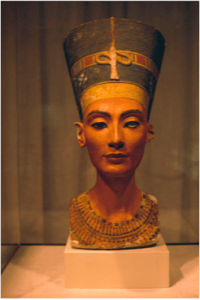
Within the Palace is the Charlottenburg Museum.  One of the most fascinating things in there is the original bust of Egyptian Queen Nefertiti.  We’ve always wondered why the original was in Germany and not England or even Egypt.

In the Tiergarten area of West Berlin (a large public park to the west of the city center) is the Russian Memorial.  It commemorates the 480,000 Russian war dead who died in the Battle of Berlin in April and May of 1945.  Throughout the Cold War, Soviet honor guards from the Soviet occupation zone were sent to stand watch at the memorial.  It is an impressive sight.

5Another impressive sight is the Victory Column, also in the Tiergarten area of Berlin.  It was built from 1864 to 1873 to commemorate the Prussian victory in the Prusso–Danish war in 1864.  The shaft of the monument is made of cannon captured from the enemies. The bronze figure at the top was added later, after further Prussian victories in wars against Austria (1866) and France (1870– 71); so the column marks also the unification of Germany after these victories.  It’s really beautiful.

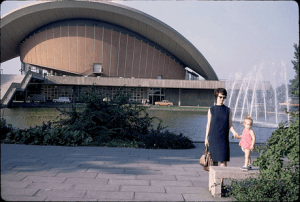
We had heard of the Congress Halle, and walked past it when our oldest daughter 6and I were in West Berlin with Fred, who was on a TDY (Temporary Duty) back in 1969.  It was built by the Americans and given to the Berliners as a symbol of friendship between the two countries.  Because of it’s unique design – an “open” oyster – it is affectionately known as the “pregnant oyster” by the locals.

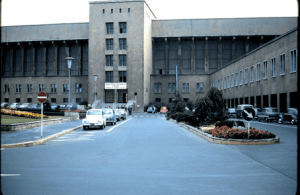
While we were with Fred on that TDY, we were staying in a hotel that was miscpart of  Templehof Airport, where the Berlin Airlift originated.  One day, I wasn’t feeling very well, kind of like I was getting the flu.  When I went down to the restaurant, the German server inquired about my health.  When I explained, he said he had just the thing for me – and he brought me a cup of the most delicious lentil soup I’ve ever had.  Mostly broth – nice and hot.  And then he put together a tray of very hot water with several tea bags and had it sent up to our room.  After all that TLC, I was back to normal by morning.

One of our fondest memories of West Berlin is the English-speaking Baptist church we visited.  There was a large group of English-speaking people in7West Berlin, and they managed to find each other and form a church.  All were welcome – including any Germans who might wish to attend an English-speaking service, even if it was more to increase their knowledge of English, than to worship our Lord.  But along the way, they were sure to be touched by the people around them, as well as the Holy Spirit, and perhaps come to know Christ as their personal Savior.

8

Our tour and trips to West Berlin were some of the most satisfying of our time in Europe.  Certainly something we will never forget.

West Berlin~Part 1

11 Aug

SUNDAY MEMORIES

Judy Wills

JUDY


 We had some amazing experiences during our times in West Germany.  We saw so many wonderful sights while there.  So much history, as well. One of our favorite cities to visit was West Berlin.  At the time we were there, The 1Wall (Der Maur) was still in place.  And, unfortunately, the Brandenberg Gate was in the Russian Zone, or East Berlin.  We were unable to get close to it.I later spoke to a German 2national who said she just couldn’t imagine living in such an “enclosed” place as West Berlin.  I tried to assure her that it didn’t FEEL enclosed.  The American Zone was quite open and free.  I don’t think I was very convincing.  She just had to experience it for herself.

 3As we walked around the city, we came upon a fascinating piece of old Germany – a very old hand-watering pump.  Apparently, anyone who knew about it, could bring their car/wagon/etc. there and get free water to wash whatever they had – as long as they were willing to hand-pump the water.  Not something you see around the U.S.

My Mother had come to Germany to visit us that year (May 1969) and we delighted in taking her places that I know she only dreamed of ever seeing.  We happened to be in West Berlin during the celebration of the 20th anniversary of the Berlin Airlift.    The German people had erected a 4monument to that occasion, and the celebration took place in front of it.  The monument is three-pronged, representing the American, British, and French efforts to keep the free German people from starving and out of Russian/Communist hands.  It was a tremendous success.

Another site that impacted me greatly was in the heart of downtown West Berlin, along the 5Kurfurstendam, affectionately known by the locals as the Kudam, which is the main shopping street in downtown West Berlin.  After the colossal disaster of World War 2, the German people decided to leave a reminder to themselves of the cost of pride and war.  They left standing the bombed-out shell tower of the Kaiser Wilhelm church.  And built right next to it a beautiful and modern new church and church tower.  While the new structure is impressive, it cannot be fully appreciated until one is inside.  The all-glass bricks are a cobalt blue, and with the sun shining through those bricks – well, all I can say is, it’s breath-taking.  And peaceful. And amazing.  And I’ve run out of adjectives already.

6

To be continued………..

My One & Only Ski Trip

19 Jun

A Slice of Life
Bill Lites

Bill

I believe the year was 1978, and one of my job related trips was to, what was then, the Hercules Powder Co. facility in Utah. The purpose of the trip was to coordinate design requirements for the Navy’s Trident submarine missile with the Hercules engineers. As it turned out, scheduling of the trip took place during the winter and I 1 planned to try my luck at skiing while I was there. All the skiers in my office were envious and wanted to share all their skiing experiences with me. Having lived most of my adult life going to college in southern California and working in Florida,
I hadn’t ever done any snow skiing, and appreciated most of the advice. I had no skiing togs and was in need of everything to play the part of a novice ski bum. Then, as luck would have it, I learned one of the other young engineers in our office was an avid skier and was willing to let me borrow his equipment for the trip. He provided me with a hat, goggles, gloves, sweater, a lined ski jacket and ski pants. All I had to come up with was some long johns, a couple pair of heavy wool socks and sun glasses. What a deal that was! He told me I could rent the skis, polls and boots at the ski lodge. So, off I went ready to meet the challenges of the Utah ski slopes.

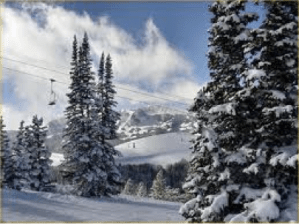
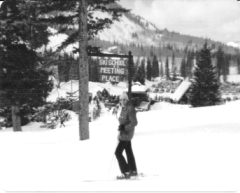
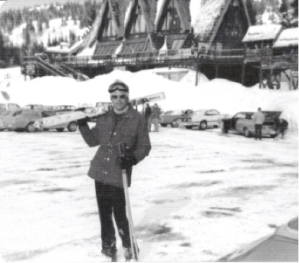
It was recommended that I try the Park City, Utah ski resort, and since I was only going to have time for one day of skiing, that’s where I went. The snow that year in the Park City area was deep and beautiful, and I had no trouble finding the resort. The ski lodge was a picturesque structure set at the bottom of a mountain slope, 2where several ski trails were cut into the tree covered mountainside converged, with ski lift access to each. The ski instructors were very helpful, providing all levels of instruction. They had a beginner’s package, which included skis, polls & boot rental, a morning of basic instruction and a full day lift pass, all for a very reasonable price.

Even though I may have looked the part of a skier, I wasn’t ready for those first three hours of hard work it took 3just to learn how to stay upright on skis. They taught us how to walk sideways up a slope, how to point the front of our skis together to “wedge” slowly down a slope, how to fall and how to get up. And boy did I ever need to know how to do that! Once the morning basic class was over, I was ready for a rest and some lunch somewhere warm.

After lunch, the next four hours were spent riding the lift up the mountain and trying to4 get back down the beginners slope without running into a tree or crashing into someone or falling and breaking something. To this day, I can’t believe I fell down that many times, in that many different ways, and didn’t break something. I have to admit, by the end of the day, even though I was tired, I was enjoying myself and really didn’t want to turn in my skis and leave. But I did, and of course that isn’t the end of the story.

I went back to my motel in town, thawed out in a long hot shower, had a wonderful steak dinner at a local restaurant, then went back to the motel and tried to watch some TV. But I was so tired by then I couldn’t stay awake, and just went to bed early, since I had to catch my flight back to Florida the next day anyway.

The next morning I woke up with two surprises. First of all I could hardly get out of 5bed. I was sore from head to toe. I hurt in places I didn’t even know I had muscles. I finally struggled over to the window and looked outside to find it had snowed 6during the night and the rental car was covered with almost 12 inches

of snow. What a sight that was! Then I began to worry if I would be able to get to the airport in time for my flight.

As it turned out, by the time I had breakfast, packed and checked out of the motel, the roads were clear enough for me to make it to the airport in time to catch my flight and my once in a lifetime ski trip was over. But that didn’t mean the muscle pain was over. Not on your life! It took almost a week for my body to recover from that day on the ski slopes. Even though I have never been on snow skis again my entire life, I wouldn’t exchange that experience for anything. I think the only type of snow skiing I would consider now would be in a nice slow horse-drawn sleigh ride with the love of my life by my side.

7


Springtime in Wisconsin

12 Jun

A Slice of Life

Bill Lites

1

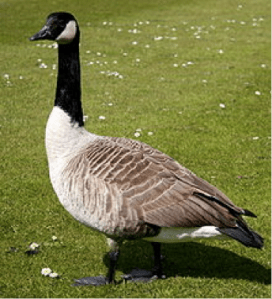
During a recent trip to the Oshkosh AirVenture Museum, and to visit other local Wisconsin museums and airshows, I was amazed to see the huge numbers of Canadian Geese in and around most of the areas, I traveled.

I didn’t pay much attention to this until on one occasion as I traveled down a four-lane city street, and had to stop for a family of geese crossing the road.  There was Mama leading the way with three tiny goslings trailing along behind 2her and Papa bringing up the rear.  What a sight!  All this rush-hour traffic brought to a halt by these tiny creatures.

The next day I went to visit a Railroad Museum in another city.  After viewing the information video in the main building, I started down the walkway to the Engine House, and was struck by the amount of what looked like dog poop on the sidewalk.  I thought, “These people need to tell the dog owners to pick up after their dogs, or at least the museum needs to wash down the sidewalks once i3n a while.”   Being careful where I stepped, I moved onto the grass to get a better view for a camera shot, and noticed that the grass was littered with the same “dog poop.”

Then it dawned on me that this was Canadian Geese droppings.  I should have realized what I was 4seeing sooner, because I had seen fields and ponds covered with Canadian Geese no matter where I had gone on this trip.

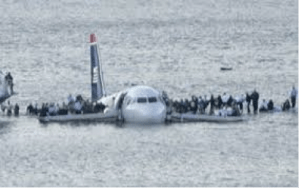
On one evening during this trip, I had dinner with my niece and her husband and I related my goose story to them.  He told me his company had to rig special anti-geese devices over their retention ponds to try to keep the geese from congregating.  In addition, they have contracted with a private company who brought 5their dogs to chase the geese off their property.  The Canadian Goose population has recently increased in many areas to the point that they are now considered a pest and a threat to airline traffic (Ref. US Airways flight 1549).

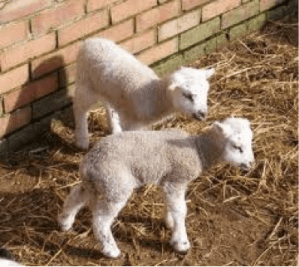
On another day, at the Old World Wisconsin historic site, in one of the sheep pins, I was thrilled to see 6four brand new baby lambs.  The guide told us that two of them had be born the day before and two (twins) had been born just that morning.  They were the cutest little things you could imagine.

I didn’t think much more about it until I was traveling back across the countryside toward the motel and saw a large open field with maybe one hundred sheep grazing and about the same number of small 7baby lambs staying close to their mothers.  What a sight!  I guessed it must truly be the lambing season there in central Wisconsin.

Then on another day, while driving to another museum, I spotted a small herd of Buffalo grazing in a field of yellow dandelions.  And, sure enough, there were a few new-born buffalo in the herd.  Now I thought the West was the only place where people were raising buffalo now a days.  I8 was glad to see even these small herds of them there in Wisconsin.    I guess they will prosper most anywhere they are not being hunted.  Ever had a Buffalo Burger?  I had one years ago and it was great!

I guess you would have to say I got a real close-up and personal view of what it’s like to live in Wisconsin in the Spring.  It was a wonderful experience, and the airplane museums were great too!