Tag Archives: Travel Series

My Western Trip~Part 8

25 Jun

A Slice of Life

Bill Lites
Bill


The next day I headed out to the Rialto Municipal Airport to visit the Warbirds West Museum, but when I got there, I discovered they were out of business. So, I turned around and drove over to Chino, CA for a tour of the Planes of Fame and Yanks Air Museums. I had visited both of these fabulous museums two years ago, and was looking forward to touring them again to see what kind of new aircraft they had added to their collections. As it turned out they both didn’t open until late in the morning the day I was there, and I had several museums in the West Los Angeles area I wanted to visit. bikesSo, I headed west for Inglewood, CA (where I went to college) but ran into heavy traffic before I could get close to my first destination. It was Sunday, and a bicycle marathon (with tens of thousands of bicycles) was being held that day and was traveling down Wilshire Blvd. causing traffic to be backed up for miles on either side of Wilshire. After creeping along for almost an hour, before I found a place where I could get out of that mess, I was tired, frustrated, and decided to call it a “Wasted Day”- giving up on seeing any museums that day and headed back toward the motel.

 The next morning (Monday) I started out for West Los Angeles again, only to run into more heavy morning rush-hour (stop & go) traffic on the freeways. I said, “The heck with this,” and headed south toward Santa Ana. My next stop was at the John Wayne fuddyAirport to visit the Lyon Air Museum. This was a great experience, as all the museum’s aircraft are in flying condition and all their rare vehicles run. I got a special treat when they towed their B-17G, “Fuddy Duddy” out of the hanger and fired up all four engines. There’s nothing I enjoy more than the smell of a large aviation engine starting up. It’s something about the oil and gas mixture that does it for me. And, here I got to experience the smell of “Four” engines starting! What a thrill.

 Next, I tried to find out about the Aeros Lighter Than Air Project I had heard was going on at the Tustin AFB. Worldwide Aeros is planning to build airships that would be about 500 feet long, with a zeppelin-like rigid structure, ultimately designed to carry loads as heavy as 250 tons, at speeds of more than 100 miles an hour. The object is to use a LTA vehicle to move heavy weights over difficult terrain, without spending a lot of money developing a supporting infrastructure. The idea sounds good, but I keep remembering what happened to the USS Macon and USS Akron back in the 1930s. Come to find out, the only scaled-down prototype vehicle, the Aeroscraft Large Cargo Vehicle (Dragon Dream), was damaged just the month before, when part of the 1942 hanger roof collapsed and fell on it. There was no word as to when or if the project would continue.

blimp


While I was in Tustin, I visited The Marconi Automotive Museum.   This impressive collection features automobiles from around the world, including some very rare Ferrari and Maserati race cars.

Heading south again, I stopped for lunch at Ruby’s Aqua Diner, situated on beautiful North Lake in Irvine, CA. I had one of the best BLT sandwiches I’d ever eaten, and the 50’s music was great. Then it was on south to Vista, CA where I had a nice visit with DiVoran’s brother, David, and his wife Susan. That evening we continued our visiting and enjoyed some mouth-watering Mexican food at Cocina del Charro Mexican Restaurant in San Marcos, CA.

restaurant


                                                            —–To Be Continued—–


My Western Trip Part~7

18 Jun

A Slice of Life

Bill Lites

Bill

Bright and early the next morning I drove down to Port Hueneme, CA to visit the U.S. 1Navy Seabee Museum. This museum preserves and displays historic material relating to the history of the Naval Construction Force, better known as the Seabees, and the U.S. Navy Civil Engineer Corps. During World War II, approximately 250,000 Seabees passed through the Naval Construction Battalion Center (NCBC) at Port Hueneme, on their way to or from Europe and Pacific Theaters.  Among many other tasks they were asked to perform, over the course of the war, the U. S. Naval Combat Demolition Units (NCDU) working closely with the Army Combat Demolition Units (ACDU) were instrumental in removing much of the hazardous materials and obstacles from the beaches in advance of the June 6, 1944 Normandy Invasion.
On my way to Los Angeles to visit several museums in that area, I stopped at the Whiteman Airport in Pacoima, CA to link up with Chuck, who provides mockup modern jet aircraft for the movie and TV industry. My museum guide indicated Producers Air Force had several aircraft, so I was expecting real aircraft. But interestingly, what Chuck does is provide mostly mockup cockpits of various fighter jets for close-up scenes with the actors. His aircraft are full scale mockups, usually from the nose of the aircraft to just behind the cockpit, with fully operating canopies and all the cockpit instruments and controls, including real ejection seats. It was a real education talking to Chuck and hearing all about how he provides the industry with what they need.2

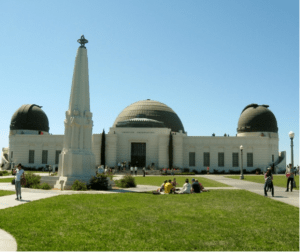
 Chuck had to go to work, so I proceeded on into Los Angeles to visit the Griffith Observatory. DiVoran and I had visited Griffith Park and the Observatory back in the early 1960s when we lived there, but it was a shock to see how many people were there3 that day. Cars were backed up halfway down the mountain waiting for a chance to find a parking space. I went into the lobby and took a look at the fascinating Foucault Pendulum, which was introduced in 1851 by French physicist León Foucault, as the first simple proof of the rotation of the Earth in an easy-to-see experiment. I walked around the outer domes and got a view of the smoggy L.A. basin and the Hollywood Hills.
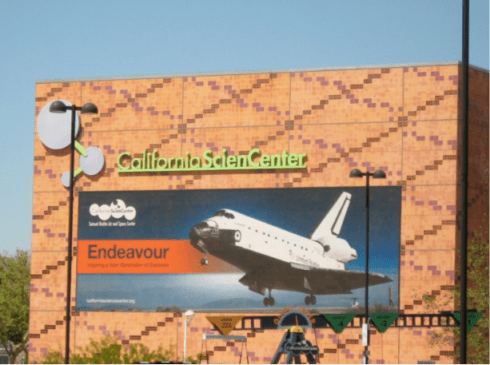
That was about all of the crowds I could handle, so I headed down town to Exposition Park to check out the California Science Center. The Science Center was a wonderful experience, as there were many displays that interested me. At the top of the list, was the Space Shuttle Endeavour . Aircraft displays, inside and outside, included a 1929 Velie Monocoupe, a Lockheed F-104 Starfighter, a replica of the Bell X-1 that Chuck Yeager broke the sound barrier in, a Northrop F-20 Tigershark, a Northrop T-38 Talon, and a beautiful Lockheed A-12 Blackbird two-seat trainer (60-6927), stripped of its black finish, and gleaming silver in the sun. Manned Spacecraft included Mercury, Gemini and Apollo Space Capsules, Pioneer 10, Mariner IV and Venus probes and a prototype of the Viking Lander.

4


—–To Be Continued—–


My Western Trip~Part 6

11 Jun

 A Slice of Life

By Bill Lites

Bill Small Red Plane


Next, it was over to Simi Valley, CA for a tour of the Ronald Reagan Presidential Library & Museum. I was impressed with the 24 different galleries, which traced Reagan’s life from his early days as local hero, college standout, glamorous Hollywood actor, then as governor of California, and ultimately to the presidency of the United States. There was even a full-sized replica of the Oval Office in one of the galleries. But, of course the thing that impressed me the most was Air Force One (S/N 27000), also known as “The Flying Whitehouse” and the Marine One helicopter (S/N 150611), both of which Reagan used while President. I asked one of the Docents how they got the plane in the building, and she said, “They built three sides of the new building, took the wings and tail assembly off the plane, so they could bring it in through the fourth opening, and re-assembled the airplane inside. Then they finished the fourth all glass wall. For the full story of how the U.S. President’s airplane got its name, Google “Air Force One.” It’s a fascinating story I think you will enjoy knowing.

1


Before leaving Simi Valley, I stopped at the Santa Susana Railroad Depot & Museum to get the history of an early California railroad depot and its operations. This was one of the most unusual and interesting small museums. The depot is an example of what the Southern Pacific Railroad called their Standard No. 22 Depot in 1903. The depot has been meticulously restored with many original furnishings and working equipment, that the Docent uses to explain to visitors how the depots operated in the early 20th century. Today, on what was the old Southern Pacific rails, Amtrak’s Coast Starlight trains head up and down the coast, and the daily Surfliner and Metrolink trains ferry commuters in and out of Los Angeles.

2


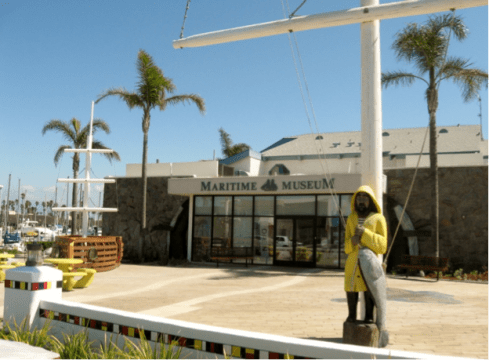
Now, because of a time constraint, I headed west to Oxnard, CA where I quickly visited the small Mullin Automotive and Murphy Auto Museums. I also visited the Channel Island Maritime Museum, there in Oxnard, where I learned something very interesting about some of the early 17th century Dutch Maritime painters. It seems that some of them painted in such detail that (with a very strong magnifying glass) one can see that each of the distant subjects in the painting has been given details such as a pipe in the mouth, some with a mustache and all with a nose, ears and even eyebrows. The kind of details you might expect in a close-up portrait painting, but not in a battle scene at sea. And, then there were the fabulous model ships, many of them crafted by the Curator/Docent that took me on a tour of the museum. The model ship detail was outstanding! What a great tour.

3


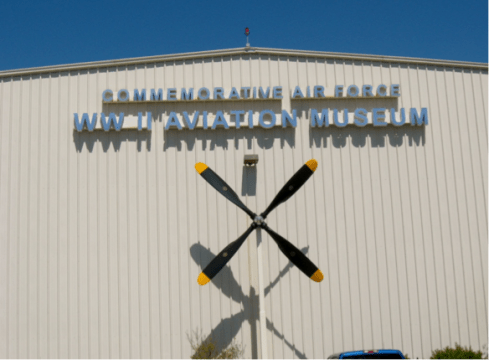
Then, to round out the day, I visited the CAF WWII Aviation Museum in Camarillo, CA. This museum is very similar in size and display aircraft to the Valiant Air Command Warbird Museum here in Titusville, FL where I volunteer as a tour guide one day each week. They had an AT-6 and a two-place P-51 Mustang, both actively giving rides while I was there, and I got some really good close-up photos of both as they fired up their engines, taxied out with their passengers and took off. I always get a thrill when I hear the sound of a Rolls-Royce Merlin engine at full throttle passing overhead.

4


—–To Be Continued—–

My Western Trip~Part 5

4 Jun

A Slice of Life

Bill Lites

Bill Small Red Plane

With a pleasantly full tummy, I headed west to the Mojave Air & Spaceport to check out the famous Scaled Composites operation that Burt Rutan had founded. I was disappointed to discover that Northrop Grumman now owned the company and the open access to the facility I had once experienced when visiting Scaled Composites back in the early 1980s was no longer available. Since the Spaceport is now basically closed to visitors, I took a few pictures of some of the aircraft that have made the Spaceport famous in recent years, and are now displayed in the Rotary Rocket Roton. Then I headed for Palmdale, CA to check out the Lockheed Skunk Works.

                                   1


I had hoped for a tour of the Lockheed Martin Plant 42 where they are building the new F-35 Joint Strike Fighter and the Skunk Works, where it is rumored they are now developing a new unmanned spy plane, dubbed the SR-72, or “Son of Blackbird.”   But, here again I was to be disappointed, as the whole area was fenced off with no visitor access. So, I drove on over to visit the Joe Davis Air Park and the Blackbird Park (Production Flight Test Installation). This provided me with great up close and personal viewing of some of America’s most popular and fastest airplanes ever made.

2


I started the next day with a tour of the Edward AFB and Museum. This was a three hour closely monitored bus tour of the museum and some of the base facilities. This was another case of having experienced open access visiting of most of the Edwards AFB facilities while assigned to the Space Shuttle Recovery Team in the mid-1980s. It seems that access to most of the U.S air bases around the country have been closed or largely restricted to the public since 9-11. As an example, the Edwards tour is only given two days each month, and then a person must sign up 30 days in advance to provide time for security background checks. I did however learn one very interesting thing on this tour. How the “Muroc Air Force Test Center” originally got its name. Can you guess? Google “Edwards AFB & Vicinity” and scroll down to “1910” and see what you get. I would never have guessed. I found it very informative. Things sure were a lot simpler back in those days.   As part of the Edwards AFB Museum tour, I visited the Century Circle display, which traces just one time period of the Air Force Flight Test Center’s history, which (Muroc) Edwards is famous for.

                                               3

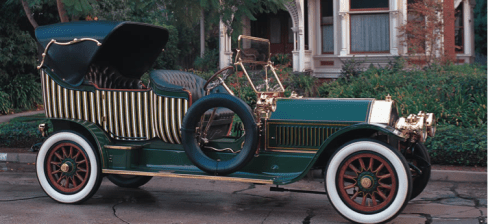
After leaving Edwards, my next stop was in Sylmar, CA to visit the Nethercutt Collection. This was one of the best automobile collections I have ever seen. J. B. Nethercutt was the co-founder of the Merle Norman Cosmetics Company and he collected more than 30 classic luxury automobiles as part of a 200-car collection that is on a rotating display. Each of the cars has been carefully restored, runs like new and is licensed for when they are taken to car shows. In addition, the collection includes an amazing collection of automobile mascots, antique furniture, clocks, watches, and one of the world’s finest collections of mechanical musical instruments, which is displayed in the museum’s music room.

4


—–To Be Continued—–


My Western Trip~Part 4

28 May

A Slice of Life

Bill Lites

Bill Lites

After walking the streets and meeting many of the 1880s town characters at the old west “Calico Ghost Town” it was just a few miles down I-15 to Peggy Sue’s Nifty 50s Diner in Yermo, CA. Peggy Sue’s Diner really brought back a lot of the 1950s memories of the good times we had as teenagers at our local diners in Albuquerque, NM. To compliment the cozy atmosphere at Peggy Sue’s Diner, you can “Eat to the Beat” with good homemade food and great 50’s music. Then after a burger, fries and a milkshake, you can explore the extensive collection of movie and TV memorabilia that Peggy Sue has on display.

1


The next stop was Barstow, CA where I visited the Route 66 “Mother Road” Museum and the American Railroad Museum, both located in the original 1911 Casa del Desierto (The Harvey House) Railroad Depot. The historic structure is an elegant presence in the Mojave Desert and is still used and often referred to as the Barstow Amtrak Station. This famous depot was, for many years, what unofficially became known as the “Crossroads for Travelers,” where the Old Mormon Tail and the Santa Fe Trail came together. Early 1900s travelers, following winding wagon trails across this area turned it into what was later called The National Old Trails Road. Then in 1926, when the Federal Government instituted a new highway numbering system, The National Old Trails Road became U.S. Highway 66, and the rest is history. DiVoran and I became well acquainted with the portion of Route 66 between Las Angeles and Albuquerque in the first several years after we were married, but that’s another story for another blog.

2


The next day I had planned to visit the U.S. Naval Armament Museum at the China Lake Naval Air Station just outside Ridgecrest, CA. But, when I signed in for the security check, I was told that their computers had been down for several hours, and they didn’t expect them to be back on-line for another 3-4 hours. There were several people ahead of me, to be processed, and I didn’t have time to wait around in the “hope” that their computers would be restored anytime soon. So, I headed on over to Boron, CA to visit the Saxon Air Museum and the 20 Mule Team Museum. Borax mining and unusual desert rock formations are the big interests in this area. I had made several Space Shuttle recovery trips to Edwards AFB when I worked for Lockheed, and had been introduced to Domingo’s Mexican Food Restaurant there in Boron. So, after checking out the museums and the rock shops, I treated myself to a great lunch at Domingo’s. Nothing had changed since last I had eaten there, including the model train that runs around overhead, inside the dining room, while you are enjoying your meal.

3


                        —–To Be Continued—–


My Western Trip~Part 3

21 May

A Slice of Life

Bill Lites

3


On the way back to Las Vegas, it was suggested that I take the scenic route through the Valley of Fire State Park. This area has some of the most unusual desert rock formations I’ve seen. It made for a beautiful drive, as the sun was getting low, making the red hue of the rock formations glow like they were on fire. Maybe that’s where they came up with the name for the state park. You think?

1


The next morning I started the day off with California Eggs Benedict at Marie Calendar’s (yumm), on my way to meet Bob at Nellis AFB. Bob had agreed to escort me on a tour of the Thunderbirds Museum, located there on Nellis. What a thrill it was to visit the home base of that great demonstration team, and view the planes and all the memorabilia tracing the team’s history over the years they have been in operation.

2


Then I headed West on I-15 toward Barstow, CA. My first stop was at Goodsprings, NV to check out the 1913 era Pioneer Saloon of “Things Are Tough All Over” movie fame, staring Cheech & Chang.   The saloon has been operating continuously since opening in 1913, and the building and many of the saloon furnishings are original (including the pot-bellied U.S. Army Cannon stove), giving it a rustic and well used appearance. Part of the old west history of the Pioneer Saloon includes five bullet holes in one wall, and a hammered copper picture next to the bullet holes tells the tale of how they got there. The Saloon’s original bar was built in the 1860s by the Brunswick Company of Brunswick, Maine. The story of the arduous trip that brought that bar to Goodsprings, and the Pioneer Saloon, is typical of the transportation routes of the early 1900s. Made of fine quality Cherry wood, even after all these years, it shows no real signs of wear and still maintains its high gloss.

3


As I continued West on I-15, I experienced a gentle climb until just after I crossed the border into California, when I started noticing what appeared to be a rainstorm heading my way. Just as I entered the Clark Mountain Pass (elev. 4726), I ran into SNOW flurries. I had just stopped for gas in Jean, NV and it hadn’t seemed that cold there. I just couldn’t believe I was driving through SNOW in the middle of a bright sunny day. Of course, the flurries didn’t last long, but it was still a thrill just to have driven through them. Down the road a ways, I stopped in Yermo, CA to visit the historic Old West Calico Ghost Town.   Located just 3 miles east of Barstow, Calico was founded in 1881 as a silver mining town, and today has been converted into a county park named Calico Ghost Town.  Silver mining and the population of Calico, supported by the Zenda Mining Company, peaked in 1887 and has steadily declined ever since. Walter Knott (of Knott’s Berry Farm) purchased Calico in the 1950s, and architecturally restored the town’s builldings to look as they did in the 1880s. 


4                       


—–To Be Continued—–


My Western Trip~Part 2

14 May

A Slice of Life

Bill Lites

Bill


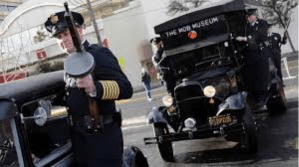
After I got checked in at the hotel, I walked a couple of blocks over to the Mob Museum which is set up as a history of the “Mafia” and organized crime during the early days in the U.S. and especially in Las Vegas. The Museum is housed in the former Las Vegas Post Office and Courthouse, built in 1933, and has restored the second floor courtroom where many of the Kefauver Committee hearings to expose organized crime were held in 1950 and 1951. They even have a portion of the garage wall from the 1929 St. Valentine’s Day massacre that was relocated from its original location in Chicago’s North Side.

1


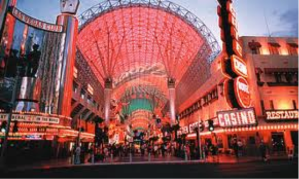
Next I strolled a few blocks to the “Fremont Street Experience” which is a 5-block covered pedestrian mall known for years as “Glitter Gulch.”  It reminded me of the Galleria Vittorio Emanuele II shopping mall in Milan, Italy, except for all the noise and flashing lights. It has open-air bars and shops, street barkers, male and female photo shops, all brightly lit with flashing colored lights and lots of loud music. The place was mobbed with people.

2

The next day I drove out toward Bolder City and took the very interesting Hoover Dam tour. The dam was built during the Great Depression, with what today we would consider fairly primitive equipment. Construction began in 1931, and at times, with as many as 5000 workers laboring 24 hours a day, for almost 5 years, they completed the project, and productive dam operations began in 1936. Just think about that! That massive structure was completed two years ahead of the projected completion date and under budget. There is so much interesting information about the actual building of Hoover Dam that there is not room to share it all with you here. If you are interested in the details, I think you will find it fascinating to Google “Hoover Dam” and read all about this massive project.

3


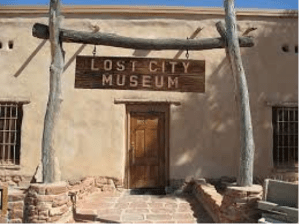
Hoover Dam spans the border between Nevada and Arizona at that point, so after the tour I drove across the “Hoover Dam Bypass Bridge” to the Arizona side of the river and then back across to Nevada side, just for fun. Then I headed Northeast into the Moapa River Indian Reservation to Overton, NV to visit The Lost City Museum. This unique museum traces the Anasazi Indians and their ancestors who have inhabited this area from as long ago as two millennia. Then in about 1150, evidence suggests that a severe drought hit the area and the Anasazi Indians disappeared, to be replaced by the Paiute Indians between then and about 1800. Evidence shows that the Paiute Indians then called this area home until around the1850s, when Anglo farmers moving west pushed them out of the area. The Lost City Museum was built in 1935, to house artifacts from the Pueblo Grande de Nevada, which was to be partially covered by the waters of Lake Mead as a result of building Hoover Dam. The museum now includes artifacts from many of the ancestral inhabitants of this area, the Mojave Desert and other archaeological sites in Southern Nevada.

4 png


                                                            —–To Be Continued—–

My Western Trip~Part 1

7 May

A Slice of Life

Bill Lites

Bill Lites

Bill Lites

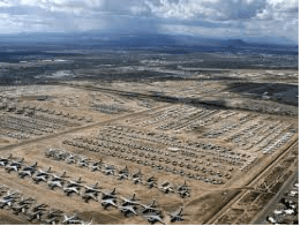
Being an airplane enthusiast, one of the places I had always wanted to visit, was the Pima Air & Space Museum in Tucson, Arizona. My friends all told me it was a magnificent place to see, and the aerial photos I had seen on the internet proved it. The museum itself is on 80 acres, and then there is what is called “The Bone Yard” which is another 300 acres of U.S. Airplane storage. Wow! I couldn’t miss seeing that.

1


So, I started looking in my Aviation Museum Guide for what other aviation museums I could manage to see in the Southwest, and that’s how I came up with “My Western Trip” route. Now you might think that makes for a long trip, but the way I look at it, once I’m in an area, I like to see as many different kinds of museums (not just aviation museums) as possible. In addition, I really enjoy the planning of a trip, and as a result of my research, my list of museums began to grow. Since my initial plans were to start and end my trip in Los Angeles, I wanted to include a visit with DiVoran’s brother and his wife Susan, in Vista, CA and our high school friends Jim and Charlene in San Diego. Then, while in California, there was the Edwards AFB museum tour I wanted to take. That tour was only given two days each month and had to be scheduled 30 day in advance. Once I selected a date, I had to work my travel days (from my initial point) around that date. So, you can see some of the many factors I had to deal with to make this trip work.

2


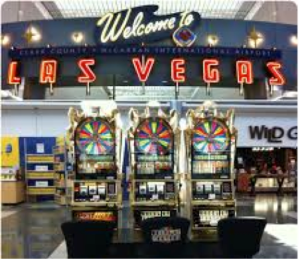
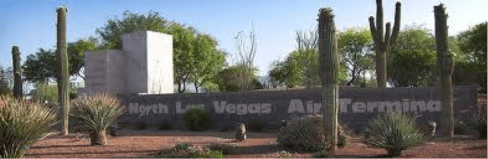
When researching rental car prices, I discovered that the same car rented in Las Vegas was $300 cheaper than that same class of car I had planned to rent in L.A. or San Diego. That savings would pay for most of my gas on this trip, so now my trip was going to start and end in Las Vegas. See how fast these kinds of trip plans can change. Knowing how hot it could get in the Southwest desert at times, I had planned this trip for the first part of April in hopes the weather would not be too hot. After much fine tuning of my travel itinerary, I was finally ready to go. I had never been to Las Vegas, and when we landed, my first surprise was that the Airport was actually landscaped with Saguaro cactus, Mesquite trees and Tumbleweeds. That made for a very unusual landscape theme.         

3 

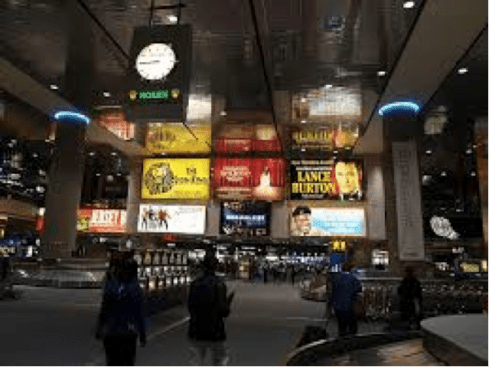
Then, on my way to Baggage Claim, I passed thru several areas filled with gaming machines, many of which were pinging away like pinball machines. The Baggage Claim area was surrounded with gaming machines and huge screens loudly advertising what was currently being feathered at each of the showplaces on the “Strip” that week.

 The rental car process went as smooth as a breeze, but then at the Downtown Grand Hotel, where I was to stay the first two nights, I had to thread my way thru a large Casino filled with all manner of gaming machines to get to the Check-in desk. I was overwhelmed by the whole commercial scene.

4


                                                                        —–To Be Continued—–


A Memorable Trip Across the Desert~Part 2

30 Apr

A Slice of Life

Bill Lites

Bill

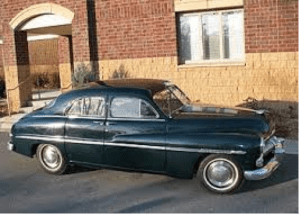
So we headed down the road, as fast as the old flathead “V8” would take the Mercury, and safely pull the trailer, all the time watching the temperature gage closely. If we didn’t come to a “Trading Post/Filling Station” before the temperature gage reached “Hot”, we would pull over and pour the two bags of water into the radiator and take off again. Somehow, we managed to limp from station to station, across the remaining (?) miles of desert and into Albuquerque the next afternoon. I didn’t have to worry about falling asleep at the wheel that night. Whew! Was that ever a stressful trip! Wouldn’t you know it, our friend Leon, thinking we would get into Albuquerque in plenty of time for some rest, had set us up to attend a New Year’s Eve party that evening. Remember, we had not had any sleep for over 30 hours. But, we got cleaned up, left the Mercury dripping in DiVoran’s folks’ driveway and went to the party in Leon’s can. DiVoran’s aunt commented as we walked out the door to our last party for a long time, “Oh, I’m so glad I’m not young anymore.” We managed to stay awake until midnight, and had a great time, but then we slept until almost noon before DiVoran’s dad, Ivan, woke us.

1


 That afternoon, after a diligent search for an open auto parts store, Ivan helped me replace the leaking water pump. We added antifreeze to the cooling system since the temperature was below freezing in Albuquerque at night. After I drove the Mercury around several blocks to make sure everything was working right, we discovered the antifreeze had eaten thru the seals in the second water pump, and we had to drain the system and replace that pump too. That finally took care of the water pump problem, and we installed the proper thermostats so DiVoran would have a working heater during the winter.

2


The rest of my leave was spent having a great visit with my folks, my aunt Jessie and Granny. DiVoran and I had a T-bone steak dinner with all the trimmings at our favorite “Mom & Pop “ restaurant down town, and a superb lobster dinner at our favorite seafood restaurant uptown in the Nob Hill area. When my leave was up, I said goodbye to friends and family, left DiVoran with her folks and took the train back to San Diego and my ship. That was a lonely trip, but as usual the U.S. Navy found lots of things to keep me busy for the next eight months.

3


When I look back at some of the things we did as “Young Adults”, it’s hard to believe we had the nerve to strike out on adventures like that, thinking nothing of the possible challenges we might come up against. Oh well, that was back when we were all young and indestructible. Remember those times? Back in the “Good Old Days?”


A Memorable Trip Across The Desert~ Part 1

23 Apr

A Slice of Life

Bill Lites

Bill


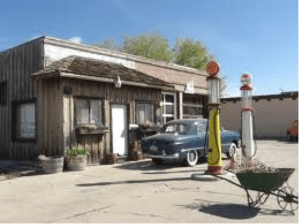
Our last day in San Diego was December 30, 1957. DiVoran and I were in our shorts and tee shirts loading a 4’x 6’ trailer and our 1950 Mercury Sedan with everything we owned. As usual, I had waited until the last minute to finish the last of the packing and we were working up a sweat trying to get on the road before dark. A thick fog rolled in around 5:00 PM, which made for eerie working conditions. As it turned out, it was almost midnight before we left San Diego, headed for “Route 66” and Albuquerque, New Mexico. The U.S. Navy had given me ten days leave before I was to ship out for Japan, and I was taking DiVoran to live with her parents, and attend beauty school while I was gone.1                                               

The first few hours passed without a hitch, but as we got into the Arizona Mountains, the outside temperature became frigid and the temperature gage in the car crept over toward the “Cold” peg. Evidently, the previous owner of our Mercury had removed the thermostats from the cooling system, and I didn’t know it. Guess what?   No heater. We started covering up with everything we could lay our hands on, but were still freezing cold. As we entered the desert, on the eastern side of the mountains, I noticed the temperature gage had started moving off the “Cold” peg, and was slowly climbing toward “Normal”. That was not a good indication. That’s when I started looking for one of the many “Trading Post/Filling Stations” that were spaced at intervals along Route 66 back in those days.

2


Lucky for us, we came upon a “Filling Station” just before the needle reached the “Hot” peg. We stopped to see what the problem was, but the station was closed. We were on our own. Here we were out in the middle of the desert; it was pitch dark, and we hadn’t seen a car on the road (going either way) for miles, and now, no mechanic to help diagnose the problem. Did I mention it was freezing cold?   Well, once I lifted the hood, it didn’t take long to figure

out what was wrong. One of the two water pumps had sprung a leak. What could we do?

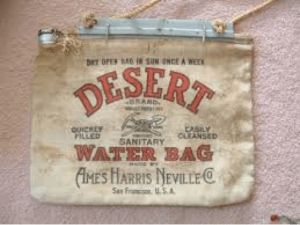
The station had a water hose that we used to fill the radiator, and we always carried two full “emergency” water bags slung over the front bumper.

3


—–To Be Continued—–