Archive | Bill Lites A Slice of Life- Wednesday RSS feed for this section

My Western Trip~Part 3

21 May

A Slice of Life

Bill Lites

3


On the way back to Las Vegas, it was suggested that I take the scenic route through the Valley of Fire State Park. This area has some of the most unusual desert rock formations I’ve seen. It made for a beautiful drive, as the sun was getting low, making the red hue of the rock formations glow like they were on fire. Maybe that’s where they came up with the name for the state park. You think?

1


The next morning I started the day off with California Eggs Benedict at Marie Calendar’s (yumm), on my way to meet Bob at Nellis AFB. Bob had agreed to escort me on a tour of the Thunderbirds Museum, located there on Nellis. What a thrill it was to visit the home base of that great demonstration team, and view the planes and all the memorabilia tracing the team’s history over the years they have been in operation.

2


Then I headed West on I-15 toward Barstow, CA. My first stop was at Goodsprings, NV to check out the 1913 era Pioneer Saloon of “Things Are Tough All Over” movie fame, staring Cheech & Chang.   The saloon has been operating continuously since opening in 1913, and the building and many of the saloon furnishings are original (including the pot-bellied U.S. Army Cannon stove), giving it a rustic and well used appearance. Part of the old west history of the Pioneer Saloon includes five bullet holes in one wall, and a hammered copper picture next to the bullet holes tells the tale of how they got there. The Saloon’s original bar was built in the 1860s by the Brunswick Company of Brunswick, Maine. The story of the arduous trip that brought that bar to Goodsprings, and the Pioneer Saloon, is typical of the transportation routes of the early 1900s. Made of fine quality Cherry wood, even after all these years, it shows no real signs of wear and still maintains its high gloss.

3


As I continued West on I-15, I experienced a gentle climb until just after I crossed the border into California, when I started noticing what appeared to be a rainstorm heading my way. Just as I entered the Clark Mountain Pass (elev. 4726), I ran into SNOW flurries. I had just stopped for gas in Jean, NV and it hadn’t seemed that cold there. I just couldn’t believe I was driving through SNOW in the middle of a bright sunny day. Of course, the flurries didn’t last long, but it was still a thrill just to have driven through them. Down the road a ways, I stopped in Yermo, CA to visit the historic Old West Calico Ghost Town.   Located just 3 miles east of Barstow, Calico was founded in 1881 as a silver mining town, and today has been converted into a county park named Calico Ghost Town.  Silver mining and the population of Calico, supported by the Zenda Mining Company, peaked in 1887 and has steadily declined ever since. Walter Knott (of Knott’s Berry Farm) purchased Calico in the 1950s, and architecturally restored the town’s builldings to look as they did in the 1880s. 


4                       


—–To Be Continued—–


My Western Trip~Part 2

14 May

A Slice of Life

Bill Lites

Bill


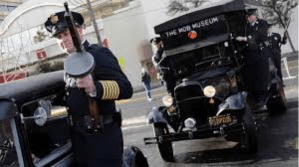
After I got checked in at the hotel, I walked a couple of blocks over to the Mob Museum which is set up as a history of the “Mafia” and organized crime during the early days in the U.S. and especially in Las Vegas. The Museum is housed in the former Las Vegas Post Office and Courthouse, built in 1933, and has restored the second floor courtroom where many of the Kefauver Committee hearings to expose organized crime were held in 1950 and 1951. They even have a portion of the garage wall from the 1929 St. Valentine’s Day massacre that was relocated from its original location in Chicago’s North Side.

1


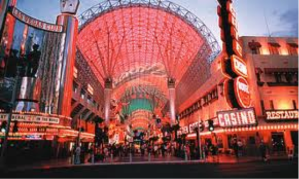
Next I strolled a few blocks to the “Fremont Street Experience” which is a 5-block covered pedestrian mall known for years as “Glitter Gulch.”  It reminded me of the Galleria Vittorio Emanuele II shopping mall in Milan, Italy, except for all the noise and flashing lights. It has open-air bars and shops, street barkers, male and female photo shops, all brightly lit with flashing colored lights and lots of loud music. The place was mobbed with people.

2

The next day I drove out toward Bolder City and took the very interesting Hoover Dam tour. The dam was built during the Great Depression, with what today we would consider fairly primitive equipment. Construction began in 1931, and at times, with as many as 5000 workers laboring 24 hours a day, for almost 5 years, they completed the project, and productive dam operations began in 1936. Just think about that! That massive structure was completed two years ahead of the projected completion date and under budget. There is so much interesting information about the actual building of Hoover Dam that there is not room to share it all with you here. If you are interested in the details, I think you will find it fascinating to Google “Hoover Dam” and read all about this massive project.

3


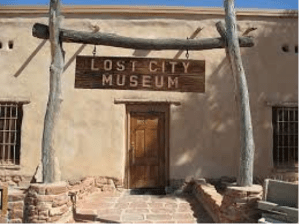
Hoover Dam spans the border between Nevada and Arizona at that point, so after the tour I drove across the “Hoover Dam Bypass Bridge” to the Arizona side of the river and then back across to Nevada side, just for fun. Then I headed Northeast into the Moapa River Indian Reservation to Overton, NV to visit The Lost City Museum. This unique museum traces the Anasazi Indians and their ancestors who have inhabited this area from as long ago as two millennia. Then in about 1150, evidence suggests that a severe drought hit the area and the Anasazi Indians disappeared, to be replaced by the Paiute Indians between then and about 1800. Evidence shows that the Paiute Indians then called this area home until around the1850s, when Anglo farmers moving west pushed them out of the area. The Lost City Museum was built in 1935, to house artifacts from the Pueblo Grande de Nevada, which was to be partially covered by the waters of Lake Mead as a result of building Hoover Dam. The museum now includes artifacts from many of the ancestral inhabitants of this area, the Mojave Desert and other archaeological sites in Southern Nevada.

4 png


                                                            —–To Be Continued—–

My Western Trip~Part 1

7 May

A Slice of Life

Bill Lites

Bill Lites

Bill Lites

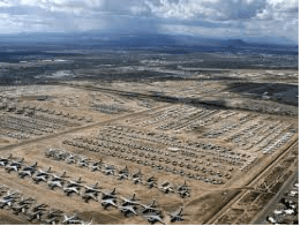
Being an airplane enthusiast, one of the places I had always wanted to visit, was the Pima Air & Space Museum in Tucson, Arizona. My friends all told me it was a magnificent place to see, and the aerial photos I had seen on the internet proved it. The museum itself is on 80 acres, and then there is what is called “The Bone Yard” which is another 300 acres of U.S. Airplane storage. Wow! I couldn’t miss seeing that.

1


So, I started looking in my Aviation Museum Guide for what other aviation museums I could manage to see in the Southwest, and that’s how I came up with “My Western Trip” route. Now you might think that makes for a long trip, but the way I look at it, once I’m in an area, I like to see as many different kinds of museums (not just aviation museums) as possible. In addition, I really enjoy the planning of a trip, and as a result of my research, my list of museums began to grow. Since my initial plans were to start and end my trip in Los Angeles, I wanted to include a visit with DiVoran’s brother and his wife Susan, in Vista, CA and our high school friends Jim and Charlene in San Diego. Then, while in California, there was the Edwards AFB museum tour I wanted to take. That tour was only given two days each month and had to be scheduled 30 day in advance. Once I selected a date, I had to work my travel days (from my initial point) around that date. So, you can see some of the many factors I had to deal with to make this trip work.

2


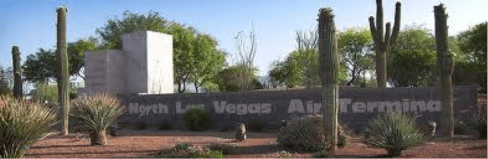
When researching rental car prices, I discovered that the same car rented in Las Vegas was $300 cheaper than that same class of car I had planned to rent in L.A. or San Diego. That savings would pay for most of my gas on this trip, so now my trip was going to start and end in Las Vegas. See how fast these kinds of trip plans can change. Knowing how hot it could get in the Southwest desert at times, I had planned this trip for the first part of April in hopes the weather would not be too hot. After much fine tuning of my travel itinerary, I was finally ready to go. I had never been to Las Vegas, and when we landed, my first surprise was that the Airport was actually landscaped with Saguaro cactus, Mesquite trees and Tumbleweeds. That made for a very unusual landscape theme.         

3 

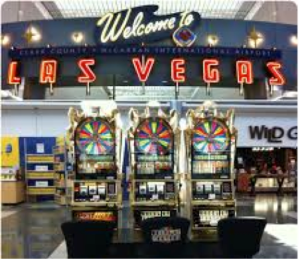
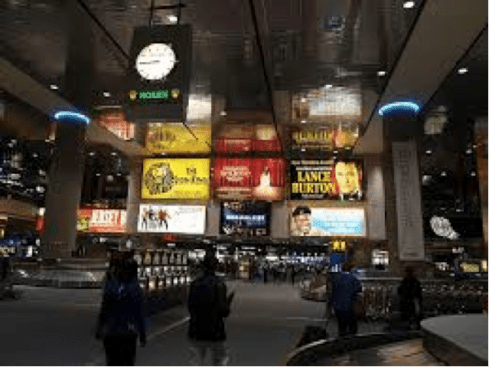
Then, on my way to Baggage Claim, I passed thru several areas filled with gaming machines, many of which were pinging away like pinball machines. The Baggage Claim area was surrounded with gaming machines and huge screens loudly advertising what was currently being feathered at each of the showplaces on the “Strip” that week.

 The rental car process went as smooth as a breeze, but then at the Downtown Grand Hotel, where I was to stay the first two nights, I had to thread my way thru a large Casino filled with all manner of gaming machines to get to the Check-in desk. I was overwhelmed by the whole commercial scene.

4


                                                                        —–To Be Continued—–


A Memorable Trip Across the Desert~Part 2

30 Apr

A Slice of Life

Bill Lites

Bill

So we headed down the road, as fast as the old flathead “V8” would take the Mercury, and safely pull the trailer, all the time watching the temperature gage closely. If we didn’t come to a “Trading Post/Filling Station” before the temperature gage reached “Hot”, we would pull over and pour the two bags of water into the radiator and take off again. Somehow, we managed to limp from station to station, across the remaining (?) miles of desert and into Albuquerque the next afternoon. I didn’t have to worry about falling asleep at the wheel that night. Whew! Was that ever a stressful trip! Wouldn’t you know it, our friend Leon, thinking we would get into Albuquerque in plenty of time for some rest, had set us up to attend a New Year’s Eve party that evening. Remember, we had not had any sleep for over 30 hours. But, we got cleaned up, left the Mercury dripping in DiVoran’s folks’ driveway and went to the party in Leon’s can. DiVoran’s aunt commented as we walked out the door to our last party for a long time, “Oh, I’m so glad I’m not young anymore.” We managed to stay awake until midnight, and had a great time, but then we slept until almost noon before DiVoran’s dad, Ivan, woke us.

1


 That afternoon, after a diligent search for an open auto parts store, Ivan helped me replace the leaking water pump. We added antifreeze to the cooling system since the temperature was below freezing in Albuquerque at night. After I drove the Mercury around several blocks to make sure everything was working right, we discovered the antifreeze had eaten thru the seals in the second water pump, and we had to drain the system and replace that pump too. That finally took care of the water pump problem, and we installed the proper thermostats so DiVoran would have a working heater during the winter.

2


The rest of my leave was spent having a great visit with my folks, my aunt Jessie and Granny. DiVoran and I had a T-bone steak dinner with all the trimmings at our favorite “Mom & Pop “ restaurant down town, and a superb lobster dinner at our favorite seafood restaurant uptown in the Nob Hill area. When my leave was up, I said goodbye to friends and family, left DiVoran with her folks and took the train back to San Diego and my ship. That was a lonely trip, but as usual the U.S. Navy found lots of things to keep me busy for the next eight months.

3


When I look back at some of the things we did as “Young Adults”, it’s hard to believe we had the nerve to strike out on adventures like that, thinking nothing of the possible challenges we might come up against. Oh well, that was back when we were all young and indestructible. Remember those times? Back in the “Good Old Days?”


A Memorable Trip Across The Desert~ Part 1

23 Apr

A Slice of Life

Bill Lites

Bill


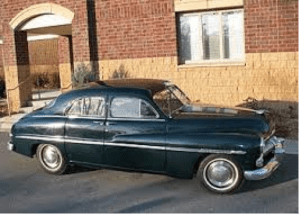
Our last day in San Diego was December 30, 1957. DiVoran and I were in our shorts and tee shirts loading a 4’x 6’ trailer and our 1950 Mercury Sedan with everything we owned. As usual, I had waited until the last minute to finish the last of the packing and we were working up a sweat trying to get on the road before dark. A thick fog rolled in around 5:00 PM, which made for eerie working conditions. As it turned out, it was almost midnight before we left San Diego, headed for “Route 66” and Albuquerque, New Mexico. The U.S. Navy had given me ten days leave before I was to ship out for Japan, and I was taking DiVoran to live with her parents, and attend beauty school while I was gone.1                                               

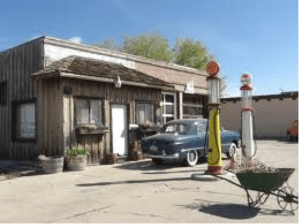
The first few hours passed without a hitch, but as we got into the Arizona Mountains, the outside temperature became frigid and the temperature gage in the car crept over toward the “Cold” peg. Evidently, the previous owner of our Mercury had removed the thermostats from the cooling system, and I didn’t know it. Guess what?   No heater. We started covering up with everything we could lay our hands on, but were still freezing cold. As we entered the desert, on the eastern side of the mountains, I noticed the temperature gage had started moving off the “Cold” peg, and was slowly climbing toward “Normal”. That was not a good indication. That’s when I started looking for one of the many “Trading Post/Filling Stations” that were spaced at intervals along Route 66 back in those days.

2


Lucky for us, we came upon a “Filling Station” just before the needle reached the “Hot” peg. We stopped to see what the problem was, but the station was closed. We were on our own. Here we were out in the middle of the desert; it was pitch dark, and we hadn’t seen a car on the road (going either way) for miles, and now, no mechanic to help diagnose the problem. Did I mention it was freezing cold?   Well, once I lifted the hood, it didn’t take long to figure

out what was wrong. One of the two water pumps had sprung a leak. What could we do?

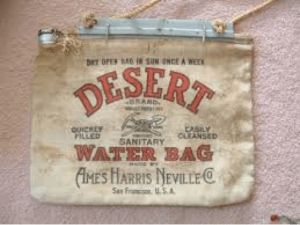
The station had a water hose that we used to fill the radiator, and we always carried two full “emergency” water bags slung over the front bumper.

3


—–To Be Continued—–


TICO Airshow 2014~Part 2

2 Apr

A Slice of Life

Bill Lites

Bill Lites


The weather was perfect, and we all enjoyed a great Airshow together. The Airmen were a little disappointed that there were no P- 39s, P-40s, or P-47s taking part, as they were some of the first fighter planes they had flown during the war. Then later, I met one of the young men (18 or 19) who will soon be going to college, aided by one of the many Tuskegee Airmen Scholarships, to study engineering or another aviation related field, and maybe even become a pilot. He reminded me so much of what the original Tuskegee Airmen must have looked like in the early days of WWII, when all they wanted, was to do their part towards helping protect America and other freedom-loving countries from foreign aggression.

1


Overall, it was a great experience that I will treasure for years to come. Now as my “Two down and one to go” painting with its Tuskegee Airmen autographs hangs on my bedroom wall, it has more meaning than it ever did before. All I have to do is look at it and the memories will take me back to the day when I was in the presence of a group of special men who loved their country enough to put their lives on the line for us. Some of the airmen’s feats included; 15,000 combat sorties flown, 260 enemy aircraft destroyed, 150 Flying Crosses and Legions of Merit earned, along with more than 700 Air Medals and clusters earned by many of the 1,000 black pilots flying combat missions during WWII.

This included the Distinguished Unit Citation, which wasawarded to the 99th Fighter Squadron in July 1945 for its performance in combat over Sicily.

2


However, the war was not over for the Tuskegee Airmen when they returned home to America. They had to face the many challenges of segregation that continued to rage in their own country. Then, after 60 years, in 2007, approximately 300 Tuskegee Airmen and their families were collectively awarded the Congressional Gold Medal by President George W. Bush for their, bravery, outstanding performance and dedicated service to our country during WWII.

3


Thank you Tuskegee Airmen for your service to our country.

2014 TICO Airshow~Part 1

26 Mar

A Slice of Life

Bill Lites

1


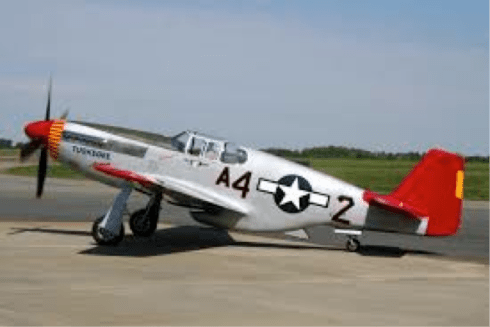
Several years ago, my friend Terry gave me a nice 16”x20” print of a Red Tailed P-51Mustang shooting down a German Me-109 somewhere over the Western Front during WWII. If you look close, you’ll see the painting depicts the smoking German airplane with the pilot stepping out on the wing, getting ready to bail out over the side, while the American pilot watches from a distance.  The print hangs on my bedroom wall, surrounded by many other airplane pictures, where I can enjoy them any time I want a thrill.

2

“Two down and one to go” By W. S. Phillips


I had known about the Tuskegee Airmen from my study of WWII aviation history, and the movie “Red Tails” and was always impressed with the many challenges those men had to endure to become fighter pilots during the war.  I had even visited the Tuskegee Airmen Museum in Tuskegee, AL two years ago during a trip to visit my friend Terry. However, I had never imagined that I would ever have the honor to meeting any of them in person.       3  

 As part of my retirement “fun”, I volunteer as a tour guide, one day a week at the Valiant Air Command Warbird Museum here in Titusville, Florida. This weekend was the museum’s 2014 annual Airshow, and the theme for the show was to “Honoring the Tuskegee Airman.” The VAC museum had invited all of the surviving Tuskegee Airmen to be their guests at the three-day event, to share with the airshow attendees their many WWII experiences.  Well, this was my chance, and I didn’t hesitate for a minute.

I did the research on my print, and discovered it was painted by W. S. Phillips, and actually depicted Lt. Clarence D. “Lucky” Lester in his P-51 (which he named “Miss Pelt”) shooting down his second of three German aircraft on July 18, 1944.  Reportedly, the German Luftwaffe gave these airmen the nickname, “Schwarze Vogelmenschen,” or “Black Birdmen.”

4

As many of the Tuskegee Airman as could manage were there, and what a thrill it was to be able to shake hands and talk with several real war heroes!  I took my “Two down and one to go” print and ask each of them to autograph it for me.  A couple of them remembered “Lucky” Lester, and told me how they recognized the different squadron planes, by the color of the trim tabs on the rudder and elevators. There was the 99th, the 100th, the 301st and the 302nd Fighter Squadrons. They each had their own specific color and/or numerical markings.

5 


—–To Be Continued—–


Robots~Part 3

19 Mar

A Slice of Life

Bill Lites

Bill


I just read an article about a new micro engine that says scientists have built the “smallest petrol engine,” tiny enough to power a WATCH.  The mini-motor, which runs for two years on a single squirt of lighter fuel (they say), is set to revolutionize world power/energy technology.  It produces 700 times more energy than a conventional battery, despite being less than a centimeter long.  It is hard for me to imagine a motor small enough to run a laptop, much less a watch, being able to replace a battery, but that is what the article was saying could happen in the not too distant future.  Check it out on the Internet.

Inspired by colonies of insects such as ants and bees, researchers are modeling the behavior of “swarms” of thousands of tiny robots, which together perform a useful task, such as finding something hidden, cleaning, or spying (on who I wonder?).


While most robots today are installed in factories or homes, performing labor or life saving jobs, many new types of robots are being developed in laboratories around the world.  Much of the research in robotics now is not focusing on specific industrial tasks, but on investigations into new types of robots, alternative ways to think about or design robots, and new ways to manufacture them.  It is expected that these new types of robots will be able to solve real world problems when they are finally realized. 

1

 Then there are the fears and concerns about robots that have been repeatedly expressed in a wide range of books and films.  A common theme in this genre is the development of a master race of conscious and highly intelligent robots, motivated to take over or destroy the human race.  Does any of that kind of paranoia sound familiar? 

2


Now, you know, I just started out to go on the Internet to check out a few things about “Robots” for my friend Leon, and now I have written a three-part (1250 word) blog about just some of what I found.  Who says the Internet is not a distraction?  Well, it sure can be one for me, as you can see.

3


—–The End—–

Robots~Part 2

12 Mar

A Slice of Life

Bill Lites
Bill


The military is developing unmanned combat air vehicles (UCAVs), which are an upgraded form of unmanned aerial vehicles (UAVs), that can perform a wide variety of missions, including combat.  UCAVs are now being designed which will have the ability to fly themselves, pick their own course and target, and to make most decisions on their own.  How scary is that?


Almost every unmanned space probe ever launched could be considered a robot of one type or another.   Those launched in the early 1960s were very limited in their abilities, but more recently their ability to fly, land, survey and take samples on foreign planets is an indication of the advancement of robotic technology.


Another example of the use of robotics is in the dairy industry.  I just received an email about the dairy farm in Fair Oaks, Indiana that uses computer assisted robotics to process (feed &  milk) their approximately 32,000 cows per day, to produce enough milk for 8 million people.  As part of the daily processing, a transponder that is attached to each cow, reads and records the amount and quality of the milk from that cow, as it is automatically milked.  Also, a pedometer is attached to each cow that records the distance the cow travels in each 24-hour period.


Due to the hazardous nature of mining operations, in particular underground mining, the prevalence of autonomous, semi-autonomous, and tele-operated robots has greatly increased in recent years.  A number of vehicle manufacturers provide autonomous trains, trucks and loaders that will load material, transport it from the mine site to its destination, and unload it without requiring human intervention.


Robots in healthcare have two main functions. Those which assist an individual, such as a person with a disability or a sufferer of a disease, and those which aid in the overall operation  and processing of such industries as pharmaceutical companies and many hospitals systems.


                                                                        —–To Be Continued—–   

Robots Part 1

5 Mar

A Slice of Life

Bill Lites

Bill

In a letter I received from my friend Leon the other day, he mentioned that he had gotten interested in “Robots & Droids.”  I had no idea where he was getting his information, since I knew he didn’t have a computer.  So, I decided to check out the internet to see what I might find there that might interest him.  WOW, was I surprised!   We are surrounded by robots, whether you realize it or not.  Wikipedia started off by saying, “A robot is a mechanical or virtual agent, usually an electro-mechanical  machine that is guided by a computer program or electronic circuitry.”  Then it went on for pages to describe all kinds of Robotics, Soft Robotics and Virtual Software Agents (otherwise known as Bots).

1


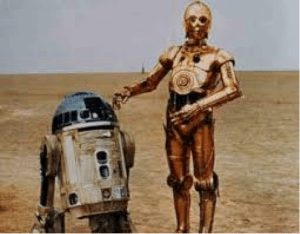
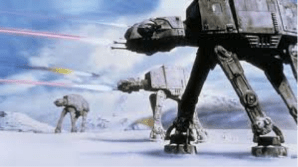
This immediately brought to mind the “Star Wars” movie series with all its robotics in action and living color.  Of course, there were the “Good” robots that were always there to help Luke Skywalker and his friends with whatever had to be done.  These robots were even lifesavers at times, giving up their vital parts for their owners.

2

 Then there were the “Bad” robots, coming (as it seemed) out of the woodwork, lead by the evil Darth Vader.  This guy was determined to get rid of the good guys and take over everything they had, not to mention the whole Galactic Empire.  Boy, did we enjoy watching the good guys defeat the bad guys for a change, even when they were bigger and badder that anyone could imagine.

3


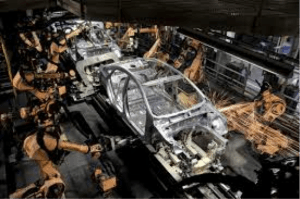
Then I thought about the trip to Alabama I made last year to see another friend.  On the way back I stopped in Montgomery, at the Hyundai plant, for a tour and, saw how the automobile industry is using computer assisted processing and robotics.  It was amazing to see how most of the heavy and dangerous jobs have been replaced by robots. 

4


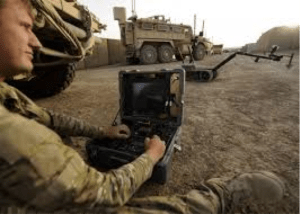
Of course there is the military use of  Teleoperated robots, or telerobots,  which are  devices remotely operated from a distance by a human operator rather than following a predetermined sequence of movements.  These units are being used for such dangerous jobs as bomb locating and disposal.

5


                                                                 —– To Be Continued—–