Archive | Bill Lites A Slice of Life- Wednesday RSS feed for this section

My Western Trip~Part 13

30 Jul

A Slice of Life

Bill Lites

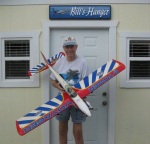
Bill Small Red Plane

I started out early the next day so I could stop at the Timpa R/C Model Airfield to see what kind of planes they might be flying. There was a small crowd as the winds had been blowing fairly hard the day before and the weather man had forecasted more of the same. The Timpa R/C site is located on 160 acres of unobstructed land for radio control airplane and helicopter flying, with a 750’ paved runway, paved run-up area and covered assembly area with tables. It was one of the nicest R/C sites I have seen in a long time. The club members were very cordial and I got some great photos of them and their planes.

1


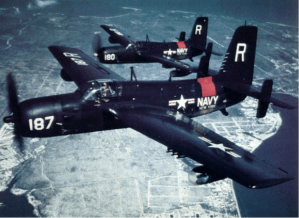
My next stop was to visit the CAF Arizona Airbase Museum in Mesa, AZ. This was a very enjoyable visit, as the museum had a great collection of well-restored aircraft including the only Grumman AF-2S Guardian I had ever seen. The Guardian was a huge aircraft and I couldn’t believe it was carrier rated back when U.S. carriers only had smaller straight flight decks. The plane was in their restoration hanger in the final stages of preparation for its first post restoration flight test.
2


The Wings of Flight Museum was on the other side of the Falcon Field Airport, so I hitched a ride with one of the local FBO fueling employees in his electric cart. Wings of Flight turned out to be a private aerobatic team that hires out for airshows and other aviation events mainly in the immediate Arizona area. Two of the pilots were taking a break from an aircraft inspection and invited me to join them for a cup of coffee. They told me about how their eight-plane business had gotten started with just two of them, and how it just kept on growing. They didn’t seem to be in any kind of a hurry and could have talked to me all day if I had wanted to. They seemed like a really great bunch of guys, doing what they all loved to do – fly.

3


Next, I headed to Peoria, AZ to visit the Challenger Space Center that actually turned out to be a children’s learning center. So I headed down the road to Chandler, AZ to visit the Rawhide Western Town. This was a smaller version of Tombstone, but was more about attractions and a Steakhouse than anything else. When the street barkers started calling for people to head for the O.K. Corral shootout show, the whole place became deserted, and I left. Somewhere on one of the smaller roads on my way to or from the Rawhide Western Town, a Roadrunner ran across the road in front of my car, and I was instantly transported back to when I was much younger, driving on a two-lane road somewhere in New Mexico, where it was a common sight to see Roadrunners run from one side of the road to the other. What a thrill that was!   By the time I got back into Phoenix, and found the Wingspan Air Museum, they were closed. So I stopped and had a delicious Fuddruckers ¼-pound BBQ Burger and Raspberry Ice Tea, after which i went to the motel for some rest and TV.

4


—–To Be Continued—–


My Western Trip Part~12

23 Jul

A Slice of Life

Bill Lites

Bill


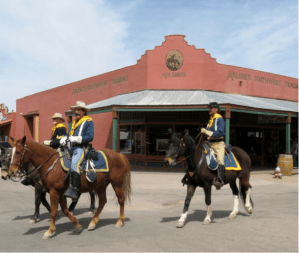
After lunch, I headed south to visit the city of Tombstone, a historic western town in Cochise County, Arizona, founded in 1879 in what was then Arizona Territory. It was one of the last wide-open frontier boomtowns in the American Old West. By the early 1890s, prosperity from silver mining, the town had expanded to the point where the ladies and gentlemen of Tombstone could attend operas presented by visiting acting troupes at the Schieffelin Hall opera house, while the miners and cowboys saw shows at the Bird Cage Theatre, said to be “the wildest, wickedest night spot found anywhere between Basin Street and the Barbary Coast.” The U.S. Army attempted to keep some kind of order in the Territory, but under the surface tensions were growing. 

1


Shortly after the Earp brothers arrived in Tombstone in late 1879, an ongoing conflict developed between them and the Clanton brothers and Tom McLaury. The cowboys repeatedly threatened the Earp brothers, over the years, until the conflict escalated into a deadly confrontation that turned into a shootout, the now-famous Gunfight at the O.K. Corral. The city of Tombstone has survived the ravages of time, and is now a thriving tourist attraction, with many period clad characters walking the streets, encouraging visitors to enter their particular establishment to get in out of the heat. I had a sarsaparilla in Doc Holiday’s Emporium , and it really did quench my thirst.

2


Before leaving Tombstone, I visited the Wyatt Earp House & Gallery, which was closed at the time, but I was able to look in the windows of the house and read the inscriptions on the bronze statue of the famous lawman. Just outside the town of Tombstone was the famous Boothill Grave Yard (originally called The Tombstone Cemetery until around 1884), were many of the area bad guys are buried. And, of course, I couldn’t leave Tombstone without visiting that historic site. Well, as you might guess, the grave yard was full of famous named people, and the Curator even has a brochure you can purchase, listing many of the 250 people buried there; when and how they died, and who killed them, if known. A few of the famous Tombstone legends you will see on the headstones & markers throughout the grave yard include, Frank and Billy Clanton (O.K. Corral shootout) and their father “Old Man Clanton” (killed by Mexican cattle rustlers on a cattle drive), Tom McLaury (also of the O.K. Corral Shootout) and 3-fingered Jack Dunlap (a train robber) who was shot while attempting to rob an express car guarded by Jeff Milton. On my way back to Tucson I stopped in Benson, AZ to visit the Benson Railroad Museum, but it was also closed, so I just headed back to my motel for a nap and some dinner.

3


—–To Be Continued—–


My Western Trip~Part 11

16 Jul

A Slice of Life

Bill Lites

Bill Lites

While I was in Tucson I had several other places I wanted to visit, so the next place on my list, was the Titan Missile Museum just 20 miles south of Tucson, in Sahuarita, AZ. I was not aware that any of our ICBM silos here in the U.S. had survived the missile reduction treaties (SALT) over the years, which was part of the “world-wide weapon systems modernization program.” As it turns out, this preserved missile site, officially known as Titan II ICBM site 571-7, is all that remains of the 54 “Cold War” Titan II missile sites that were on alert across the United States from 1963 to 1987. It is now a Registered National Historic Landmark.

1


On my way back to Tucson from the Titan Missile Museum, I stopped to check out the San Xavier del Bac Mission (White Dove of the Desert) just off I-19. The mission was very simple inside, but very beautifully decorated at the same time. As I was leaving, I noticed a number of wooden shade structures near the parking area where several local women were cooking a verity of dishes for sale to the visitors and parishioners. It was getting close to dinner time, and I was tempted to try some of the food, but then thought better of it, since a trip like this is not the time to come down with a case of Montezuma’s Revenge.                  

2


I started the next day with a trip to the Saguaro National Park (West) that our family had driven thru back in 1975, as part of a six-week cross-country camping trip we had taken, when I was between jobs. We were impressed with the tall multi-armed Saguaro cactus, which can grow to as high as 70 feet tall, and filled that part of the Sonoran Desert. Next, I visited the Sonora Desert Museum, which we had also visited in 1975, but it had expanded and changed so much over the years that I didn’t recognize any part of it, except the entrance. Luckily, this time I had chosen a better time of year to visit, so, instead of mid-July and 120 degrees in the shade, it was early April with a mild breeze and a pleasant humidity free 80 degrees.

3


Next on the list, and just down the road was the Old Tucson Studios, which was originally built in 1938 by Columbia Pictures as a replica of 1860s Tucson for the movie “Arizona.” It was fun walking the dusty streets of Old Tucson and recalling some of the great movies that had been filmed there, over the years. Films such as The Bells of St. Mary’s (1945), starring Bing Crosby & Ingrid Bergman. The Last Round-Up (1947) with Gene Autry, Winchester ’73 (1950) with James Stewart, The Last Outpost (1951) with Ronald Reagan,  Gunfight at the O.K. Corral (1957), The Lone Ranger and the Lost City of Gold (1958) and Cimarron (1959). My hero, John Wayne, starred in four movies filmed at Old Tucson Studios; Rio Bravo (1959), McLintock! (1963), El Dorado (1966) and Rio Lobo (1970. Movies have continued to be made there, with the latest being in 2013. Old Tucson Studios was opened to the public as a tourist attraction in 1960, and the many extras wondering the streets in their period costumes added much to the nostalgia.

4


—–To Be Continued—–


My Western Trip~Part 10

9 Jul

A Slice of Life

Bill Lites

Bill


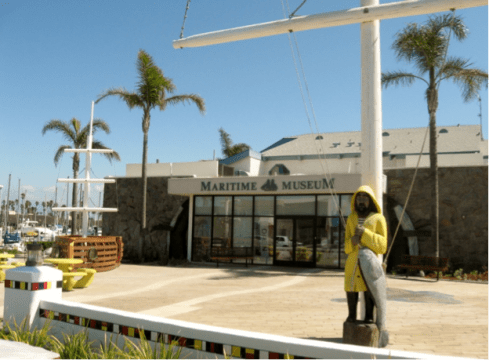
Heading for the Point Loma Peninsula, I checked out the Cabrillo National Monument, which commemorates the landing of Juan Rodriguez Cabrillo in the San Diego Bay on September 28, 1542. After that beautiful drive, I visited the famous San Diego Maritime Museum, Seaport Village, the Seafood Grotto, the Tribute to Bob Hope wartime tours, and the WWII V.J. Day Monument. The tribute to Bob Hope was unique, in that it consisted of a group of bronze figures representing all the U.S. Military Services, gathered around Bob, while he told many of his funniest jokes (via recordings) to anyone who was listening.

1


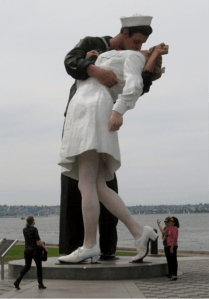
And then, there was the gigantic WW V.J. Day Monument, depicting the famous 1945 Time Square celebration picture of a sailor kissing a dental technician. Many, along with me, had always thought she was a nurse, because of her white uniform, but the base plaque said she was not a nurse, but a dental technician. I finished the day with a wonderful visit with our high school friends Jim and Charlene, while we ate dinner at the Brigantide Seafood Restaurant.

2


The next morning I headed east to visit the Pacific Southwest Railroad Museums in La Mesa and Campo, Ca. Unfortunately, they were both closed, so I just kept heading east toward Yuma, AZ where I planned to visit the Yuma Territorial Prison. Now there was a place you would never have wanted to be incarcerated, as a criminal, in the late 1800s. Amazingly, even though most inmates were sentenced to do time at the Territorial Prison for violent crimes, some were sent there for things such as polygamy, forgery and violations of the Neutrality Act. While in Yuma, I also visited the U.S. Quartermaster Depot which was used by the U.S. Army to store and distribute supplies for military posts in the territories of Arizona, Nevada, Utah, New Mexico, and Texas from 1864 to 1883.

3


Next, it was on East for another 240 miles of desert, thru Gila Bend and a lot more desert, to Tucson, AZ where I was looking forward to visiting the Pima Air & Space Museum and AMARG (Better known as the Bone yard). The next day was Friday, and I was up bright and early so I could be first in line for tickets to both the Museum and the Bone Yard, since they only gave Bone Yard tours M-F. What a great time I had there! The Museum itself encompasses four large hangers of beautifully restored aircraft, and 30+ acres of static display aircraft outdoors. The Bone Yard consists of over 300 acres, where literally thousands of discontinued U.S. Military aircraft are stored, reclaimed or restored to flying condition when needed.   Luckily, the Museum provides bus tours of both the Museum grounds and the Bone Yard, so people like me can see most all there is to see in about 4-6 hours. It really boggled my mind to see acres and acres of airplanes stored like that, all in one place!

4


—–To Be Continued—–


My Western Trip Part~9

2 Jul

A Slice of Life

Bill Lites

Bill Lites

Bill Lites

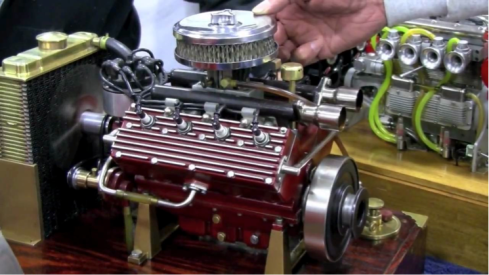
The next morning I visited the Joe Martin Miniature Engineering Museum in Carlsbad, CA.   I had received emails about the detailed aluminum model aircraft that Young Park had built. Maybe you have seen pictures of them. When I researched his planes, I discovered he had donated a couple of his masterpieces to the Joe Martin Museum, and I wanted to see them up close. They are unbelievably detailed!

1

Well, I was absolutely overwhelmed by the many museum models! There were miniatures of just about everything mechanical you can think of. They were all scratch built, and all work just as the full sized item would. It’s hard for me to grasp the idea that people have the skill and patience to build these working miniatures. There were several examples of model steam engines (operated by air pressure), and a demonstration of a model V-8 auto engine, that had the coolest sound. If you can imagine a soprano Vroom-Vroom!!!

2


And, then there was the model “external” combustion engine demonstration, which included the answer to one of my life long questions. In the early days of the railroad, how did they keep the water tanks you see being used (in the movies) to replenish the steam engines, filled with water? Answer; External Combustion Engines (not usually seen) used to pump water from a well near the tank. Also not seen, is the job of the train’s engineer, who would stoke the pump’s external engine fire source when he finished filling his train’s water tank. I find these engine pumps fascinating. There are some really cool examples of model “external combustion engines” on YouTube. If you Google “External Combustion Engine” some of the schematics are even animated, giving you a good idea of how the engine and its pump works. Check them out for yourself, it’s really interesting.

3


Needless to say, I spent a lot more time at the Joe Martin Museum than I had planned. But, once I was able to tear myself away from all those fabulous models, I headed for San Diego. I made stops on the way at the Antique Car & Steam Engine Museum, the Mission San Luis Ray and the Flying Leatherneck Aviation Museum. The next morning I went to Balboa Park to visit the San Diego Air & Space Museum, the San Diego Auto Museum and the San Diego Model Railroad Museum. I had been to the Air & Space Museum and the Auto Museum (Google; Louie Mattar’s Fabulous Car & Old Plank Road) two years ago, but I had missed the Model Railroad Museum. Supported by at least four local model railroad clubs, this is one of the largest (27,000 sq. ft.) model train layouts in the country. They must have had 15 or 20 tracks coming into the rail yard and turntable area from all directions. I wished my friend Leon, who works with Model Circus Train clubs in Albuquerque, NM, could have been with me to see this fabulous layout.

4


—–To Be Continued—–


My Western Trip~Part 8

25 Jun

A Slice of Life

Bill Lites

Bill


The next day I headed out to the Rialto Municipal Airport to visit the Warbirds West Museum, but when I got there, I discovered they were out of business. So, I turned around and drove over to Chino, CA for a tour of the Planes of Fame and Yanks Air Museums. I had visited both of these fabulous museums two years ago, and was looking forward to touring them again to see what kind of new aircraft they had added to their collections. As it turned out they both didn’t open until late in the morning the day I was there, and I had several museums in the West Los Angeles area I wanted to visit. bikesSo, I headed west for Inglewood, CA (where I went to college) but ran into heavy traffic before I could get close to my first destination. It was Sunday, and a bicycle marathon (with tens of thousands of bicycles) was being held that day and was traveling down Wilshire Blvd. causing traffic to be backed up for miles on either side of Wilshire. After creeping along for almost an hour, before I found a place where I could get out of that mess, I was tired, frustrated, and decided to call it a “Wasted Day”- giving up on seeing any museums that day and headed back toward the motel.

 The next morning (Monday) I started out for West Los Angeles again, only to run into more heavy morning rush-hour (stop & go) traffic on the freeways. I said, “The heck with this,” and headed south toward Santa Ana. My next stop was at the John Wayne fuddyAirport to visit the Lyon Air Museum. This was a great experience, as all the museum’s aircraft are in flying condition and all their rare vehicles run. I got a special treat when they towed their B-17G, “Fuddy Duddy” out of the hanger and fired up all four engines. There’s nothing I enjoy more than the smell of a large aviation engine starting up. It’s something about the oil and gas mixture that does it for me. And, here I got to experience the smell of “Four” engines starting! What a thrill.

 Next, I tried to find out about the Aeros Lighter Than Air Project I had heard was going on at the Tustin AFB. Worldwide Aeros is planning to build airships that would be about 500 feet long, with a zeppelin-like rigid structure, ultimately designed to carry loads as heavy as 250 tons, at speeds of more than 100 miles an hour. The object is to use a LTA vehicle to move heavy weights over difficult terrain, without spending a lot of money developing a supporting infrastructure. The idea sounds good, but I keep remembering what happened to the USS Macon and USS Akron back in the 1930s. Come to find out, the only scaled-down prototype vehicle, the Aeroscraft Large Cargo Vehicle (Dragon Dream), was damaged just the month before, when part of the 1942 hanger roof collapsed and fell on it. There was no word as to when or if the project would continue.

blimp


While I was in Tustin, I visited The Marconi Automotive Museum.   This impressive collection features automobiles from around the world, including some very rare Ferrari and Maserati race cars.

Heading south again, I stopped for lunch at Ruby’s Aqua Diner, situated on beautiful North Lake in Irvine, CA. I had one of the best BLT sandwiches I’d ever eaten, and the 50’s music was great. Then it was on south to Vista, CA where I had a nice visit with DiVoran’s brother, David, and his wife Susan. That evening we continued our visiting and enjoyed some mouth-watering Mexican food at Cocina del Charro Mexican Restaurant in San Marcos, CA.

restaurant


                                                            —–To Be Continued—–


My Western Trip Part~7

18 Jun

A Slice of Life

Bill Lites

Bill

Bright and early the next morning I drove down to Port Hueneme, CA to visit the U.S. 1Navy Seabee Museum. This museum preserves and displays historic material relating to the history of the Naval Construction Force, better known as the Seabees, and the U.S. Navy Civil Engineer Corps. During World War II, approximately 250,000 Seabees passed through the Naval Construction Battalion Center (NCBC) at Port Hueneme, on their way to or from Europe and Pacific Theaters.  Among many other tasks they were asked to perform, over the course of the war, the U. S. Naval Combat Demolition Units (NCDU) working closely with the Army Combat Demolition Units (ACDU) were instrumental in removing much of the hazardous materials and obstacles from the beaches in advance of the June 6, 1944 Normandy Invasion.
On my way to Los Angeles to visit several museums in that area, I stopped at the Whiteman Airport in Pacoima, CA to link up with Chuck, who provides mockup modern jet aircraft for the movie and TV industry. My museum guide indicated Producers Air Force had several aircraft, so I was expecting real aircraft. But interestingly, what Chuck does is provide mostly mockup cockpits of various fighter jets for close-up scenes with the actors. His aircraft are full scale mockups, usually from the nose of the aircraft to just behind the cockpit, with fully operating canopies and all the cockpit instruments and controls, including real ejection seats. It was a real education talking to Chuck and hearing all about how he provides the industry with what they need.2

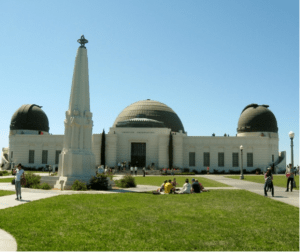
 Chuck had to go to work, so I proceeded on into Los Angeles to visit the Griffith Observatory. DiVoran and I had visited Griffith Park and the Observatory back in the early 1960s when we lived there, but it was a shock to see how many people were there3 that day. Cars were backed up halfway down the mountain waiting for a chance to find a parking space. I went into the lobby and took a look at the fascinating Foucault Pendulum, which was introduced in 1851 by French physicist León Foucault, as the first simple proof of the rotation of the Earth in an easy-to-see experiment. I walked around the outer domes and got a view of the smoggy L.A. basin and the Hollywood Hills.
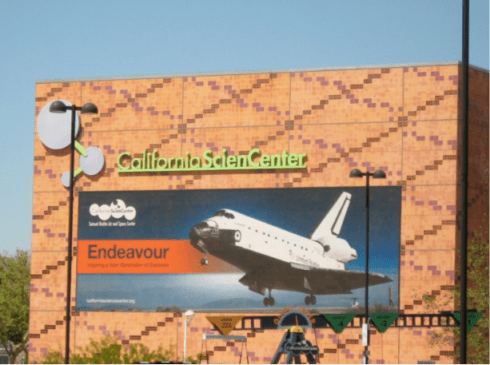
That was about all of the crowds I could handle, so I headed down town to Exposition Park to check out the California Science Center. The Science Center was a wonderful experience, as there were many displays that interested me. At the top of the list, was the Space Shuttle Endeavour . Aircraft displays, inside and outside, included a 1929 Velie Monocoupe, a Lockheed F-104 Starfighter, a replica of the Bell X-1 that Chuck Yeager broke the sound barrier in, a Northrop F-20 Tigershark, a Northrop T-38 Talon, and a beautiful Lockheed A-12 Blackbird two-seat trainer (60-6927), stripped of its black finish, and gleaming silver in the sun. Manned Spacecraft included Mercury, Gemini and Apollo Space Capsules, Pioneer 10, Mariner IV and Venus probes and a prototype of the Viking Lander.

4


—–To Be Continued—–


My Western Trip~Part 6

11 Jun

 A Slice of Life

By Bill Lites

Bill Small Red Plane


Next, it was over to Simi Valley, CA for a tour of the Ronald Reagan Presidential Library & Museum. I was impressed with the 24 different galleries, which traced Reagan’s life from his early days as local hero, college standout, glamorous Hollywood actor, then as governor of California, and ultimately to the presidency of the United States. There was even a full-sized replica of the Oval Office in one of the galleries. But, of course the thing that impressed me the most was Air Force One (S/N 27000), also known as “The Flying Whitehouse” and the Marine One helicopter (S/N 150611), both of which Reagan used while President. I asked one of the Docents how they got the plane in the building, and she said, “They built three sides of the new building, took the wings and tail assembly off the plane, so they could bring it in through the fourth opening, and re-assembled the airplane inside. Then they finished the fourth all glass wall. For the full story of how the U.S. President’s airplane got its name, Google “Air Force One.” It’s a fascinating story I think you will enjoy knowing.

1


Before leaving Simi Valley, I stopped at the Santa Susana Railroad Depot & Museum to get the history of an early California railroad depot and its operations. This was one of the most unusual and interesting small museums. The depot is an example of what the Southern Pacific Railroad called their Standard No. 22 Depot in 1903. The depot has been meticulously restored with many original furnishings and working equipment, that the Docent uses to explain to visitors how the depots operated in the early 20th century. Today, on what was the old Southern Pacific rails, Amtrak’s Coast Starlight trains head up and down the coast, and the daily Surfliner and Metrolink trains ferry commuters in and out of Los Angeles.

2


Now, because of a time constraint, I headed west to Oxnard, CA where I quickly visited the small Mullin Automotive and Murphy Auto Museums. I also visited the Channel Island Maritime Museum, there in Oxnard, where I learned something very interesting about some of the early 17th century Dutch Maritime painters. It seems that some of them painted in such detail that (with a very strong magnifying glass) one can see that each of the distant subjects in the painting has been given details such as a pipe in the mouth, some with a mustache and all with a nose, ears and even eyebrows. The kind of details you might expect in a close-up portrait painting, but not in a battle scene at sea. And, then there were the fabulous model ships, many of them crafted by the Curator/Docent that took me on a tour of the museum. The model ship detail was outstanding! What a great tour.

3


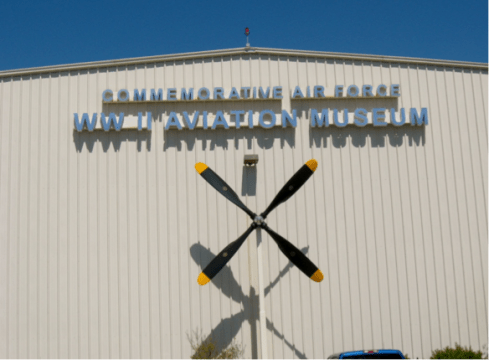
Then, to round out the day, I visited the CAF WWII Aviation Museum in Camarillo, CA. This museum is very similar in size and display aircraft to the Valiant Air Command Warbird Museum here in Titusville, FL where I volunteer as a tour guide one day each week. They had an AT-6 and a two-place P-51 Mustang, both actively giving rides while I was there, and I got some really good close-up photos of both as they fired up their engines, taxied out with their passengers and took off. I always get a thrill when I hear the sound of a Rolls-Royce Merlin engine at full throttle passing overhead.

4


—–To Be Continued—–

My Western Trip~Part 5

4 Jun

A Slice of Life

Bill Lites

Bill Small Red Plane

With a pleasantly full tummy, I headed west to the Mojave Air & Spaceport to check out the famous Scaled Composites operation that Burt Rutan had founded. I was disappointed to discover that Northrop Grumman now owned the company and the open access to the facility I had once experienced when visiting Scaled Composites back in the early 1980s was no longer available. Since the Spaceport is now basically closed to visitors, I took a few pictures of some of the aircraft that have made the Spaceport famous in recent years, and are now displayed in the Rotary Rocket Roton. Then I headed for Palmdale, CA to check out the Lockheed Skunk Works.

                                   1


I had hoped for a tour of the Lockheed Martin Plant 42 where they are building the new F-35 Joint Strike Fighter and the Skunk Works, where it is rumored they are now developing a new unmanned spy plane, dubbed the SR-72, or “Son of Blackbird.”   But, here again I was to be disappointed, as the whole area was fenced off with no visitor access. So, I drove on over to visit the Joe Davis Air Park and the Blackbird Park (Production Flight Test Installation). This provided me with great up close and personal viewing of some of America’s most popular and fastest airplanes ever made.

2


I started the next day with a tour of the Edward AFB and Museum. This was a three hour closely monitored bus tour of the museum and some of the base facilities. This was another case of having experienced open access visiting of most of the Edwards AFB facilities while assigned to the Space Shuttle Recovery Team in the mid-1980s. It seems that access to most of the U.S air bases around the country have been closed or largely restricted to the public since 9-11. As an example, the Edwards tour is only given two days each month, and then a person must sign up 30 days in advance to provide time for security background checks. I did however learn one very interesting thing on this tour. How the “Muroc Air Force Test Center” originally got its name. Can you guess? Google “Edwards AFB & Vicinity” and scroll down to “1910” and see what you get. I would never have guessed. I found it very informative. Things sure were a lot simpler back in those days.   As part of the Edwards AFB Museum tour, I visited the Century Circle display, which traces just one time period of the Air Force Flight Test Center’s history, which (Muroc) Edwards is famous for.

                                               3

After leaving Edwards, my next stop was in Sylmar, CA to visit the Nethercutt Collection. This was one of the best automobile collections I have ever seen. J. B. Nethercutt was the co-founder of the Merle Norman Cosmetics Company and he collected more than 30 classic luxury automobiles as part of a 200-car collection that is on a rotating display. Each of the cars has been carefully restored, runs like new and is licensed for when they are taken to car shows. In addition, the collection includes an amazing collection of automobile mascots, antique furniture, clocks, watches, and one of the world’s finest collections of mechanical musical instruments, which is displayed in the museum’s music room.

4


—–To Be Continued—–


My Western Trip~Part 4

28 May

A Slice of Life

Bill Lites

Bill Lites

After walking the streets and meeting many of the 1880s town characters at the old west “Calico Ghost Town” it was just a few miles down I-15 to Peggy Sue’s Nifty 50s Diner in Yermo, CA. Peggy Sue’s Diner really brought back a lot of the 1950s memories of the good times we had as teenagers at our local diners in Albuquerque, NM. To compliment the cozy atmosphere at Peggy Sue’s Diner, you can “Eat to the Beat” with good homemade food and great 50’s music. Then after a burger, fries and a milkshake, you can explore the extensive collection of movie and TV memorabilia that Peggy Sue has on display.

1


The next stop was Barstow, CA where I visited the Route 66 “Mother Road” Museum and the American Railroad Museum, both located in the original 1911 Casa del Desierto (The Harvey House) Railroad Depot. The historic structure is an elegant presence in the Mojave Desert and is still used and often referred to as the Barstow Amtrak Station. This famous depot was, for many years, what unofficially became known as the “Crossroads for Travelers,” where the Old Mormon Tail and the Santa Fe Trail came together. Early 1900s travelers, following winding wagon trails across this area turned it into what was later called The National Old Trails Road. Then in 1926, when the Federal Government instituted a new highway numbering system, The National Old Trails Road became U.S. Highway 66, and the rest is history. DiVoran and I became well acquainted with the portion of Route 66 between Las Angeles and Albuquerque in the first several years after we were married, but that’s another story for another blog.

2


The next day I had planned to visit the U.S. Naval Armament Museum at the China Lake Naval Air Station just outside Ridgecrest, CA. But, when I signed in for the security check, I was told that their computers had been down for several hours, and they didn’t expect them to be back on-line for another 3-4 hours. There were several people ahead of me, to be processed, and I didn’t have time to wait around in the “hope” that their computers would be restored anytime soon. So, I headed on over to Boron, CA to visit the Saxon Air Museum and the 20 Mule Team Museum. Borax mining and unusual desert rock formations are the big interests in this area. I had made several Space Shuttle recovery trips to Edwards AFB when I worked for Lockheed, and had been introduced to Domingo’s Mexican Food Restaurant there in Boron. So, after checking out the museums and the rock shops, I treated myself to a great lunch at Domingo’s. Nothing had changed since last I had eaten there, including the model train that runs around overhead, inside the dining room, while you are enjoying your meal.

3


                        —–To Be Continued—–