
A Slice of Life
Bill Lites
My friends from Boston and New York had advised me not to use the George Washington Bridge if I could help it, but that’s the way “Greta” took me on my way back to the west to visit the Aviation Hall of Fame in Teterboro, NJ. So, it was across the Throgs Neck Bridge, thru the Bronx, over the Hudson River on the G.W. Bridge to the museum. As it turned out, it must have been my lucky day for that crossing, because that trip was pretty much of a breeze and I made it to the museum in good time. This museum, located at the Teterboro Airport, displays historic aircraft and spacecraft equipment, artifacts and photographs along with a model aircraft collection, honoring the many New Jersey men and women who have helped make the aviation industry what it is today. There is a room filled with medallions honoring the over 160 inductees to date.


I woke up to rain the next morning. Up until now the weather had been perfect and I had just assumed it would be the same for the whole trip. Silly me. What was I thinking? Well, it rained that entire day as I sloshed my way toward Connecticut. I figured “Greta” would have routed me back across the G.W. Bridge and up I-95 to Bridgeport, CT before turning north. But I wasn’t ready to try my luck getting across the G.W. Bridge again, especially during the morning rush-hour traffic in the rain. So, I decided to take the northern route, using the Garden State Parkway, and then crossing the Hudson River at the Tappenzee Bridge. Well, wouldn’t you know, I missed the exit for the bridge. I stopped at a service center and asked how to get back to the bridge exit and the guy said, “Just take the next exit and do a “U” turn.” Right! It was 20 miles to the next exit and it ended up taking me 30 minutes and another 30 miles back to the bridge exit (all this in the pouring down rain).

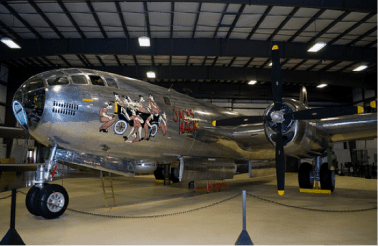
I finally made it to the right exit, across the Tappenzee Bridge, then thru Danbury and Hartford, CT to the New England Air Museum in Windsor Locks, CT. That ended up taking 1-½ hours longer than I had planned. What a waste of time that was! The museum displays over 60 beautifully restored aircraft and related artifacts/equipment in three hangers. As I followed a group into the B-29 hanger, I overheard someone say that the small group was honoring their 95 year old uncle who had been a navigator in B-29s during WWII. The elderly gentleman was overwhelmed by the occasion and the size of the aircraft. I heard him say, “I don’t remember it being so big!” What a nice thing for a family to do for their uncle. While I was in the area, I had planned to visit the American Museum of Aviation in Stafford Springs, CT but I discovered that visiting the museum was by appointment only. I was behind schedule anyway, so I just headed south to my next stop, at the New London Customhouse in New London, CT which is operated by the New England Maritime Association. This turned out to be a very small museum, so I didn’t spend much time there.
—–To Be Continued—–










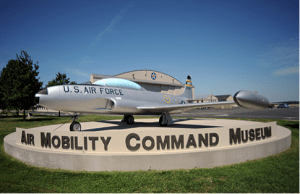




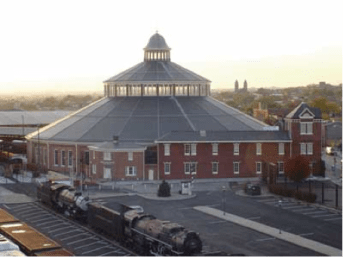


 some of the hangers where the museum’s aircraft are now housed. Among notable aircraft built by Fairchild during and shortly after WWII included the PT-19/PT-23/PT-26 Cornell trainers, the AT-21 Gunner twin-engine trainer, the C-61 Argus (For the RAF), and the C-82 Packet, C-119 Flying Boxcar and the C-123 Provider cargo planes. The museum wasn’t officially open, but one of the guys working at the airport hangar (where “Greta” delivered me) agreed to show me the museum’s aircraft collection and tell me a little about Fairchild’s roll in wartime Hagerstown.
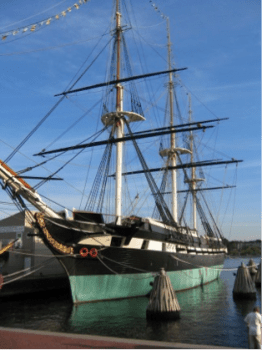
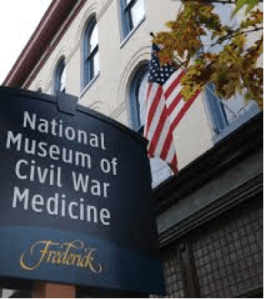 medical treatment used on the fighting men during the Civil War. It is surprising to me that as many men as did, survived their treatments, surgeries and amputations during that war. I guess the main reason for their survival rate was that they were young and healthy when they went into the war. It makes one appreciate modern medical practices such as the advances in cleanliness, antiseptics, surgical applications and especially prosthetics technology.
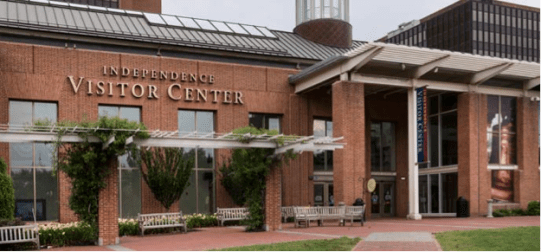
 front of the museum just long enough to go in and ask where to park. I couldn’t have been in the museum more than 3 or 4 minutes, but when I came out to move my car I had a parking ticket and the writer of that ticket was nowhere to be seen. He/she must have been lurking in some doorway, close by, just waiting for me to walk away from my car, because the ticket was a computer print-out with a “lot” of automobile information that had to have been observed and entered into their hand-held device. Man, was that fast! Needless to say, that was a costly museum visit.












 Old Things R New