A Slice of Life
Bill Lites
Day 5 – July 19:
After breakfast this morning, I headed northwest on I-65 & I-90, across the border into Illinois, and for an hour or so toward Chicago, where I visited the Chicago Maritime Museum located in the Bridgeport area of the city. This museum displays a widely integrated history of how the early indigenous tribes used the many waterways for transportation and communications, and how much of this early knowledge has evolved into the maritime system we enjoy today. The museum’s many exhibits, artifacts, and memorabilia bring to life how the early maritime influence has changed modern day transportation systems growing society.
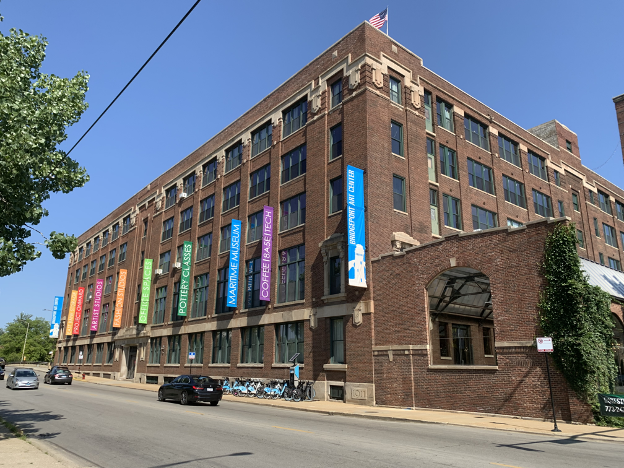
Photo Credit: Bill Lites
After leaving the Maritime Museum, it wasn’t too far to where I visited the Chicago Museum of Science and Industry located in the Jackson Park area. This huge museum has the distinction of being housed in the only remaining building (one of the “White City” buildings) from the 1893 World’s Fair, and was built to house the Palace of Fine Arts for the Columbian Exposition. After the fair, the building was restored in 1923 and again in 1933 for other museums that came and went. This building is big enough to accommodate vary large exhibits such as half of a full-sized United Airlines Boeing 727 airliner and the captured WWII German submarine U-505 and others. I was impressed with the amount of free open space between exhibits, unlike many large museums. It is a “Must See” museum if you are ever in the Chicago area.
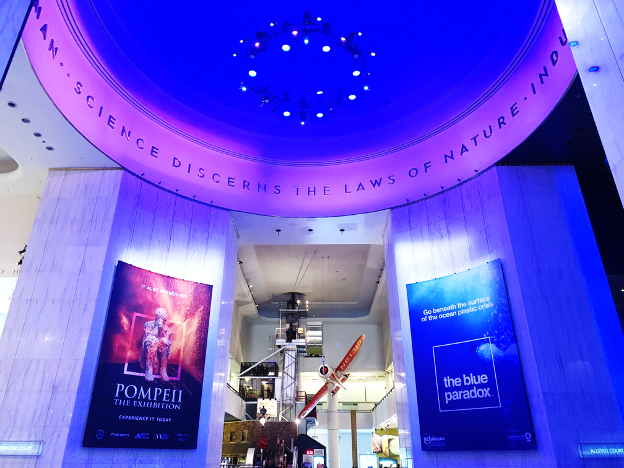
Photo Credit: Bill Lites
I had to kind of rush thru the MOSI because I my plans were to visit my niece Karen and her husband Brian this afternoon and I wanted to save as much time as possible to spend with them. So, after that amazing museum visit, I headed north on I-94 & US-41 to visit the National Museum of the American Sailor located in Great Lakes, IL. However, Brian had informed me about Fort Sheridan, located in the Highland Park area of North Chicago, and since it was on my way up US-41 to visit the Sailors Museum I decided to stop there first. As it turns out, an original French trading post was built at this location in 1670 and was enlarged and named Fort Sharidan in 1840. Used as a military base until 1968, it was deactivated and taken over by the U.S. Navy and now includes parts of the U.S. Naval Training Center Command. I was impressed by the design of their 1891 “Water Tower” located in the center of the base.

Photo Credit: Bill Lites
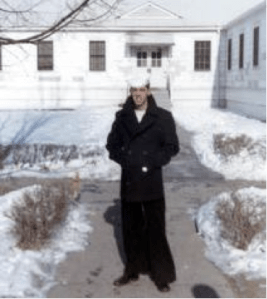
There was some confusion (with Greta my Garmin) about the address for the Sailor’s Museum, and I never did find the museum (I think it is on the naval base and not open to the public) but I did end up finding the Main Gate to the U.S. Naval Training Center, there in Great Lakes, where I did my original 13-weeks of Basic Training (Boot Camp) in the winter of 1956.
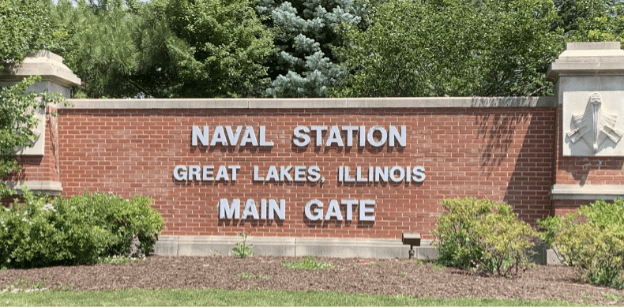
Photo Credit: Bill Lites
Just seeing the words on that entrance wall brought back memories that replayed in my mind. I was young and thought I knew where I was going and what I wanted out of life when I got there. Boot Camp was a rude awakening! It was a grueling period in my life, but I learned a lot about friends, discipline, my duty to my country, and responsibility there during those 13-weeks. I must admit, I really needed that.

Photo Credit: Bill Lites
After that short trip down memory lane, I headed northwest a short distance to visit Brian and Karen, who live in Lake Villa, IL. We had a wonderful visit and Brian cooked a delicious meal, so we didn’t have to go out for supper. We spent the evening reminiscing about the good-old-days, my Road Trip, and their European Christian Ministry. As it happened, they were leaving for Budapest in two days and would include a long-needed vacation there after their European business conference was over. Since Karen had to work and I wanted to get an early start after breakfast the next day, Brian helped me get my things into their guest room and we called it a night. A family visit like that is so great!

Photo Credit: Judy Wills
—– To Be Continued—–
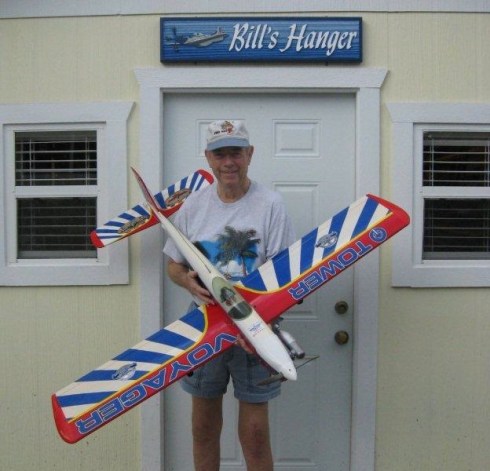
Bill is a retired Mechanical engineer living with his wonderful artist/writer wife, DiVoran, of 65 years in Titusville, Florida. He was born and raised in the Southwest, did a tour of duty with the U.S. Navy, attended Northrop University in Southern California and ended up working on America’s Manned Space Program for 35 years. He currently is retired and spends most of his time building and flying R/C model airplanes, traveling, writing blogs about his travels for Word Press and supporting his wife’s hobbies with framing, editing and marketing. He also volunteers with a local church Car Care Ministry and as a tour guide at the Valiant Air Command Warbird Museum there in Titusville. Bill has two wonderful children, two outstanding grandchildren, and a loving sister and her husband, all of whom also live in Central Florida, so he and DiVoran are rewarded by having family close to spend lots of quality time with.
One of Bill’s favorite Scriptures is: John 10:10

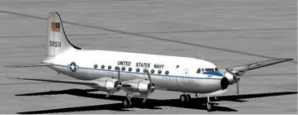
 extended on station, the Navy had to come up with a way to transport me back to the states. So, I received orders to be flown from Japan to Treasure Island Naval Station in California for separation. With everything I owned in my duffle bag, my first attempt to get to an airport was a four-hour hot and bumpy school bus ride, on some of the roughest roads I had ever traveled, to Itazuke AFB. Since I was enlisted, which is as low as it gets in the military, when it comes to travel authorization, several officers bumped me off that flight, and I had to endure another 4-hour bus ride back to the ship.
 accounted for. Once they got the doors closed, we taxied to the end of the runway, the pilot did his pre-flight engine checks, and we headed down the runway at full power. Well, full power didn’t last long, as at least one of the engines started backfiring and the pilot aborted the takeoff. We stopped at the end of the runway, and the pilot did more engine checks. Since there still was no wind from any direction, the pilot turned back on the runway, and headed off at full power again. This time an engine caught on fire, and thank God the pilot had time to abort the takeoff. We all hurriedly deplaned, dripping wet, on shaky legs, and walked back to the terminal, leaving the flight crew and fire department to deal with the smoking engine. That episode didn’t give me a lot of confidence in any C-124 being able to get me safely back to the states.
 was only bumped off one flight there, before I was given a seat on a TWA Super “G” Constellation flight headed for San Francisco. The flight consisted of three, very long 8-hour, over water flight legs, with stops at Wake Island, then at Honolulu, Hawaii and finally to San Francisco International Airport. Even though that flight was luxurious, compared to what the C-124 flight on MATS would have been, I was still mighty glad to be on the ground, and at the end of that trip.
 Naval Reserve, to finish my 6-year tour of duty I had signed up for. I spent most of my free time visiting many of the tourist spots San Francisco is best known for, such as “Alcatraz Island”, Coit Tower, the Planetarium at Golden Gate Park, and of course, Fisherman’s Wharf, where I enjoyed some of their world famous seafood more than once.

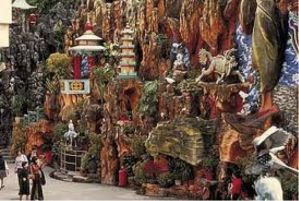 That sight gave me a very uncomfortable feeling at the time, knowing I was eating lunch that close to Communist China. Another part of the tour was to the amazing Tiger Balm Gardens. The gardens consist of acres of Chinese figures cut into a hillside, and painted some of the most vivid colors you can imagine. Overall, the trip to Hong Kong was really great, and a one-of-a-lifetime experience. I would like to go back some day to see how it has changed over the years, as modern pictures show a very modern city compared to what I remember.
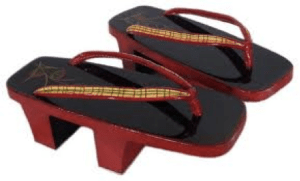 Japan. I can’t remember just what the occasion was for our visit, but the day after we got there the ship hosted an “Open House” for the Japanese people. We had the ship roped off so the visitors would walk in a line, in one direction, through only certain areas. We had a solid stream of people, walking through the ship all day long, and I didn’t notice until it was all over, but all those wooden shoes the Japanese women wear had chipped the paint right off the decks, everywhere the tour went on the ship.
 places I visited while there, was the “Ground Zero Museum.” The museum houses many graphic artifacts from the ruins of the city, and photographs of what was left of the city after the Atomic Bomb (Fat Man) was exploded 1540 feet above the city on August 9, 1945.

 Boom, which was permanently attached to, and located, toward the aft portion of the ship. When a boat was required for any reason, the boat crew had to walk out on the Boat Boom to where their boat was tied-off, and go down the Jacob’s ladder to the boat. Then when they were done with the boat, they had to tie it off to the Painter Line, and climb up the Jacob’s ladder to the Boat Boom, and back to the ship. The first few times I had to do that, I had to walk very slow and it was very scary, since the 1”x 8” catwalk attached to the top of the beam, we had to walk on, was highly varnished, to protect it from the salty environment. This made it very slippery when wet, and I felt like I was “Walking the Plank” every time I went to or from the ship to a boat.
 Enlisted Men’s Club or in Sasebo itself. Finally, after months of this routine, the ship made a trip to Hong Kong, to give the crew an opportunity to be exposed to other cultures of the world, and for a chance at some different scenery.
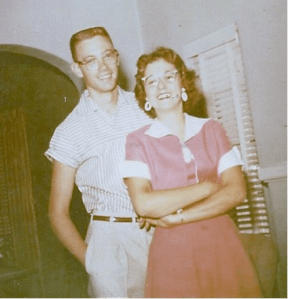
 Kong in 1957, was built into the hills surrounding it, and reminded me of the Mexican border cities of Juarez or Tijuana (except a lot cleaner & more beautiful), where a person could buy anything very reasonably. I bought a tailor-made Navy blue uniform and a beautiful Chinese Cheongsam silk dress for DiVoran for next to nothing, compared to what they would have cost in the states.
 Kong’s 60,000 boat dwellers lived. Here the boats had been tied so closely together, over so many years, that a person could step from one boat to the next, all the way across a portion of Aberdeen Harbor. The only boats that could get out of that mass, were the ones on the outer edge.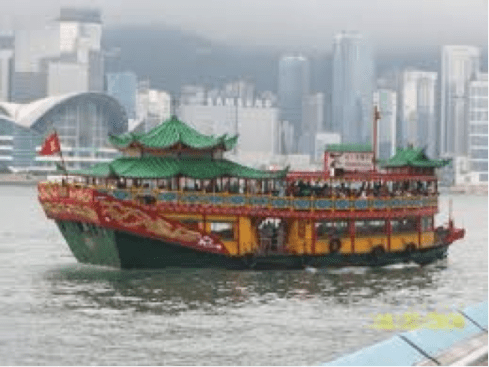

 Honolulu was everything the travel brochures advertise it to be. That was a marvelous time, with swimming, snorkeling, surfing, touring, and an occasional wonderful and delicious evening luau, with lots of pretty hula dancers.
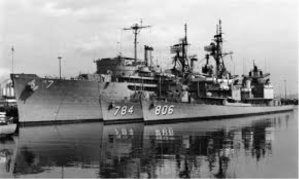 the type of repairs not extensive enough to require a shipyard. The USS Jason (AR-8), the sister ship we were relieving, had her steam up and was ready to head back to California when we arrived. There was a brief “Changing of the Guard” ceremony, then the Jason was gone, and we began the work for which the ship had been designed.
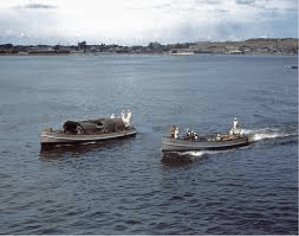 many boat engines used by the ship, as well as boat duty. Since we were tied up to a buoy in Sasebo harbor, anyone needing to leave the ship to go anywhere (ship to ship, or ship to shore) had to go by boat. There was the Captain’s Gig, used by the Captain and the other ship’s officers, and the Liberty Launches, used to transport the ship’s enlisted personnel and for every other task know to man. The three-man crew for each boat consisted of a Boatswain’s mate, a Quartermaster and an Engineman. This meant the ship had to supply enough three-man crews to man all the boats the ship might have in the water at any one time, and still maintain adequate shipboard operations.













 Old Things R New