Butterflies and Flowers

1 Apr

SUNDAY MEMORIES

Judy Wills


As I’ve mentioned before, I grew up in Albuquerque, New Mexico.


New Mexico state flag – Credit Google Search

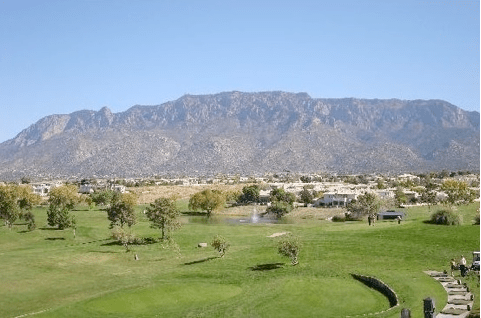
It was a grand place to live and grow up in. I loved the mountains – more now that I am no longer around them to enjoy.


ountains outside Albuquerque – Credit Google Search


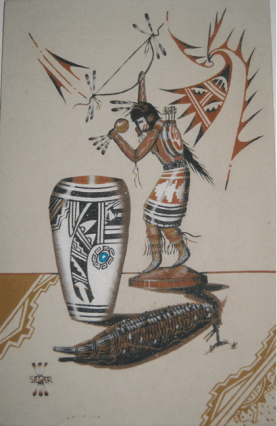
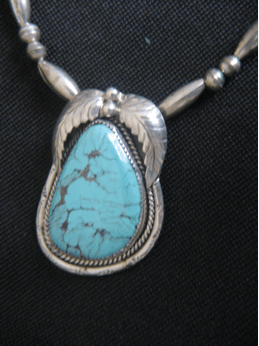
I loved the dry climate – especially more now that I live in a humid environment. I loved the Indian/Mexican culture – I still do, with the sand paintings I have from my Aunt Jessie and the turquoise and silver jewelry I inherited from her.


There just isn’t much that I remember about Albuquerque and New Mexico in particular, that I don’t love. I mentioned once, a few years ago to our daughter, that it was dirty, dusty, and scrubby, but it was home. And I loved it! We had a cute, three-bedroom, one-bath house.


I remember Mom and Dad saying they needed to add another bathroom on – just because I took so long getting ready each morning. But they never did. They did add a covered patio that joined the house to the detached garage, which was nice. We had many a meal on that patio, in the evenings, especially, but sometimes breakfast. It was great.

When our neighbors added a concrete-block fence between their back yard and ours, my Mother planted many rose bushes and iris flowers along our side of the fence.


Fred and me by the roses


There was also a small, long stretch of dirt between the house the driveway, where she planted iris plants. I remember taking the petals from those iris plants and “pressing” them between book or Bible pages. When they flattened and dried, they were almost transparent – I could read through them! It was amazing.

Perhaps that’s why I came to love the iris flower so much. When I see them, it reminds me of “home” and how much I enjoyed those flowers blooming. I’ve never tried my hand at growing them, however. I think I’ve mentioned before that I have a “black thumb” rather than a “green thumb” when it comes to growing anything! When we were in Heidelberg, Germany, someone had planted a bunch of iris bulbs at the end of one of the housing buildings. Every Spring, they just sprouted up – mostly lilac color, some white, some dark purple. My favorite is the dark purple, so I suppose that is the most prominent color of iris Mom had planted.

When our youngest daughter, Janet, was giving birth to her twins, I was able to attend to her in the hospital. I remember one day going by the gift shop in the hospital and stopping in my tracks! Hanging there was a beautiful, stain-glass window hanging that had butterflies and iris blossoms on it! It was one of those “I just MUST have that” moments, and so I purchased it and had it shipped home to Florida. It hangs in our “office” window where I can see it just any time I want.

I think it’s lovely. What do you think?


Are You Sure You Will Go To Heaven?

31 Mar

Walking by Faith, Not by Sight

Janet Perez Eckles


Are you sure you’ll go to heaven?

Reblogged March 31, 2018


Class reunions are so much fun…not. “Wow, you didn’t change a bit,” I heard a friend say.

But how can one not change during decades?

Of course, we change.

But we say state the “politically correct” thing. After all, we’re reuniting with friends from our youth. Those friends that joined us in the silly antics. They shared the insecurities that we try so hard to hide. Those friends who, long ago, sparked envy, and others brought comfort.

Reuniting with them is, can we say “interesting.”

Don’t Miss This Reunion

But there is one reunion no one should want to miss. The reunion that holds the glorious life after we take our last breath. The reunion that opens the door to the place where no more tears are shed. No more pain. No more sorrow or fear.

That reunion with Jesus makes life on earth bearable, doable and possible.

But really? You might be like a friend who voiced her doubt to me recently. She said, “There are many ways to heaven. I’m a good person, I never hurt anyone intentionally and I do my best to live right.”

Hmmm…how good is good-enough? And living right is right-enough?

Did you ever ask that question? What is the level of “goodness” in a person that opens the door to heaven for eternity?

Here’s the Answer

God so longs to reunite with us. That’s a fact. But one day, He shook His head as He observed our feeble attempts to get it “right.” (My personal paraphrase.)

As you can guess, He saw that, on our own, we never could obtain that “good enough” level to gain entry to heaven. So, He did the most amazing thing. He said again that He loves us so much that He sent a Savior to save us from eternal death. He said His name would be Jesus.

There you have Him. Jesus, the Savior, the one in whom we put out hope for life eternal. For a future secure after we close our eyes for the last time. The one who resurrected and is alive. And the One, the only One who promised that when we open our eyes again, we’ll be by His side, walking on the streets of gold. Forever whole and complete, overflowing with joy.

What do you think?

Is it time to celebrate? Resurrection Sunday holds that promise: death has no power over us. Gloom has no significance. And fear has no grip.

Let’s hold on to this truth because the expectation of that reunion with Jesus should keep us dancing in celebration.

That’s precisely God’s will. And when we do His will, we find comfort in this admonishment:

Not everyone who says to me, “Lord, Lord,” will enter the kingdom of heaven, but only he who does the will of my Father who is in heaven. Many will say to me on that day, “Lord, Lord, did we not prophesy in your name, and in your name drive out demons and perform many miracles?” Then I will tell them plainly, “I never knew you. Away from me, you evildoers!” (Matthew 7:21-22)

My Prayer for You

I pray that you, friend, haven’t gotten lost in the busyness of life. And distracted, you’ve been lured by other stuff that you forgot about “that day.”

Instead, I hope that you’ve chosen to open your heart to Jesus and invited Him in. Then you can be certain that as you go through life on earth, you’ll be secure. And in the next life, the sweet reunion with Jesus happens.

Until that day, store this promise in your heart: “Do not let your hearts be troubled. Trust in God; trust also in me. In my Father’s house are many rooms; if it were not so, I would have told you. I am going there to prepare a place for you. And if I go and prepare a place for you, I will come back and take you to be with me that you also may be where I am” (John 14:1-3).

The guest list to enter that House has specific names …is yours included?

Let’s pray.

Father, I don’t know the number of my days; show me how to do your will and to know you through your Word. Grant me wisdom and diligence to fill my heart with truth from Scripture and fill my days with your instructions. I ask for the freedom to live a life rich with the security that heaven is guaranteed for me. In Jesus’ name I pray, amen.

Questions to Ask Yourself

  • What has kept you from knowing Jesus in a personal way?
  • Where will your courage come from to choose to follow Jesus as He instructs?
  • What security do you have that heaven awaits you?

Janet

______________________________________

Did you know I wrote a book filled with words of encouragement, uplifting thoughts and illustrations of real-life triumph to empower you? Its title, Trials of Today, Treasures for Tomorrow: Overcoming Adversities in Life. You can get it HERE.

SOURCE: https://janetperezeckles.com/blog/direction/are-you-sure-youll-go-to-heaven.html

My Sin

30 Mar

Jesus gave himself for our sins to rescue us. Galatians 1:4


I  sin daily yet He loved me so deeply that He took on my sins to himself. Amazing love.

Road Trip~Chimney Rock Monument

29 Mar

On the Porch

Onisha Ellis


Day 12, September 18, 2017

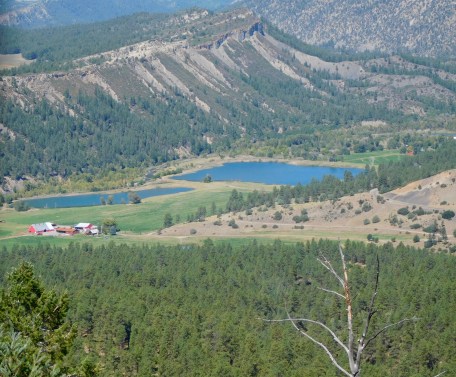
This morning my body decided to rebel  and sent me to rest for the day. Not wanting to ground everyone else, I suggested they visit the nearby Chimney Rock National Monument.

Since I was not on the trip, I am relying on excerpts from the website:

This undiscovered gem is an intimate, off-the-beaten-path archaeological site located at the southern edge of the San Juan Mountains  in Southwestern Colorado. You’ll walk in the footsteps of the fascinating and enigmatic Ancestral Puebloans of the Chaco Canyon, following primitive pathways that haven’t changed for 1,000 years. Archaeological ruins and artifacts, abundant wildlife, and its setting in the breathtaking San Juan National Forest make Chimney Rock a must-see. 


Also from the monument website:

Chimney Rock is the highest in elevation of all the Chacoan sites, at about 7,000 feet above sea level. From the base, the hike to the top is just a half mile and it’s rewarded with dramatic 360-degree views of Colorado and New Mexico.


If you enjoy photography, Mountain Photography has a collection of breathtaking photos.


They returned from their adventure with stories to tell and I enjoyed hearing them and felt confident I would be feeling better for our trip to Mesa Verde the following day.

Here is my favorite picture of the day.


Rebekah and her dad

My Ransom Was Paid

28 Mar

But this I know with all my heart…


Dolphins…Angels of the Sea

27 Mar

A Time to Live

Melody Hendrix


Dolphins….angels of the sea
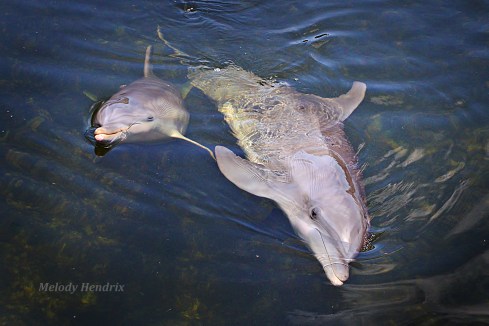
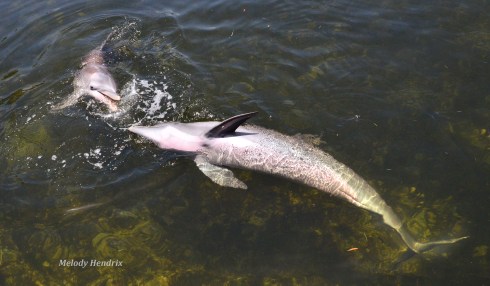
Our hearts are with you, little souls, stay strong.


Although our oceans teem with life, few creatures of the great blue expanse are as magical as dolphins.


 10 fascinating dolphin facts that will make you love them even more.


1. Nearly 40 species of dolphins swim the waters of the world. Most live in shallow areas of tropical and temperate oceans, and five species live in rivers.

2. Dolphins are carnivores. Fish, squid and crustaceans are included in their list of prey. A 260-pound dolphin eats about 33 pounds of fish a day.

3. Known for their playful behavior, dolphins are highly intelligent. They are as smart as apes, and the evolution of their larger brains is surprisingly similar to humans.


4. Dolphins are part of the family of whales that includes orcas and pilot whales. Killer whales are actually dolphins.


5. Dolphins are very social, living in groups that hunt and even play together. Large pods of dolphins can have 1,000 members or more.


6. Depending on the species, gestation takes nine to 17 months. After birth, dolphins are surprisingly maternal. They have been observed nestling and cuddling their young.


7. A dolphin calf nurses for up to two years. Calves stay with the mothers anywhere from three to eight years.


8. Dolphins have acute eyesight both in and out of the water. They hear frequencies 10 times the upper limit of adult humans. Their sense of touch is well-developed, but they have no sense of smell.


9. Dolphins have few natural enemies. Humans are their main threat. Pollution, fishing and hunting mean some dolphin species have an uncertain future. In 2006, the Yangtze River dolphin was named functionally extinct.


10. Because dolphins are mammals, they need to come to the surface of the water to breathe. Unlike land mammals that breathe and eat through their mouths, dolphins have separate holes for each task. Dolphins eat through their mouths and breathe through their blowholes. This prevents the dolphin from sucking up water into the lungs when hunting, reducing the risk of drowning.


Here is more interesting information:


 The evidence for this evolutionary history can still be seen in dolphins today. Adult dolphins have remnant finger bones in their flippers, as well as vestigial leg bones.</divv


Dolphins stay awake for weeks on end.


Recent research has shown the surprising capabilities of dolphins for staying awake for days or weeks on end — or possibly indefinitely.  On the one hand, the ability makes perfect sense. Dolphins need to go to the ocean’s surface to breathe, so they can’t simply breathe automatically like humans do. They have to stay constantly awake to take a breath and avoid drowning. How do they do this? By resting just one half of their brain at a time, a process called unihemispheric sleep.


Brian Branstetter, a marine biologist with the National Marine Mammal Foundation, and fellow researchers conducted a test with two dolphins, seeing how long they could stay alert. According to Live Science:
The scientists found these dolphins could successfully use echolocation with near-perfect accuracy and no sign of deteriorating performance for up to 15 days. The researchers did not test how much longer the dolphins could have continued. “Dolphins can continue to swim and think for days without rest or sleep, possibly indefinitely,” Branstetter told LiveScience. These findings suggest that dolphins evolved to sleep with only half their brains not only to keep from drowning, but also to remain vigilant.
Breathing and not being eaten are two excellent reasons to keep at least half of the brain active at all times. But what about baby dolphins? Turns out, they don’t sleep at all either! For as long as a month after birth, dolphin calves don’t catch a wink of sleep. Researchers think this is overall an advantage, helping the calf to better escape predators, keep the body temperatures up while the body accumulates blubber, and even encourage brain growth.
“Somehow these seafaring mammals have found a way to cope with sleep deprivation, facilitating rather than hindering a crucial phase of development for their offspring,
Dolphins can’t chew. If you’ve ever watched a dolphin eat, you’ve noticed that they seem to gulp down their food. That’s because dolphins can’t chew. Instead, their teeth are used to grip prey. Sometimes, they’ll shake it or rub it on the ocean floor to tear it into more manageable pieces. One theory for why they’ve evolved to do away with chewing is because they need to quickly consume fish before it can swim away. Skipping the process of chewing ensures their meal doesn’t escape.”


Dolphins have worked for the Navy since the 1960s.


The idea of dolphins being employed by the military to scan harbors for enemy swimmers or pinpoint the location of underwater mines may seem like the plot of a B-rated movie. But it’s true and has been for more than 50 years. Since the 1960s, the U.S. Navy has been utilizing dolphins and training them to detect underwater mines. Much the same way bomb-detecting dogs work by using smell, dolphins work by using echolocation. Their superior ability to scan an area for particular objects allows them to zero in on mines and drop a marker at the spot. The Navy can then go in and disarm the mine. The echolocation abilities of dolphins far outstrip anything people have come up with to do the same job.
Dolphins are also used to alert the Navy to any enemies in harbors. Business Insider reports
“The Navy Marine Mammal Program at the Space and Naval Warfare Systems Command (or SPAWAR) in San Diego, California trains 85 dolphins and 50 sea lions, according to SPAWAR spokesman Jim Fallin.”
There has of course been a good deal more speculated about the uses to which the military puts dolphins, including claims that they train them to kill people or plant explosives on ships. None of this has been confirmed by the military. Still, animal activists have long opposed the use of dolphins for military purposes.


Dolphins teach their young how to use tools.


A 2005 study by researchers revealed that a population of dolphins living in Shark Bay, Australia use tools, and they pass that knowledge down from mother to daughter.
Individuals in this small group of dolphins will search for several minutes to find cone-shaped sea sponges that are shaped for the task. They tear this sea sponge free of the ocean floor, then carry it on their beaks to a hunting ground where they use it to probe the sand for hiding fish. The researchers think this helps protect their sensitive snouts while they hunt. The behavior is called “sponging,” and the researchers found it was not only the first instance of tool use in cetaceans, but it’s also evidence of culture among non-humans.


According to National Geographic:
The hunting tactic was almost wholly confined to a small group of females and their daughters among the Shark Bay population, with just a single male showing the same behavior. The challenge for the study team was to find out whether sponging is acquired through social learning — and therefore evidence of culture — or is transmitted genetically. The researchers analyzed the mitochondrial DNA (DNA passed down by females) of 13 spongers and 172 nonspongers. They found the trait appeared to be passed on mostly within a single family line from mother to daughter and that sponging most likely originated in a recent ancestor. “
It’s clearly culture, and a behavior taught by mothers to their offspring. It’s another bit of evidence showing just how intelligent and social dolphins really are.


Dolphins get high on fish toxins.


We know that pufferfish have strong toxins. Apparently dolphins know this too, and they use this for recreational benefit. Normally, pufferfish toxin is deadly. However, in small doses the toxin acts like a narcotic. BBC filmed dolphins gently playing with a pufferfish, passing it between pod members for 20 to 30 minutes, then hanging around at the surface seemingly mesmerized by their own reflections.


Reports The Independent:


Rob Pilley, a zoologist who also worked as a producer on the series, told the Sunday Times: “This was a case of young dolphins purposely experimenting with something we know to be intoxicating … It reminded us of that craze a few years ago when people started licking toads to get a buzz, especially the way they hung there in a daze afterwards. It was the most extraordinary thing to see.”  Apparently humans aren’t the only species to knowingly dabble in strange substances to achieve an altered state of mind!


Dolphins call each other by name.


Dolphins have names and respond when called. Dolphins within pods have their own “signature whistle,” just like a name, and other dolphins can use that special whistle to get the attention of their pod mates. Considering dolphins are a highly social species with the need to stay in touch over distances and coordinate together, it makes sense that they would have evolved to use “names” much in the same way people do.
According to the BBC, researchers followed a group of wild bottlenose dolphins, recording their signature whistles and then playing the calls back to the dolphins
.
“The researchers found that individuals only responded to their own calls, by sounding their whistle back. The team believes the dolphins are acting like humans: when they hear their name, they answer.”
What’s more, they don’t respond when the signature whistles of dolphins from strange pods are played, showing that they’re looking for and responding to specific information within whistles. The research opens up whole new questions about the extent of dolphin vocabulary and also could reveal clues about the evolution of our own language skills.


I am retired and enjoying life. My hobbies are my 5 grandchildren, son and daughter, and my loving husband. I am a photographer and extreme nature lover. I love spending time in my garden or in the wilderness connected to God my Creator.
Melody

Collie

26 Mar

My Take

DiVoran Lites


When I was seven,
We got a brown ball of collie,
And named him Brownie.
One day when he was grown
He followed my brother and me
To our parents’ restaurant
Where we’d get ready for school
Somehow I dropped my belt in
The Main Street intersection.
When I went back
There was the dog
With his paws stretched out to
Guard the belt

Once Mother drove us to
The next town a mile away
Taking along a visiting cousin
Who screamed and cried
About Brownie running behind
The car until Mother stopped
And put him in the trunk.

In the fourth of July parade
Brother and I
Sitting at a small table
Eating dinner
Rode in a trailered boat
Behind a car
A sign on the side of the
Boat said, “Eat at Min’s Café.”
And Brownie followed with
A St. Bernard style keg
Around his neck to
Represent liquid refreshment.

On a 35 degree below, snowy day,
Brownie lay on the school stoop
Waiting for us until the
Teacher let him in to lie
On the floor bedside the
Pot-bellied stove and
Thaw icy fur into puddles.

Summers, we rode horses
Over the dry prairie
Watching for hidden mines
And prairie dog holes
Brownie came trotting
Along behind, always.

He went home with us at night
To watch over us in our crime-
Free town while Daddy and Mother
Finished up 16 hour days at the
Restaurant.

A 1960 California Family Christmas

25 Mar

SUNDAY MEMORIES

Judy Wills


I know….I know….Christmas was either three months ago – or nine months to come. So I am either WAY late or WAY early with this post! However, in going through my pictures recently – something I really enjoy doing – I came upon the Christmas before Fred and I married, and it was in California with my parents and Bill and DiVoran.

We stayed with Bill and DiVoran in their tiny little house, so it was cramped spaces, but sometimes that can be the most fun, right?


In any case, we drove from Albuquerque, New Mexico early that morning, and drove straight through to Inglewood, California. It was a long drive, but there were four drivers, so it wasn’t too bad. We drove in Fred’s car – that lovely, classic 1957 Chevy Bel Air.


It was a dream to drive and to ride in. And with the four of us in the car together – Mom, Dad, Fred and me – we had a great time together. I remember starting out that there was frost on the windows. It didn’t take long before the sunshine on the car melted the frost, even though it was so cold outside.

Because Bill and DiVoran’s house was small, DiVoran made the best use of the space, knowing we would really crowd the place. There was no room for a Christmas tree, so she made one out of a tinsel garland, tacked on one wall.


She placed ornaments on the “tree” and a star at the top. They had a credenza underneath it where we placed our Christmas gifts. It was quite unique and imaginative. She’s so creative, and it shows in the paintings she does, as well.

I remember them setting up a cot for Fred to sleep on.


Bill and DiVoran sitting on Fred’s cot


There was a couch that I suspect folded down to make a bed, where my parents slept.


I have absolutely NO memory of where I slept, but perhaps there was another cot somewhere in that room that was my spot for sleeping. Perhaps they put me in the kitchen? It was a one-bedroom little house, and Bill and DiVoran slept in their bed. It was quite cozy!

We had some plans for things to do while there. I know we went to Disneyland one day.


We went to Marineland.


To Knott’s Berry Farm.


We kept busy, and made the most of our trip.

When Christmas Day arrived, we had a great meal together. And it was made even better because DiVoran’s parents came and joined us at the table. My mom and dad ate from TV trays, but that didn’t lessen the fun. It was just a great time together.

It just goes to show that you don’t have to have a lot of space, or expensive tastes, to have a wonderful family time together. And that’s the key – time together. That’s what makes family. We are blessed.


It’s Spring, It’s Winter, No Wait, It’s Spring Again.

23 Mar

On the Porch

Onisha Ellis


Our daughter has been visiting with us this past week. Although the weather wasn’t the best, we had enough fun to keep me from having time to pick up where I left off on our road trip.

Before Rebekah arrived, I noticed a sign advertising a u-pick farm located on the outskirts of town that grows tulips, hyacinth and daffodils. When I mentioned it to Rebekah, she was keen to go.  We ventured out on Monday, before the rains began only to discover the farm was closed on Mondays. We were determined, though and  Tuesday morning dawned sunny. Rebekah loves tulips so she was in her element.


Wednesday we awoke early and the temperature had plunged.  The rain began shortly after our weekly breakfast with friends. On our drive home we saw a few snow flurries, but the ground was too warm for any accumulation. By lunch time the snow was beginning to fall steadily and we decided to drive highway 441 up towards Cherokee to see if the snow was “sticking” there. This was the first time I had experienced fairly heavy snowfall that melted upon hitting the ground.  I found it to be kind of weird.

In Cherokee, the temperature was colder and while the roads were clear, snow covered the tress and buildings. It was beautiful.


Snow covered solar panels at the Visitor center.


Highway 441 which travels through the Great Smoky Mountain National Park was closed 4 miles north of the Oconaluftee visitor center. We were good with that. Being raised in Florida, icy roads terrify me. Rebekah wanted to take pictures of the pioneer village in the snow, so I bundled up and joined her, while hubby stayed in the car. He has a lot more common sense than I do!


I love the homestead picture. The wood was damp enough to allow the color of the wood to pop. In the Summer sun, it is not as obvious.

On our way back through Cherokee we stopped to get a picture of this painted bear. He is beautiful. I wish the camera on my phone had been able to capture the art.


Thursday, it was as if all the snow and cold temps never happened. The sun was bright in a beautiful blue sky. We decided to take a drive to our favorite waterfall in the area, Cullasaja falls. We love it in every season.


We seem to be physically incapable of visiting Cullasaja without continuing on up the road to Dry Falls. I went with Rebekah to the overlook, but it was cold and I decided to pass on walking down to the falls!


Rebekah


Rebekah will be returning to her home soon and we will be settling back into our life in the mountains. I will need to readjust to the slower pace-no more power walking in the grocery store!  I will need to remember to meet the eyes of the people I see in the shops and to SMILE. Don’t get me wrong, Florida people are friendly. Growing up in the 50s, everyone smiled and said hello but we have lost the art of saying howdy.


Ford Trimotor Flight

21 Mar

A Slice of Life

Bill Lites


“Did you hear that the EAA’s 1929 Ford Trimotor is going to be here to give rides next month?” my friend Dick asked me. “No” I said. “Want to go for a ride with me?” he asked. “Sure, where can I sign up?” I said. I was thrilled by the prospect of being able to fly in one of aviation’s early landmark aircraft, and was eager to hear more about it. Dick and I are volunteer tour guides at the Valiant Air Command Warbird Museum in Titusville, Florida. We both love airplanes and enjoy telling guests to the museum all about the museum’s 35+ vintage airplanes. When we heard about the EAA’s 1929 Ford Trimotor coming to our museum, we could hardly wait.


Henry Ford had wanted to get into the commercial aircraft manufacturing business, to take advantage of the growing domestic commercial airline industry in the United States. So in 1923, Ford bought the Stout Metal Airplane Company, and William B. Stout became chief designer for the new Ford Aircraft Division.The Stout 3-AT Trimotor was the first all-metal commercial transport built in the U.S. much of which was based on early design and developments by the German designer Hugo Junkers. The implacable and underpowered aircraft was barely able to maintain altitude, and Henry Ford was furious. Tom Towle was put in charge of Ford’s aircraft engineering department, and along with Otto Koppen, John Lee and James McDonnell, refined the 3-AT into the 4-AT and eventually into what we now know as the 5-AT Ford Trimotor (commonly known as the “Tin Goose”),


These rugged aircraft were built to handle rough field operations and could also be fitted with floats or skis. The design of the Ford Trimotor represented a quantum leap over other airliners of its time, providing fast and efficient transportation for the airline industry. A total of 199 Ford Trimotors were built between 1926 and 1933. Well over 100 airlines, worldwide, would fly the Ford Trimotor from mid-1927 to late 1933, when more modern airliners began to appear to take their place. By the early 1930’s, the Ford Aircraft Division was reputedly seen as the “largest manufacturer of commercial airplanes in the world.”


The Ford Trimotor became known for its use on many record breaking flights. Commander Richard E. Byrd made the first flight above the geographic South Pole on November 27 and 28, 1929, in a Ford Trimotor named the Floyd Bennett.


A Ford Trimotor was even used for the flight of Elm Farm Ollie, the first cow to fly in an aircraft and to be milked in mid-flight. One of the most famous 5-AT Ford Trimotors was used for 65 years, by Scenic Airways, to fly visitors on sight-seeing flights over Arizona’s beautiful Grand Canyon.


The day arrived for our flight “To Experience the Golden Age of Aviation” in our 1929 5-AT Ford Trimotor. During our pre-flight briefing (seatbelt safety, etc.), we were told this airplane was very simple, and was mechanically flown by the pilot. Then he added that the pilot only had to remember one number. That number was “90 mph”- 90 mph to takeoff – 90 mph for cruise – and 90 mph for landing. We were the first two passengers in line, so we took the two bulkhead seats. This allowed us to talk to the pilot, through the opening to the cockpit, while the plane was loading, and to observe the starting of the two wing engines, out our windows.


The interior of the plane was beautifully restored with rich wood paneling and Art Deco style fixtures of the early 1920’s and 1930’s. The plane had large windows which gave the passengers great visibility during our flight. The seats were very modern and comfortable, with modern seat belts and life vests.  I’m sure they were much more comfortable than the Wicker seats (no seat belts) I’ve read about, that were furnished in the first commercial Ford Trimotor’s. I’m not sure I would feel very safe riding in an airplane in that configuration!


After take-off, we turned south and flew at approximately 1000 feet down U.S.#1. It was a beautiful clear day, and to the east we could see the Indian River and NASA’s Vertical Assembly Building (VAB), and to the west Port St. John, Cocoa and Rockledge. The vibration and noise levels made it hard to talk to my friend across the aisle, but were not as bad as I had expected. Now we turned back north toward TICO Airport, and we were able to view the scenery the passengers on the other side of the plane had been able to see on the way south. The guy at the pre-flight briefing had been right; I could tell little engine difference from takeoff to landing.


My friend, Dick, is a pilot, and after we landed, he had several questions for the pilot while the other passengers were disembarking. I have to admit it was an exciting adventure, and I am really glad we took the flight. And now I have another item I can check off of my “Life’s Bucket List.”


9


—–The End—–


If you are interested in enjoying one of these amazing flights go to eea.org