Archive | Bill Lites A Slice of Life- Wednesday RSS feed for this section

I Love to Travel Part 2

19 Aug

A Slice of Life

Bill Lites

So now, this is an example of how I plan one of my road trips.   I select a specific Aviation museum, from the Guide Book to visit.  I preferably like it to be in an area of the country where I haven’t been before.  Using the guide book, I research the other Aviation museums in the states surrounding the target museum.  Then I use Wikipedia (“Museums in Colorado”) to find all the different types of museums in the states surrounding the target state, that interest me.  I locate the museums, using MapQuest, to establish a route, in those states, and that becomes my itinerary.  I find a major city, nearest my route, with the best airline rate, and my itinerary starts there.  I usually fly Southwest Airlines because I can fly free with my Reward Miles.

My direction of travel does not depend on moving clockwise or counterclockwise, as long as the big two-week itinerary circle brings me back to the same airport.  That way I can pick-up and return my rental car at the same location without any addition drop-off charges.  Rental car costs, gas, food, and museum admissions are usually my only our-of-pocket expenses I have (unless there are tour fees or special tickets. etc.) for one of these two-week trips.  I have my own Accident Insurance, but I’m not always sure my Auto Insurance will cover everything on the rental car, so I usually purchase Travel Insurance that covers anything that could happen to me or the rental car on the trip.

I figure a day’s travel miles (as close as possible) where my itinerary will place me at a location where I can get good motel rates (larger cities generally have more motels to choose from, and their rates are usually lower).  I make advanced motel reservations (usually free with credit card points), so I don’t have to do that on the road.  All of this planning can sometimes take me weeks to arrange, but once it’s all arranged, and I have conformations for everything, I’m ready to go.  
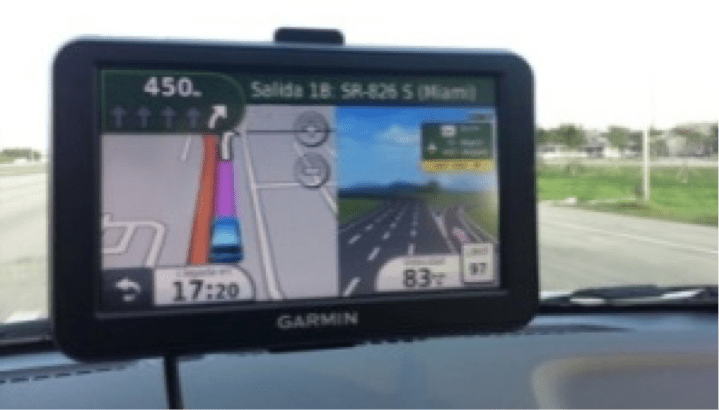
I like to print out a copy of all my conformation notices for airline, rental car, and motels.  Then I make a copy of the description of each museum, which includes name, address, and phone number (days & hours of operation).  I arrange the museum sheets in the order I have decided on for my itinerary, so I will have them at hand in the car as I go.  That way, all I have to do is plug-in the address on my Garmin (Greta), and off I go.  This also gives me a record of everything I might need in case Greta or I get lost, or any other type of problem I might run into.  Sometimes Greta, will take me to the wrong address, or not be able to locate the address.  If that happens, I can refer to the information sheet, for the place I’m heading, and call to ask for directions.  Those sorts of things have happened more than once on my trips in the past.
At the end of each day’s travels, while relaxing at the motel, I record the hi-lights of the day’s activities on my cell phone and email it to my computer at home.  When I get home I use the emails and the internet to thoroughly research each museum for any special or historical data I can find.  It’s amazing how much more interesting my blogs can become with that expanded information.  I arrange the museum’s information in sequence, for that day, and that becomes a short blog (500-700 words).  Then I post one blog per week on the “Old Things R New” website.  This allows others to enjoy my trips (vicariously) if they like that sort of thing, and maybe learn a little something new at the same time.  Writing up these blogs also allows me to re-live the fun memories of the trip again.
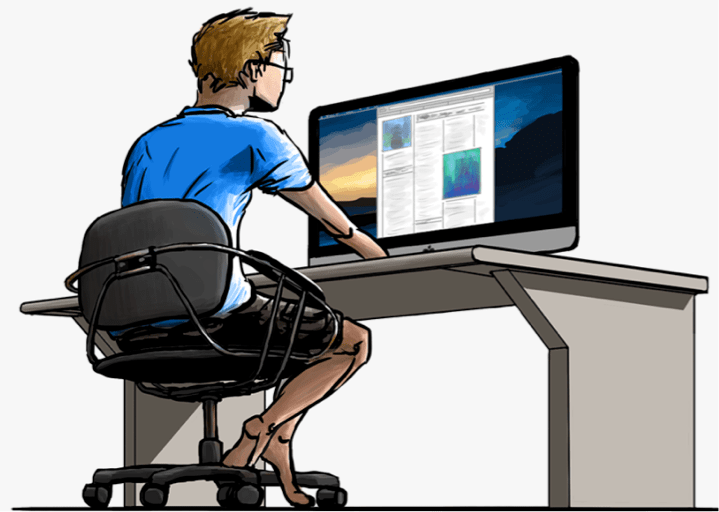
I hope you have enjoyed this quick look at the reason “I Love to Travel” and how I go about choosing, researching, arranging, and reporting a two-week “Bucket List” road trip.  These trips are so relaxing, enjoyable and freeing for me.  I can really recommend travel.  Just getting away from the every-day mundane things of life, and hitting the road to somewhere.  It doesn’t have to be a BIG trip.  Just get out and go.  We have a big country out there, and there is a large variety of very interesting and beautiful places and things to see.  So enjoy it.  If you are ever interested in some of the places and things I’ve encountered on my past trips, you can find my travel blogs at www.oldthingsrnew.com. Enter the Title & Part # (if any) of the blog you would like to read in the search box, at the top of the opening screen.  Press “Search” and that should take you to the blog you are looking for (by Bill Lites).  I wish each and every one of you Happy Traveling and enjoyable reading.

Bill

—–The End—–

Bill is a retired Mechanical engineer living with his wonderful artist/writer wife, DiVoran, of 63 years in Titusville, Florida. He was born and raised in the Southwest, did a tour of duty with the U.S. Navy, attended Northrop University in Southern California and ended up working on America’s Manned Space Program for 35 years. He currently is retired and spends most of his time building and flying R/C model airplanes, traveling, writing blogs about his travels for Word Press and supporting his wife’s hobbies with framing, editing and marketing.  He also volunteers with a local church Car Care Ministry and as a tour guide at the Valiant Air Command Warbird Museum there in Titusville.  Bill has two wonderful children, two outstanding grandchildren, and a loving sister and her husband, all of whom also live in Central Florida, so he and DiVoran are rewarded by having family close to spend lots of quality time with.

Bill

One of Bill’s favorite Scriptures is:  John 10:10

I Love to Travel Part 1

12 Aug

A Slice of Life

Bill Lites

I guess I must have gotten my “Travel Genes” from my father as he was on the road a lot, for his work, when I was growing up.  Then as a teenager I worried my parents when i made several long trips on my motorcycle.  When I joined the U.S. Navy they took me all over the world, and by the time I got out, I was hooked on travel.  After DiVoran and I were married, and I was going to college in California, it didn’t bother me a bit to travel across the “Great American Desert” to visit my parents living in Albuquerque, or to drive to northern California to visit DiVoran’s parents in Livermore.

After I finished college we moved to Florida for my work on the Apollo Manned Space program.  Over the years I ended up working for several of the major aerospace companies, and traveled quite a lot for my jobs.  I retired from the Manned Space program in 1996, after 35-years, as what I called myself, “An Aerospace Nomad.”  I had been shuffled around various areas of the country during all that time and I was ready for a change.  I was working for Lockheed (LSOC), in Florida, when NASA decided to change their Space Shuttle processing contractor.  I was going to have to change who I was working for again, and that was the last straw for me.  I was just 58 years-old when I retired.  I felt like the “Aerospace Hassle” had made an old man of me before my time.  I was ready for a rest from the fast pace and constant pressure of the NASA schedulers.

I’m sure my first year of retirement was like a lot of men, wondering if I could adjust to all that time with nothing in particular to do.  I also wondered if I would be called back to the job like many men I knew were.  If that happened, what would I do?  I would just have to wait and see how I felt about that, if and when I was called back.  As it turned out, I was able to adjust fairly well.  It took a while to take care of all the repairs around the house, but I managed.  A couple of years later I started volunteering, one morning a week, to help at the Car Care Ministry at our church.

A year or so after that, a friend talked me into volunteering, as a Tour Guide, at the Warbird Air Museum here in Titusville one morning a week (that wasn’t hard).  I am interested in all kinds of airplanes, and this allows me to keep up with the warbird community as well as the on-going evolution of the aviation industry.  I love the time and the comradery I get to spent with the friends I have made over the years at both of these weekly volunteer occasions.

Then in 2012, in addition to the volunteer work, I took up a new hobby – travel (one of my favorite things to do) and blog writing.  While browsing thru the gift shop at our Warbird Air Museum, one volunteer day, I happened upon a book titled “GUIDE TO OVER 900 AIRCRAFT MUSEUMS.”  This guide book covers museums in the U.S. and Canada.  I thought, “WOW!  This is just what I need to help me find museums to visit.”  As you might have guessed, I have developed a love of going to museums.  All kinds of museums.  Airplane Museums, Auto Museum, Train Museums, Maritime Museums, or any other kinds of museums I happen to come across.

Using that guide book, I have established a method for my travel plans.  I usually try to make one (two week) trip in the spring and one (two week) trip in the fall of each year.  Note: My 2020 trips have been interrupted by shoulder replacement surgery and Covis-19.  I have had to postpone this summer’s trip twice (from July to September) because of travel restrictions, but I am determined to get at least one two-week trip in before the end of the year.

—– To Be Continued—–

Bill is a retired Mechanical engineer living with his wonderful artist/writer wife, DiVoran, of 63 years in Titusville, Florida. He was born and raised in the Southwest, did a tour of duty with the U.S. Navy, attended Northrop University in Southern California and ended up working on America’s Manned Space Program for 35 years. He currently is retired and spends most of his time building and flying R/C model airplanes, traveling, writing blogs about his travels for Word Press and supporting his wife’s hobbies with framing, editing and marketing.  He also volunteers with a local church Car Care Ministry and as a tour guide at the Valiant Air Command Warbird Museum there in Titusville.  Bill has two wonderful children, two outstanding grandchildren, and a loving sister and her husband, all of whom also live in Central Florida, so he and DiVoran are rewarded by having family close to spend lots of quality time with.

Bill

One of Bill’s favorite Scriptures is:  John 10:10

Our Chicken Little Experience

5 Aug

A Slice of Life

Bill Lites

It was sometime around 2008 and our son, Billy, and his family lived on 5-acres in rural Orange City, where they had started keeping chickens for the eggs.  Every once in a while they would get overstocked with eggs, and we would be the lucky recipients.    Billy had gone to great lengths to protect his chickens with a nesting shelter and a chicken coop, but over the years his flock had been diminished by foxes and the occasional bobcat.

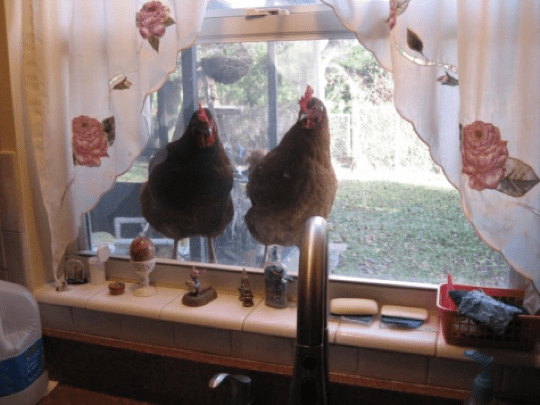
At the time of this story he only had two of the Road Island Red chickens left.  They wanted to go on vacation, but he was afraid that if he let the chickens run free, a fox was sure to get them.  So he asked DiVoran and me if we would keep them for the 2-weeks they would be gone.  He assured us that they were well-mannered and would be no trouble.  We said, “Sure” since our backyard was fenced and backed onto a wildlife area (no neighbors to bother).  Billy brought over a nice “portable” coop for the chickens to sleep in, and we set it up over papers, with food and water on our screened back porch. Every morning we would let them out into our backyard, with food and water, and they pretty much took care of themselves.  They did a dandy job of free “Pest Control” in our back-yard.  We were glad for that, but I’m not sure how happy the birds were about it.

Now this is the amazing part of the story.  Every evening around dusk, the two chickens would let us know it was time for them to go to bed.  They would jump up on our kitchen window sill and peck on the window.  I kid you not!  Just so you would believe me when I told you this story, I took this picture of them on our kitchen window sill looking in.

DiVoran and I took turns going out and picking them up off the window sill, and carrying them in and putting them in their coop.  They didn’t seem to mind being picked up or handled.  They didn’t try to struggle or fly away.  They would just let us pick them up and carry them to their coop.  We would give them more food and water, and place a blanket over the coop.  They were quiet and happy all night. 

We enjoyed watching them scratch around the yard as if it was a new area to investigate every day.  We also had a good time each day looking for the day’s cache of eggs.  It was like a daily Easter Egg Hunt.  It was quite a challenge since they never seemed to lay them in the same place two days in a row.  It was a fun short-term experience, but DiVoran and I both agree we wouldn’t want to do it as a living or even as a hobby.

—-The End—–

Bill is a retired Mechanical engineer living with his wonderful artist/writer wife, DiVoran, of 61 years in Titusville, Florida. He was born and raised in the Southwest, did a tour of duty with the U.S. Navy, attended Northrop University in Southern California and ended up working on America’s Manned Space Program for 35 years. He currently is retired and spends most of his time building and flying R/C model airplanes, traveling, writing blogs about his travels for Word Press and supporting his wife’s hobbies with framing, editing and marketing.  He also volunteers with a local church Car Care Ministry and as a tour guide at the Valiant Air Command Warbird Museum there in Titusville.  Bill has two wonderful children, two outstanding grandchildren, and a loving sister and her husband, all of whom also live in Central Florida, so he and DiVoran are rewarded by having family close to spend lots of quality time with.


Bill


One of Bill’s favorite Scriptures is:  John 10:10

God is Good

29 Jul

A Slice of Life

Bill Lites

The other day I was working on a blog for the website we support (www.oldthingsrnew.com).  I had some relaxing instrumental guitar music, from YouTube, playing softly in the background.  As I was typing along, suddenly the music went off.  I didn’t pay any attention to it at the time, as there are sometimes small breaks between songs.  But then when my attention was drawn away from my blog by the silence, I clicked on the music icon to get it started again, but nothing happened.  Then a message appeared in the middle of the screen that said i had no internet connection.  Well shucks!  There went my music.  That happens now and then when AT&T is doing something that interrupts the internet signal.  So I just went on with my blog work and forgot about it for a while.

After a while, I remembered a phone call I needed to make and got up to make the call.  But no!  There was no dial tone.  I walked over and turned on the TV.  Yep, no signal there either.  Well, this had lasted a while, so I guessed AT&T was taking longer than usual today.  I would give them a couple of hours before I called in a trouble report.  I hated the thought of having to go thru the hassle of talking to their computerized answer machine that thought it was smarter than I was, and wouldn’t let me talk to a real person.  I went back to my blog and forgot about the loss of my music for another hour or so.  The next thing I knew it was time for lunch, and then a quick power nap.  After my nap DiVoran said we needed to run to the store for something important (I can’t remember what it was).  So we got ready, got in the car, and headed to the store.  As we headed down our street, we passed an AT&T service truck parked a few houses down the block.  I stopped and backed up to ask the technician if he knew what AT&T might be doing to the internet and how long it would take.

I quickly told him my internet interruption story and asked him what he thought might be going on.  He asked me where our house was, and I indicated that it was, just down the block.  He said he had just finished an installation at the house next to ours, and he would come take a look at our situation.  We were thrilled that he was going to take the time to check out the problem, and didn’t just tell us to call in a trouble report.  I showed him the power-pole that we shared with our neighbor.  He said “Yep, that is the house I just finished working on.  He went up the power-pole and inspected the work he had done there.  When he knocked on the door, he asked me to try the internet music.  It worked.  Then I checked the TV and the phone, and they all were working perfectly.  

Then he told me that he had found the problem at one of the power-pole connections.  He was very happy to have found the problem before we had called in a trouble report, as I’m sure it would have been discovered that it was his mistake, and there might have been repercussions for him.  I was thankful that I had not had to go thru the nightmare of having to wait (sometimes days) for a technician to have time to come (from where ever they come) to fix the problem.

Now my question for you is, who had that AT&T service truck in that location at that particular time?  I don’t believe in coincidences.  I believe my loving God had that truck in that very location, at that very time, so that He could help the AT&T technician avoid any repercussions, and He could make us happy at the same time.  Now if that isn’t a case of God being good to His children, I don’t know what is.  Thank you Lord.

—–The End—–

Bill is a retired Mechanical engineer living with his wonderful artist/writer wife, DiVoran, of 61 years in Titusville, Florida. He was born and raised in the Southwest, did a tour of duty with the U.S. Navy, attended Northrop University in Southern California and ended up working on America’s Manned Space Program for 35 years. He currently is retired and spends most of his time building and flying R/C model airplanes, traveling, writing blogs about his travels for Word Press and supporting his wife’s hobbies with framing, editing and marketing.  He also volunteers with a local church Car Care Ministry and as a tour guide at the Valiant Air Command Warbird Museum there in Titusville.  Bill has two wonderful children, two outstanding grandchildren, and a loving sister and her husband, all of whom also live in Central Florida, so he and DiVoran are rewarded by having family close to spend lots of quality time with.

Bill

One of Bill’s favorite Scriptures is:  John 10:10

Into The Light Again Part 2

26 Feb

A Slice of Life

Bill Lites

As far as accidents is concerned, the Navy has also said that during that same time period, approximately 250 aircraft were lost in Lake Michigan, for multiple reasons, (only 21 pilots were lost).  It should be noted that the U.S. Coast Guard was tasked with the job of providing “crash boats” that followed the carriers for the purpose of rescuing any downed pilots who had to ditch in the lake.

U.S. Coast Guard “Crash Boat”

To date only about 75 of those aircraft have been found and recovered from the bottom of the lake.  As it happens, several years ago, the Valiant Air Command (VAC) Warbird Museum in Florida, where I volunteer as a tour guide, received an F4F Wildcat (FM-1 #414994) fighter aircraft that was recovered from the lake in1993, and restored it to static display condition.  When recovered the aircraft was in remarkably good condition after having sat 300’ underwater on the bottom of Lake Michigan for almost 50 years.  The aircraft’s paint was still blue and the insignias were still clearly readable.

    An F4F Wildcat Fighter Recovery from Lake Michigan

The restoration took five years of loving care by the VAC’s volunteer mechanics.  Most of the restoration crew at the VAC were ex-Grumman employees who had built these aircraft during WWII.  Then after the war, when they retired, many of them had moved to central Florida, and when they heard about our restoration, they wanted to be a part of the project.  They did an absolutely fabulous restoration job, and the aircraft looks like it just came off the assembly line.  

      F4F Wildcat Fighter (414994) Static Display at VAC

While the restoration crew was hard at work, they thought they would try and find out who the pilot was, flying the aircraft the day it ended up in the lake, and what had happened to him.  They did some research, and discovered that he didn’t go down with the aircraft, that his name was Ensign William E. “Dixie” Howell, that he had survived the war, he was still alive (then age 75), and he lived in the small town of Ocala in Central Florida.

      F4F Pilot Ensign W. E. “Dixie” Howell

When the restoration was complete, the museum decided to invite “Dixie” to the dedication ceremony there at the VAC in 1997.  The first thing “Dixie” said when he saw the aircraft was, “I can’t believe it.  That aircraft looks better now than it did the day I crashed it in the lake!”  They took a picture of “Dixie” in the cockpit with a big smile on his face.  I can just imagine how he must have felt.  Here he was looking at the aircraft that he thought he would never see again, much less be able to sit in the cockpit at the controls.  The picture, in his mind, must have been of the last thing he saw as he exited that aircraft after he ditched in Lake Michigan in 1943.   And now he was sitting in that same cockpit 54 years later.  What a memorable occasion that must have been for “Dixie.”

    Dixie & F4F Wildcat (414994) Meet Again

Recently the VAC museum acquired its second Great Lakes recovery aircraft on temporary loan from the Naval Aviation Museum in Pensacola, FL.  This SBD-5 (436291) was recovered by the Navy in 1993 and restored to static display condition by the Naval Aviation Museum before it was loaned to the VAC museum in 2019.  WWII aircraft recoveries from cold fresh water lakes has always made for easier restorations than those from the world’s warm salt water oceans, because of the rapid growth of the coral and the arthropod population in the warmer waters.

Description: C:\Users\Bill Lites\AppData\Local\Microsoft\Windows Live Mail\WLMDSS.tmp\WLMBB1F.tmp\IMG_8610.JPG

SBD-5 (436291) Static Display at VAC

However, indications from recent Lake Michigan recoveries show that in the last ten years or so, the Zebra & Quagga Mussels (arthropods) have invaded the lake, and are attaching themselves to the derelict aircraft structures, and many other things.  The mussel’s secretion attacks and eats away the paint and even the aluminum metal aircraft structural surfaces.  This makes it much more difficult (and expensive) to restore the aircraft to static condition.  This is especially true with those restorations where the aircraft is being restored back to its original flight condition.  

The next time you are in the Central Florida area, be sure to make one of your stops the VAC Warbird Museum and take a look at our beautifully restored aircraft, some of which are seeing the light-of-day again, for the first time, after many years in the cold dark waters of Lake Michigan.

Description: C:\Users\Bill Lites\AppData\Local\Microsoft\Windows Live Mail\WLMDSS.tmp\WLMC090.tmp\IMG_8518.jpg

    —–The End—–

Bill is a retired Mechanical engineer living with his wonderful artist/writer wife, DiVoran, of 61 years in Titusville, Florida. He was born and raised in the Southwest, did a tour of duty with the U.S. Navy, attended Northrop University in Southern California and ended up working on America’s Manned Space Program for 35 years. He currently is retired and spends most of his time building and flying R/C model airplanes, traveling, writing blogs about his travels for Word Press and supporting his wife’s hobbies with framing, editing and marketing.  He also volunteers with a local church Car Care Ministry and as a tour guide at the Valiant Air Command Warbird Museum there in Titusville.  Bill has two wonderful children, two outstanding grandchildren, and a loving sister and her husband, all of whom also live in Central Florida, so he and DiVoran are rewarded by having family close to spend lots of quality time with.


Bill


One of Bill’s favorite Scriptures is:  John 10:10

Into The Light Again Part 1

19 Feb

A Slice of Life

Bill Lites

As a part of the aftermath of the First World War many political and economic changes were seen in America. The national trauma of the war created an ever increasing attitude of isolationism in this country.  One of the immediate results, by the political establishment, was to reduce the military.  The elimination of the unneeded military forces was a large factor in helping to reduce the nations War Debt.  A feeling of relief, celebration and prosperity ramped up during the 1920s until the Great Depression was cast upon us in 1929.  Then the struggle of the 1930s was mainly centered on survival.

Typical “Bread Line” of the 1930s

Even with the buildup of Nazi forces in Germany in the late 1930s, most Americans didn’t want to think about getting involved in another war.  So, when the Japanese attacked Pearl Harbor on December 7, 1941 the United States was not ready for a war.  Even though hundreds of thousands of men immediately signed up for the military services, the U.S. military buildup was slow, with training being a large part of the equation.

U.S. Military buildup and training took time

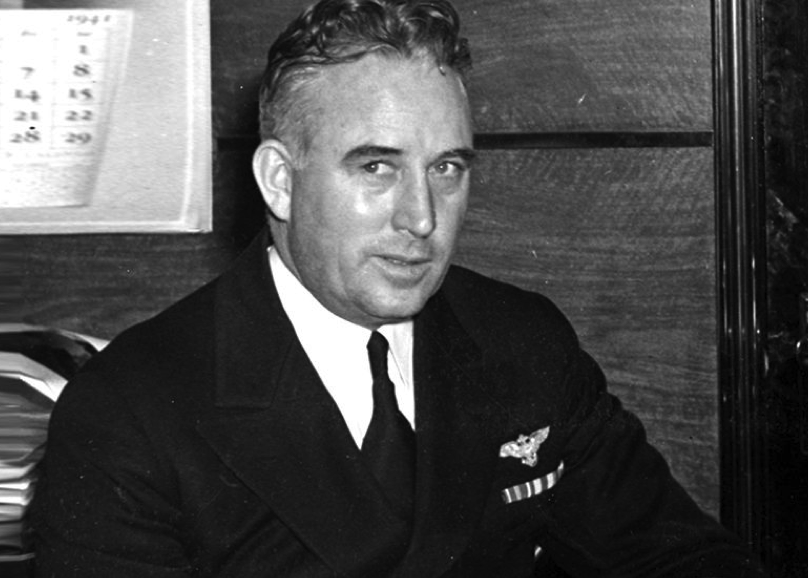
At that time, the U.S. Navy only had a few operational aircraft carriers to help defend America’s coastlines, most of which were assigned to front-line duties, in the world’s oceans, fighting the Axis powers.  However, the Navy needed qualified carrier pilots, and they needed them ASAP.  As it happened, a far-sighted naval commander named Richard F. Whitehead had presented an out-of-the-box proposal for qualifying carrier pilots in early 1941, but the plan was rejected at the time by the Navy department.

Description: https://chicagonavymemorial.org/application/files/7615/6658/7523/Whitehead_banner.jpg

Commander Richard F. Whitehead 

But after the Pearl Harbor attack, Whitehead’s plan was quickly approved and expedited to provide the badly needed carrier pilot qualification source.  In March of 1942 the Navy purchased two early 1900s side-paddlewheel steam ships (SS Seeandbee & SS Greater Buffalo) that at one time had been luxury cruise liners servicing the Lake Michigan waters.

SS Seaandbee

The Navy essentially removed the superstructures and upper decks of both ships, and installed a 550’ long flight deck on each.  When the conversion of the Seeandbee was completed, she was renamed USS Wolverine (IX-64) and was commissioned in August 1942.  With a maximum crew of 270 officers and enlisted men, intense naval carrier pilot qualification operations commenced immediately.  The qualification of 59 pilots on the very first day of the ship’s operation almost doubled Commander Whitehead’s original pilot training estimate.  When the conversion of her sister ship, the Greater Buffalo, was completed, she was renamed USS Sable (IX-81) and the ship was commissioned in May 1943.

USS Wolverine & USS Sable at Chicago pier 

It was not long before the two ships began to be casually referred to as the “Cornbelt Fleet.”  Pilots would take off from their NAS Glenview training base, just north of Chicago, and head out over the lake in search of the USS Wolverine or USS Sable to begin their carrier qualification practice landings and takeoffs.  Once a pilot found his assigned ship, he would land and immediately takeoff to go around the pattern for another attempt.  Over the course of the war, U.S. Navy records indicate that almost 18,000 carrier pilots were qualified on these two ships, including one of the youngest Navy carrier pilots to be qualified, future president George H.W. Bush.  In addition to pilot training, the two ships were also used to train some 40,000 sailors and Landing Signal Officers (LSO) in carrier flight deck operations.    

Landing Signal Officer (Paddles) and Trainer 

It should be noted that, at the time, each pilot who was training to be assigned to flight duty on a frontline aircraft carrier, had to complete eight “successful” landings and takeoffs before he could qualify as an aircraft carrier pilot.  For most of these pilots, this was their first attempt at trying to land an aircraft on a moving deck, and they didn’t all have the steel nerves to do it right the first time.  It is said that as many as 400-600 landing and takeoff operations were performed on these two ships in a single day.  These operational schedules continued seven days a week (weather permitting) until the end of the war.  With all this activity, you might expect that there were some accidents along the way, and you would be right.

Carrier pilot qualification

—–To Be Continued

Bill is a retired Mechanical engineer living with his wonderful artist/writer wife, DiVoran, of 61 years in Titusville, Florida. He was born and raised in the Southwest, did a tour of duty with the U.S. Navy, attended Northrop University in Southern California and ended up working on America’s Manned Space Program for 35 years. He currently is retired and spends most of his time building and flying R/C model airplanes, traveling, writing blogs about his travels for Word Press and supporting his wife’s hobbies with framing, editing and marketing.  He also volunteers with a local church Car Care Ministry and as a tour guide at the Valiant Air Command Warbird Museum there in Titusville.  Bill has two wonderful children, two outstanding grandchildren, and a loving sister and her husband, all of whom also live in Central Florida, so he and DiVoran are rewarded by having family close to spend lots of quality time with.


Bill


One of Bill’s favorite Scriptures is:  John 10:10

My 2019 Great Lakes Road Trip Part 15

12 Feb

A Slice of Life

Bill Lites

Day 15 – Tuesday August 6

This morning Brian, Karen, and I had a great visit over breakfast and coffee, before Karen had to leave for work.  Brian took the time to follow me back into Chicago to turn in my rental car.  When that was out of the way, he took me around parts of the Oak Park area of Chicago where Frank Lloyd Wright had lived and worked.  Wikipedia tells me that Wright’s 1889 home was remodeled in 1895, and his studio was added to the house in 1898.  The house was then restored and registered as a National Historic Landmark in 1976, and is now operated as a museum by the Frank Lloyd Wright Preservation Trust.  

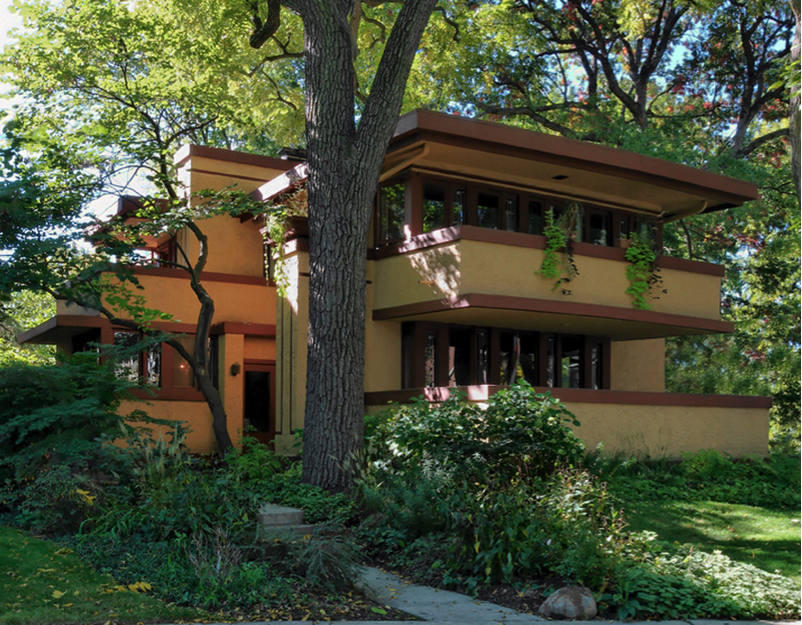
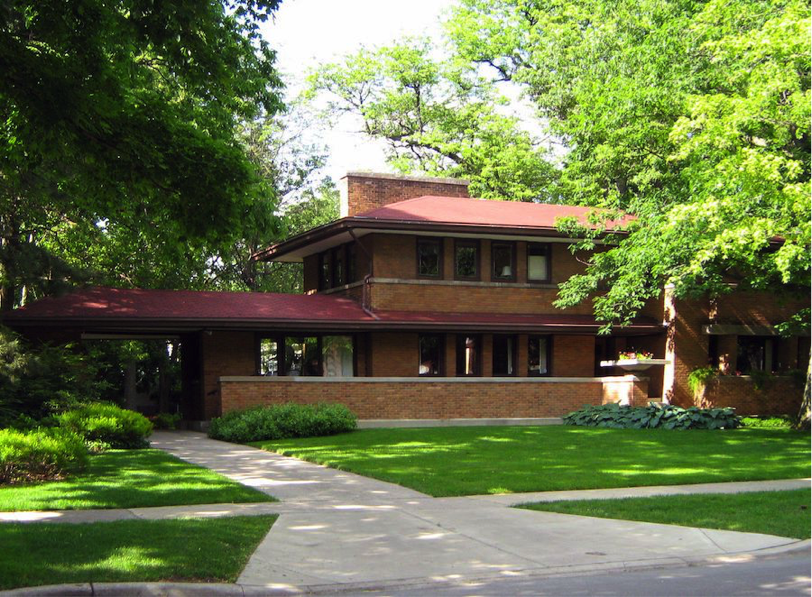
This part of the Oak Park area also boasts of an additional 25 Wright-designed structures, including the Frank Thomas House (1901), the Arthur B. Heurtley House (1902), the Edward R. Hills House (1906), the Laura Gale House (1909), and the Harry S. Adams House (1913), many of which Brian pointed out as we drove past them.

                                                Frank Thomas House (1901) 

                                                Arthur B. Heurtley House (1902)

                                                Edward R. Hills House (1906) 

Description: A large yellow house with terraces.

                                                Laura Gale House (1909)

Description: The exterior of the Harry S. Adams house. The facade is red brick. The house is surrounded by trees.

Harry S. Adams House (1913)

It has been said that Wright was heavily influenced by his first architectural “mentor” Louis H. Sullivan (who Wright called the Father of Modernism).  Wright worked for the firm of Adler & Sullivan from1888 to 1893, where he was Sullivan’s assistant.  During this time, he was introduced to the Prairie School style of architecture.   Wright has been quoted as saying of that style, “We were striving to establish simplicity and a real American form of architecture we could call our own.”  Note: The internet photos of Sullivan and Wright (below) are thought to have been taken of the two men in the late 1880s, during the time they were working together.

                        Louis H. Sullivan                                         Frank Lloyd Wright

After this interesting and informative tour of the Oak Park area, Brian drove me to the Midway International Airport were he dropped me off at the Southwest curb-side check-in area.  By the time I got processed through Security and made my way to the gate for my 1:00 pm flight I didn’t have to wait long.  The Southwest loading and departure for Orlando was right on time.  The non-stop flight was uneventful and the pretzels and mini- cookies were still fresh.  

Description: Image result for southwest airlines

DiVoran was there to pick me up at the Orlando International Airport, and we had a great Colombian taste treat dinner at the Oh! Que Bueno Restaurant on SR-436.  Then we made that familiar trip on SR-50 to Titusville, and home, for a good night’s sleep in my own bed for the first time in two weeks.

I hope you have enjoyed reading about this Great Lakes Road Trip as much as I have, reliving these exciting adventures into some of these areas of our beautiful country.  Stay tuned for another one-of-a-kind trip to places you may or may not have ever been to, as I take to the road on my next adventure in the near future.  Happy travels to one and all.

—–The End—–

 Bill is a retired Mechanical engineer living with his wonderful artist/writer wife, DiVoran, of 61 years in Titusville, Florida. He was born and raised in the Southwest, did a tour of duty with the U.S. Navy, attended Northrop University in Southern California and ended up working on America’s Manned Space Program for 35 years. He currently is retired and spends most of his time building and flying R/C model airplanes, traveling, writing blogs about his travels for Word Press and supporting his wife’s hobbies with framing, editing and marketing.  He also volunteers with a local church Car Care Ministry and as a tour guide at the Valiant Air Command Warbird Museum there in Titusville.  Bill has two wonderful children, two outstanding grandchildren, and a loving sister and her husband, all of whom also live in Central Florida, so he and DiVoran are rewarded by having family close to spend lots of quality time with.


Bill


                        One of Bill’s favorite Scriptures is:  John 10:10

My 2019 Great Lakes Road Trip Part 14B

5 Feb

A Slice of Life

Bill Lites

Day 14 – Monday August 5 (Continued)

To continue this day’s activities, and as I mentioned last week, at the Chicago Maritime Museum, I was interested to read, as part of the museum’s information, the story of the two 1900s paddle-wheel passenger steamers that the U.S. Navy converted to the aircraft carriers “USS Sable” and “USS Wolverine” during WWII.  These two carriers were stationed in Lake Michigan and Chicago was their home port.  The two aircraft carriers were used to train U.S. Navy carrier pilots.  Navy records indicate that many aircraft were lost in the lake, due to multiple causes, and the Valiant Air Command Warbird Museum in Florida, where I now volunteer as a tour guide, has one of the restored F4F Wildcat airplanes that was recovered from the lake 1993.  However, that fascinating story is for another time and another blog.  Look for that blog coming soon.

As I was leaving the maritime museum, I ran over something and damaged a tire on my rental car.  I had made plans to have dinner with my niece, Karen, and her husband, Brian, that evening, so I called to tell them I might be late.  Brian is a great communicator, and he set about to locate the closest Avis agency for me.  He found one within 3-miles of where I was stranded.  This car did not have a spare tire (only an Emergency Repair Kit), so we called the Avis Roadside Assistance people for a tow.

The Avis Roadside Assistance wanted to tow my car 20+ miles to trade cars with me.  Brian said, “In Chicago’s rush-hour traffic that will take hours!”  So, we ended up using my personal Roadside Assistance people, who said they would take me to the closest Avis agency.  They said they could have a tow-truck to my location within one hour.  That was great.  But then about 45 minutes later, they called to tell me that the driver had been given the wrong address, and it would be another hour before he could get to my location.  It was a total of three hours before the tow-truck finally dropped me off at the local Avis lot.   The agent said they didn’t have another car of the type I was driving, or even a tire to exchange, and anyway they were getting ready to close.  Did all this upset me?  Nahh!  

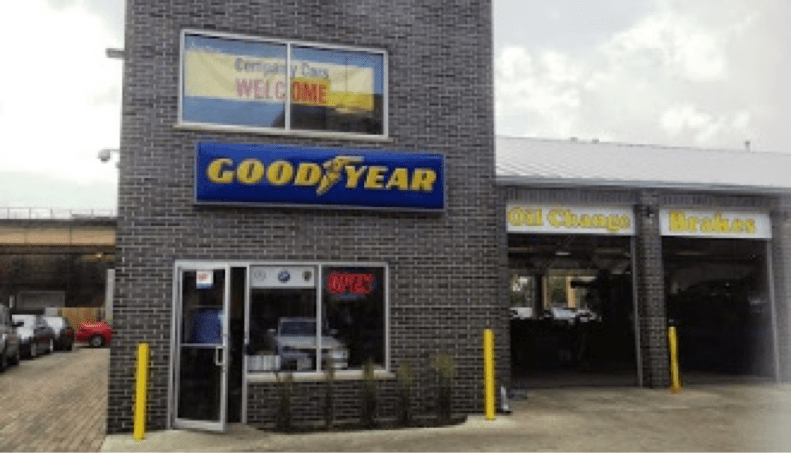
Just to show you how good God is.  There just happened to be a Goodyear Tire shop right next door to Avis.  Now is that a coincidence or what?  So I thanked Him for the tire shop, bit the bullet and took the car to Goodyear for a new tire.  They were swamped with work, but were kind enough to work me into their schedule before quitting time.  I considered myself lucky that it only took them another hour to get the tire replaced.

I chalked up the flat tire fiasco and missing the other Chicago area museums on my list today to some kind of Divine Intervention that I would never figure out.  I  headed north about 60 miles on I-90/I-94 to Lake Villa, IL where I hoped my relatives had not gone to bed.  As luck would have it, they were still up and even had some left-over dinner that they warmed-up for me.  After a short visit, I was more than ready to take a relaxing shower and sleep easy tonight in their guest room.

—–To Be Continued—–

Bill is a retired Mechanical engineer living with his wonderful artist/writer wife, DiVoran, of 61 years in Titusville, Florida. He was born and raised in the Southwest, did a tour of duty with the U.S. Navy, attended Northrop University in Southern California and ended up working on America’s Manned Space Program for 35 years. He currently is retired and spends most of his time building and flying R/C model airplanes, traveling, writing blogs about his travels for Word Press and supporting his wife’s hobbies with framing, editing and marketing.  He also volunteers with a local church Car Care Ministry and as a tour guide at the Valiant Air Command Warbird Museum there in Titusville.  Bill has two wonderful children, two outstanding grandchildren, and a loving sister and her husband, all of whom also live in Central Florida, so he and DiVoran are rewarded by having family close to spend lots of quality time with.


Bill


One of Bill’s favorite Scriptures is:  John 10:10

My 2019 Great Lakes Road Trip Part 14A

29 Jan

A Slice of Life

Bill Lites

Day 14 – Monday August 5

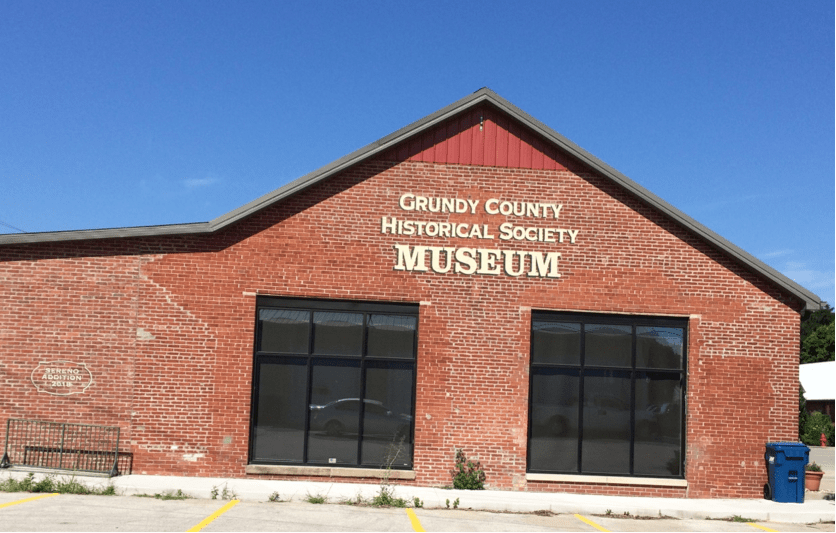
First thing this morning I headed 25 miles east on I-80 to visit the Grundy County Historical Museum located in Morris, IL. This is a small museum that collects and preserves artifacts, documents, and memorabilia related to the history of Grundy County.  This includes items of a cultural, social, geological and anthropological nature.

Heading northeast on I-80 some 20 miles I visited the Old Joliet Prison located in Joliet, IL.  This Illinois State Penitentiary was opened in 1858 to replace the first, and then aging, 1831 Illinois State Penitentiary located in Alton, IL.   Housing nearly 2000 inmates at its peak of operation, the inmate population continued to grow, and this prison was replaced by a new Illinois State Penitentiary in Crest Hill, IL in 2002.  Now just called the Old Joliet Prison, the museum gives tours of a portion of the site which provides visitors with a historical picture of 19th century prison conditions and methods of incarceration.  This was another one of those “You will have to wait for the next tour, and then the tour takes 1-½ hours.”  I opted to go on to the next museum.

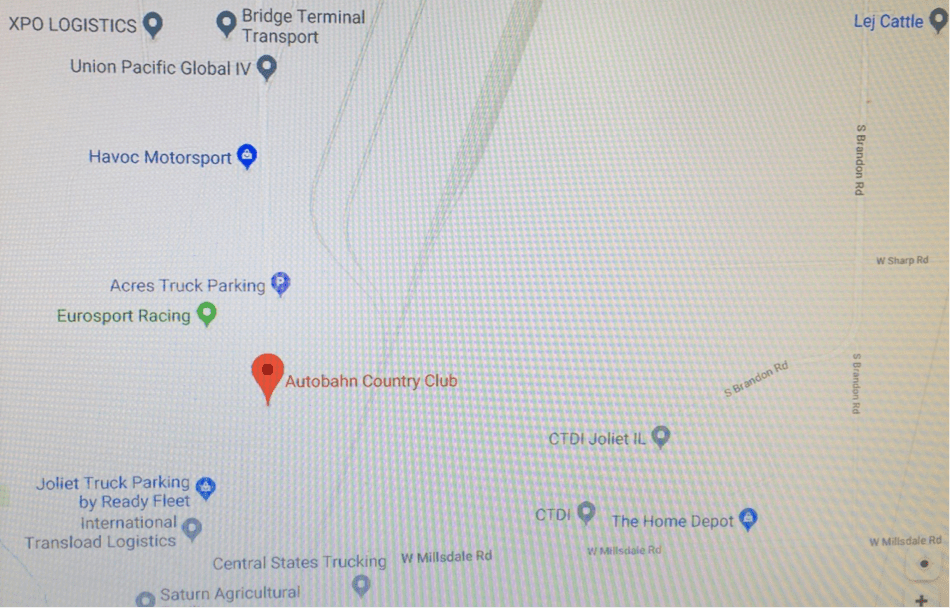
Just a few miles south of the Old Joliet Prison I had planned to visit the Stradale Team, located within the Autobahn Country Club complex.  I had hoped to get to see some radical sports cars in action at their road-racing track.  As it turned out, entry into the shops and track was blocked by a sign on the electric gate that informed me that access to the complex was “For Members Only.”  Rats!!

So, I gave Greta (my Garmin) the address for the Illinois Aviation Museum located about 20 miles north, and we headed out.  The next thing I knew, I was caught up in a huge industrial warehousing complex, with literally hundreds of 16-weelers, of all types, heading in every direction.  That wouldn’t have been so bad, but a lot of them seemed to be heading down the same 2-lane road that Greta had me on, and the backup must have been a mile long.  It took forever to get to the “T” in the road where I thought we could finally make some time.  WRONG!  That 2-lane “T” road was also backed up as bad as the one I just turned off of, IN BOTH DIRECTIONS!  It took me a full hour to finally get to a decent 4-lane road where I could pass some of those trucks and make some time.  Whew!  That was frustrating.

Description: C:\Users\Bill Lites\AppData\Local\Microsoft\Windows Live Mail\WLMDSS.tmp\WLM7D8A.tmp\IMG_8424.JPG

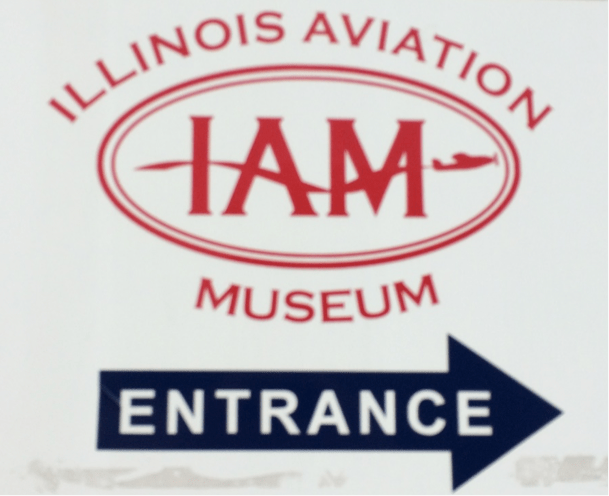
I finally arrived at the Illinois Aviation Museum located adjacent to the Bolingbrook International Airport in Bolingbrook, IL expecting a large museum with lots of beautifully restored airplanes.  What I found was an F-80 Shooting Star, a Huey helicopter, and several smaller airplanes, all jammed in one small hanger.  There was no one around, even after I called out “Hello” a couple of times.  So, I strolled onto the hanger, took a few photos of the airplanes, and told Greta, Let’s tray the next museum.

Description: C:\Users\Bill Lites\AppData\Local\Microsoft\Windows Live Mail\WLMDSS.tmp\WLM159E.tmp\IMG_8362.JPG

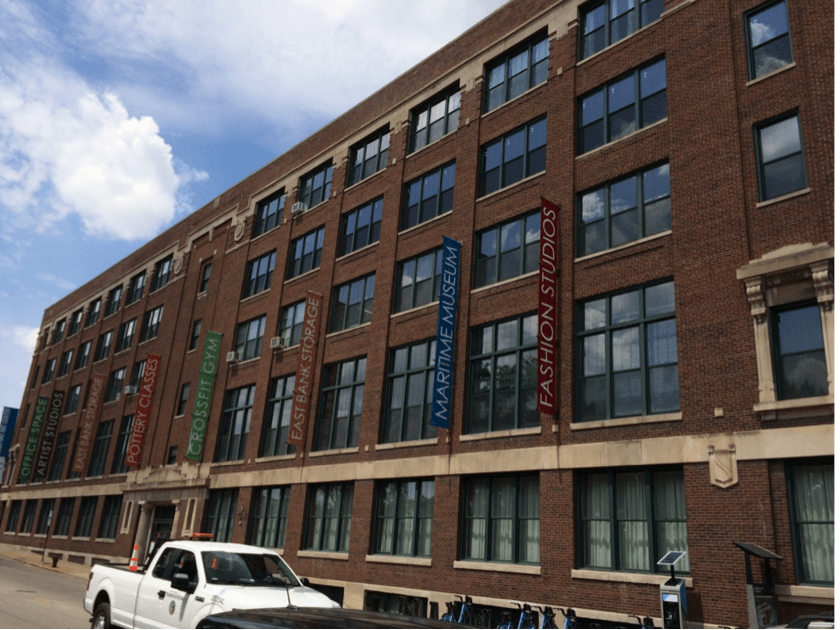
Now I headed northeast about 25 miles on I-55 to visit the Chicago Maritime Museum located in the southern part of Chicago.  This large museum houses exhibits, artifacts and memorabilia related to the history of maritime activities on Lake Michigan, with special interest surrounding the port of Chicago in particular.

As a side note, this museum mentions the two Lake Michigan side-wheeler passenger steam ships that the U.S. Navy converted into aircraft carriers (USS Sable & USS Wolverine) and used to train U.S. Navy carrier pilots during WWII.  As it happens, the museum in Florida, where I volunteer as a tour guide, has on display one of the airplanes that was used to train those pilots on those ships during that time period.

—–This day’s activities will be continued next week—–

Bill is a retired Mechanical engineer living with his wonderful artist/writer wife, DiVoran, of 61 years in Titusville, Florida. He was born and raised in the Southwest, did a tour of duty with the U.S. Navy, attended Northrop University in Southern California and ended up working on America’s Manned Space Program for 35 years. He currently is retired and spends most of his time building and flying R/C model airplanes, traveling, writing blogs about his travels for Word Press and supporting his wife’s hobbies with framing, editing and marketing.  He also volunteers with a local church Car Care Ministry and as a tour guide at the Valiant Air Command Warbird Museum there in Titusville.  Bill has two wonderful children, two outstanding grandchildren, and a loving sister and her husband, all of whom also live in Central Florida, so he and DiVoran are rewarded by having family close to spend lots of quality time with.


Bill


                             One of Bill’s favorite Scriptures is:  John 10:10

My 2019 Great Lakes Road Trip Part 13B

22 Jan

A Slice of Life

Bill Lites

Day 13 – Sunday August 4 (Continued)

Continuing today’s activities at the Johnson-Sauk Trails State Park, I discovered Ryan’s Round Barn was built in 1910 and is one of the largest round barns in the country.  The barn is 80+ feet high and 85 feet in diameter, with a full-size 16-foot wide silo inside.  This restored wooden round barn actually consists of a lot more, on the inside, than a person might think (check the plaque below).  Back in the day it is said, religious groups in the area built their barns round because they “left no corners for the devil to hide.”  What a hoot that is!

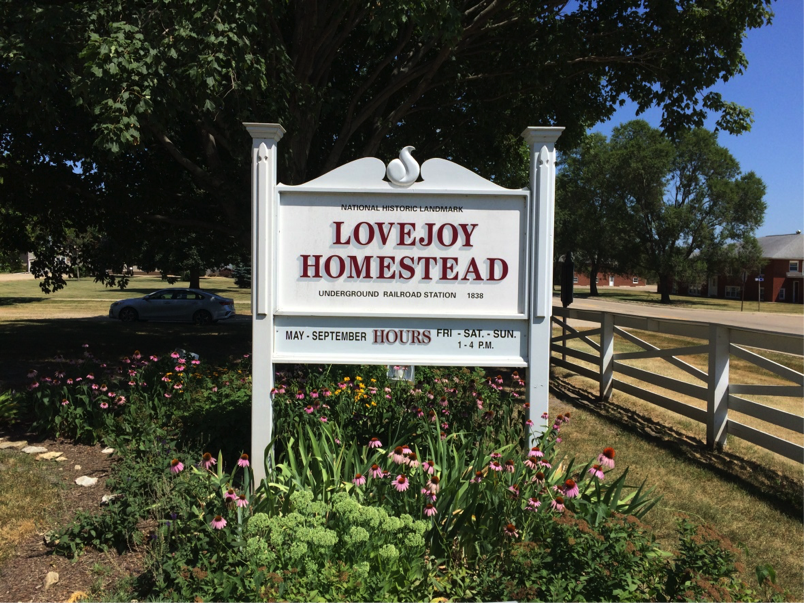
Now I headed east another 25 miles, on I-80, to visit the Lovejoy Homestead located in Princeton, IL.  This 1835 home, that Owen Lovejoy lived in, was another of the many stations of the “underground railroad” used by fugitive slaves, in their flight north to freedom in Canada.  The Rev. Owen Lovejoy was a local Congregational minister and outspoken abolitionist, who preached anti-slavery from his pulpit, and later on the floor of the United States Congress.  The Lovejoy house is decorated in period furnishings, and visitors can view the secret space, in the attic, where the fugitive slaves were hidden.

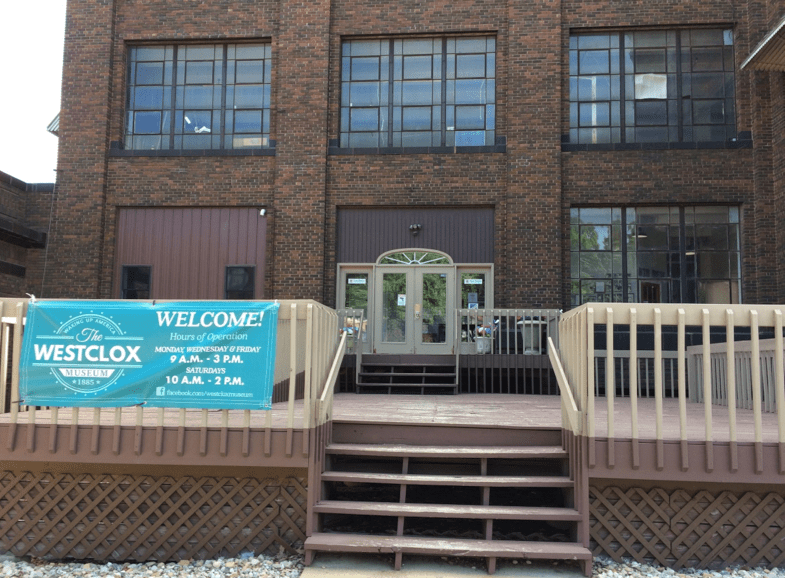
Another 20 miles east on I-80 I visited the Westclox Museum located in Peru, IL.  This museum is housed in the original building where Westclox (United Clock Company/Western Clock Company/General Time Corporation) manufacturing began in 1885.  The museum displays all types of clocks, watches, and other time related items from all over the world.   It also tells the historical story of the Westclox business and family adventures.  From the story of this company, it is likely that most everyone in this country has, or will, own a Westclox product at one time or another in their lifetime.

Just a couple miles east of Peru, I was heading to visit the Illinois & Michigan Canal (I & M) dock located in LaSalle, IL when I saw a small train depot off the side of the road.  I stopped to take a photo, and discovered it was the old 1900 Peru-LaSalle Rock Island Railroad passenger depot, which was the original eastern terminus of the Rock Island Line at that time.

Description: Image result for peru-lasalle rock island railroad passenger depot.

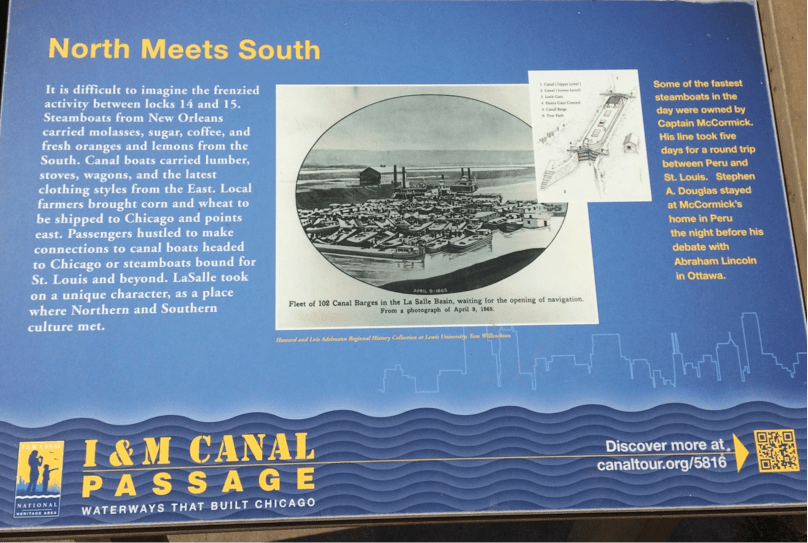
Across the railroad tracks I stopped at The Illinois & Michigan (I & M) Canal Boat Passage dock there in La Salle.  The I & M Canal was built to connect the Great Lakes with the Mississippi River.  The 96 mile Illinois portion of the canal was built in 1846, and connected the Chicago River (Chicago) and the Illinois River (La Salle).  The canal used 17 locks to take care of the 140’ water height difference between Lake Michigan and the Illinois River.  Even though the canal improved productivity in central Illinois; traffic on the canal consisted of only slow mule-drawn barges until America’s western advancing railroad system replaced it in 1933.  Today visitors can take a leisurely ride in a restored mule-drawn canal boat on a one- mile portion of what is left of the original I & M Canal.

Description: C:\Users\Bill Lites\AppData\Local\Microsoft\Windows Live Mail\WLMDSS.tmp\WLMACA3.tmp\IMG_8337.JPG

Now I headed east some 15 miles on US-6 to visit the Ottawa Scouting Museum located in Ottawa, IL.  This small museum displays artifacts and memorabilia related to the history of youth scouting (American & English) over the past 100 years.  William D.  Boyce was one of the founders of the Boy Scouts of America in 1910, and he lived in Ottawa and is buried there.  Ottawa was one of the many canal cities that evolved from the introduction of The I & M Canal in the 1800s.  The museum also displays historical items related to the growth of the city of Ottawa. 

Just outside the city of Ottawa I visited the Illinois Waterway Visitors Center located on the Illinois River.  The Illinois Waterway is operated by the U.S. Army Corps of Engineers, is over 300 miles long, and includes portions of the Illinois, Des Plaines, Chicago, and Calumet Rivers.  The Visitors Center is located at the Starved Rock Lock and Dam site, and gives visitors an in-depth view of the Waterway’s history and operations.  Surrounded by the Starved Rock State Park, on both sides of the Illinois River, this area’s beautiful woodlands are a favorite for camping, hiking, and bird watching. 

Description: C:\Users\Bill Lites\AppData\Local\Microsoft\Windows Live Mail\WLMDSS.tmp\WLMCD6C.tmp\IMG_8341.JPG

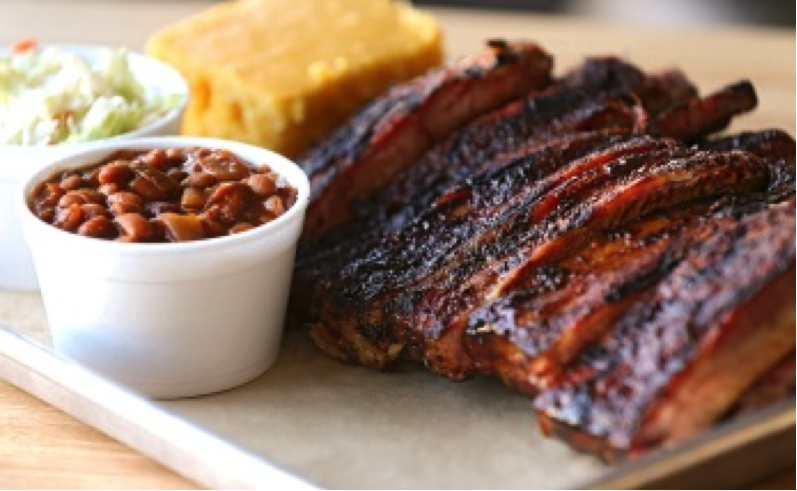
Now I ask Greta (my Garmin) to take me to tonight’s motel there in Ottawa.  Once I got checked in and unpacked my necessities, I heated up my leftover Jimmy Jack’s Rib Shack delicious St. Louis Ribs, with baked beans and cole slaw from last night, and enjoyed that great meal again.  Too bad I can’t take Jimmy Jack and his famous ribs with me on the rest of this trip.

Description: Image result for jimmy jacks rib shack in iowa city ia

—–To Be Continued—–

Bill is a retired Mechanical engineer living with his wonderful artist/writer wife, DiVoran, of 61 years in Titusville, Florida. He was born and raised in the Southwest, did a tour of duty with the U.S. Navy, attended Northrop University in Southern California and ended up working on America’s Manned Space Program for 35 years. He currently is retired and spends most of his time building and flying R/C model airplanes, traveling, writing blogs about his travels for Word Press and supporting his wife’s hobbies with framing, editing and marketing.  He also volunteers with a local church Car Care Ministry and as a tour guide at the Valiant Air Command Warbird Museum there in Titusville.  Bill has two wonderful children, two outstanding grandchildren, and a loving sister and her husband, all of whom also live in Central Florida, so he and DiVoran are rewarded by having family close to spend lots of quality time with.


Bill


                              One of Bill’s favorite Scriptures is:  John 10:10