
A Slice of Life
Bill Lites
My largest and favorite scale model R/C airplane is a big ¼ scale Bellanca Citabria. The real high-wing aerobatic airplane is famous with flyers all over the country and my R/C model is a beautiful airplane, and it flies like a dream. Someone told me that the unusual name of this airplane is really “Airbatic” spelled backwards. How about that for someone with nothing to do but think up an unusual name for a new aerobatic airplane for his boss at Ballanca Manufacturing in 1964 (or maybe it was the boss himself).
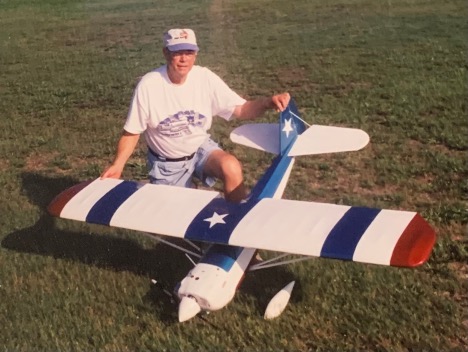
Photo Credit: Bill Lites
Of course, I just had to have a ¼ scale Piper Cub in my stable of model R/C airplanes, as a constant reminder of that very first little hard-wood Piper Cub I built when I was eight years old. This airplane is a model of the famous Piper J-3 Cub that was designed in the 1930s and has been one of the basic trainers used by people all over the world to learn how to fly. My model uses a .91 CID four-stroke engine and looks, sounds, and flies very realistic in the air and on the ground. Great fun!

An R/C model airplane enthusiast from Michigan joined our Titusville Model Airplane Club sometime in 2001 and introduced the members in our club to the Simple Plastic Airplane Designs (SPAD) Coroplast R/C model airplanes. These amazing model airplanes are very inexpensive to build, while being of a very simple and rugged construction. They are designed and built to represent a verity of real airplanes and also used as expendable “Combat” contenders where a pilot tries to clip a 100’ streamer off the tail of his opponent’s airplane (with his propeller) without damaging either airplane (causing lots of mid-air collisions
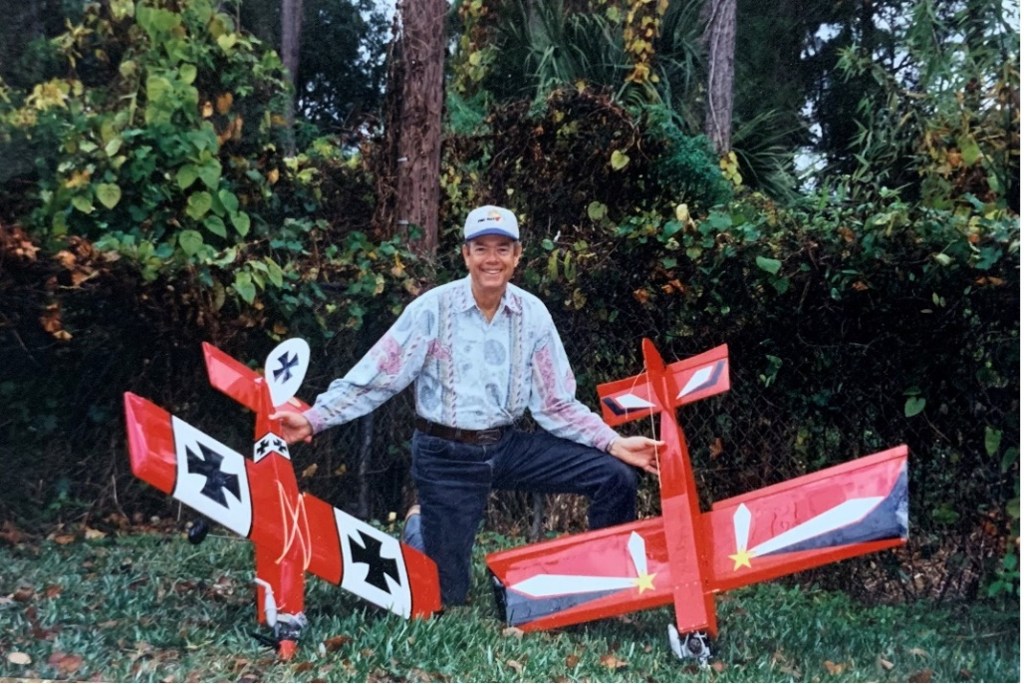
Photo Credit: Bill Lites
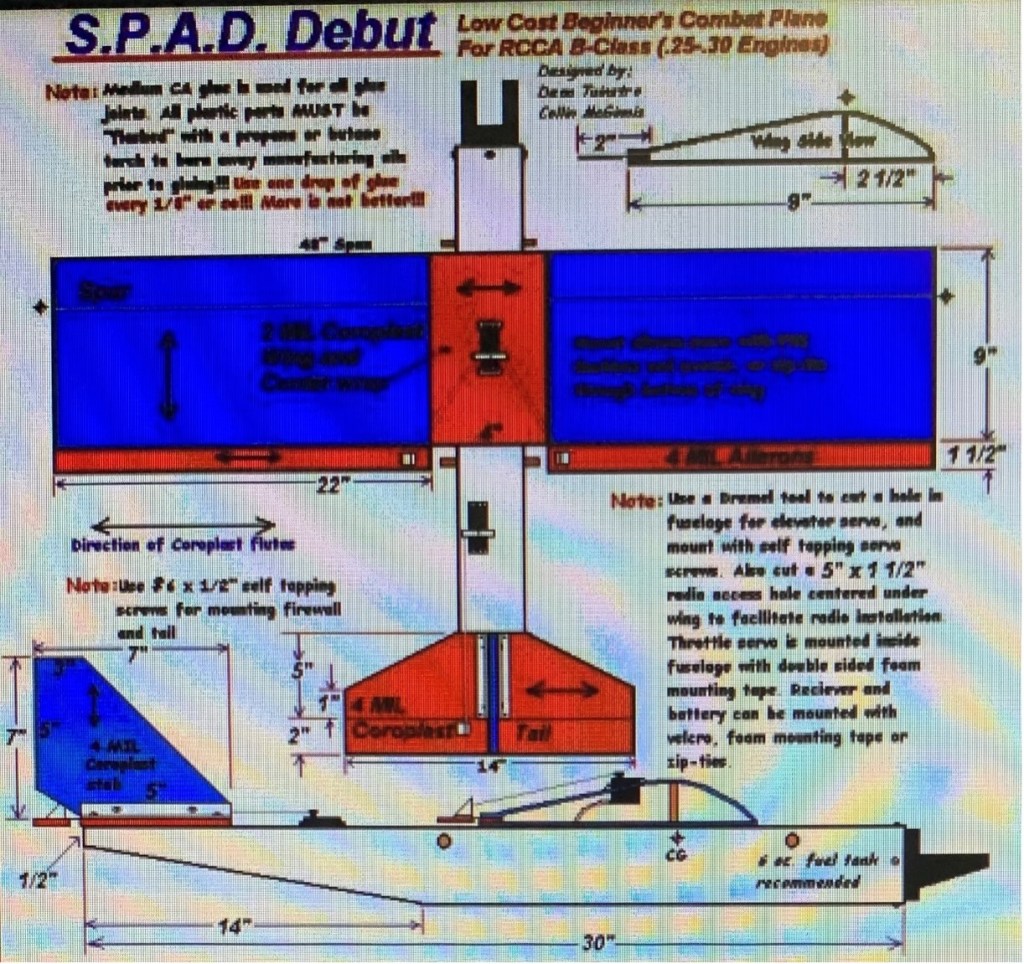
The body is made from a 2”X2” section of PVC downspout and all the other components, such as wing and tail are made of Coroplast sheet. The engine is mounted on a ¾“ thick block of plywood or hardwood, which is held in place with (4) screws. The fuel tank, flight receiver, and flight battery are installed inside of the fuselage with Velcro while the control servos are installed on the outside of the fuselage. The wing is usually held in place with big strong rubber bands.
Design Credit: https://www.spadtothebone.net/
Most of these basic SPAD airplanes are hand launched and belly landed because they have no landing gear. It took a coordinated effort, and a lot of practice to get used to: 1. Start up the engine (in the starting station), then 2. Run the engine up to full power, and 3. Launch the plane (underhanded), while holding the radio in the other hand (a neck strap to hold the radio helped). It was a practiced procedure that we SPAD flyers all learned to do after a few failed attempts.
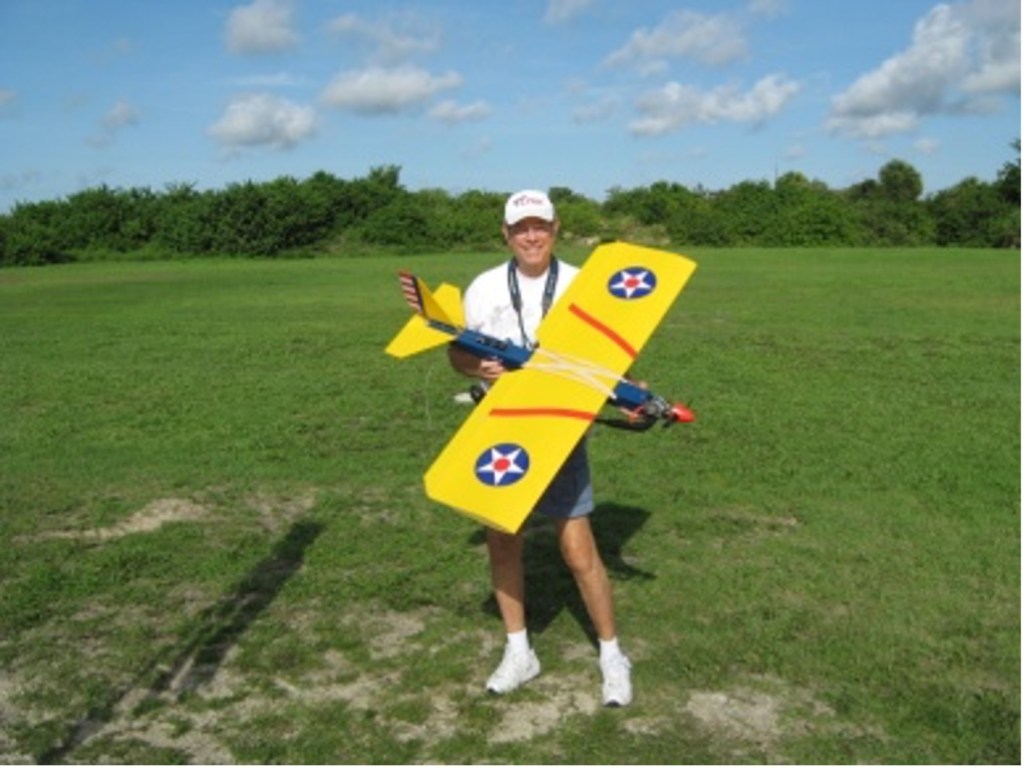
Photo Credit: Bill Lites
I enjoy going to R/C model airplane airshows and fly-ins whenever I get the chance. One of the biggest R/C model airplane airshows I ever attended was the 25th Annual Joe Nall Memorial R/C Model Fly-in held at Joe’s Triple Tree Aerodrome in Woodruff, SC in 2007. The year I attended, there were over 500 R/C model airplanes there of all sizes and descriptions from all over the country. A crowd of over 2000 avid spectators showed up, including as many as 60 R/C model airplane vendors. What a spectacular all-week event that was!

Photo Credit: yahoo.com/search/images;Joe+Nall+Triple+Tree+Aerodrome
One of the most thrilling events I ever witnessed was when I attended the 2009 Dawn Patrol Rendezvous Fly-in at the National Museum of the United States Air Force in Dayton, OH. There were some 30 real and replica WWI biplanes and triplanes that flew in from many parts of the country to participate in that event. There were many WWI reenactors dressed in period costumes who brought their antique automobiles, motorcycles, and bicycles to the event. There were replicas of field hospitals with doctors and nurses for the French, German, and U.S. soldiers
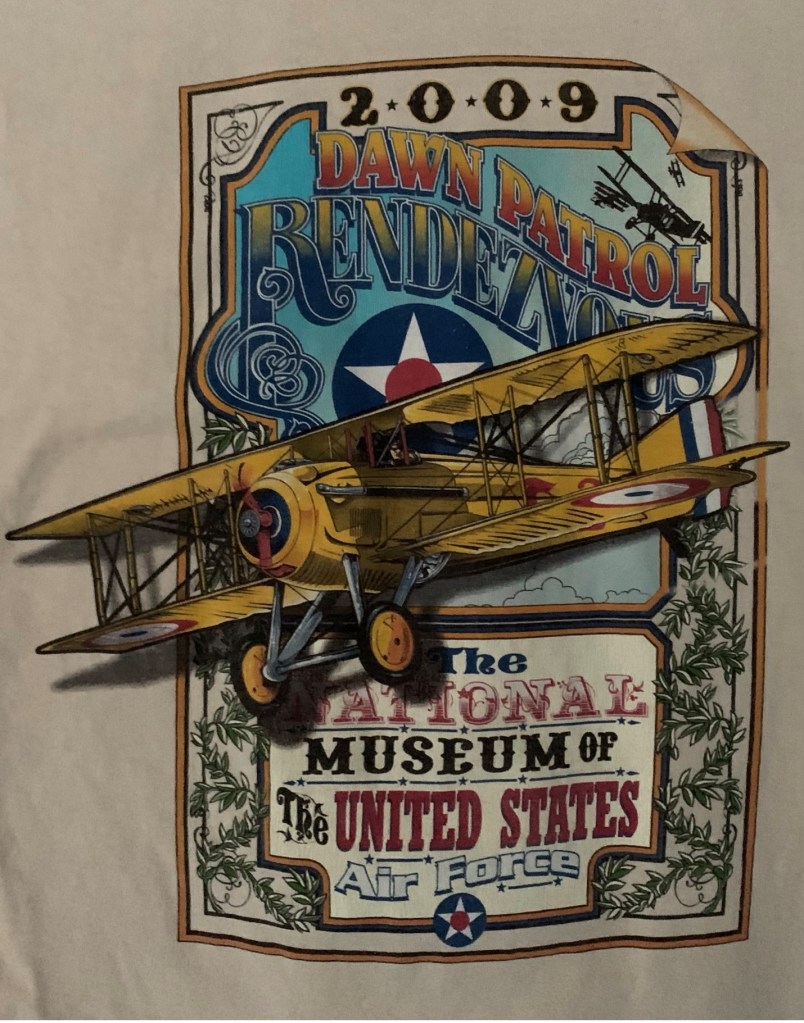
Photo Credit: Bill Lites
There were also many WWI R/C model biplanes and triplanes at the fly-in, which ranged in size from the smallest (¼ scale) to the largest (½ scale) models that flew at intermissions. Of course, the R/C pilots were also dressed in WWI costumes with leather coats, caps, and flight goggles to make their appearance fit in with the overall reenactment venue of the event.
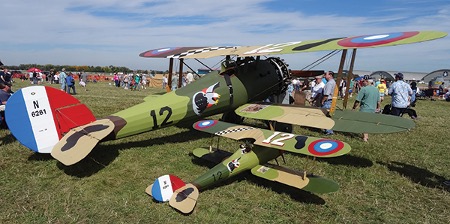
Photo Credit: yahoo.com/search/images;dawn+patrol+rendevoue
The fuel powered R/C model airplanes of the past, that I grew up with, are losing their popularity in many model airplane clubs now-a-days, with the influx of inexpensive foam airplanes and the availability of more powerful flight batteries. However, flying R/C model airplanes has been one of the most fun and rewarding things I have done over the years, and I plan to continue enjoying the sport of flying R/C model airplanes (fuel powered or electric powered) as long as I am able. See you at the flying field.

Photo Credit: Bill Lites
—–The End—–
Bill is a retired Mechanical engineer living with his wonderful artist/writer wife, DiVoran, of 65 years in Titusville, Florida. He was born and raised in the Southwest, did a tour of duty with the U.S. Navy, attended Northrop University in Southern California and ended up working on America’s Manned Space Program for 35 years. He currently is retired and spends most of his time building and flying R/C model airplanes, traveling, writing blogs about his travels for Word Press and supporting his wife’s hobbies with framing, editing and marketing. He also volunteers with a local church Car Care Ministry and as a tour guide at the Valiant Air Command Warbird Museum there in Titusville. Bill has two wonderful children, two outstanding grandchildren, and a loving sister and her husband, all of whom also live in Central Florida, so he and DiVoran are rewarded by having family close to spend lots of quality time with.

One of Bill’s favorite Scriptures is: John 10:10


 Old Things R New
Thank you for stopping by and reading our posts. Your comments are welcomed.