
A Slice of Life
Bill Lites

Then it was north again to the Puget Sound Naval Shipyard at Bremerton, WA and back into our winter blues. That shipyard and what went on there was absolutely amazing! The ship had hardly been tied off to the dock, before the “yard birds” started clambering aboard. There was a brief decommissioning ceremony, after which the ship’s company was informed of their light duty tasks, and told to stay out of the way of the shipyard workers. It took over a month for the Navy to process transfers for all of the 1500 sailors who had brought the ship from the east coast around to the west coast. In the mean time, we had lots of time to watch what was going on with the ship, and as much liberty as our paychecks would allow.
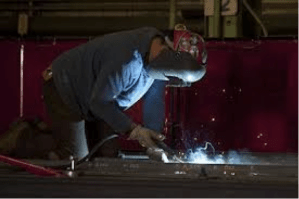 As we watched, one of the first things the “yard birds” did, was to cut openings in the bulkheads, below decks, down both sides of the ship from the bow, all the way to the stern, to provide access to the anti-torpedo armor plate attach studs and nuts. The armor plates ran the length of the ship, and were about 20’x 20’ and 7½ inches thick. It looked like, under normal conditions at sea, that at least half or more of the plate would extend below the water line. It took days for them to cut the welds off each plate, and install lifting pad eyes. While that was going on outside, inside the ship, another group was cutting off the watertight closures over the studs and nuts, and removing the nuts. Once all was in readiness for plate removal, a huge crane on a barge would attempt to lift the plate, while workers inside were pounding on the studs coming through the ship’s hull with air driven jack hammers, trying to push the plate away from the ship’s side.
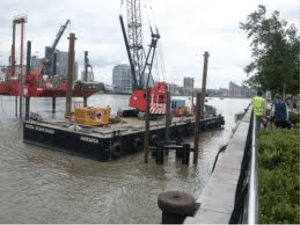 Between each plate and the hull was a layer of black gooey preservative that caused tremendous surface tension when trying to remove the plate. I was amazed to see the removal of each plate cause this huge ship to list one degree. And then, when the plate was stacked on 12”x12” beams on another barge, its edges almost cut the beams in half.
I spent hours exploring the many parts of the ship I had never had the opportunity to see during the six months I had been on board. One of the most memorable finds was, when I discovered the hatch to one of the ship’s fresh water tanks. Since the ship was using shore supplied water and electricity now, the water tank had been drained, and was dry. It was located on the side of the ship and must have been 20’ wide by 100’ long, by 40’ high, with a ladder running down to the bottom from the hatch. When I looked inside, there was a giant ball float arrangement, used to indicate the water level, just like what is used in a toilet tank. What a sight that was!
—–To Be Continued—–


 Old Things R New