Tag Archives: American Space Program

The Contractor~Part 3

20 Jan

A Slice of Life 

Bill Lites


They say, “All good things must come to an end.” Well, things moved along very well for our little construction business, for a couple of years, until 1981. By that time, our little construction company had expanded into building mostly custom homes and duplexes. We had just finished a new “Spec” home and were in the middle of one of those duplex projects. Wouldn’t you know it, that was the year when the Prime Interest Rate rose to an all-time high of 21% and people couldn’t afford the loans to buy a new home.

1

The rise in interest rates happened so fast that we got caught with that one unsold home. In addition to that, the person who had contracted with us to buy the duplex we were building defaulted on his contract with us, and then sued us when we refused to give him his deposit back. This law-suit action unnerved Ivan and Dora and they closed the “Company Bank” on any further building projects. We finally sold the one remaining home, but it took a full year to settle the law-suit over the duplex contract. After the law-suit was settled (in our favor) we were able to sell the duplex, so we didn’t lose any money on either of these projects. But, the days of our little construction company were numbered.

2

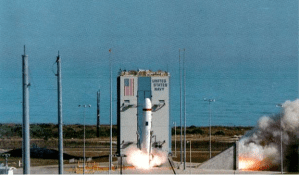
I continued to work with my contractor friend part-time on a few of his projects until 1984, when LMSC called me back to work on their improved Trident II submarine missile flat pad development program. This job required my full attention on the day shift, with additional hours of over-time, which pretty much curtailed any building contracting work. The Trident II program operated from the brand new Launch Complex 46 facility on the Cape Canaveral AFS. The four-year development program went very fast and ended for me in 1989.
3

This time, LMSC offered me a transfer to the Lockheed Space Operations Co. (LSOC), a subsidiary created to operate the Space Shuttle processing program at the KSC, or be laid off with most of the rest of the test organization. Since I didn’t have any prospects for a job with any of the other aerospace companies I had worked for, I chose the transfer. I ended up working on Launch Complex 39 A/B for an ex-Douglas engineer, and friend, who I had interfaced with on the Apollo/ Saturn V moon rocket, way back in 1965, when I was working for North American Aviation. I finished out my 35-year Aerospace career with LSOC helping process Space Shuttle launches and many of its California landing recoveries until 1996 when I retired.

4

I had kept my Contractors licenses current, all these years, with the hopes that I could go back to building houses after I retired. However, now land values had gone sky high and availability was almost non-existent. Someone has said that you have to let something you love go before you can get it back. My dream of being “The Contractor” was great but short lived, and it took me many years to get over that desire. But, I finally had to let it go, as the violent ups and downs of the new home market never gave me a decent opportunity to get that dream back. I now had to look for other challenges, such as hobbies, travel and writing, to occupy my retirement time. I’ve done that, and after 20 years, I am still enjoying every minute of my retirement life. I can defiantly recommend retirement. Try it as early as you can. I think you will like it.

Bill


—–The End—–


The Space Race Begins~Part 1

27 May

A Slice of Life
Bill Lites

Bill Red Spot Plane

I have always been interested in aviation. I grew up during the WWII years, when aviation technology was on the increase. I’m sure my parents bought me toys that were popular with other kids during those years. Thus, as can be seen in the photos below, those toys may have had a lot to do with how I perceived aviation.

Along with that, you might remember the blog I wrote about my “Parachute Man,” who got lost on the front bumper of a car when I was about 5 years old. That incident and my recent meeting with a real WWII paratrooper (Bob Bearden) at an airshow in Texas, remind me of how aviation has been an important thread running through my entire life’s experiences.

3

And then came the “Big Event”, when I was 6 years old, and took my first ride in a real airplane. That life changing event took place in 1945, when I flew with my family in an American Airlines DC-3 from Dallas, TX to our new home in Albuquerque, NM. That one airplane ride hooked me on airplanes from then on! I remember reading about other people who credit their first airplane ride as the catalyst for their aviation career. I can truly say, that was true for me too.

4

During my grade school years, I started building small wooden model airplanes that I hung from my bedroom ceiling or placed on stands to sit on my desk. My parents bought me an electric train set one Christmas, but the interest in model trains didn’t last long and I was soon back to building model airplanes.

5

Next came flying rubber band models made of balsa wood sticks and tissue paper. Not being satisfied with the limitations of the rubber band models, by the time I got to high school, I had started building and U-Controlled flying models airplanes. That hobby shared much of my time with auto engine mechanics.

6

By the time I finished my tour of duty with the U.S. Navy, my love of “Everything Aviation” had pretty much helped me decide to become an aircraft mechanic. However, unbeknownst to me, my involvement in the “Space Race” actually would start in 1958, when I enrolled in my first Mechanical Engineering class at Northrop Institute of Technology (NIT), in Inglewood, CA. I had intended to attend NIT to take their Aircraft & Engine (A&E) course to become a certified aircraft mechanic, but the registrar had other ideas.

7

He talked me into taking their Aircraft Maintenance Engineering course which would give me a Mechanical Engineering degree and an A&E license, and of course, more money for the college. But, before I finished all my courses at NIT, the direction of my life’s career changed, and I would kind of segue away fromthe A&E mechanic job. Now my plan was to be a “Liaison Engineer” in one of the many aviation companies, there in the Los Angeles area, where I would coordinate engineering drawings with the manufacturing department for incorporation into the finished product.

8

However, the A&E Schooling did help me get a part-time job at the Los Angeles International Airport (LAX) in 1960 servicing aircraft for local commuter airlines. I loved that job. Some of the activities I performed for these airlines consisted of adding fuel and oil to airplanes for turn-a-round flights, as well as towing planes to the overnight parking areas when needed. What a thrill that was, as it required communicating with the airport’s control tower on the airplane’s radio.

9

—–To Be Continued—–