Archive | Melody Hendrix A Time to Live-Tuesday RSS feed for this section

Florida Butterflies~Eastern Tiger Swallowtail

2 Jan

A Time to Live

Melody Hendrix


Papilio glaucus, the Eastern Tiger Swallowtail, is a species of swallowtail butterfly native to eastern North America. It has derived its name “Eastern,” because it is abundantly found in the United States east of the Rocky Mountains, starting from Ontario south to the Gulf coast and northern part of Mexico.
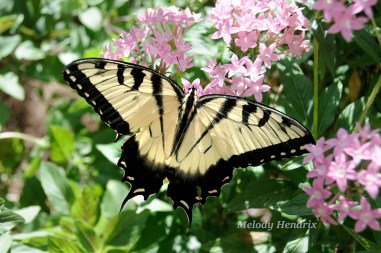


The Eastern Tiger Swallowtail lives in deciduous woods all along the streams, rivers, swamps, edges of forest, river valleys, parks and suburbs. The term “Tiger,” is used due to its distinctive tiger like markings, particularly found on the males.  The word “Swallowtail”, is because of their long “tail” on their hind wings which is similar to the swallows.
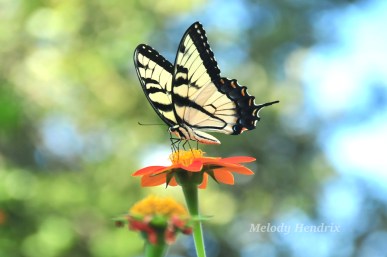


Males are yellowish or yellow-orange in color with black tiger stripes. Their wings are bounded in black with yellowish spots and there are black tiger stripes running around the top of their wings.
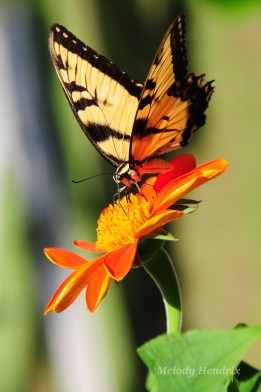


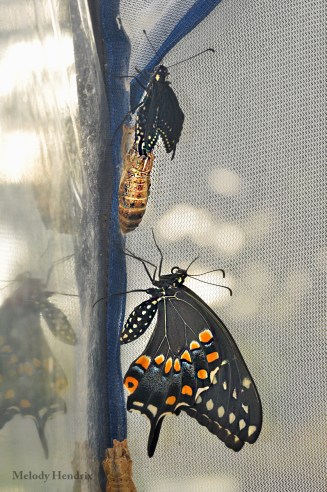
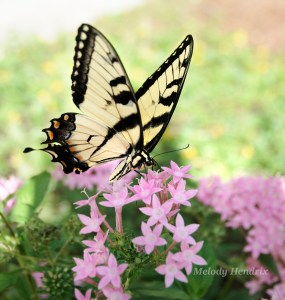
 The color of the female varies from yellow to bluish-black. The hind wing of females has a row of prominent blue stripes and a sparkling blue wash over parts of the inner hind wing. The upper side hind wing has a distinct orange minor spot.
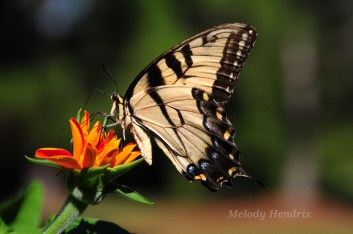
 

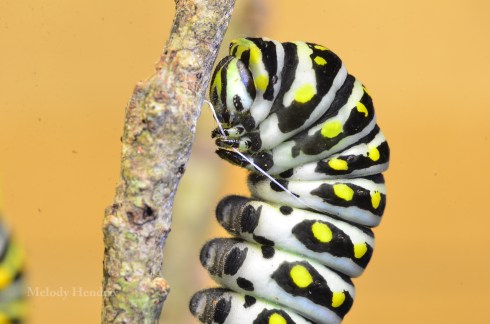
The brown caterpillar resembles bird droppings,  while eyespots on green caterpillar look like eyes of a snake. Both morphological features repel predators.


The caterpillars of this butterfly normally place themselves in the heart of the leaves and face upwards.
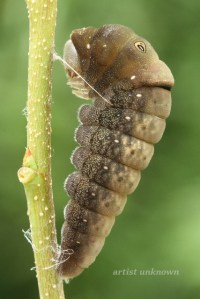
 

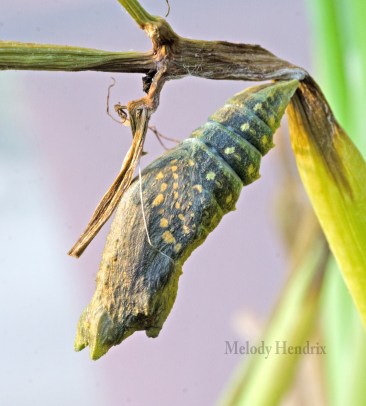
The chrystalis stage


The wingspan is around two and a half to four and a half inches. The females are slightly larger than males.
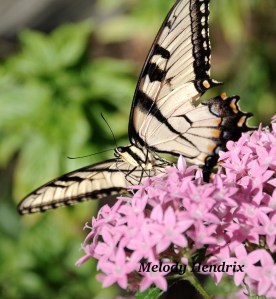


They are powerful and swift fliers and are active only during the day. They spread their wings while resting. They continue to flap their wings while feeding on nectar.


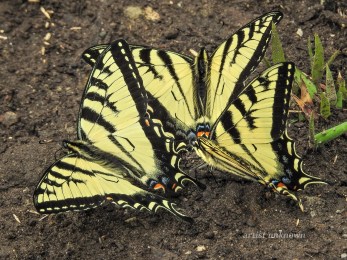
Eastern tiger swallowtails usually avoid company, however, they are a mud puddler. They huddle near each other around puddles and muddy rocks. This helps them take out necessary amino acids as well as sodium ions favorable for reproduction.


This butterfly has several bird predators. Sharp skinned hawk, Great crested flycatcher, Bald faced hornet, Red winged blackbird, Downy woodpecker, White breasted nuthatch, Fiery searcher, Eastern gray squirrel, Chinese mantid, Virginia opossum, Barred owl, Raccoon, Green darner, Common crow and Belted kingfisher are its most common predators. Sometimes they can fly away quickly from their predators. Caterpillars consume oils from the host plants of the carrot family. The stinking taste of the chemical in their bodies repulses birds and other predators.

Eastern Tiger Swallowtail larvae eats the leaves of a variety of wooded plants which serve as host plants.  Sweetbay, mountain ash, basswood, tulip tree.  Other plants include Yellow poplar, American hornbeam, Black willow, American elm, Spicebrush, Red maple and Sassafras.

The adults butterflies eat the nectar of flowers from a variety of plants. Tiger swallowtail visits oregano, purple coneflowers, zinnias and butterfly bush to extract nectar from the flowers. It occasionally consumes juice extracted from the overripe fruit.

Eastern Tiger Swallowtail have three flights from the months of February to November in deep South and two flights from the months of May to September in north.
They brood twice, especially those from the northern part while butterflies from the southern area brood thrice. Males watch out for females who are receptive. They patrol at tree top points and swoop at lower levels to stop in front of females and offer to mate. During courtship the male and female flap around each other before landing and mating. If they feel they are under danger during mating then the female carries the male away. Male swallowtails have a scent like pheromone which is used in courtship.

Hibernation occurs in the pupa stage in those places with cold winter months. Butterflies stop growing once they emerge. The lifespan of the Eastern Tiger Swallowtail Butterfly stretches from spring through fall and live for about a month.

This butterfly’s presence in the garden is magical with it’s large size, beautiful coloring and the ability to approach it while feeding.
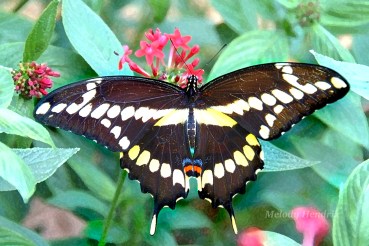
Next week we will explore another swallowtail butterfly very similar to the Eastern Tiger Swallowtail. The Giant Swallowtail.


I am retired and enjoying life. My hobbies are my 5 grandchildren, son and daughter, and my loving husband. I am a photographer and extreme nature lover. I love spending time in my garden or in the wilderness connected to God my Creator.
Melody

Florida Butterflies~Zebra Longwing

26 Dec

A Time to Live

Melody Hendrix


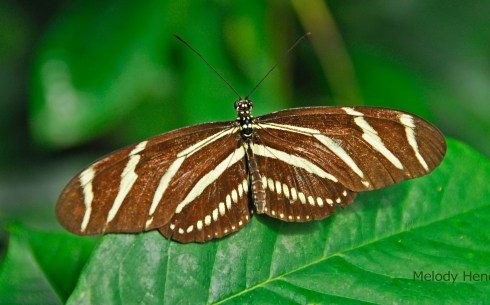
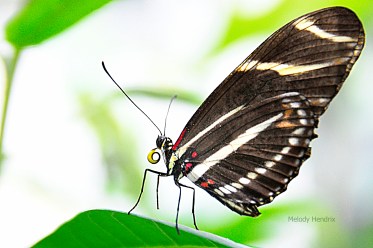
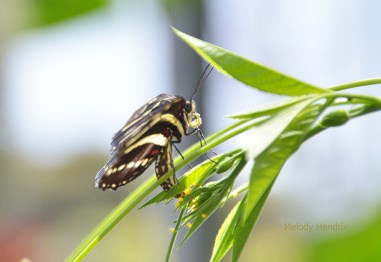
Florida designated the zebra longwing butterfly (Heliconius charitonius) as the official state butterfly in 1996. The zebra longwing butterfly is found throughout Florida in hardwood hammocks, thickets, gardens, and particularly in the Everglades National Park. The zebra longwing butterfly is characterized by long black wings with distinctive thin stripes and a slow, graceful flight.


 It makes a creaking sound when alarmed. Zebra longwings feed on nectar and pollen. They are the only butterflies known to eat pollen, it collects on it’s proboscis.


Most butterflies can only sip fluids with their specialized mouth parts, but the Zebra Longwing takes some pollen as well as nectar. Their saliva enables them to dissolve the pollen and to take their nutrients. Pollen is very nutritious, rich in proteins, unlike nectar which contains almost no proteins, just sugars. This diet allows the butterflies to prolong their lives and also enables them to continue producing eggs for several months. As a consequence they are more dependent on flowers than other types of butterflies and this makes them good pollinators. They feed on a wide range of flowers; some of their favorites are lantana, shepherd’s needle (Bidens). It is also possible that they develop a sort of symbiosis with those plants that provide their preferred pollen.


 This  is probably why they have a long lifespan (about six months, as compared to a more usual one month for other butterfly species).
The zebra longwing butterfly lays its eggs on passion vine leaves. Passion vines contain toxins that are consumed by the caterpillars, which make the adult butterflies poisonous to predators.


The longwing is not so common in northern part of the state. The zebra longwing roosts in a flock with its kin. The longwing sleeps so soundly that you can literally pick it off its roost and return it later, without waking any of the rest of its family.


 The longwing is so comfortable with its perch, it also faithfully returns to the same perch every night. During the day her flight is slow, feeble, and wafting, but she can quickly dart to shelter if threatened or approached. Zebra longwing and other heliconians have a reputation for being very intelligent insects.


They have a social order when roosting; the oldest ones choose the best places. They also gently nudge the others early in the morning to get going. Another interesting characteristic of heliconian butterflies is that they can remember their food sources and return daily to the plants where they fed previously, a behavior known as trap lining. The memory is so strong that if one shrub in their route is cut down they return to the location again and again only to search in vain.

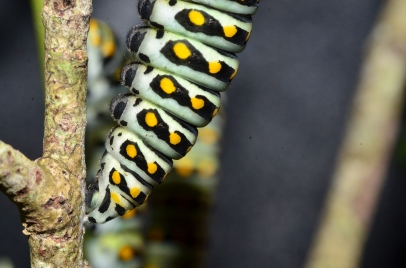
The zebra longwing butterfly begins mating right after it emerges from its chrysalis. The caterpillar has a white body with long black spines and a yellow head.


If weather conditions are right, the zebra longwing butterfly can go from egg to butterfly in a little over three weeks.


Next week we will explore the majestic Eastern Tiger Swallowtail.


I am retired and enjoying life. My hobbies are my 5 grandchildren, son and daughter, and my loving husband. I am a photographer and extreme nature lover. I love spending time in my garden or in the wilderness connected to God my Creator.
Melody

Yellow Sulphur Butterflies

19 Dec

A Life to Live

Melody Hendrix


The yellow butterflies you see around fall are the Sulphur butterflies. There are many variations, but all look similar.


Cloudless sulphur, a common year-round resident in much of peninsular Florida, the cloudless sulphur rapidly extends it range northward each spring and eventually establishes breeding colonies as far north as Canada and the Midwest by the end of summer. As cool autumn weather approaches, adults from the final generation begin a return migration, coming back to the Deep South to overwinter.


You may see them in most open, sunny areas such as roadsides, old fields, gardens, pastures, and fallow agricultural fields.


Larval Host Plants: Cloudless sulphur caterpillars use a various plants in the pea family including, Cassia tree, Partridge pea, sickle-pod senna, sensitive pea, wild senna, coffee senna  and Christmas senna or golden shower. Cloudless sulphurs may be found in all habitats when migrating, but breed in disturbed open areas where their caterpillar host plants and nectar plants are found. They have relatively long tongues and can reach the nectar of some tubular flowers that some other butterflies cannot. They have such a sweet fuzzy face and big eyes.


Males patrol for females throughout the day and especially around nectar. The male initiate courtship by making contact with the female’s wings either with his wings or legs. A receptive female usually flicks her wings and then closes them. Unless the female assumed a “mate refusal” posture (open wings and raised abdomen)


Eggs are laid singly on the host plant. Larvae live exposed (no shelter) and feed on foliage, buds and flowers.


At night, on dark, cloudy days, and during storms, adult cloudless sulphurs roost singly on leaves. Although the adults are brightly colored when flying, they seem to disappear against similarly colored leaves in the shade. The roost site may be low to the ground in shrubs with lots of foliage or high up in the leaves of trees.


The fall migration of cloudless sulphurs is the easiest to observe butterfly migration in the southeastern United States. (Monarchs are migrating at the same time, but they generally fly too high to see and are heading for Mexico. During fall, the numbers of cloudless sulphurs crossing an east-west line bisecting the Florida peninsula at the latitude of Gainesville may approach the numbers of monarchs overwintering in clusters at highly localized sites in Mexico.


 The seasonal migrations of cloudless sulphurs and monarchs are similar in that each species is abandoning large and favorable summer breeding areas that have lethally low winter temperatures for more favorable climates to the south. In the spring, surviving adults head northward and soon repopulate the summer breeding areas. In both species, the northward migration is evidenced by the reappearance each summer in the breeding areas they abandoned the previous fall.


It’s always so interesting to me how plants defend themselves against herbivores. Caterpillars can be quite destructive to it’s host plants. So many host plants grow extrafloral nectaries on the leaf petioles to attract predacious ants for protection.


Different plants grow different shaped cups, but they are all filled with nectar for the ants. The ants in return protect the plants from the herbivores. I find this fascinating how nature works.

Raising these yellow beauties is easy if you have the host plants, which for me is the Cassia tree. A beautiful tree that blooms in the fall in a fantastic display of yellow unusual looking blooms.


It’s chrysalis is much different than the monarch. You can see the butterfly colors through it the day before it emerges.


Next week we will explore our own Florida state butterfly, the Zebra Longwing.

Raising Eastern Black Swallowtail Butterflies

12 Dec

A Time to Live

Melody Hendrix


The Black Swallowtail butterfly is probably the second best known butterfly and one of the easiest to raise, next to the Monarch. It is found throughout much of North America. It is seen in Florida from February to October.

Their coloration and appearance change dramatically as they grow. Many spend the winter season as pupae, a middle stage of development, before finishing their transformation into butterflies in the spring.


They molt, or shed their skin, five times.

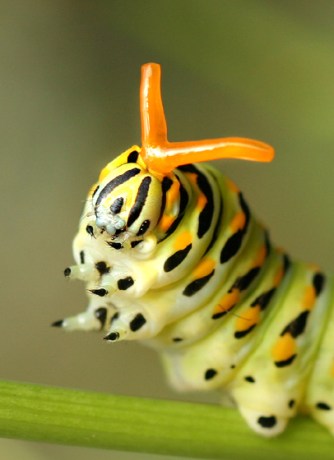
All species of swallowtail caterpillars have a special orange “forked gland”, called the osmeterium, that secretes bad-smelling and bad-tasting chemicals to help keep predators away. The caterpillar absorbs toxins from the host plants. When in danger, the osmeterium everts and releases the foul smell to repel predators.


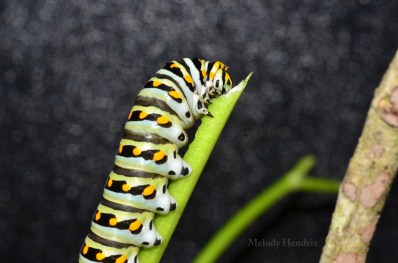
Black swallowtail caterpillars eat and lay their eggs on a variety of herbs in the carrot family as host plants. Many of them poisonous such as the Queen Annes Lace. It’s best not to have them at all.  I have found dill, parsley and fennel (in that order) to be the safest and easiest plant to find and grow for host plants. If you plant enough, you may even have a little for yourself.

Black swallowtail caterpillars are eating machines, growing from .08 inches to 1.57 inches.


When a caterpillar is ready to pupate, it may crawl 100 feet or more away from its host plant. Once it has chosen a spot to pupate, it makes a large mat of silk from its spinnerets (under its head). In the midst of the mat of silk, it makes a small tight silk button

It crawls onto the mat and locks its anal prolegs on the silk button.


Then it makes a silk sling or girdle by touching its spinnerets down, moving its head up and over and down, up and over and down, dozens of times.

It ducks its head and upper body into the girdle and sits for a day.


The following day, the caterpillar literally splits its cuticle (skin) behind its head and wriggles out. The cuticle slowly moves downward to it’s rear and falls off the new chrysalis. The fresh chrysalis attaches its cremaster (rear end of the chrysalis), covered in tiny hooks, into the silk button.


Over the next hour, the chrysalis slowly reshapes into the classic Black Swallowtail chrysalis shape. Over the next 24 hours, it hardens. It will color it’s chrysalis to match the plant. You can see two examples in this picture above.

The day before the butterfly emerges, its tiny wings show through the chrysalis shell.


After emerging, it pumps hemolymph (blood) into its wings and the wings slowly expand into full size and shape.


If the weather is bad, you can wait a day after it emerges to release it. It does not eat the day it emerges. For extreme weather, you can keep adult male and female butterflies in the butterfly house with nectar and host plants and they will mate and lay eggs.


The black swallowtail is protandrous, meaning males emerge before females.  This emergence pattern is advantageous, because males that emerge earlier have a greater success in competing for superior territories, indicated by female preference. The superior territory is more important than body size.


Males can only mate twice a day, but females will mate more than once to replace a sperm supply that has deteriorated with time.

Usually, Black Swallowtails live about 10 to 12 days. Some however, can live up to 35 to 40 day while overwintering.

If you want to see a closeup and detailed view of the Black Swallowtail’s entire life cycle, I think you will really enjoy this video.


Next week will be another one of my favorites (maybe they are all favorites) of  the yellow sulphur butterflies. They have the sweetest face.


I am retired and enjoying life. My hobbies are my 5 grandchildren, son and daughter, and my loving husband. I am a photographer and extreme nature lover. I love spending time in my garden or in the wilderness connected to God my Creator.
Melody

Raising Your Own Butterflies

5 Dec

A Time to Live

Melody Hendrix


Raising your own butterflies
Raising your own Monarch butterflies at home can be fun and exciting. Especially if you have children or grandchildren that can experience it with you. It’s a wonderful display of God and nature. It also teaches struggles and responsibility for being a good stuart of our planet.

Let’s start with what you will need.

1.  You will need a container. What size and what kind depends on how much you want to engage in butterfly rearing and for how long. If you just want to raise a couple of butterflies, you can use a large jar, or anything that doesn’t give off chemicals. Just put a paper towel on the bottom and a stick that the caterpillar can climb up on inside. Mesh or panty hose secured with a rubber band at the top. Don’t use a jar lid with holes poked in because it is not enough air circulation and it can cut the caterpillars.

I recommend, for ease and enjoyment, that you purchase a butterfly house made for raising butterflies. They are made of a fine mesh that the caterpillars can easily climb. They keep out most preditors. They allow air to circulate. They are lightweight and fold up when not in use, and they can be cleaned and sterilized easily. I prefer a large one because I can put in a whole potted plant in it. When it is eaten, I exchange it with another and set the eaten one outside to regrow. Otherwise in a small container, you have to put cuttings in a vase with water. Caterpillars can fall into the water, so be sure to put foil or moss or something so there are no gaps in the stems for the caterpillars to fall through.

The caterpillars when ready to stop feeding, will make their way to the top of the mesh container or a stick. They will either climb a limb that is touching the mesh side, or most likely they will climb down the plant, across the bottom and up the mesh side to the top.
Monarch butterflies are the easiest to raise because their nectar plant and host plant is the same. So you can have many potted milkweed plants in your yard for the butterflies to have nectar and keep some in the butterfly house for the caterpillars. Try to keep the potted plants free of ants and insects by setting the pot on something instead of the dirt. Check plant for spiders or other insects that may be harmful. Water the plant and rinse the leaves before you put it in the house.
There are many sizes and shapes.
2.  Host plants. Be sure to buy enough host plants to last. It’s shocking to see how fast the caterpillars can consume an entire potted plant.
3.  Mist bottle. With all the machanics that go on inside the caterpillar, it needs moisture to be successful. Mist inside of the house and on the plants every few days. You can also keep damp newspaper on the bottom if you are raising them inside. It is better that they are kept outside unless it is cold.
4.  Calendar. You will want to know when to expect stages to happen so you won’t miss anything
5.  Q-Tips. You may need to move a caterpillar from the garden to the buttefly house. It is best to just break off the stem and lay it on top on the designated plant. It will move on it’s own. Or you can take a q-tip and gently work its feet off the plant. Extreme care must be taken not to drop or injure it in anyway.
6. If you have a small container, you can put host plant cuttings in a flourist water pick which will supply water to the plant for a day or two. Or use a vase as mentioned above.

7. Something to climb up on. In a mesh butterfly house, you don’t necessarily need anything for the butterfly to climb up on because it will find it’s way up the mesh sides and form it’s chrysalis at the top. If it is in glass, it will need to climb a stick to form it’s chrystalis at the top of the stick. Be sure there is a clear path from the plant to the stick.  Make sure there is plenty of room for the butterflies wings to expand once it’s emerged.
8. Weight. The mesh butterfly houses can blow away. If you have potted plants inside, there is no worry, but if you just have a vase or something plastic, you may need something sitting on the bottom to keep it from moving. Usually the house comes with tie downs to anchor it, but some rocks or brick sitting on the floor, will weight it down.
9.  Newspaper. Caterpillars poop a lot. You may wish to put some newspaper in your caterpillar condo to catch the frass and make it easy to dispose of. It’s very important to get rid of it – if frass stays in their refuge, they could get sick and die. Make sure where ever you will be raising your butterflies that it is not in a windy location. That will dry them out. Also keep them out of extreme cold or heat. They like humidity, but not to the point of growing mold.
If a chrysalis falls off, but not injured, you can hot glue, tape or pin the silk that holds the chrystalis to the top of the mesh house. The chrystalis can lay on the bottom on a paper towel, but when it emerges, it must have a way to immediately climb up on something to pump it’s fluid into it’s wings.


It will take 9 – 14 days for the butterfly to emerge once it makes it’s chrystalis. Mark it on the calendar. You will see it turn from green to almost black with color showing through. It will emerge the next morning. Probably very early. If the chrystalis stays black for more than 2 or 3 days. It’s dead. Remove it.


When the butterfly is ready to emerge, it does so very quickly. So be ready. Observe the butterfly for a few hours. When its wings are almost dry, you can put your finger under its legs and it should hop on your finger. Walk outside and set it on a flower for some great photos. It cannot fly until the wings have completely dried. It’s a perfect time to get great pictures. You won’t have to chase it all around the garden.

If you see a butterfly laying eggs on a plant, you can collect that plant, keep it in a water source and put it in the buttfly house to allow the eggs to develope and become the butterfly that laid the eggs. Keep picking fresh leaves from the same plant. Most butterflies drink from many different plants for nectar, so your new butterfly will likely have a food source nearby. Having many kinds of nectar plants is the key to attract many different kinds of butterflies.

Raising butterflies can be bitter sweet. They are not all meant to survive. Many things can go wrong and there are enemies lurking. but you can help its chance to survive and multiply. With more and more habitates lost and deadly chemicals everywhere, helping nature is a good thing.

One common problem is when the butterflies wings don’t get proper circulation for the wings to inflate and don’t straighten. It will never fly. The best thing you can do is set it concealed on a nectar plant and let nature take it’s course. Once I thought I would keep one alive. You can feed them red gatorade or cut some bananas or other fruit and they will eat the nectar juice. I wouldn’t recommend doing this. It lived 3 weeks. An unnecessary tedious effort.
Next week I will profile another easy to raise butterfly…. The Black Swallowtail. It loves dill and parsley.


I am retired and enjoying life. My hobbies are my 5 grandchildren, son and daughter, and my loving husband. I am a photographer and extreme nature lover. I love spending time in my garden or in the wilderness connected to God my Creator.
Melody

Florida Butterflies- The Monarch Butterfly

21 Nov

A Time to Live

Melody Hendrix


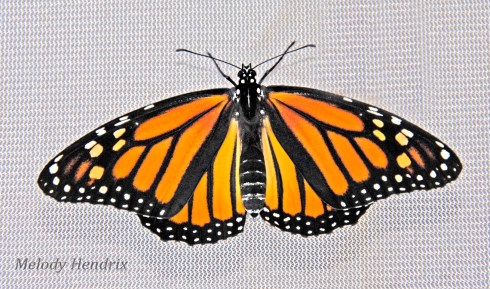
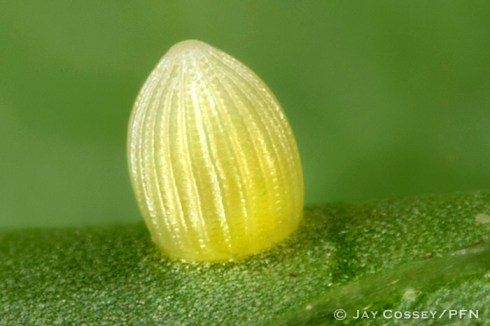
The Monarch a beautiful butterfly that can be found all over America, southern Canada and Mexico.  Like all butterflies, Monarchs lifecycle consists of a series of changes called metamorphosis. After mating (below) life begins as a tiny egg about the size of a sesame seed.
The female lays about  100 – 200 eggs on milkweed leaves, their host plant. Within a few days the baby caterpillar starts squirming. It’s ready to hatch.
It chews a hole in the side of the shell and emerges into the world. It’s only about two millimeters long. It snacks on the nutrient-rich shell. But soon it starts feeding on it’s main diet, the milkweed. Monarchs store a poison called Cardiac Glycosides for defense by feeding on the milkweed. The Monarch lets it’s predators know of this poison by the bright colors it wears.
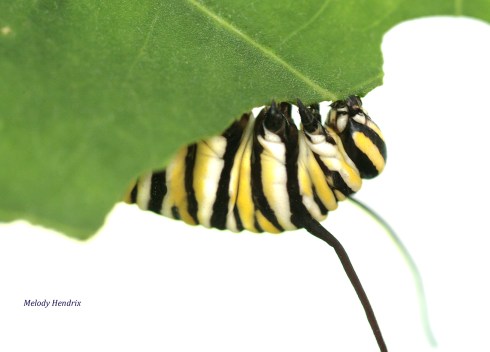
As the caterpillar quickly grows, they shed their skin several times. The caterpillar stage lasts for 9 to 14 days.
Watch the complete alien-like transformation from caterpillar to butterfly below:
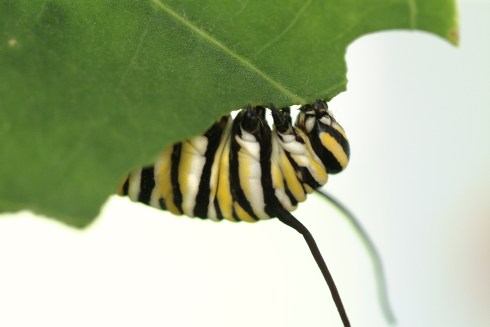
 It sheds it’s skin one last time on the underside of a twig.
Firmly attached, the monarch begins pupation, shedding it’s caterpillar clothes for the last time. The “pupae” as it is called now wiggles to release the pullled up skin.
It then stays motionless for about one and a half weeks, as the pupa undergoes a wonderous transformation. The green changes as the exquisit colors start showing through the pupae shell. It’s final metamorphosis accomplished, the new butterfly emerges
At first the wings are quite small, but over the next half hour or so, fluids are pumped into the wings expanding them to their full size. Adult monarchs feed on nectar and water by sipping on it using a sucking tube called a proboscis that lies coiled under the head when not in use. When the butterfly emerges, the tube is still split in two pieces. It will work to mesh them together to form the tube.
Finally the monarch will take to the air for the first time. The adult Monarch will spend it’s life feeding on nectar, pollinating and reproducing. …beginning the lifecycle once again.
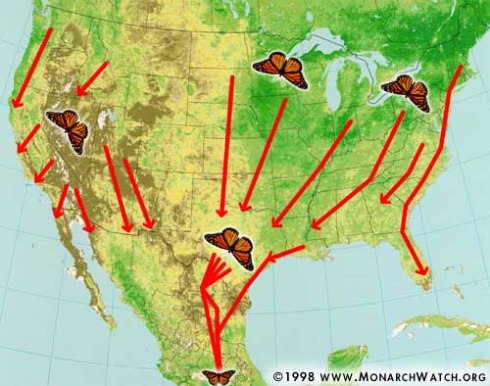
The monarch is the only butterfly known to make a two-way migration as birds do. Unlike other butterflies that can overwinter as larvae, pupae, or even as adults in some species, monarchs cannot survive the cold winters of northern climates. Monarch butterflies (Danaus plexippus) perform annual migrations across North America which have been called “one of the most spectacular natural phenomena in the world”.
Starting in September and October, eastern and northeastern populations migrate from southern Canada and the United States to overwintering sites in central Mexico where they arrive around November. They start the return trip in March, arriving around July. No individual butterfly completes the entire round trip; female monarchs lay eggs for the next generation during the northward migration and at least four generations are involved in the annual cycle.
The fourth generation of the Monarch butterflies are the only ones that migrate.
They live for six to eight months until they again get ready to undertake the return migration.  How these butterflies take a particular direction for migration is an unsolved mystery of our generation.  They fly at speeds ranging between 12 to 25 miles an hour.
Similar to the migrating birds, the monarch butterflies use the clear advantage of updrafts of warm air, called “thermals” and glide as they migrate, to preserve the energy required for flapping their wings all the way through the long 2500 mile voyage from the Great Lakes in Canada to the warm Central Mexican Oyamel fir forests in the Michoacan Hills. They rest there through winter and then complete their migration Northwards in search of milkweed plants in the Eastern United States.
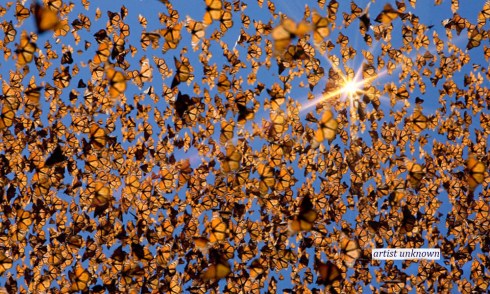
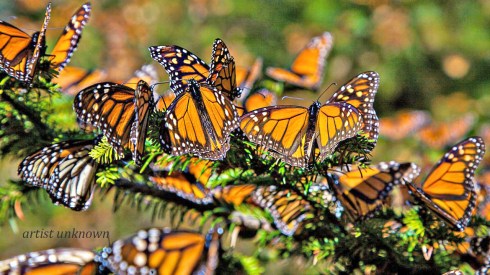
 At the wintering sites in Mexico, they roost in the millions in huge groups in the trees.
The females will lay their eggs on the milkweed leaves, and the cycle goes on until the next fourth generation starts the return migration to complete the cycle north in the spring.
 The Mexican authorities, In 1986, converted 62 square miles of forests in the Sierra Madres to the now renowned Monarch Butterfly Biosphere Reserve, home to hundreds of millions of Monarch butterflies during winter. The government further extended the reserve area to an area of 217 acres in the year 2000.
These butterflies use their eyes to locate flowers, they use their antennas to smell the nectar and the minute receptors lodged in their feet called “tarsi” come in handy to taste  sweet substances.
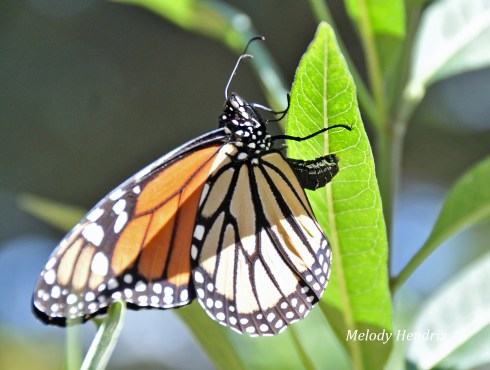
A black spot on an inside surface of its hind wing distinguishes the male Monarch butterflies from the females that have no such spot as the female in the second picture from the top.
Next week I will show you how to raise your own Monarch butterflies to be able to see and experience them close up and populate your garden.


I am retired and enjoying life. My hobbies are my 5 grandchildren, son and daughter, and my loving husband. I am a photographer and extreme nature lover. I love spending time in my garden or in the wilderness connected to God my Creator.
Melody

Creating a Florida Butterfly Garden

14 Nov

A Time to Live

Melody Hendrix


God might just have designed things in our world to bring us pleasure – that it might have given Him pleasure to create such a diverse and interesting world of color and intricacy to point us to Himself!

I feel close to God when I am in my butterfly garden.


Anyone can create a welcoming haven for your local butterflies. It takes some planning, but the rewards are great! You can even attract butterflies in a small container garden on a porch.


Let’s start with finding out what zone you are at the link below.

http://planthardiness.ars.usda.gov/PHZMWeb/

Each butterfly species has it’s own nectar flowers and host plant. Find out what your common butterflies are and what are their nectar flowers and what are their host plants. Some plants may not be possible for you to grow, so pick at least two species of butterflies that you can provide for it’s life cycle. For the Monarch, it’s nectar plant and it’s host plant is the same. The milkweed.


There are several kinds, but the most common is the tropical milkweed. It is not native or the best one, but it’s rare to find the swamp milkweed which is native. One advantage of the Tropical is that you can grow it from seeds or preferably cuttings. You will need a lot of it. The caterpillar is a voracious eater, capable of consumming an entire leaf in less than five minutes. They gain about 2700 times their own weight.


Here is a link to butterfly garden designs.

The location of your garden is important. It should be an area where no insecticides such as malathion, Sevin and diazinon will be used. Even benign insecticides are lethal to butterflies.

It should have some shade but mostly sun. Butterflies feed in the sun. They are cold blooded and need to warm up and dry out from the dew in the morning.


Try to choose plants that bloom at different times of the year for continuous flowers.

Here is a link below for butterfly nectar plants in Florida

http://www.nsis.org/butterfly/butterfly-plants-nectar.html

These are the plants I have had the most success with.

Milkweed, tall red Pentas, Mexican sunflower, Firebush, Firespike, Jatropha, Butterfly bush, blue Porterweed, coral Porterweed, Lantana, Salvia, Parsley, Dill, Plumbago

If you can, plant for each stage of the butterflies life.

Here are some fun pampering you can do for your butterflies

Make a puddler


Many species of butterflies congregate on wet sand and mud to partake in “puddling,” drinking water and extracting minerals from damp puddles. In many species, this “mud-puddling” behavior is restricted to the males, and studies have suggested that the nutrients collected may be provided as a nuptial gift during mating. It provides salts and minerals for egg making.

Fill a container or bird bath with play sand and add about 2 tablespoons of manure. Mix well and push to one side to leave an emply area for some tiny gravel and flat rocks. Pour enough water in to soak the sand, but don’t let water sit above the sand or the rocks.

Feed them a fruit treat. Some butterflies enjoy the sweet nectar that comes from fragrant fruit.

http://butterfly-lady.com/butterflies-and-fruit/

The cute butterfly houses you see with the slits in them are a nice decor, but the butterflies do not use them.

A group of butterflies is called a “Flutter” Often times you will see a female with more than one male following her scent. Eventually one will win and they will fall to the ground and connect the tips of their abdomen. The male will transfer his package of sperm. Sometimes they fly connected for a while. The female has about 100 eggs to deposit on her host plant.


She lays one egg at a time and each are fertilized as they pass by the sperm package. Only about 2 percent will survive. Ants, wasps and other pests will devour most eggs and caterpillars.


Next week we will learn all about the Monarch butterfly. See ya then…


I am retired and enjoying life. My hobbies are my 5 grandchildren, son and daughter, and my loving husband. I am a photographer and extreme nature lover. I love spending time in my garden or in the wilderness connected to God my Creator.
Melody

For the Love of Florida’s Butterflies

7 Nov

A Time to Live

Melody Hendrix

I thought I would do another series for a few months. I would like to share with you a true earth treasure. The butterfly.


A little creature that whispers Gods glory and gospel. The apostle Paul says we are works in progress and that our transformation from the old to the new is a struggle. All of creation is overflowing with living attributes paralleling the divine principles of life and struggle. Look at the transformation of the butterfly from egg to larva to butterfly, a supreme work of nature.


Monarch


It wasn’t until my admiration for them turned to passion that I wanted to photograph and learn the details of a butterflies life. It wasn’t just their magical beauty in my garden that thrilled me, but their life story. The one our God  wrote for them. Oh, what they go through to live and multiply. I call their life cycle “from mushy to majesty”.  The marvel of metamorphosis.


Sit in my butterfly garden with me in the weeks to come. I would like to share with you how you can enjoy butterflies in your yard, how to photograph them and to enjoy their beautiful story. Each week I will showcase a different Florida butterfly.

I am going to start with information about planting a successful butterfly garden next week. Then show you how to enjoy their entire life cycle by raising your own. The first butterfly showcase will be the Monarch since they are the most well known and are the easiest to attract and raise.

See ya next week.


I am retired and enjoying life. My hobbies are my 5 grandchildren, son and daughter, and my loving husband. I am a photographer and extreme nature lover. I love spending time in my garden or in the wilderness connected to God my Creator.
Melody

Family

31 Oct

A Time to Live

Melody Hendrix


Cherish your family and friends
For they are your treasure,
A God given wealth
beyond measure.


I am retired and enjoying life. My hobbies are my 5 grandchildren, son and daughter, and my loving husband. I am a photographer and extreme nature lover. I love spending time in my garden or in the wilderness connected to God my Creator.
Melody

Hearts Like Wildflowers

17 Oct

A Life to Live

Melody Hendrix


I hope you are blessed
with a heart like wildflowers.
Strong enough to rise again
after being trampled upon,
tough enough to weather
the worst of the summer storms,
and able to grow and flourish
even in the most broken places.
Nikita Gill


I am retired and enjoying life. My hobbies are my 5 grandchildren, son and daughter, and my loving husband. I am a photographer and extreme nature lover. I love spending time in my garden or in the wilderness connected to God my Creator.
Melody