
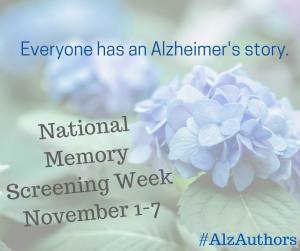
I met Marianne Sciucco in the virtual world on Face Book. She is an author and to be honest, the lovely blue hydrangeas on her book cover are what lured me into reading her novel, aptly titled, Blue Hydrageas. It is a moving story of a couple dealing with Alzheimer’s. Today she has her own story to share.
 I’m writing today as one of the forgotten, one of those left behind in the fog of Alzheimer’s disease that took over someone I loved.
The first time this happened was in the late 1980’s, when, as a 20-something, I didn’t know much about this disease and didn’t understand why Auntie Gilda had to live in a nursing home and didn’t recognize me when I came to call. She was my mother’s oldest sister by 15 years, more like the grandmother I never had than an aunt, who coddled me as a child and expressed great joy when I took the time to visit her as a young adult.
Heartbroken is too weak of a word to describe how I felt when she looked right through me as I took her hands and said hello in the crowded corridor of the dementia ward.
She was not the first aunt to forget me, and not the last, and my story is not unique as I am among the millions of people who have been left behind by parents, spouses, brothers, sisters, and in some cases children who are afflicted with Alzheimer’s and other dementias.
This is a disease shrouded in hopelessness, where little can be done to cure, prevent, or stall its progression.
It’s a primary concern of the elderly: Will I get Alzheimer’s? My mother, father, sister, brother, grandmother had it. Am I next?
It’s a worry of those with aging parents: Mom seems forgetful. Is it Alzheimer’s?
When memory problems surface, even simple problems like searching for familiar words, forgetting an acquaintance’s name, misplacing the car keys again, the thought train that maybe it’s Alzheimer’s starts roaring down the tracks.
All of this is usually needless worry as many of these behaviors are normal, natural, and no cause for concern. They could be symptoms of a medical problem unrelated to any dementia. Still, some of us stay up nights worrying: What if it’s Alzheimer’s?
Which is why it’s important to include a memory check as part of your annual physical. Healthcare providers recommend routine screenings for a variety of conditions: hypertension, diabetes, high cholesterol, and cancers such as skin, colorectal, breast and prostate. A memory check is another exam you should do annually, to make sure your cognitive function is intact.
November 1-7 is National Memory Screening Week, and a great time to not only perform this check for yourself but for your loved ones, especially your elders, who may be experiencing cognitive decline. Memory screenings are for those concerned about memory loss or those experiencing warning signs of cognitive decline, whether or not there is a family history of dementia or Alzheimer’s. If friends or family are making comments about your mental acuity, a screening may be beneficial, whether you take one at your physician’s office, your local senior center, or at home.
If you’re asking yourself any of the following questions, it’s time for a screening:
Am I becoming more forgetful?
Do I have trouble concentrating?
Do I have difficulty performing familiar tasks?
Do I have trouble recalling words or names in conversation?
Do I sometimes forget where I am or where I am going?
Have family or friends told me that I am repeating questions or repeating myself?
Am I misplacing things more often?
Have I become lost when walking or driving?
Have my family or friends noticed changes in my mood, behavior, personality, or desire to do things?
Early diagnosis is crucial in the treatment of memory impairment, as many conditions are reversible. But without proper medical care, situations can escalate and lead to serious decline or other conditions that may adversely impact one’s health.
Your healthcare provider (physician, nurse practitioner, physician’s assistant) can administer a screening test, and many community organizations do so through the Alzheimer’s Foundation of America. Self-administered at-home tests are another option. These tests take only minutes and may help determine if further investigation is needed. However, these tests should never be a substitute for a professional medical evaluation if one suspects cognitive impairment or decline. Proper medical evaluation of potential memory issues includes a consultation with a physician, a complete physical exam, a thorough review of health history, and diagnostic tests.
At the very least, simple at-home screening tests can open up dialogue, and introduce important discussions about what can happen if dementia or Alzheimer’s strikes, and how individuals prefer to be treated if it does.
Schedule a memory screening test with your healthcare provider this week, or visit Community Memory Screening and Awareness-Raising Education: The Road to Early Detection and Care (AFA C.A.R.E.S.) to find a local screening center in your community.

Some popular memory tests are:
The Self-Administered Gerocognitive Exam (SAGE), a 10-15 minute, 4-page, paper and pen test offered by The Ohio State University Wexner Medical Center.
The Mini-Cog Test for Alzheimer’s and Dementia, a simple three minute test that is useful in detecting mild cognitive impairment, dementia, or an early stage of Alzheimer’s.
Talking about memory issues and Alzheimer’s can be difficult. One way to open a discussion is through reading. Here are five titles, including my own, that can help start a conversation about memory concerns:
Alzheimer’s Daughter, Jean Lee
On Pluto: Inside the Mind of Alzheimer’s, Greg O’Brien
Somebody Stole My Iron: A Family Memoir of Dementia, Vicki Tapia
hat Flowers Remember, Shannon Wiersbitzky
Blue Hydrangeas, an Alzheimer’s love story, Marianne Sciucco
Additional Resources:
The Alzheimer’s Association
Visit our Face Book page, Ending the Isolation of Alzheimer’s
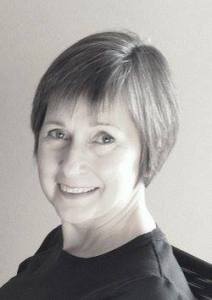
About Marianne Sciucco
I’m not a nurse who writes but a writer who happens to be a nurse. A lover of words and books, I dreamed of becoming an author when I grew up but became a nurse to avoid poverty. I later brought my two passions together and write about the intricate lives of people struggling with health and family issues. I grew up near Boston and earned my Bachelor’s degree in English at the University of Massachusetts at Boston. I spend a lot of time on Cape Cod. I also survived nursing school and when not writing work as a campus nurse at a community college in New York’s Hudson Valley, where I live with my patient and reliable husband and beautiful, brainy daughter. We are ruled by Mr. Chance, a cat we rescued who thinks he rescued us. I’m currently working on a YA novel, “Swim Season,” about the new girl on the team who challenges a longstanding school record, to be released in 2015. A dedicated Swim Mom for ten years, you can find me during swim season at one of many Skyline Conference swim meets cheering for my daughter and her team. 25:00!
You may connect with Marianne on her website, Face Book as well as on Twitter







 What is going on in the world? This question seems to be on the minds of many people today as we consider world events. Some people face these times of uncertainty with great fear and dread while others engage these times with wonder and expectation. For those of us who are Christians, there is another question on our minds: “Do world events have anything to do with Bible prophecy and the return of Jesus?” While God is clear in His Word that no one knows the time or day when Jesus will return (Matthew 24:36), He also tells us in the same passage to “keep watch.” He gave us specific prophecies in the Bible related to world events telling us these would be indicators that His return was near, and He stated that these anticipated happenings would grow in increasing intensity: “But all these things are merely the beginning of birth pangs” (Matthew 24:8). The miracle of birth begins slowly, maybe even weeks before the actual delivery. Early contractions are so insignificant that many young mothers may not even notice them. As the prophecies of Matthew 24 begin to be fulfilled, they will start small and grow in significance. There is no doubt that we are seeing a growth in intensity of world turmoil, and some of these specific prophecies are becoming more pronounced with every passing day.
 believe that God has given Christians equipment, or armor, to help us endure the evil days leading up to Christ’s return and to bear fruit during a time of unparalleled opportunity. Ephesians 6:13 says, “Therefore, take up the full armor of God, so that you will be able to resist in the evil day, and having done everything, to stand firm.” I shared these thoughts about this verse in my book: “While ‘the day of evil’ can refer to a time of intense temptation or spiritual conflict that can come at any point in any Christian’s life, it seems that God may be calling us to think about THE day of evil. Is it possible that this passage is calling Christians approaching the last days to prepare for battle by putting on spiritual armor?” With that question going through my mind, I began studying Bible prophecy about the last days comparing it to the teaching of the spiritual armor of Ephesians 6. The connection was significant, and I believe there are important implications relating the spiritual armor for the last generation before the return of Christ. These implications are not only important for us, but also for our children and grandchildren.