Tag Archives: Travel Series

Flying Legends Airshow~Part 8

14 Oct

A Slice of Life

Bill Lites

Flying Legends


Day 8 – Wednesday July 8th


When I checked in at the “Ye Ole Red Lion Hotel” the evening before, the hotel proprietor was very efficient and explained everything to me, including Wi-Fi password, dinner and breakfast menus & hours. I asked him if breakfast was to be served in the same dining area where I took my dinner (Fish & Chips) and he said, “Yes.”  I woke ready to dig into my English breakfast (served from 8-10) that was included with the price of my room. But when I arrived at the breakfast room, at 8:30, the door was locked. I knocked on the door but nobody came. I knocked on a window and still no one came. After waiting for about 15 minutes I finally decided I wasn’t going to get any breakfast. I thought, “You know that’s a good way for the hotel to save money on the free breakfast they advertise. Just don’t open up and then you don’t have to serve breakfast. The people have their destinations to get to and will usually give up and drive away, like I did.”

1


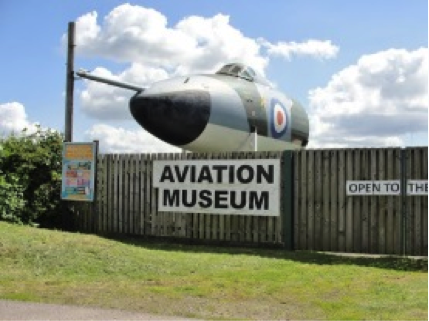
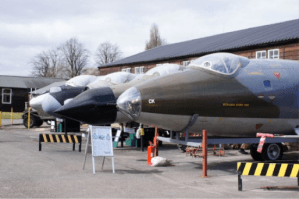
My first stop today was at the South Yorkshire Aircraft Museum in Doncaster. They had a very nicely restored Vulcan bomber sitting outside as you entered the museum property, but the rest of their outside display airplanes were in very poor condition. The inside of the only Hanger they had looked like a junkyard. It was so full of parts of airplanes, helicopters and engines that a person could hardly walk thru the mess. Their excuse for the condition was that they just didn’t have room to properly display everything they had. They did have a row of several British Cambara nose sections displayed outside that I thought Larry would be interested in.
2


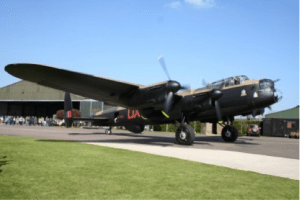
Next it was on to the Lincolnshire Aviation Center in Hagnaby. This was a beautifully restored our WWII RAF bomber base. Several of the original buildings and the control tower have been restored and used to exhibit their WWII memorabilia. The museums claim to fame is a fully restored Lancaster bomber. Every few days (today wasn’t one of those days) they start the engines and you can buy a ride in the bomber as they taxi it down the runway and back. WOW, what a thrill that must be!
3


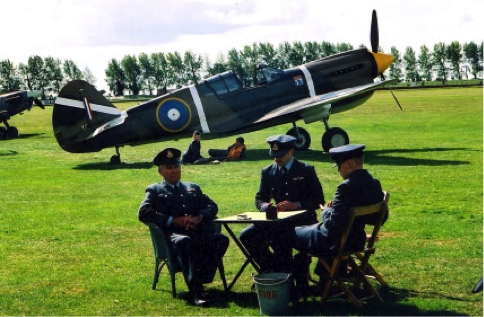
Next was the Battle of Britain Memorial Center and Coningsby. This museum reminded me of Kermit Weeks’ Fantasy of Flight in Florida. Every beautifully restored airplane they have in their collection is in flying condition, and is flown frequently. The only difference is that Kermit flies his own restored museum airplanes and this museum’s restored airplanes are flown by active duty No. 29 Squadron RAF pilots in their spare time, on special occasions, at airshows all over England. Missing from the photo below is their C-47.

4

Next on the list was the Cranwell Aviation Heritage Center in Sleaford. This museum only had one plane and the museum was mostly dedicated to the history of the Cranwell Air Field Training Center there during World War II.

5


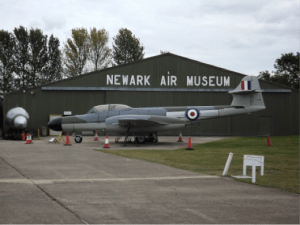
The Newark Air Museum in Newark-on-Trent was closed today, but I did get a few photos of their outside static display airplanes, thru the fence.
6


Next was the Finland & West Norfolk Aviation Museum in Wisbeck. I didn’t get to this museum before they closed, but I would never have guessed it was a museum, except for the sign over the door and the one airplane out front. From the outside, it looked like a work shop in a small warehousing area.

7


I found the Riverside Chalets in the small town of Spalding.   The small apartment type rooms were located behind the Riverside Pub.  They were very nice, quiet and clean. I had a great meal of beef, new potatoes and mashpeas and a pint of Guinness at the tiny pub that evening.

8


—–To Be Continued—–
Flying Legends Airshow~Part 5

23 Sep

A Slice of Life

Bill Lites

Flying Legends

Day 5 – Sunday July 5th

After a full English breakfast at the Quality Inn Hotel (not like any free breakfast I’ve ever had at a Quality Inn here in the U.S.) the first place to visit today was the Royal Air Force Museum in Cosford. This was one of the best aviation museums I have seen so far on this trip. The museum consists of four huge hangers full of beautifully restored British aircraft dating from the early days of aviation (pre-WWI) to the present time. A person could spend a whole day just reading about the many different aircraft that are housed in those hangers. These aircraft make up much of the backbone of British aviation history.

1

Next I had planned to stop and take a picture of the old Eastgate & Eastgate Clock Tower in Chester. But, by the time I got there the town center was jammed with people (of course Greta had to direct me right through the middle of all those people to get me to the clock tower location). It was all I could do to catch a glimpse of that beautiful clock structure as I drove under it, while trying not to run over a pedestrian.

2

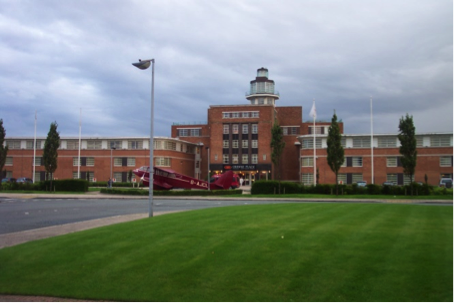
The Speke Airdrome Museum probably should not have been in the museum guide book, because the old Liverpool Airport terminal has been closed and turned into a luxury hotel. The only airplanes were a couple of mid 50s commercial aircraft behind the hotel (that used to be the airport ramp), that have been out in the weather for so long that they were looking pretty shabby. As you might guess, I didn’t spend a lot of time there.

3

It started to rain about that time and since my next stop was at the Merseyside Maritime Museum, also located in Liverpool, and would probably be mostly outside, I decided to skip that museum and move on to the Avro Heritage Museum in Woodford. However, this museum was only open on Tuesdays and Thursdays, so I just kept heading north.

4

I was surprised to see that the Manchester Airport Museum, for its size (the very small museum consisted of only two aircraft) had two of the largest modern British aircraft on display; a Nimrod bomber and a Concord airliner. Visitors were allowed to inspect the interior of both aircraft. Since I had already inspected a Nimrod bomber, at a previous museum, I elected to only walk through the Concord. That is one of the special aircraft I wish I had been able to take a flight on before they were removed from service.

5

I was disappointed to find the Imperial War Museum (North), also located there in Manchester, was closed. I was expecting to find this large museum to be well represented, since it is part of the National Imperial War Museum Foundation.

10

Next I headed for a visit to the Ribble Steam Railroad Museum in Preston. Here again I was disappointed to find it closed. This was another one of those cases where Greta took me within two blocks of the museum and said I had arrived at my destination. Luckily there was a couple out for a walk, and they were able to direct me to the museum.

7

I ended the day by visiting the 11th century Lancaster Castle, which it is said was built over the location of a 1st century Roman fort overlooking the River Lune. As it turned out, the castle was located on the hilltop just a two-minute walk from the Royal Kings Arms Hotel where I spent the night.

8

The Royal Kings Arms Hotel was built in 1625 and was immortalized by Charles Dickens in his tale of “The Lazy Tour of Two Idle Apprentices” and “The Bridal Chamber.” Several members of the English royal stayed at this hotel in the early 1800s when it was also a coach station. The rooms were nice, but the hotel itself was showing its age. However, I have to say this was the only accommodation I stayed at during my entire trip in the UK that had an elevator for guests.

9

—–To be Continued—–

Flying Legends Airshow~Part 4

16 Sep

A Slice of Life

Bill Lites

Flying Legends


 Day 4 – Saturday July 4th

Since I had inspected the breakfast room the evening before, and saw that it was going to be a “Cold, help yourself to cereal and toast” setup (and the choices really didn’t look that appetizing), I elected to skip breakfast that morning and just have one of my granola bars instead.

1

That got me off to an earlier start for the day than I had expected, which put me at the Jet Age Museum in Gloucester 30 minutes before they opened. One of the docents saw me pull into the carpark and came out to inform me that they couldn’t let me wonder around the outside static display aircraft or into the museum until 10:00. I told him that was no problem, that I would just wait in the car until they opened. The next thing I knew, here came that same guy carrying a tray containing a cup of hot coffee (with sugar & cream) and a croissant, just for me. I thought, “This is the best service I’ve ever had at any museum anywhere in the world.”

2

I was the only visitor at their museum that early, and all the folks there couldn’t do enough for me. It was a small museum but they had the front section of a Vulcan bomber on display, as part of their museum tour, and they escorted me into and around the cockpit and navigation/weapons stations. I discovered that for as big as that plane is, the crew stations are very confined. I did however, manage to squeeze into the pilot’s seat for a photo op.

3

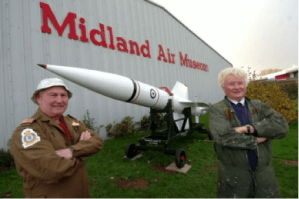
Next it was on north to try to catch the Baginton Air Pagant which was being put on at the Baginton Airport. As it turned out, Greta got confused with all the road construction in the immediate area and couldn’t find the entrance to the airport. So, I had to settle for visiting the Midland Air Museum, which was located right there adjacent to the airport runway, and was one of the museums on my list. And, I was able to see a few of the airshow flyovers from that vantage point.

4


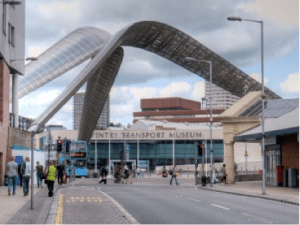
The Coventry Transport Museum was an absolutely marvelous collection of beautifully restored British made bicycles, motorcycles, automobiles and trucks, from the earliest days of motorized transportation to the present. The museum took up a whole city block (not as big as a city block in the U.S.) and exhibited displays on four levels of the building.

5

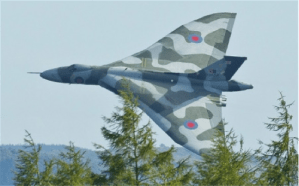
The Cold War Jet Collection located at the Bruntingthrope Aerodrome in Leicestershire was closed, but I was able to take a few pictures of their outside static displayed aircraft through the fence. Bruntingthrope Aerodrome is where the world’s last airworthy Avro Vulcan bomber (XH558) was restored to flight condition in 2007. This beautiful airplane will be grounded for safety concerns after the 2015 airshow season.

6

The Bruntingthrope Aerodrome is also the home of the world’s last airworthy de Havilland Comet 4C (XS235), which is kept flight certified by the Aerodrome volunteers there.

7


Greta couldn’t find the National Motorcycle Museum in Bickenhill, so I called it a day and headed for the Quality Inn Hotel in Birmingham for the evening.

8

When I got to Birmingham, Greta took me to the correct street number, but one block to the north of the actual location. I re-entered the address and she took me right back to the same place. I finally asked a man on the street if he could tell me where the Quality Inn Hotel was, and he said, “It’s just right around the corner on the next street over.”   That happened more than once on this trip. The rooms at the Quality Inn were very nice, but were accessed by a maze of up and down stairways that gave my knees a real workout, even without my suitcase.  I had to ask the clerk to move me to another room which was accessed by fewer stairs. He was glad to do that for me, and my knees were glad too.

9


—–To Be Continued—–

Flying Legends Airshow ~Part 3

9 Sep

A Slice of Life

Bill Lites

Flying Legends

3 – Friday July 3rd

My first English breakfast with hot tea the next morning was great! A fried egg, Canadian bacon, grilled sausage links, grilled tomato, mushrooms and navy beans, served with toast and jam.   It looked like a lumberjack’s breakfast to me, but I ate the whole thing.

1

As I was leaving, my host said, “You go on out to your car with those things, and I’ll catch you up with your suitcase.” I love how the English phrase things. I discovered the airplanes in the Cornwall Aviation Heritage Museum located in Newquay had been moved to a new location. This coupled with the fact that I could not find any indication that there were any real ships to see at the Mayflower Maritime Museum in Plymouth, helped me decide to by-pass those two museums. That reduced my travel by 125 miles for the day! What was I thinking?

2

I headed north to Yeovilton to visit the Fleet Air Arm Museum. DiVoran and I had visited this museum in 1991 during our trip to England, Scotland and Wales. At that time it was a small museum with most of its few airplanes on display outside. But I did remember that they had one of the Concord prototype aircraft in their collection, which we were allowed to walk thru. It was filled with the original test and recording equipment.

3

Since then they have expanded their museum with a huge new hanger, and with more restored RNAS airplanes. Of course, the Concord prototype is now their centerpiece and I was able to walk thru it again.

4

Now I headed for Bath to have afternoon tea at the famous Pump Room and Roman Baths. This was one of the most memorable stops DiVoran and I had made during our 1991 trip, and I wanted to experience that special sensation again. However, Greta was not cooperating that afternoon, and she took me on a wild goose chase for almost an hour, all over the area surrounding Bath. Finally, after taking a Stress Gummy and asking directions a couple of times, I found a carpark within walking distance of the Pump Room. I spent a delightful hour relaxing over pot of Earl Gray tea and their famous Bath Buns with Strawberry Jam. This fabulous experience was enhanced by a wonderful three-piece ensemble playing classical music.

5

I did not take the time to go through the Roman Baths, since DiVoran and I had explored them in great detail when we were last there. I did however, take a drink of the “Special Healing Water” available there in the Pump Room. It had noticeably less of a sulfur taste and smell than I remembered. I asked the attendant about that, and he said that it was thought the sulfur deposits that the water ran through were being eroded away, reducing the sulfur taste and smell. There you are, Bob’s your uncle!

6

Since I had wasted so much time running around the countryside, following Greta’s misguided directions, and with the extra time I had spent at the Pump Room, I decided to just head for Bristol and try to find the Well Cottage B&B before it got dark. The B&B was very nice and instructions on the door of my room informed me that the hostess retired at 9:00 pm. I couldn’t see how that could possibly affect me. Not, that is, until after I had taken a shower, and discovered I had somehow locked myself out of my room (yep, it was after 9:00). I was so glad I had put my pants and tee shirt on. I knocked a couple of times on the door I thought was the hostess’s door, and got no answer. I was really stuck! Then another guest came out, saw my plight, and told me she could have her husband call the hostess on the phone, and request that she come let me into my room. Boy was I ever embarrassed! But when the hostess came and unlocked my door, she told me it was OK, and not to worry about it. Whew, what a relief that was!

7

—–To be Continued—–

Flying Legends Airshow~Part 2

2 Sep

A Slice of Life

Bill Lites

1

 Day 2 – Thursday July 2nd

We landed at London-Gatwick Airport in a typical cloudy/fogy English day. I was surprised when stepping out of the airport to find it as hot and humid there as it had been in Orlando when I left. I took the local commuter train from the airport to Crawley (10 minutes) where I had scheduled the pickup of my rental car.

1

It was a 5-minute uphill walk in that heat and humidity to the Arora Hotel where the Budget Rental Car office was located. At check-in, the only instructions I received regarding how to operate the rental car was how to open the trunk. If you haven’t driven a modern car recently, let me tell you, the multitude of bells and whistles can be overwhelming. It took me all day to figure out how to operate the cruise control, and I never did figure out how to turn off the rear window wiper. The avoidance control system on the car was something else. I can see that a one-button programmable trip control for automobiles (while you sleep) is just around the corner.

2

Once I got on the road, “Day 1” almost turned into a total disaster! Nothing seemed to be working. My iPhone had no bars and my Garmin wouldn’t work. Ron had told me not to make or receive phone calls while I was in the UK, so I wondered around a large portion of the southeast of England that day, asking for directions, and staying lost almost of the time. It didn’t take me long to realize that I was going to be absolutely lost without “Greta” (my Garmin) during this entire trip, so when I was able, I sent Ron a text for “HELP” hoping he would receive it.

3

I learned right-a-way that trying to learn all the rules, regulations and road etiquette in the UK, while driving on the “wrong” side of the road and trying to read the road signs, is a daunting task. Parking is a whole new experience, and I don’t think I’ll ever understand how that works!

4
Somehow, during all that running around lost, I did manage to locate the Tangmere Military Aviation Museum situated on the old WWII Tangmere airfield. This museum had a small collection of aircraft outside and in one small hanger.

5

The Goodwood Aerodrome in Chichester was RAF Westhampnett during WWII where No. 145 & 602 Squadrons were stationed, during the Battle of Britain. I learned that it was from this airfield that Douglas Bader flew his last sortie. Today it is a private airfield where they host airshows and auto racing events.

6

I was so tired and frustrated by 4 o’clock in the afternoon that I just had to stop, take a Stress Gummy, and pray for help from my Friend upstairs. Thankfully Ron called and was able to help me with most of my problems. That allowed me to continue on to find the Solent Sky Museum in Southampton, which is a small museum with one large hanger and 18 beautifully restored aircraft inside.

7

Then it was on to check out the Bournemouth Aviation Museum just outside the city of Bournemouth. This museum only had 7 aircraft outside, none of which were in the best condition.

8

Then, Greta started acting up, (taking me along farm backroads and through small neighborhoods) before I finally found The Kings Arms, located in the small village of Georgeham, Devon outside Exeter. This 600 year old Pub & Inn was showing its age, but was well kept. When I walked into the pub that evening, the owner looked up from pulling a pint of ale and said, “How can I help you Mate?” He was a great host and carried my bag up the two flights of narrow stairs to my room. Boy did the bed feel good that night!
9

—–To be Continued—–

Flying Legends Airshow~Part 1

26 Aug

A Slice of Life

Bill Lites

Bill Rocket Plane


1Somewhere around the middle of last year DiVoran’s brother, David, sent me a video “teaser” of the 2014 Flying Legends Airshow that had been held at Duxford, England. I was so impressed with the event depicted in that video and all the magnificent aircraft that took part in it, that I decided right then and there that I had to make an effort to attend one of those airshows as soon as possible.

2

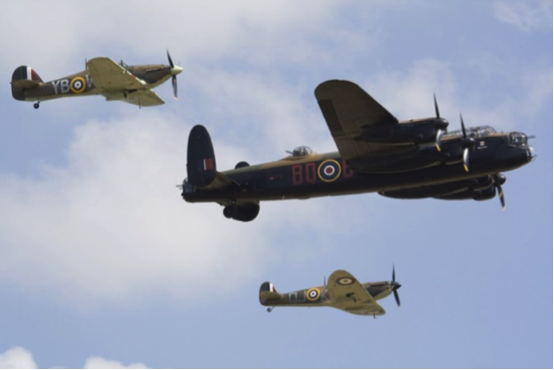
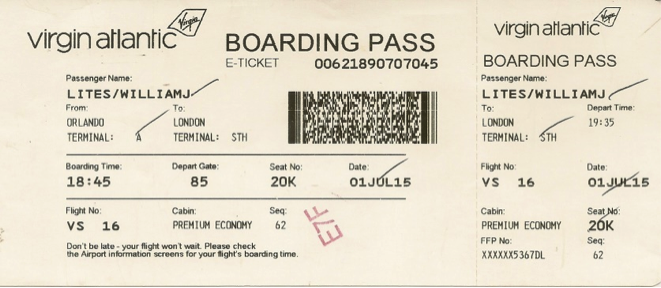
As I looked into the event closer, I discovered that the theme for the 2015 airshow was going to be the “75th Anniversary of the Battle of Britain.” Well, that did it for me! All those wonderfully restored WWII fighters and bombers brought together, in one place at one time, was more than I could resist. I decided to attend the 2015 airshow, and committed to that decision by using my Delta Skymiles to book a roundtrip flight from Orlando, Florida to London Gatwick for July 1, 2015.

10

Since one of my retirement hobbies is visiting Aviation Museums wherever I go, I started my research by Googling aviation museums in the UK. That gave me a huge list, and I discovered that they are located throughout the country. I started looking for museum locations that would allow me to transverse the entire UK, from London clockwise, and as far north as Glasgow and Edinburgh Scotland.This was made somewhat easier, just by chance, when I picked up a copy of the May 2015 issue of “Aeroplane” magazine, which just happened to include a 32-page “UK Aviation Museum Guide.”

3

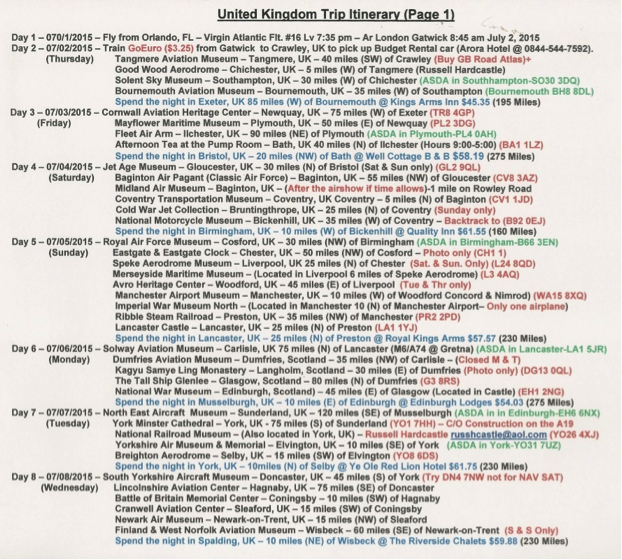
I needed to arrive in the Duxford area in time to attend the Flying Legends Airshow on the 12th of July. This required pacing daily museum visits to keep driving averages reasonable. Once the basic route and museum locations had been established, next I had to locate and book lodging accommodations at the end of each day. In addition there were several special ticket arrangements that needed to be made, and all this kept me busy for a good six months.

4

Day 1 – Wednesday July 1st

5


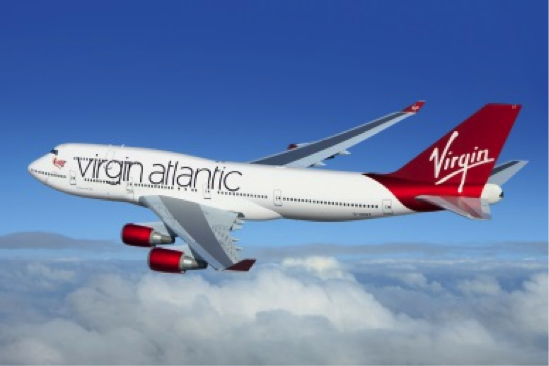
When “The Big Day” finally arrived, I was really excited about my flight that day. I would be flying on a Virgin Atlantic (Delta’s “non-stop” partner airline) Boeing 747-400; leaving Orlando International Airport at 7:25 PM and arriving at London-Gatwick Airport at 8:35 AM the next morning. This would be the first time I would be flying on a Boeing 747 and I hoped I would be able to get some sleep.

6

After reading the passenger reviews for seat selection for this particular airplane, I selected an Economy seat in the upper deck. A friend of one of my doctors, who works for Virgin Atlantic, was going to try to see if she could upgrade my ticket for this flight. Well, as it turned out, she was able to upgrade my ticket to Premium Economy (kind of like Business Class) which made the trip much more enjoyable.

7

Boy this airplane (White Rose) is really big! Just the upper deck of this airplane can seat as many people as some smaller airplanes. We took off right on time, and as we climbed out, banking east from the airport, we actually flew over our house. As we did that we were flying above a rain cloud and there was a rainbow. I had never seen a rainbow from an airplane before and wasn’t surprised to see that both ends reached all the way to the ground.

I have to say the service on the flight was first rate, and our English flight attendant (with a very interesting hairdo) made the flight quite enjoyable for us all. The food was wonderful, but I didn’t get much sleep.

`

—–To be Continued—–

My Colonial States Trip~Part 21

8 Apr

A Slice of Life

Bill Lites

Bill Small Red Plane

After that educational tour, I headed for the rental car office to turn in my car and get a ride to the Providence Train Station for my trip to the T.F. Green Airport. All went well until I arrived at the train station and my train #807 showed no gate assignment. There were four tracks, and I didn’t want to miss my train (12:27) because the next train after that (2:54) to the airport would cause me to miss my flight to Orlando. As I bought my ticket, I asked the clerk which track train #807 would leave from and she said, “That information will be posted on the schedule board about 15 minutes before the train arrives.” So, I broke out my CD player and settled in to wait. At 12:15 the schedule board had not changed and I asked the clerk about the gate number again. This time she rolled her eyes and said, “Sometimes they don’t post that information until 5 minutes before the train arrives.” I thanked her and sat back down to watch the schedule board. By now (12:23) I was about to panic, and go holler at someone, when the schedule board changed showing “Train #807 Arriving On Track 4” and I breathed a sigh of relief.

1

I got to the T.F. Green Airport Station at 12:43 and figured I now had a little over 2 hours to wait for my flight leaving at 3:30. But, when I went to check my bag for the flight, I was told that the plane had had mechanical problems and they would have to bring another plane to Providence, and the new departure time for my flight was 4:50. What a bummer! All that anxiety over missing the train was for nothing. So, what else could I do, but call DiVoran to tell her my flight was delayed, and that would make it too late arriving for us to go to dinner there in Orlando, as we had planned. She said, “No problem, I’ll just whip us up an omelet when we get home.” Well, that was fine with me, so, I broke out my CD player again and settled in for a little longer wait this time. As it turned out, it was almost 9:00 before we got home and that ham/cheese/mushroom omelet was just what the doctor ordered.

2


I’ve said it before and I’ll say it again, I love going on these trips, to see different parts of our wonderful country, visit interesting places and museums and meet my American neighbors no matter where they live. But, it is always good to get home to the company of my lovely wife DiVoran and sleep in my own bed. I hope you have enjoyed reading about this trip as much as I have enjoyed re-living it in these blogs. I’m sure I have left out some important details of the trip, but if I remember them I’ll just have to include them as some kind of a “Post Script” or “Addendum” to My Colonial States Trip at some later date. In the meantime, keep smiling because GOD loves YOU and has a wonderful plan for your life.      

3                             


           —–The End—–

Keukenhof Gardens, Holland~Part 2

5 Apr

SUNDAY MEMORIES

Judy Wills

JUDY


2


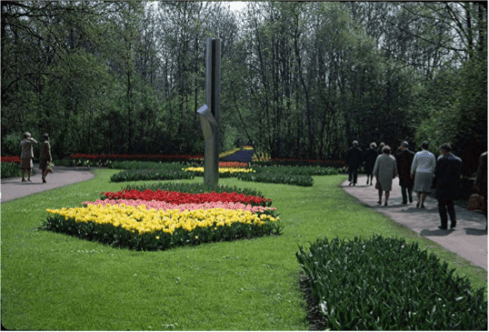
Last time, I wrote about the Keukenhof Gardens, in Lisse, Holland. We so thoroughly enjoyed our visits there, and want to share this beautiful place with everyone we know.

3

Here is some history about the tulips we found interesting from the Fluwell website:

“during World War 2, people ate tulip bulbs. The only reason for this was hunger. The Netherlands suffered a great famine in the winter of 1944-1945. Eating tulip bulbs is not something our ancestors did for fun, they did it because there was nothing else to eat.

 Many Dutchmen of certain age remember the famine and the tulip bulbs they ate. In our theme park Tulpenland, we have a lot of customers that share their memories with us. They sometimes still find it difficult to see tulip bulbs back, although they know that we use them only for flowers, not for food. Hunger is a deep emotion that is not easily forgotten.

 The Dutch famine was the result of the lost Battle of Arnhem (1944), when allied forces failed to liberate the northern provinces of the country. The northern provinces became isolated from the liberated parts of Europe. Food stocks ran out, as did fuel stocks. Then a harsh winter began. Thousands of Dutch citizens starved or froze to death.

 Due to the war situation, tulip growers had not planted tulip bulbs that year; so great amounts of tulip bulbs were stocked on farms throughout the country. During the famine authorities decided to use these stocks as food for the starving populations. The old, dry tulip bulbs were sold in grocery stores, and newspapers published recipes with tulips. The tulip bulbs were nutritious and relatively easy to cook, so that less fuel was needed.

 The tulip bulbs that people ate in the Second World War cannot be compared with modern day, fresh tulip bulbs. The war bulbs were old and dry and did not taste like fresh tulips. A fresh tulip bulb has a sweet, milky flavor that is actually not very bad. The tulip bulbs that were eaten during the war had a very bitter and dry taste instead.

 Eating tulip bulbs is not as bad as it sounds like, as long as you eat fresh tulips that were not sprayed. Unfortunately, such bulbs were not available during the last winter of WW2. It is important that this sad history is not forgotten. Dutch children are still raised with the words: you are not hungry, you only have appetite (Je hebt geen honger, je hebt trek). Real hunger makes you eat everything you can get, even old, dry tulip bulbs, as they were eaten during the Dutch famine.”


Amazing!

Just a side note here – there is a wonderful place to visit outside The Hague, called Madurodam. It is a miniature city, built to scale. It includes the normal things you would find in a city – churches, office buildings, and even Schiphol Airport in Amsterdam, with working airplanes. It’s a fun thing to see during the day, but miniature lights come on at night, and it’s quite the fairyland.

14


The family of Old Things R New wishes each of our visitors a blessed Easter. He is risen!

My Colonial States Trip~Part 20

1 Apr

A Slice of Life

Bill Lites

Bill Rocket Plane


I started my last day of this trip with another attempt at visiting the First Baptist Church in America. I drove the 15 miles into Providence, RI and this time had no trouble driving right up to the church. I parked and walked across the street to take a picture of the church and read the plaque out front. Of course the church was closed at that time of the morning, so I just moved on to the next place I wanted to visit before leaving Providence.

1
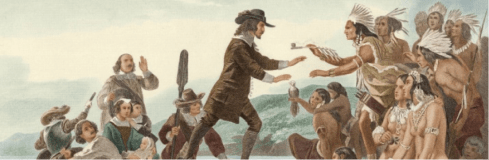
It wasn’t far to the Roger Williams Museum and National Memorial where I learned what a dedicated individual Roger Williams really was. He originally came to this country in early 1631 with a group of Puritans, who landed in Boston, MA hoping to find religious freedom in the newly formed Massachusetts Bay Colony.

2

 He left Boston later that year to accept a ministry position offer in Salem, MA whose inhabitants believed more along the lines he did. When Salem withdrew their offer, Williams accepted an offer in Plymouth, MA for the same reason. By 1633 Williams was still at odds with local clergy over his “radical” beliefs (the separation of church and state) and the Massachusetts Bay Colony wanted him gone.

3

In 1636 his persecution as a “separatist” came to a head when the Massachusetts Bay Colony convicted him for his “new and dangerous opinions” with plans to deport him back to England. He fled south from Plymouth, some 50 miles or so, to spend time with the Wampanoag Indians, and later traveled to the headwaters of Narragansett Bay where he founded the colony of Providence (later to be called Rhode Island), on land deeded to him by the Narragansett Indians.

4

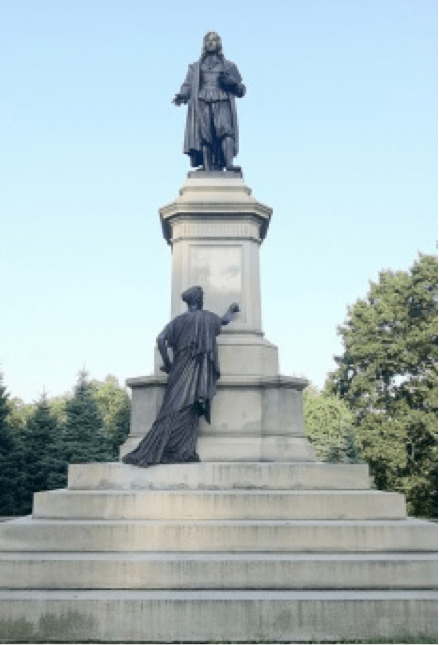
Williams established a trading post just south of Providence in 1637 and was instrumental in founding the First Baptist Church in America (which I referred to in Part 19 and above) in 1638. He returned to England in 1643 to secure a charter for the colony of Rhode Island, and again in 1651 to defend that charter against another grant that would have split the colony. In his later years Williams would succumb to ill-health, brought on by a lifetime dedicated to the colony he had founded and his struggling to keep it together, along with his constant battle with the “establishment” for religious freedom for all people everywhere. Below is a photo of the monument in Providence, dedicated to Williams with the figure of Clio (the muse of history) who is shown inscribing Williams’ name and the date (1636) when he founded the colony of Providence, which would later become the state of Rhode Island.


5


—–To Be Continued—–

My Colonial States Trip Part 18

18 Mar

A Slice of Life

 Bill Lites

Bill Small Red Plane


I wanted to save plenty of time for visiting the Submarine Force Library & Museum in Groton, CT before they closed. This museum is the only submarine museum operated by the U.S. Navy and is the home of the USS Nautilus (SSN-571), the first nuclear powered submarine in the world.  

1


The museum also was a replica of the first submarine ever used in combat, David Bushnell’s Turtle, built in 1775; a WWII HA-8 Japanese Midget submarine and the Navy’s USS X-1 research submarine that was initially designed to operate using a special closed-loop hydrogen peroxide system to generate the oxygen the submarine’s diesel engine needed to operate while the ship was submerged.


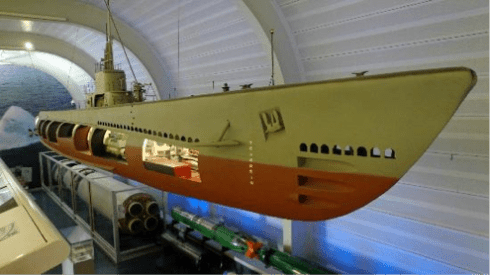
I was impressed with the 50 foot model of the USS Gato (SS-212), first of that class of submarine built by the U.S. Navy (thus carrying the class name) and was one of the typical classes of over 250 submarines built and used by the Navy during WWII. This beautifully detailed cut-away model shows all the different parts of the submarine, from bow to stern, were the crew lived and worked.

5


Next I drove up the coast a few miles to visit the Mystic Seaport Museum in Mystic, CT advertised as the largest maritime museum in the world. The museum is located on 17 acres just south of I-95 on the Mystic River and was the first living maritime museum in the United States (1929). The museum re-creates a 19th century seafaring village, with its historic sailing ships, boats and over 60 period structures that have been carefully restored. I was impressed with one of their main attractions, the last surviving whaling ship, the Charles W. Morgan.


     6                              

Since I was close to the town of Mystic, and I had looked them up on the internet as part of my trip research, I decided to try another lobster roll at the Ancient Mariner Restaurant in downtown Mystic. To my surprise, the town was in the middle of celebrating “Pirate Invasion Day” with people all over town (and in the restaurants) dressed up in Pirate costumes, running around looking for their next item in their Scavenger Hunt (or Geo Cache), and having a wonderful time, as the rain had finally let up. Then it was on up the road to the motel in Warwick, RI for a well-deserved rest after a 375 mile drive in the rain.

7


The next day was Sunday and I had planned to have a late breakfast and then attend the 11:00 service at the First Baptist Church in America in Providence, RI which was founded by Roger Williams in 1638. Williams had founded Providence in 1636 and had conducted church services in his home until 1638. For the next 60 years the congregation met outside, when the weather was nice, or in homes. The first service held in the current church building was in 1775 when the building was completed. Well, when I got to Providence some organization was having a 5-K Run right thru the area, and all the streets around the church were blocked off and the traffic was re-routed for blocks.

8


I finally gave up trying to get to the church, and headed for the Quonset Air Museum in North Kingston, RI where I found a small one-hanger museum with some unusual aircraft, not far from the Martha’s Vineyard Ferry landing. All of their aircraft were on static display, and not in what I would call beautifully restored condition. The guy behind the counter was very friendly and he told me all about the museum’s operations, after which we discussed our military service experiences at some length.

9


—–To Be Continued—–